Semi Open Rhinoplasty, What It Is, Who It Suits and How It Differs From Other Techniques

Example image used in advertising. Not a real patient.
Key points
- Semi-open rhinoplasty is a partly open technique that combines the strengths of small incisions inside both nostrils. It helps the surgeon see the line of the cartilage, and there is no incision on the outside of the columella (the strip of skin between the nostrils).
- The surgical view is wider than with closed rhinoplasty, which helps the surgeon plan the placement of the silicone implant in more detail. Results depend on each person.
- With this technique, the surgeon can refine the tip with interdomal suturing or a tip graft. It suits people having rhinoplasty for the first time or who want more definition on the bridge and tip.
- Recovery time depends on each person’s body and care, and the surgeon will schedule stitch removal at a suitable time after surgery.
Semi-open rhinoplasty is a partly open operation that helps the surgeon see more clearly when placing the implant material against your existing nasal bones. The incisions are inside both nostrils. It suits people who want a nose shape that fits the proportions of their face, and the surgeon assesses whether it is suitable for each person.
In this article, S45 Clinic brings together information about this technique, from the surgical process, how it compares with other techniques, the nose types it suits and the materials used, to how to prepare and recover, to help with an initial assessment before you see a surgeon for a consultation.
In This Article
What Is Semi-Open Rhinoplasty?
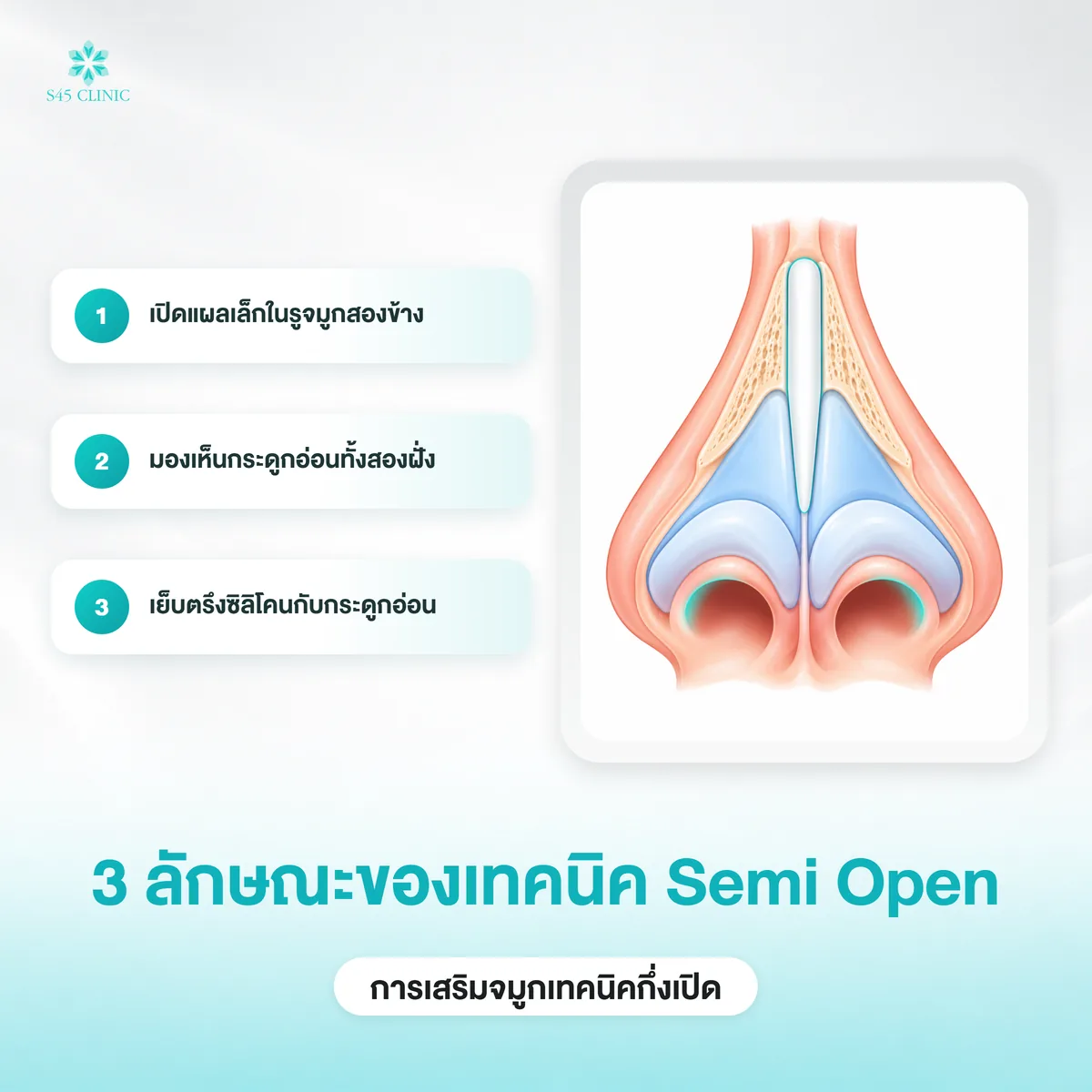
Semi-open rhinoplasty is a partly open nose surgery technique in which the surgeon makes small incisions along the inner rim of both nostrils at the same time. This opens a route to your existing nasal bones and the tip cartilages evenly on both sides.
Incisions Inside Both Nostrils to Give a View of the Cartilage

The incisions are made along the inner rim of both nostrils, with no cut through the skin on the outside of the columella. The surgeon carefully lifts the periosteum (the thin layer covering the bone) to create a pocket for inserting the silicone implant at the right level.
Working through both nostrils helps the surgeon see the tip cartilages and the line of the nasal bones, so the implant material can be placed to fit your existing bony base.
Seeing the Nasal Structure and Cartilage Compared With Closed Rhinoplasty
When comparing closed and semi-open rhinoplasty, closed rhinoplasty may use an incision in one or both nostrils but gives a more limited view, while the semi-open technique helps the surgeon see the nasal structure and cartilage evenly on both the left and right sides.
Seeing the surgical area from all sides reduces the need to judge distances in hard-to-see spots. The surgeon can check that the silicone implant sits beneath the periosteum and stitch it securely in place against the tip cartilages, which helps lower the chance of the nasal axis shifting.
How Does Semi-Open Rhinoplasty Differ From Closed and Open Rhinoplasty?
Semi-open rhinoplasty is a middle-ground procedure that combines the clear view of the open technique with the benefit of incisions inside the nose. Understanding how each approach differs can help you consider which one suits your own nasal structure.
Comparison Table of Closed, Semi-Open and Open Techniques
The table below compares different aspects of each technique to help you weigh up the options.
| Criterion | Closed technique | Semi-open technique | Open technique |
|---|---|---|---|
| Incision location | Inside one or both nostrils | Inside both nostrils | Inside the nostrils and across the columella on the outside |
| External incision | No external incision | No external incision | A small incision across the columella on the outside |
| View during surgery | Limited, with a narrower view than other techniques | Wider, with a balanced view of both sides | Wide, with a view of the whole internal structure |
| Stitching to secure the nasal axis | Less secure fixation of the axis | Stitched in place on both sides | Fixes the position of both the axis and the tip |
| Tip refinement | Limited placement of tip graft material | Interdomal suturing and tip grafts possible | Septal extension and complex tip reshaping possible |
| Recovery time | About 3 to 7 days | About 3 to 7 days | About 3 to 7 days |
Key Features of the Semi-Open Technique

The key feature of the semi-open technique is that all incisions are made along the inner rim of the nasal lining, with no surgical incision on the outer skin or the columella.
This technique also does not need the skin over the whole nasal tip to be lifted open.
What Are the Benefits of Semi-Open Rhinoplasty?
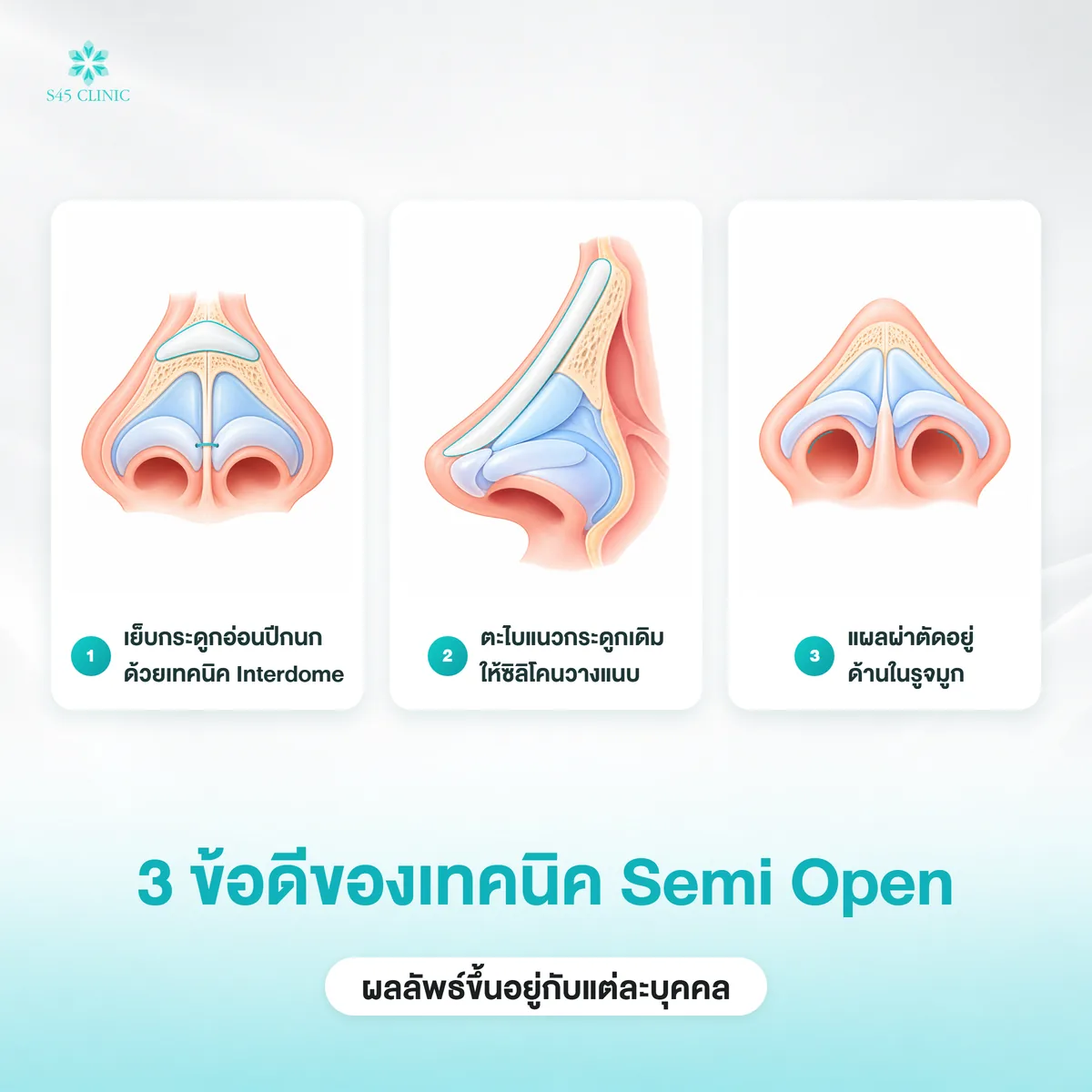
Semi-open rhinoplasty can help create definition so your nose shape fits the proportions of your face. Small incisions inside both nostrils help the surgeon see your existing nasal bones and cartilage, and make it easier to place the silicone implant flat against the bony base.
The surgeon can also stitch the silicone implant to the cartilage on both sides to lower the chance of it moving or tilting, and can refine the tip with interdomal suturing.
Interdomal Suturing of the Alar Cartilages
Interdomal suturing of the alar cartilages (the cartilages that shape the tip and nostrils), which many people look up as interdomal suture rhinoplasty, uses stitches to draw the 2 tip cartilages that sit apart towards each other in the middle.
This technique can help make the tip more symmetrical and stronger, and may help the tip look slimmer, depending on each person’s existing cartilage.
Rasping the Existing Bone Line Helps the Silicone Implant Sit Flat
Rasping (filing down the bone) smooths the surface of the nasal bones so it is even, especially for people with a slight dorsal hump (a bump on the bridge of the nose).
Once the bone line is even, a silicone implant carved to fit you can sit flat against the bony base. This helps reduce gaps under the skin and lowers the chance of the implant shifting or tilting over time.
Incisions Inside the Nostrils
All the incisions are in the lining inside the nose, so no incision is needed on the outer skin. As the skin heals in stages, the stitch marks inside gradually fade over time, depending on each person’s body and self-care.
What Are the Limitations of Semi-Open Rhinoplasty to Know Before You Decide?
Semi-open rhinoplasty offers a wider surgical view and incisions inside the nose, but medically every technique has limits that depend on each person’s anatomy. Because the skin over the columella and tip is not fully lifted open, there may be limits to reshaping in complex cases.
Understanding the limitations or drawbacks of semi-open rhinoplasty in advance helps you and your surgeon assess the shape and what is possible realistically, so you can choose a surgical approach and materials that suit your face.
A Short, Upturned Nose or Very Little Soft Tissue May Need the Open Technique
If your nose is quite short, the tip turns upwards, or there is little soft tissue at the tip and the skin is very tight, there are limits to how much the semi-open technique can lengthen the tip, because the working space inside the nostrils limits how far the deeper cartilage can be extended.
In cases like this, the surgeon will often recommend considering open rhinoplasty, which gives a full view of the internal structure, together with septal cartilage or rib cartilage rhinoplasty using your own rib cartilage to set the nasal axis and lengthen the tip. This helps spread the pull of the skin evenly and helps the nose shape suit your face.
Highly Complex Cases or Scar Tissue Pulling From a Previous Silicone Implant
If you have had several previous operations and thick scar tissue is pulling on the nose, or the central bone line is crooked, the semi-open technique does not give a wide enough view to release scar tissue in the nose at deeper layers.
Choosing the open technique for highly complex cases helps the surgeon see the whole internal structure and remove scar tissue appropriately.
Compare techniques: semi-open vs open rhinoplasty, how they differ and which to choose
Who Is Semi-Open Rhinoplasty Suitable For?
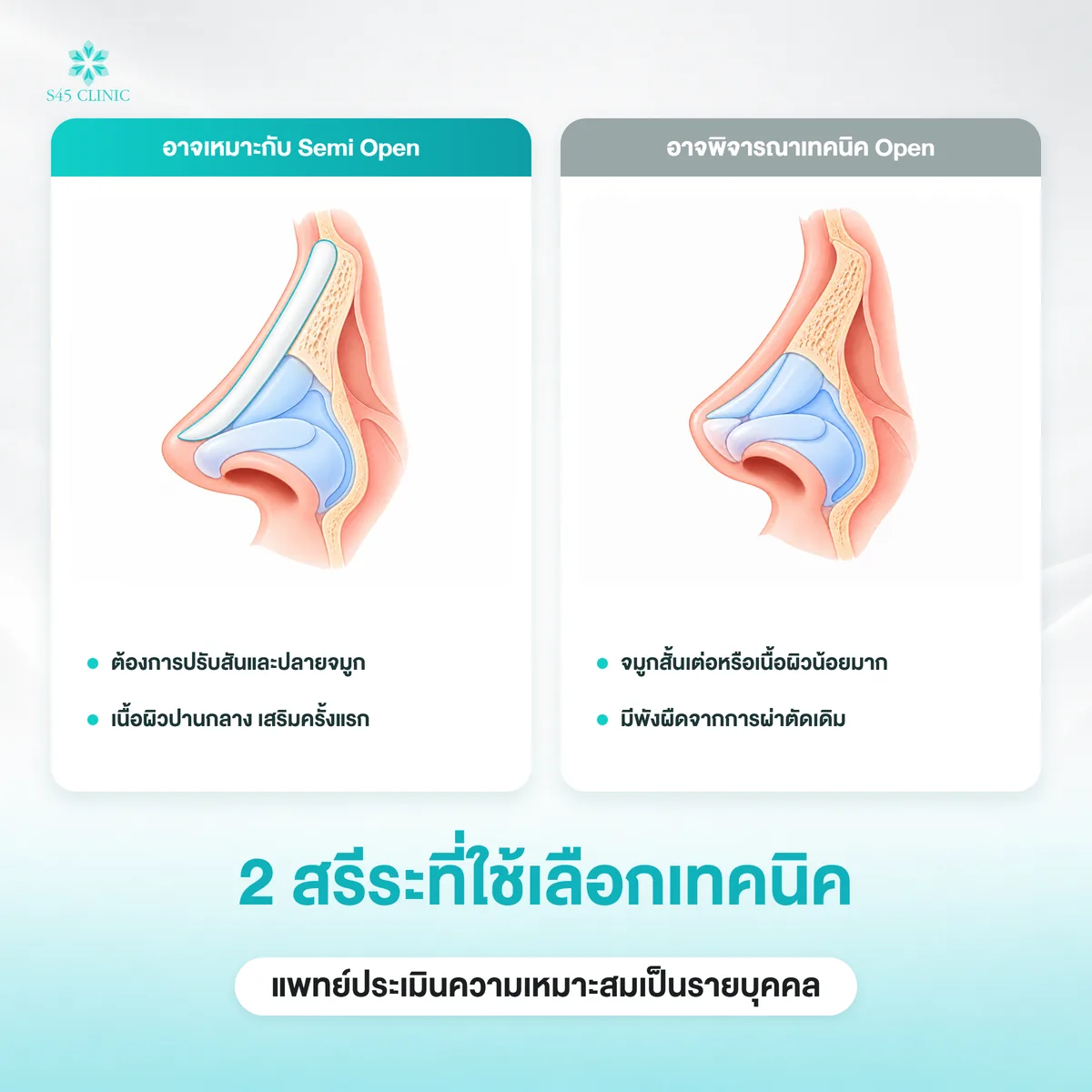
Semi-open rhinoplasty is usually considered for people whose existing nose is reasonably balanced and who want to add definition to the face. Assessing the thickness of your skin and your existing bone line helps the surgeon plan where to place the silicone implant and how to refine the tip to suit the proportions of your face.
People Who Want to Adjust the Bridge Proportions and Refine the Tip

This includes people who have a nasal bridge but want more height so it balances with the forehead and chin, and people with a slightly wide tip who want it refined with interdomal suturing.
Adjusting the height and line of the bridge can help the whole face look more balanced and defined. Results depend on each person.
People With Medium Skin Thickness Having Rhinoplasty for the First Time
People deciding on rhinoplasty for the first time, with medium skin thickness and medium elasticity that can support a silicone implant appropriately, are a group who can consider the semi-open technique.
Recovery takes about 3 to 7 days, similar to the clinic’s other techniques, and depends on each person’s body.
What Materials Do Surgeons Use With Semi-Open Rhinoplasty?
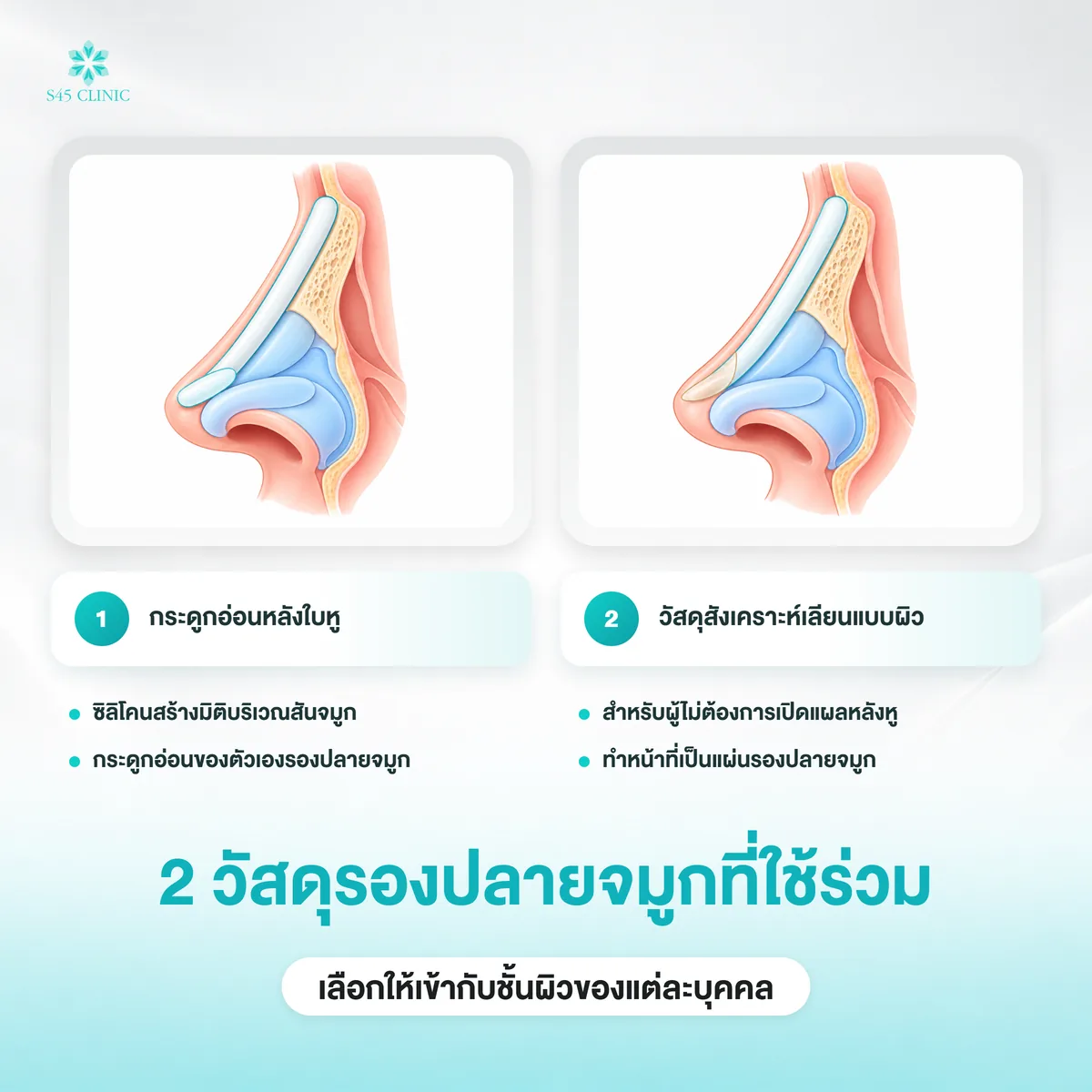
Semi-open rhinoplasty combines medical materials to adjust the definition of the bridge together with the tip. Choosing a tip graft material that suits your skin can help reduce pressure from the silicone implant and make the tip more stable.
Medical Silicone With Your Own Ear Cartilage
Using a medical-grade silicone implant with cartilage from behind your own ear, also called ear cartilage rhinoplasty, is one approach surgeons use. The silicone adds definition to the bridge, while the ear cartilage is placed as support at the tip.
Because it is your own cartilage, it is compatible with your body. It adds thickness to the skin at the tip and reduces pressure from the silicone implant pressing directly on the skin.
Synthetic Skin-Like Material to Support the Nasal Tip
If you do not want an incision behind the ear to take cartilage, the surgeon can use a medical synthetic material that mimics skin as a support layer at the tip instead.
This material is used as a cushioning layer at the tip to help reduce pressure from the silicone implant.
How Do You Prepare for Semi-Open Rhinoplasty?
Semi-open rhinoplasty requires your body to be ready and you to follow your surgeon’s advice. Preparing in advance helps your blood circulation work normally and supports your body’s recovery after surgery.
Getting Your Body Ready and What to Do Before Surgery Day
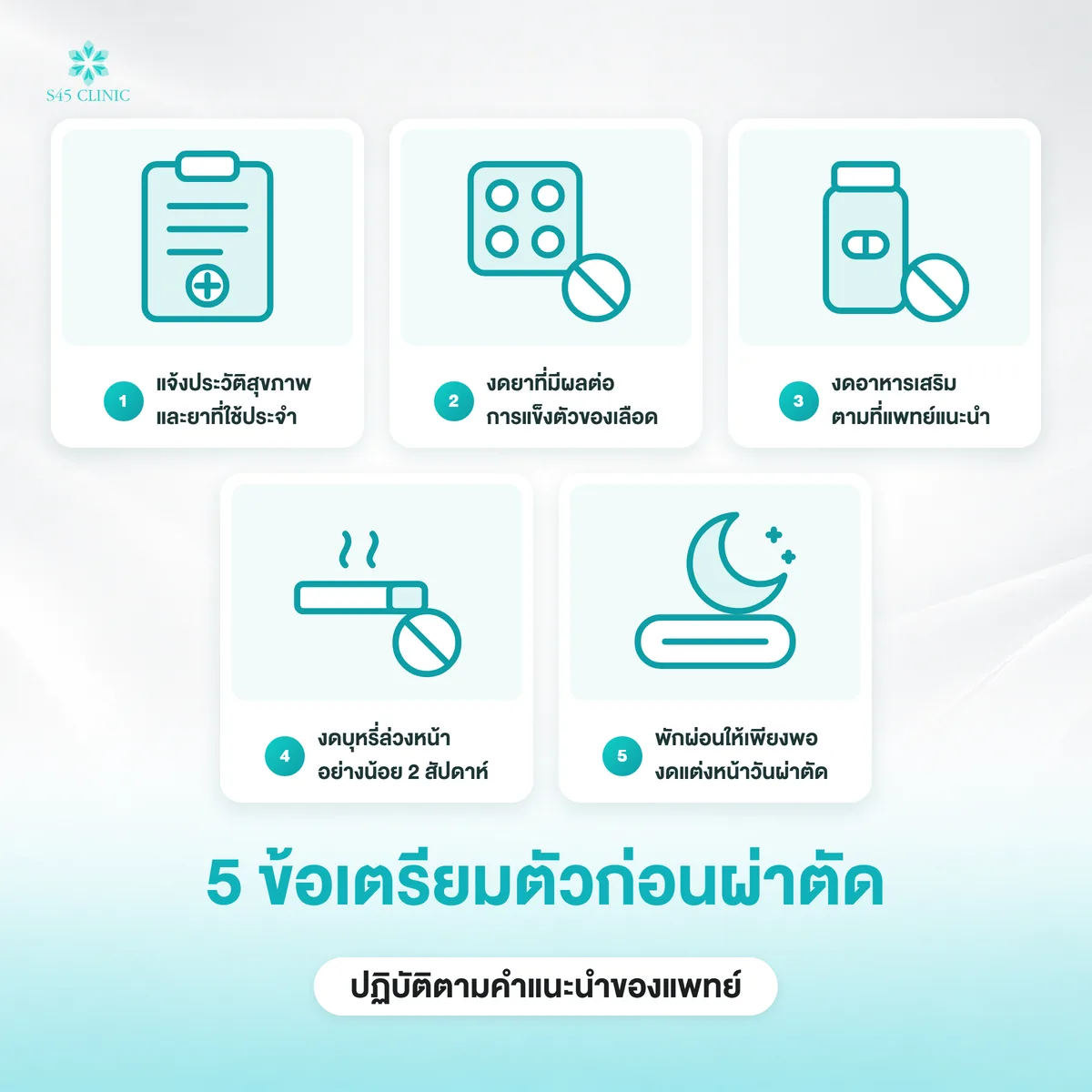
The steps to prepare before rhinoplasty are:
- Tell the surgeon your full health history, any health conditions, the medicines you take regularly and any drug allergies.
- Stop medicines that affect blood clotting, such as aspirin and ibuprofen, for as long before surgery as your surgeon advises.
- Stop supplements, vitamin E, fish oil, ginseng and ginkgo extract for as long before surgery as your surgeon advises.
- Stop smoking, including e-cigarettes, at least 2 weeks before surgery, and stop drinking alcohol as your surgeon advises.
- Get enough rest, clean your face, wash your hair, and do not wear make-up on the day of surgery.
The Surgical Steps and Anaesthesia
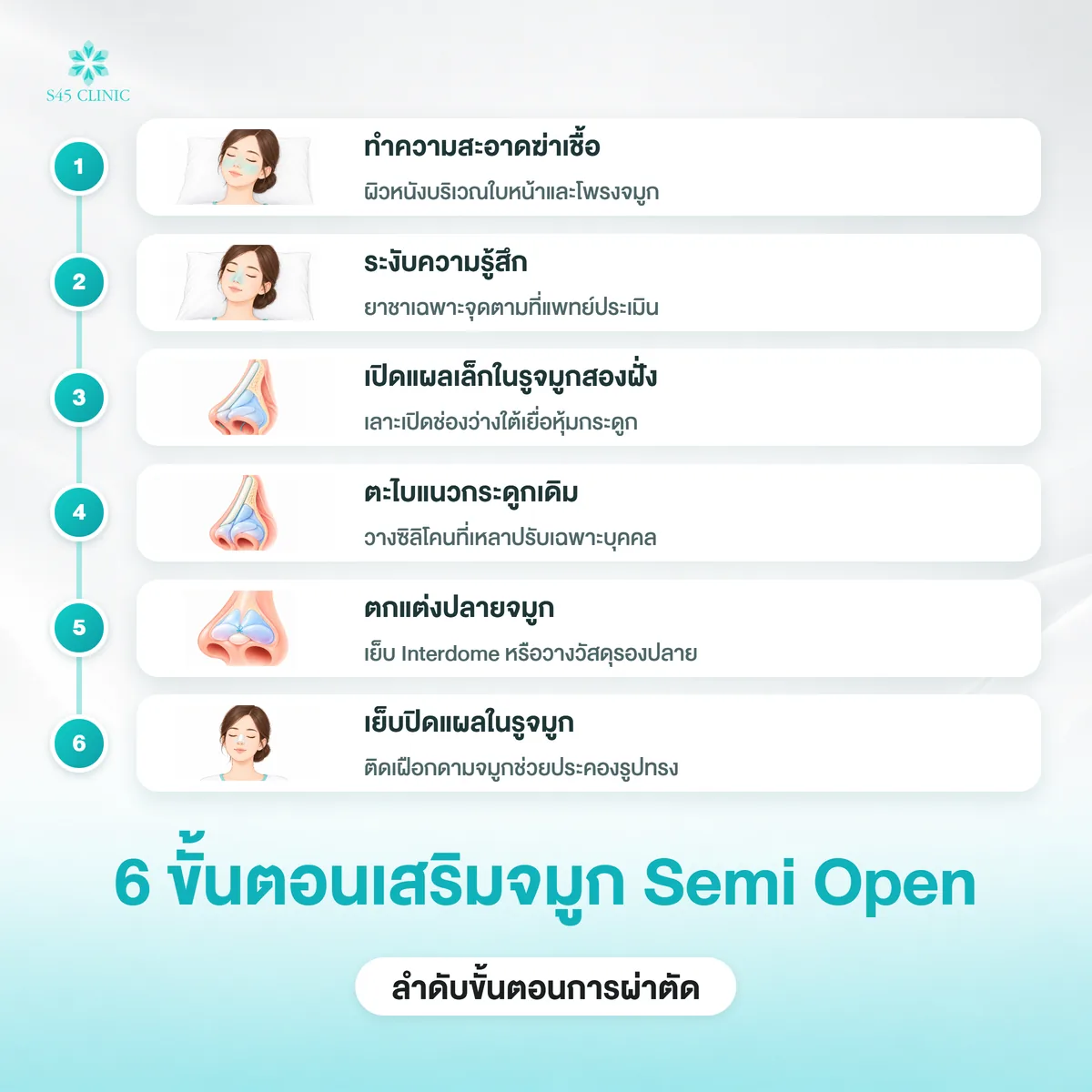
Semi-open rhinoplasty follows these steps:
- The skin of the whole face and the inside of the nose is cleaned with a medical antiseptic solution.
- The nose is numbed with a local anaesthetic, together with sedation (medicine to help you relax) or another method the surgeon chooses based on the technique and your body.
- Small incisions are made inside both nostrils, and a pocket is created beneath the periosteum.
- The existing bone line is evened out by rasping, and then a silicone implant carved to fit you is placed.
- The tip is refined with interdomal suturing or a tip graft, and the silicone implant is stitched in place.
- The incisions inside the nostrils are closed with fine stitches, and a nasal splint is applied to support the shape.
How Long Is Recovery After Semi-Open Rhinoplasty, and When Are the Stitches Removed?
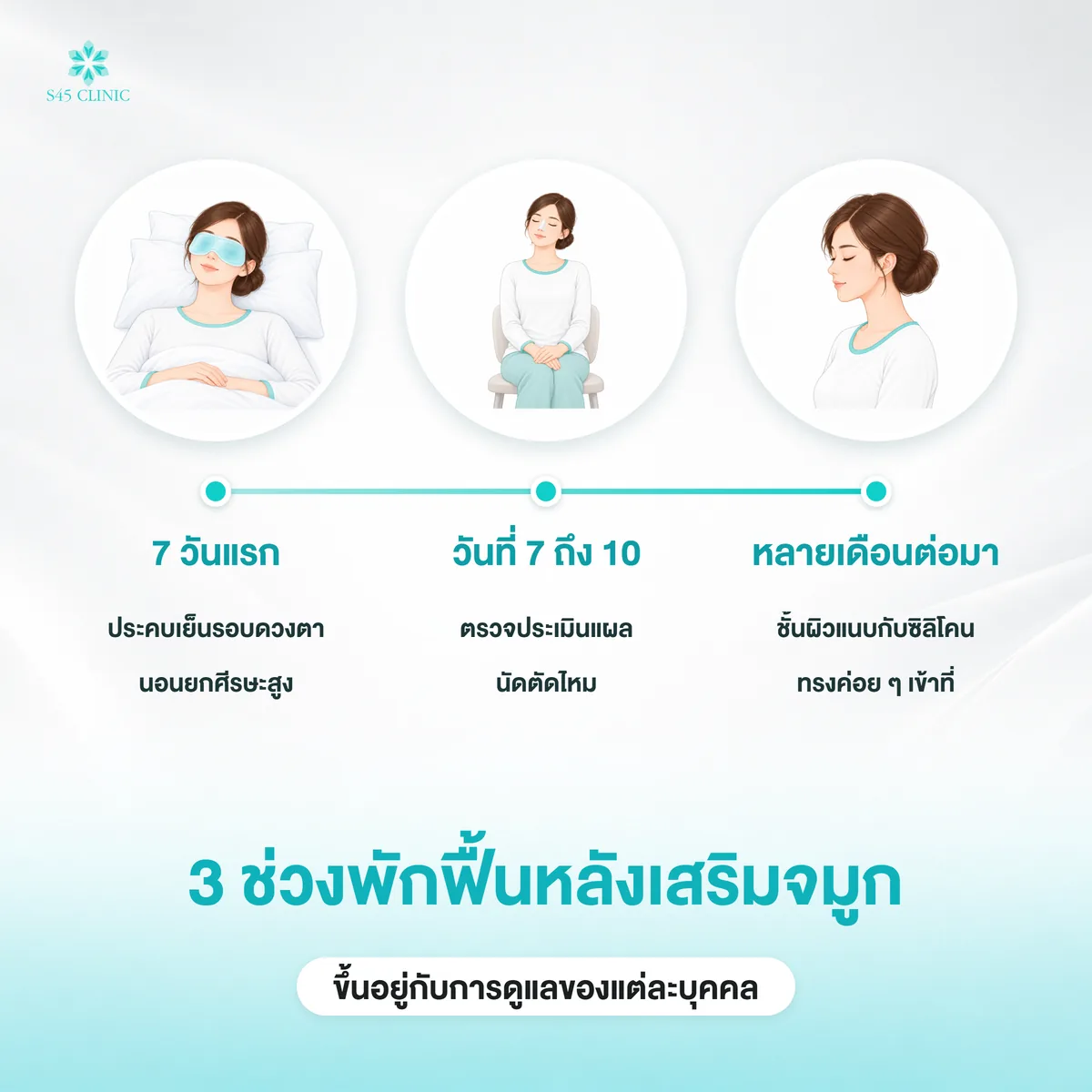
As for how many days rhinoplasty recovery takes, the average recovery time for semi-open rhinoplasty is about 3 to 7 days, depending on each person’s body. Looking after yourself properly helps the wound heal and the swelling go down in stages.
How to Care for the Wound and How Swelling Goes Down
After surgery, follow the advice of the surgeon who is looking after your case. General guidance includes:
- Use cold compresses around the eyes and forehead in the early period after surgery, for as long as your surgeon advises, to help reduce swelling and bruising after surgery.
- Switch to gentle warm compresses when your surgeon says it is suitable, to boost blood circulation.
- Gently clean the incisions inside your nostrils with a cotton bud dipped in sterile saline, as your surgeon advises.
- Sleep with your head raised on 2 pillows, or use a neck pillow for support, and do not sleep on your side or front, as your surgeon advises.
- Avoid blowing your nose hard or picking your nose, and keep the wound dry until your surgeon removes the stitches.
Stitch Removal Schedule and Follow-Up After Surgery
If you are wondering how many days after rhinoplasty the stitches are removed, the surgeon will book an appointment to check the wound and remove the stitches about 7 to 10 days after surgery, once the incisions inside the nostrils have started to heal well. After stitch removal, swelling gradually goes down over several weeks, and the skin gradually settles against the silicone implant until the shape settles over the following months, depending on each person’s care and recovery.
What Affects the Cost of Semi-Open Rhinoplasty?
The cost of semi-open rhinoplasty differs from person to person, depending on the details of the surgery and your individual medical plan, including:
- how complex your existing nose is, such as the thickness of the bone line, how crooked the central axis is and how elastic the skin is
- any bone reshaping needed at the same time, such as rasping a dorsal hump to create a base for the silicone implant
- the tip graft material chosen, such as your own ear cartilage or a synthetic skin-like material
- the tip refinement technique, such as how detailed the interdomal suturing to reshape the alar cartilages needs to be
- regular assessment and follow-up care after surgery from the clinic
Why Choose Semi-Open Rhinoplasty at S45 Clinic
Planning semi-open rhinoplasty at S45 Clinic focuses on a thorough, all-round assessment to design a nose shape that fits the proportions of each person’s face. You can find the clinic’s other rhinoplasty techniques on our rhinoplasty service page.
Analysing Facial Proportions and Skin Thickness Before Designing the Nose Shape
The surgeon measures your facial proportions from the forehead, bridge and tip down to the chin, and assesses the thickness and elasticity of the skin all around.
This analysis helps set a suitable bridge height and tip angle, to lower the chance of the skin being pulled too tight over the long term.
Planning a Nose Shape for Each Person

At S45 Clinic, the surgeon carves the silicone implant case by case, so its base fits the curves of your existing bone line.
Shaping it for each person helps spread the weight of the silicone implant evenly, reduce gaps under the skin and help the nose shape fit the proportions of your face.
Ongoing Follow-Up and Wound Recovery Care at Every Appointment
Follow-up appointments are scheduled regularly, from the first day after surgery and the day of stitch removal through to several months later, to look after the recovery of your skin.
At every appointment, the surgeon checks how the nasal axis is settling and gives you personal self-care advice, so you get suitable care throughout recovery.
Check prices: how much does rhinoplasty cost? Factors and techniques to know
Frequently Asked Questions About Semi-Open Rhinoplasty
Does Semi-Open Rhinoplasty Hurt During Surgery?
During surgery, the surgeon injects a local anaesthetic into the nose and may also give you sedation, depending on the surgeon’s assessment. After the anaesthetic wears off, you may feel tightness or soreness, which can be eased with painkillers provided by the surgeon.
Can I Have Semi-Open Rhinoplasty If I Have Little Nasal Tissue?
Yes. The surgeon will assess a bridge height that suits how elastic your skin is, and will often recommend a tip graft as well to add thickness to the skin and reduce pressure.
How Does Semi-Open Rhinoplasty Differ From Open Rhinoplasty in Terms of the Incision?
The semi-open technique uses incisions only inside both nostrils, so there is no incision on the outside of the columella, unlike the open technique, which has an incision on the outside across the columella.
Can Semi-Open Rhinoplasty Even Out a Dorsal Hump?
Yes. It can help even out a small to medium dorsal hump, using a rasp to smooth the bone surface through the incisions on both sides, so the surface is even before the silicone implant is placed.
Summary
Semi-open rhinoplasty is an option that combines a surgical view from both sides with incisions inside the nostrils. It suits people who want to add definition to the bridge and tip to fit their facial features.
Choosing a suitable technique depends on your existing nose and the thickness of your skin. A consultation with a surgeon to assess your facial proportions will help you plan a technique and materials that suit your face.
Because every nose structure…
is different
An otolaryngologist assesses every case before treatment and gives advice based on your actual concerns.
“Reveal the beauty within you”
Message us online
Surgery and medical procedures carry risks. Find out about them and consult a doctor before you decide. Results depend on each person.