Rhinoplasty Stitches, How Many Days Until They Are Removed?
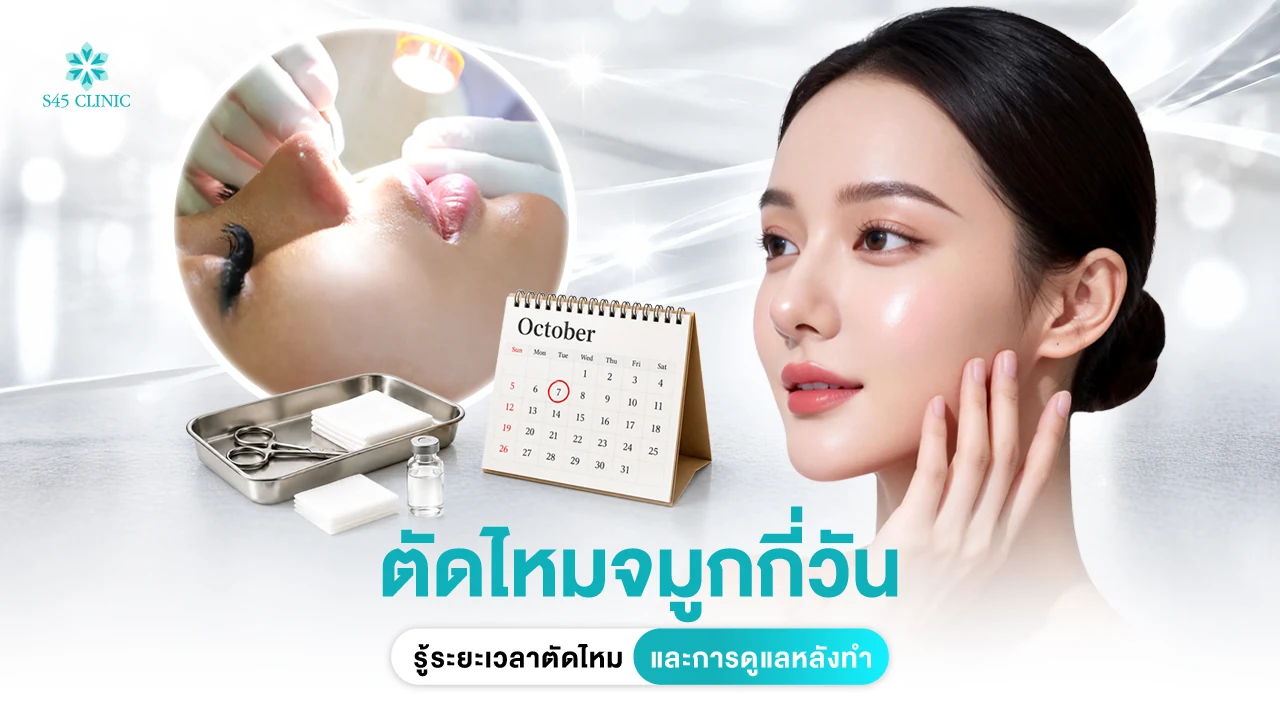
Example image used in advertising. Not a real patient.
Key points
- After rhinoplasty, how many days until the stitches are removed? Stitches are usually removed about 7 days after surgery, and the surgeon always checks that the wound edges are ready first.
- For more complex techniques, such as open rhinoplasty or alar base reduction, the surgeon may schedule stitch removal at about 7 to 14 days, depending on how each person’s skin heals.
- Before letting water touch the area or washing your face, wait about 24 to 48 hours after stitch removal so the needle holes can close, and then wash gently.
- Surgical scars usually fade gradually over about 3 to 6 months, depending on each person’s body. You can start applying scar gel 2 to 3 days after the stitches are removed.
Questions about how many days until rhinoplasty stitches are removed cover several important details, including caring for the wound so the edges do not open, lowering the chance of scarring, and what to do after stitch removal when you go back to washing your face and your daily routine.
In this article, S45 Clinic explains the stitch removal timing for each surgical technique, how the types of stitches differ, what can happen if stitches are not removed on time, and how to lower the chance of scarring, to help you look after yourself throughout recovery.
In This Article
How Many Days After Rhinoplasty Are Stitches Removed for Each Technique?
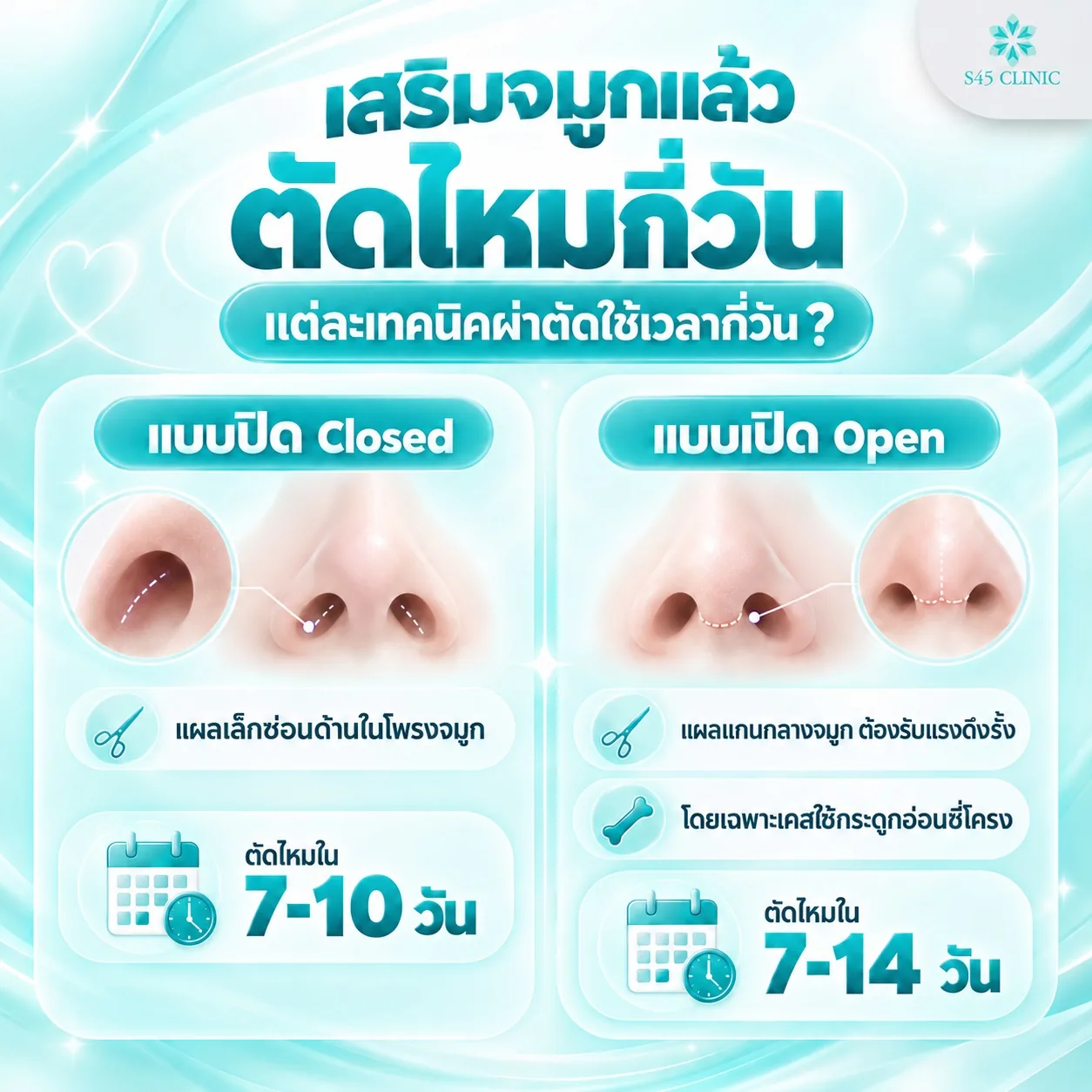
After rhinoplasty, how many days until your stitches are removed? It depends mainly on where the incision is, the type of skin, and the surgical technique used. Each method has its own healing timeframe, which also varies with each person’s skin and anatomy.
When Are Stitches Removed After Closed Rhinoplasty?
Closed rhinoplasty involves a small incision along the inside rim of the nostril. The surgeon usually schedules stitch removal for about day 7 after surgery.
The incision for this technique is in the lining inside the nose, which has a rich blood supply, so the skin and lining can heal well on their own. By day 7 after surgery, the inner wound edges start to join together. The surgeon checks that the wound is dry before removing the stitches as scheduled.
If the skin is still moist or swollen, the surgeon may postpone the appointment slightly so the stitched area can heal properly.
When Are Stitches Removed After Open Rhinoplasty?
Open rhinoplasty involves reshaping the nose and its internal framework, and leaves an incision across the columella (the strip of skin between the nostrils). The surgeon usually schedules removal of the external stitches at about 7 days, and it may take longer in some cases.
The incision on the columella is under tension and has to support the movement of the nasal tip, so the outer skin needs time to join. At around day 7, the surgeon starts to assess the external stitches. If the skin edges have joined, the surgeon removes the stitches from the columella.
In cases with septal extension or rib cartilage, the surgeon may leave some stitches in place for longer to help support the tension and lower the chance of the wound edges separating.
How Many Days After Alar Base Reduction Can Stitches Be Removed?
Alar base reduction involves removing excess skin and closing the wound along the nostril crease (the alar crease). The surgeon usually schedules stitch removal at about 7 to 14 days after surgery.
The skin in the nostril crease is thick and oily because of the oil glands beneath it, and it moves regularly when you talk, smile and chew. The surgeon uses strong stitches and brings the wound edges closely together to hold the shape of the alae.
Having your stitches removed within the scheduled timeframe helps the scar along the nostril crease heal evenly, and lowers the chance of the stitches pressing into the skin and leaving small dents along the stitch line.
What Stitches Are Used in Rhinoplasty, and Does Everyone Need Them Removed?
There are 2 main types of stitches used in rhinoplasty, based on whether the material dissolves. The surgeon chooses the type that suits the location of each incision.
Dissolvable stitches (absorbable sutures) are made from synthetic materials that the body can break down on its own. They are used to stitch the inner cartilage, for interdomal suturing (stitching the tip cartilages together), or to close the deeper lining inside the nose. These stitches do not need to be removed, as the body absorbs them over time.
Non-dissolvable stitches (non-absorbable sutures), such as nylon stitches, are smooth single-strand threads (monofilament) that do not absorb fluid and are very strong. They are used to stitch the outer skin, the incision on the columella and alar base reduction wounds. These stitches need to be removed within the set timeframe to lower the chance of the skin reacting to them as foreign material.
| Type of stitch | Common locations | Need for removal | Timeframe |
|---|---|---|---|
| Dissolvable stitches | Internal framework, cartilage, lining inside the nose | Do not need to be removed, as the body breaks them down on its own | Time to dissolve depends on the material |
| Non-dissolvable stitches | Columella incision, nostril crease | Need to be removed at the scheduled appointment | Removed within 7 to 10 or 7 to 14 days |
Does Rhinoplasty Stitch Removal Hurt, and How Do You Prepare for the Appointment?
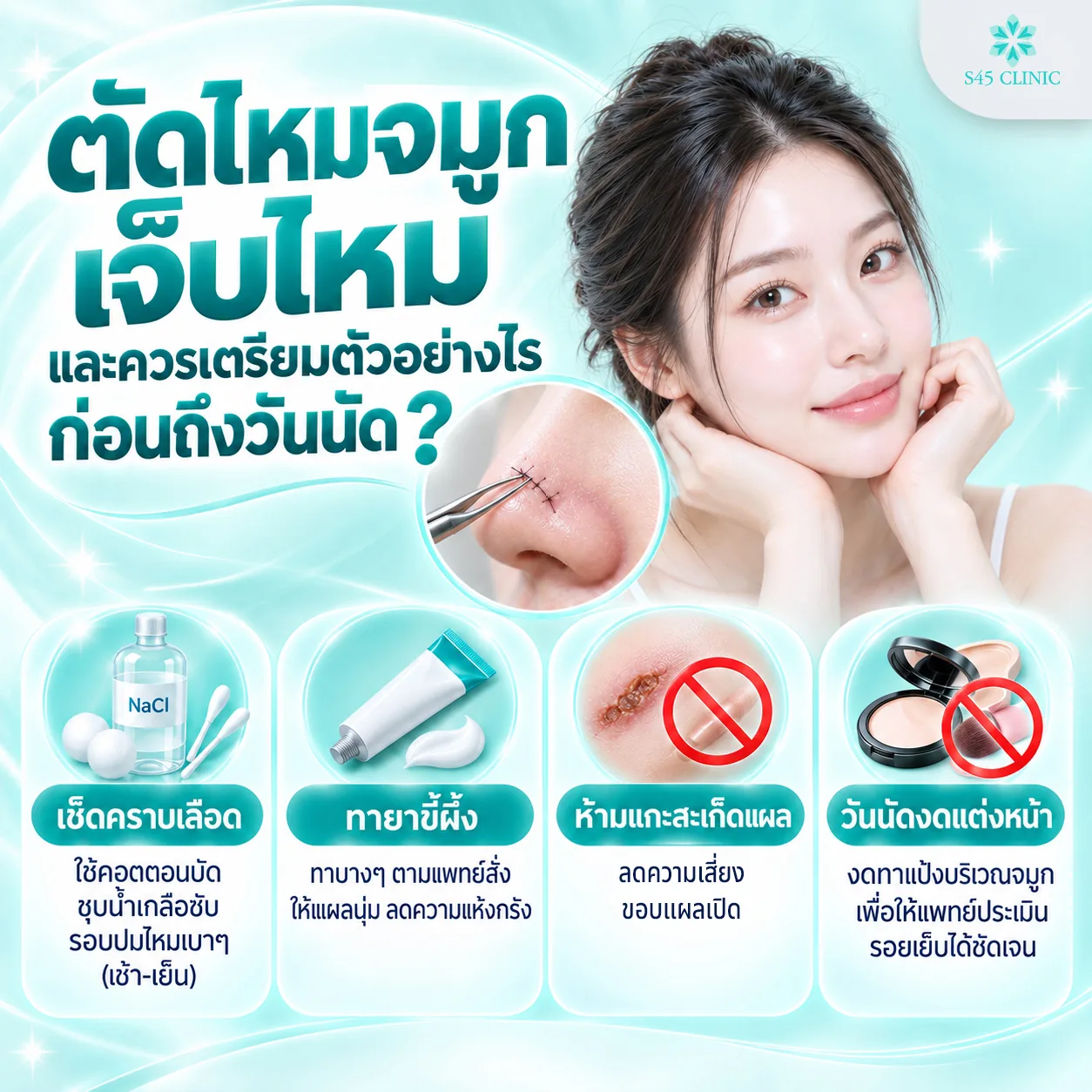
During rhinoplasty stitch removal, you may feel some tightness or light pulling where the surgeon lifts and removes the stitches. This feeling differs from person to person, and the surgeon will decide whether a local anaesthetic is needed.
Caring for and cleaning the wound before your stitch removal day can help reduce the feeling of tightness. When the skin around the stitches is clean, with no dried blood stuck to it, the stitches can slide out through the skin more easily. To care for the wound:
- gently dab away dried blood around the stitch knots with a cotton bud soaked in saline every morning and evening
- avoid picking, peeling or touching scabs on the wound, to lower the chance of the wound edges opening and bleeding
- apply a thin layer of antibiotic ointment as your doctor advises, to keep the skin around the stitch knots soft and stop the wound from drying out and crusting
- do not wear make-up or powder on your nose on the day of your appointment, so the surgeon can check the stitch line clearly
What Happens If You Miss Your Stitch Removal Appointment or Leave the Stitches in Too Long?
Having your stitches removed when your surgeon schedules it plays an important part in the recovery of your nose shape. Removing stitches too early or leaving them in too long can affect the incision and how the skin heals.
Risk of the Wound Opening If Stitches Are Removed Too Early, Before It Is Dry
Removing stitches before the scheduled time, while the collagen fibres under the skin have not yet joined well, can leave the wound edges without enough support.
Pulling from facial movement, talking or sneezing can then make the healing wound edges open, leak fluid or blood, and let dirt into the wound. This can lead to inflammation and slow down how the skin heals.
If the surgeon finds that the wound is still moist, red or swollen, postponing stitch removal by another 2 to 3 days can help lower the chance of these complications.
Embedded Stitches and Cross-Hatched Scars When Stitches Are Left in Too Long
Leaving stitches in the skin for longer than the set timeframe can prompt the body to grow new skin over them, which may lead to the stitches becoming embedded in the skin.
When stitches sink into the skin, removing them later can be harder, and you may feel pulling as they come out. This is because the body sees the stitches as foreign material and forms scar tissue around them, which can leave cross-hatched marks that look like a railway track (railroad track scars).
Oil and dirt building up around stitch knots that are left in for too long may also increase the chance of inflamed oil glands and hair follicles in the middle of the face.
How Many Days After Stitch Removal Can You Wash Your Face and Get the Area Wet as Usual?
After rhinoplasty stitch removal, wait about 24 to 48 hours before you start cleaning your face and letting water touch the wound gently.
You need to wait about 1 to 2 days after stitch removal because the original stitch line still has small needle holes. The body needs about 24 to 48 hours to grow new skin cells to close these holes. If the wound touches tap water or cleansing products too early, moisture and dirt in the water may seep into the needle holes and affect how the wound heals.
Before stitch removal and for the first 24 hours after it, wipe your face with saline instead of washing it with water. After 48 hours, you can wash your face with clean water and a mild soap. Smooth it over gently, without rubbing, scrubbing or massaging the bridge or tip of your nose, and then pat it dry with a clean towel every time.
How Do You Care for Yourself After Stitch Removal so the Scar Fades?
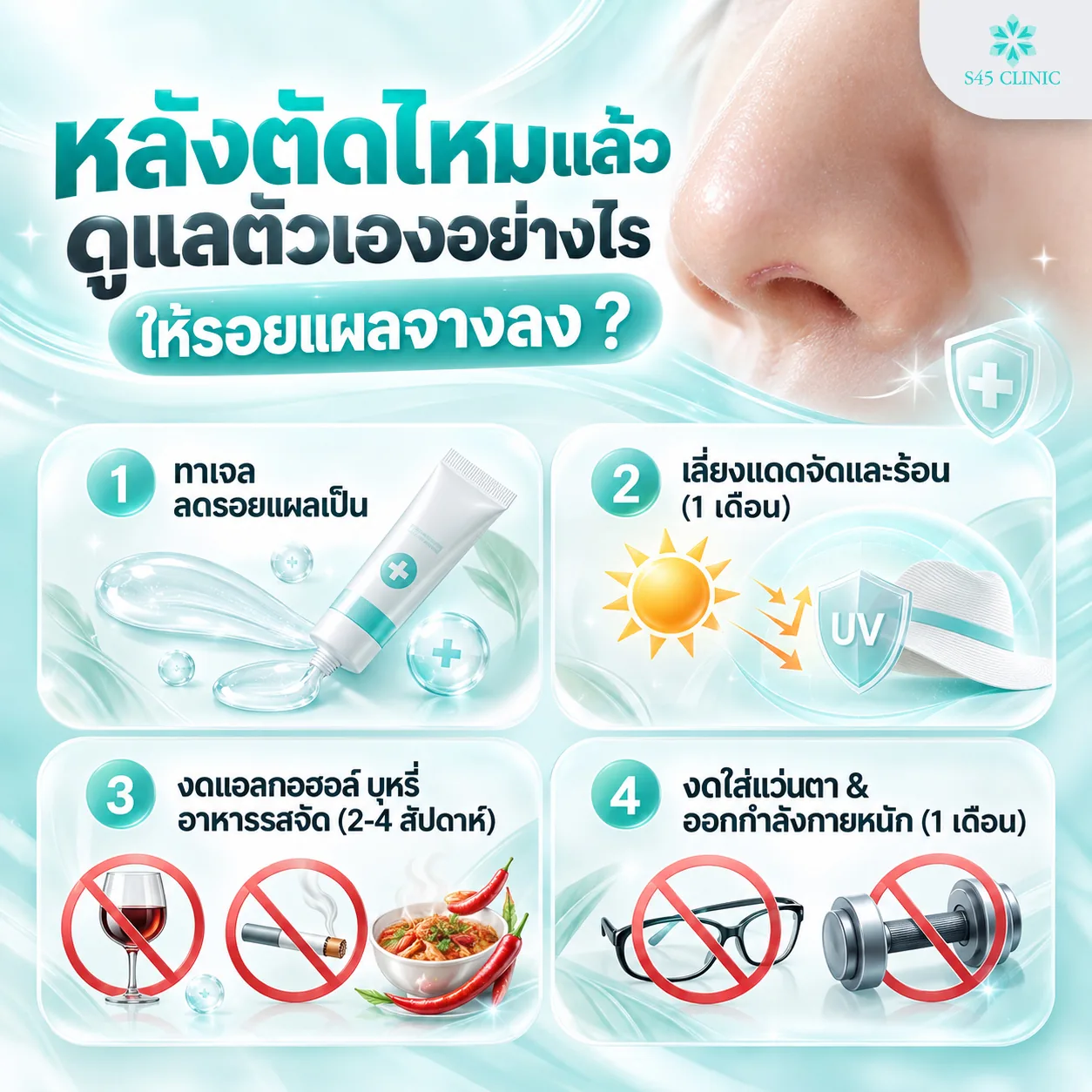
Once you know when your stitches will be removed and they have come out, your skin continues to recover. Even when the outer wound edges have closed, the collagen under the skin is still reorganising. Adjusting how you care for your skin can help the surgical scar fade gradually and lower the chance of a raised scar. To care for the scar:
- Once the wound has fully closed, the doctor may recommend silicone scar gel or sheets, used for the length of time and in the way the doctor advises. Reviews of the evidence say the effect of silicone on scars is still unclear. Surgical scars usually fade gradually over about 3 to 6 months, depending on each person’s body.
- Avoid strong sun and heat for at least 1 month, to reduce the effect of UV rays, which can trigger pigment production and make the scar darker.
- Avoid alcohol, smoking and strongly flavoured food for 2 to 4 weeks, to reduce widening of the blood vessels and help ease swelling.
- Avoid wearing glasses that press on the bridge of your nose, and avoid strenuous exercise, for at least 1 month.
Which Symptoms Mean You Need to See a Doctor Before Your Stitch Removal Date?
After rhinoplasty, it is normal for swelling and bruising to be most noticeable in the first 2 to 3 days and then to go down gradually. If the skin around the wound or the stitch line shows unusual signs that may mean the wound is infected and inflamed before your appointment, contact the clinic as soon as possible so a doctor can check you. Signs include:
- swelling, redness, tightness and heat on the bridge or tip of the nose or around the eyes that gets worse after day 3 after surgery
- pus leaking from the stitches, or an unusual smell from the wound
- fresh blood that keeps leaking from the wound and does not stop, even after pressing gently with clean gauze for more than 15 minutes
- wound edges that have opened, or stitch knots that have come loose so you can see a gap in the wound
- severe pain that does not ease after taking the pain relief your doctor prescribed, or a fever
Wound Care and Follow-Up After Surgery at S45 Clinic
Getting a nose shape that suits your face relies on a careful assessment of your anatomy and close care after surgery. Knowing how many days until your stitches are removed is only the start. Regular wound checks and follow-up by the surgeon help support your skin’s recovery.
Checking Each Person’s Wound Edges Before Stitch Removal
Before removing stitches, the surgeon checks the skin along the stitch line carefully, on both the columella and the nostril crease, to make sure the wound edges have fully joined. Assessing moisture, swelling and how flexible the skin is helps the surgeon choose the right day for each person. If the wound edges still need support, the surgeon may remove some stitches first and leave others in place, to lower the chance of the wound opening and help the scar sit evenly.
Hygiene Standards and Sterile Instruments for Stitch Removal
Stitch removal needs to be done in a clean environment, using medical instruments that have been through standard sterilisation. The doctor or staff member first softens and cleans the dried scabs around the stitches, so the stitches can be drawn out through the skin. Fine-tipped stitch scissors cut close to the knot and pull out the synthetic thread, lowering the chance of foreign material being left under the skin.
Follow-Up Appointments After Surgery
At S45 Clinic, we place importance on care after surgery. The surgeon schedules regular follow-up appointments after stitch removal to check how the wound is healing, advise you on when to start using scar gel, and answer your questions about self-care throughout recovery.
See our doctors: Our Doctors at S45 Clinic Bangkok
Frequently Asked Questions About Rhinoplasty Stitch Removal
Can I Remove My Rhinoplasty Stitches Myself at Home?
Do not remove your stitches yourself at home, as stitch removal needs sterile instruments. If you remove them yourself, you might not remove all the stitch material, leaving fragments under the skin that become inflamed, or you may get inflammation from instruments that are not clean.
Is It Dangerous If a Stitch Comes Out by Itself Before My Removal Appointment?
This can happen with dissolvable stitches inside the nose. If an external stitch comes out before day 5, check the wound edges. If the edges are still closed and there is no bleeding, it may not be a problem, but let the doctor looking after you know in every case. If the wound has opened, contact the clinic to speak to a doctor as soon as possible.
Can I Wear Make-Up Straight After Rhinoplasty Stitch Removal?
After stitch removal, you can wear make-up on the rest of your face. For the incision line, wait 3 to 5 days after stitch removal, to lower the chance of make-up or residue blocking the needle holes while they heal and close.
There Are Hard Scabs on the Stitch Knots. Should I Pick Them off Before My Appointment?
Do not pick or pull off scabs yourself. Instead, hold a cotton bud soaked in saline on them for about 1 to 2 minutes to soften them, and then dab them away gently. Leave any scabs that are still stuck firmly, so the doctor or staff can clean them properly on the day of stitch removal.
Is It Normal to Still Feel Tightness or Pulling After Stitch Removal?
Feeling slight tightness at the tip of the nose, or a little pulling when you move your mouth, is common, as the skin is still healing. These feelings usually become less frequent once the skin has healed.
When Can I Blow My Nose or Pick My Nose After Rhinoplasty Stitch Removal?
Avoid blowing your nose hard or picking it with your fingers for at least 1 month after surgery. If you have a runny nose, dab it gently with a clean tissue, or rinse the inside of your nose with saline as your doctor advises, to lower the chance of the shape and nasal bones shifting.
Summary
Rhinoplasty stitches are usually removed about 7 days after surgery, and removal may take about 14 days for alar base reduction wounds or complex cases. This allows the wound edges to fully join, lowers the chance of stitches becoming embedded in the skin, and lowers the chance of scarring. Cleaning scabs with saline before your appointment helps stitch removal go smoothly.
After stitch removal, keep the area away from water for the first 24 to 48 hours, and apply scar gel as advised. If you notice redness, swelling or unusual discharge, contact the clinic for a check as soon as possible.
Because every nose structure…
is different
An otolaryngologist assesses every case before treatment and gives advice based on your actual concerns.
“Reveal the beauty within you”
Message us online
Surgery and medical procedures carry risks. Find out about them and consult a doctor before you decide. Results depend on each person.