Can You Eat Meatballs After Rhinoplasty? Which Types You Can Eat and How to Eat Them Without Affecting the Wound

Example image used in advertising. Not a real patient.
Key points
- Can you eat meatballs after rhinoplasty? Yes, you can usually eat them as normal, but choose soft meatballs that are easy to chew and avoid chewy ones, to lower the chance of strain on your new nose shape and the surgical wound.
- Avoid tendon meatballs and other chewy meatballs, as the force of chewing with your jaw may pull on the surgical wound under the base of the nose and make it sore.
- Be careful with very spicy dipping sauces, as they can give you a runny nose that gets onto the surgical wound, and cut down on processed meatballs that are high in sodium, to lower the chance of swelling from fluid retention.
- After your stitch removal, usually about 7 days after surgery, the outer wound usually starts to heal, but you still need to choose food that is clean, freshly cooked and not too hard.
Food is something many people pay special attention to after plastic surgery, and one of the most common questions is whether you can eat meatballs after rhinoplasty. Meatballs are easy to eat and common in everyday meals, but worries about chewiness, allergies or additives that could cause inflammation, swelling or irritation at the surgical wound can leave many people unsure whether to eat them.
In this article, S45 Clinic brings together information on eating meatballs after rhinoplasty, the types of meatballs to be careful with, the effect of chewing force, a recovery timeline, and what to watch for with side dishes and sauces, to help you look after yourself correctly and feel less worried throughout your recovery.
In This Article
Can You Eat Meatballs After Rhinoplasty, and Which Types Can You Eat?
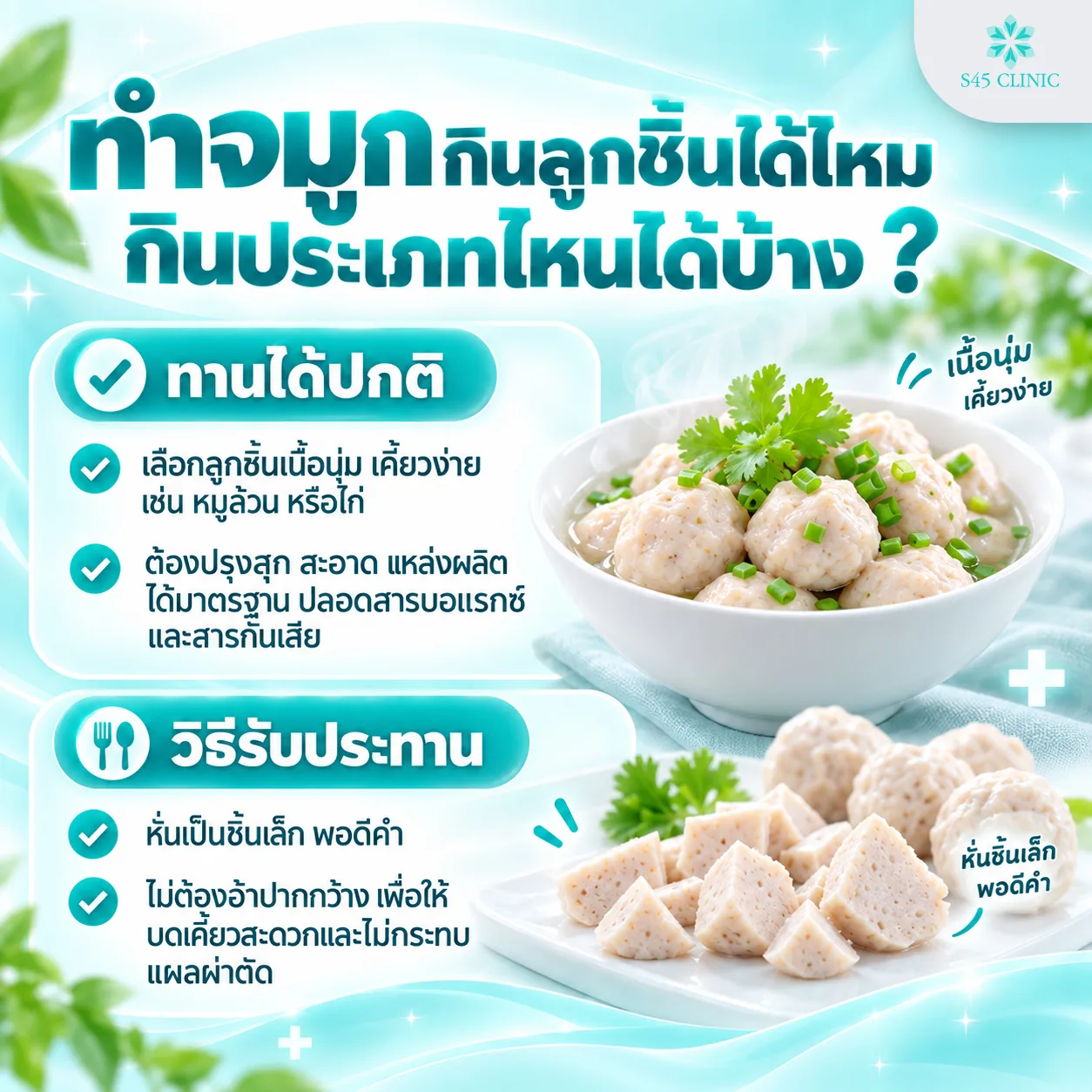
Can you eat meatballs after rhinoplasty? In general, yes, you can eat them as normal, but choose the right type of meatball and the right bite size. Meatballs that are fully cooked and clean, and that contain no ingredients you are allergic to, are not one of the foods traditionally avoided after surgery in Thailand, and they do not directly cause serious harm to the surgical wound.
The meatballs recommended for people who have just had surgery are pure pork or chicken meatballs that are soft, fine in texture and easy to chew. Cut them into small, bite-sized pieces so your back teeth can chew them easily and you do not need to open your mouth wide.
Also buy meatballs from a producer that meets food standards, without borax or high levels of preservatives, to lower the chance of irritation to your body.
Types of Meatballs to Avoid After Rhinoplasty
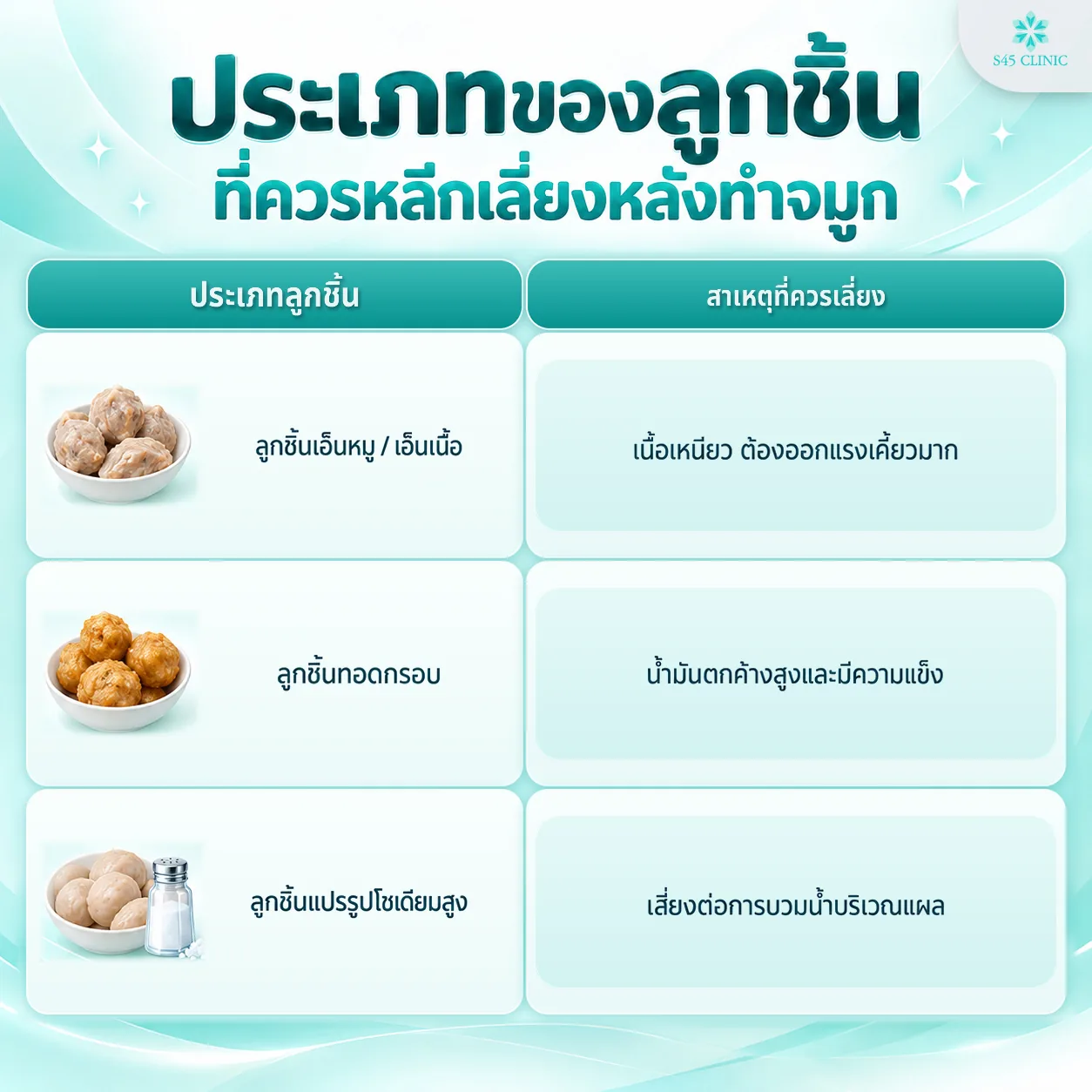
There are several types of meatballs to be careful with after rhinoplasty, because of how chewy they are, how many additives they contain and the chance of triggering an allergy. Understanding these limits, together with advice on what not to eat after rhinoplasty, helps you choose food correctly and lowers the chance of a sore wound.
Tendon Meatballs and Chewy Meatballs
Avoid pork tendon meatballs, beef tendon meatballs and meatballs that are especially springy and firm in the early part of your recovery after rhinoplasty, because they are chewy and need quite a lot of force from your jaw to chew.
The force of chewing tough food may send jolts up to the bony base and the skin layers around the nose, which can make the area that has just had surgery sore or slow down wound healing.
Processed Meatballs High in Sodium
Budget meatballs and mass-produced processed meatballs contain high levels of monosodium glutamate (MSG, a flavour enhancer), phosphates and sodium salt, which affect how your body holds on to water.
When your body gets more sodium than it needs, it may hold on to more water, which may make swelling after surgery on your face and the bridge of your nose go down more slowly than usual.
Seafood Meatballs That May Trigger an Allergy
Sea fish balls, prawn balls and squid balls carry a risk for people with a history of seafood allergy or who are sensitive to certain proteins from sea animals.
If you have an allergic reaction, you may get a rash, itching, sneezing or red swelling that spreads to the skin around your nose, and it may raise the chance of an infection at the surgical wound.
| Type of meatball | Suitability | How to eat it |
|---|---|---|
| Soft pork meatballs or finely minced chicken meatballs | Can eat | Cut into small pieces, and boil or steam until fully cooked and clean |
| Fresh fish balls (if you are not allergic to seafood) | Can eat | Choose a clean shop, and avoid fish balls with a fishy smell |
| Pork or beef tendon meatballs | Avoid | Chewy and take a lot of chewing |
| Crispy fried meatballs | Avoid | High in leftover oil and hard |
| Processed meatballs high in sodium | Avoid | Risk of swelling from fluid retention around the wound |
Why Can Chewing Tough Meatballs Affect Your New Nose Shape?
After rhinoplasty, whether silicone or cartilage was used, your new nose shape still needs time to attach to the surrounding skin layers and become settled and stable.
While you chew, your jaw and the muscles around your upper lip move all the time. If the food is very chewy or hard, these muscles may pull on the base of your nose and the stitches at the base of your nostrils, putting stress on the skin.
The force of chewing very chewy or hard food in the early period may therefore pull on the inner stitches, cause some bleeding or make the area more sore. This is why doctors usually advise choosing food that is easy to chew throughout your recovery.
Be Careful With Strongly Flavoured Dipping Sauces and Fried Meatballs, Which Can Trigger a Runny Nose and Inflammation
How meatballs are cooked and the side dishes eaten with them affect a rhinoplasty wound just as much as the meatballs themselves, because heat, oil and spices may affect how the skin layers recover and how clean you can keep the wound.
Fried Meatballs and Leftover Oil That Can Affect Wound Healing
Fried meatballs are cooked in very hot oil, and some shops tend to reuse frying oil, so the meatballs can hold quite a lot of saturated fat.
Fat from fried food may increase inflammation in the body, which may slow down wound healing. Hard, crispy fried meatballs also take more effort to chew.
Very Spicy Dipping Sauces That Can Make Your Nose Run Onto the Surgical Wound
Most meatball dipping sauces are very spicy, sour and salty. Capsaicin (the substance that makes chillies taste hot) stimulates the nasal lining to make secretions, which gives you a runny nose.
When your nose runs, mucus may pass over the surgical wound or the stitches around your nostrils, which may raise the chance of bacteria in the nose reaching the wound and causing inflammation.
How Many Days After Rhinoplasty Can You Eat Meatballs as Usual?
When you can go back to eating meatballs depends on how your wound recovers and how your skin heals each week. In the first period after surgery, the wound still needs support and less chewing force. Understanding how long the wound takes to heal, and knowing what you can eat 7 days after rhinoplasty, helps you judge when you are ready and choose food that suits each stage. As a guide:
- Days 1 to 7 after surgery: the wound is still fresh and swollen. Eat only soft pork or chicken meatballs cut into small pieces that are easy to chew, and avoid spicy dipping sauces to lower the chance of irritation.
- After your stitches are removed as scheduled, usually about 7 days after surgery: you can eat soft meatballs more easily, but still avoid tendon meatballs and crispy fried food.
- From 1 month onwards: you can go back to eating a wider range of meatballs, depending on how each person recovers and your doctor’s advice.
The Right Way to Eat Meatballs Without Affecting the Surgical Wound
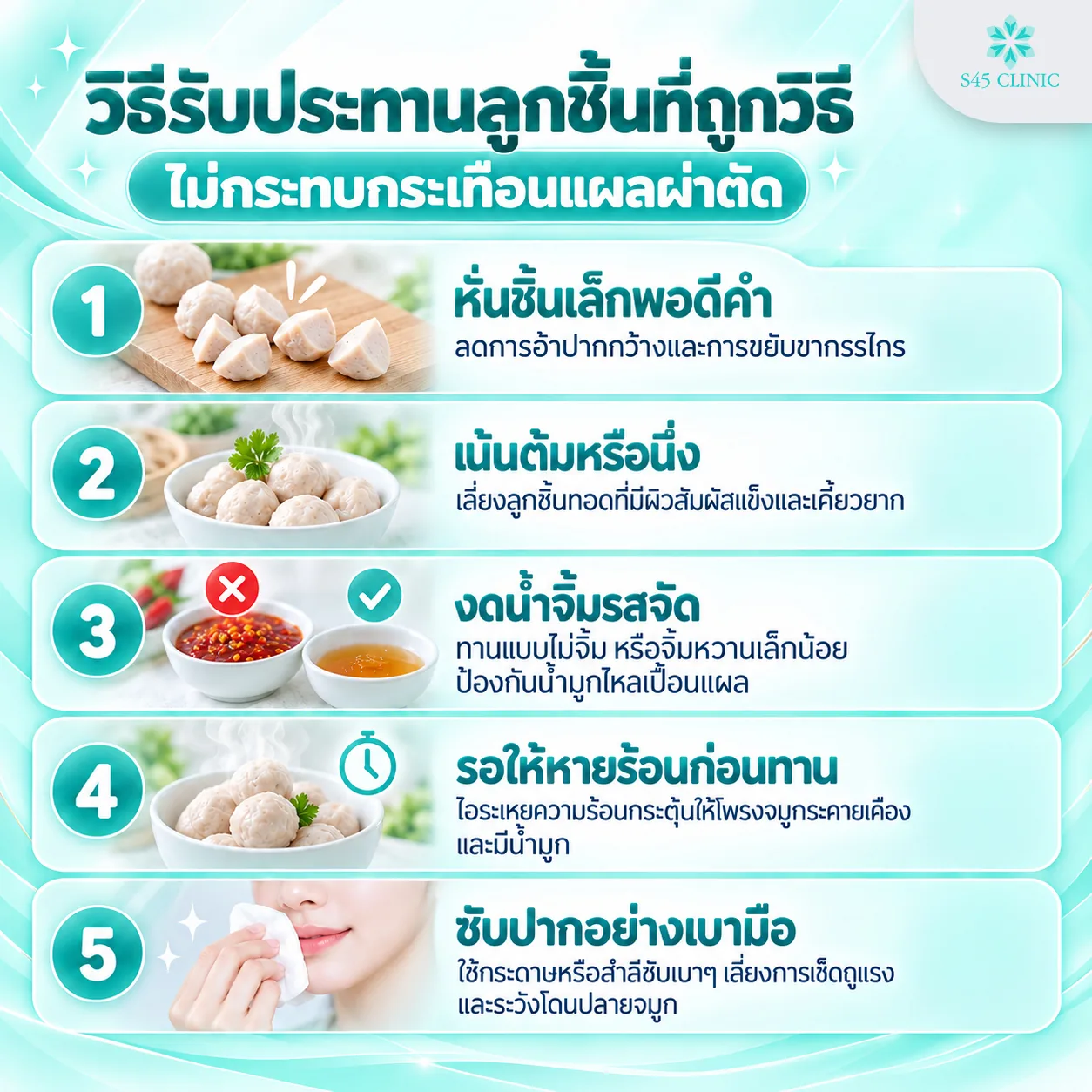
As well as choosing the right type of food, eating in the right way helps your surgical wound recover and lowers the chance of dirt reaching the stitches. To eat meatballs in the right way:
- cut meatballs into small, bite-sized pieces, so you do not need to open your mouth wide and your jaw muscles do less work
- choose boiled or steamed meatballs instead of fried ones, to avoid extra fat and a hard outer texture
- do not pour strong dipping sauce over them, and eat them without sauce or with only a little sweet sauce, to lower the chance of a runny nose
- let the food cool before eating, as hot steam from soup may irritate the inside of your nose and make it run
- dab food from around your lips gently with clean tissue or cotton wool, and avoid wiping hard or touching the tip of your nose
Follow-Up and Aftercare at S45 Clinic
Rhinoplasty and the care of complex cases rely on an individual assessment of your anatomy before the procedure starts, because each person’s existing bone structure, skin elasticity and thickness of the fat layer under the skin are different. The nose shape is planned to balance with the proportions of your face, together with stable cartilage support, so the result suits your existing anatomy.
At S45 Clinic, we place importance on follow-up checks and assessing your progress after surgery. Your doctor checks how your skin layers are recovering and how your nose is settling at every appointment, from checking how the outer wound edges are healing and removing your stitches, to follow-up visits to assess how the swelling is going down and how the skin around your nose is tightening, which helps ease your worries at each stage.
Beyond the surgery itself, how you look after yourself afterwards is another factor that affects the result. Doctors and the care team advise you on choosing food that is easy to chew, adjusting how you chew to reduce pulling on the base of your nose, and keeping the area around your lips clean, to lower the chance of irritation and inflammation and help your recovery go according to your care plan.
Frequently Asked Questions About Rhinoplasty and Eating Meatballs
Can You Eat Fried Puffed Fish Balls After Rhinoplasty?
Avoid fried puffed fish balls after rhinoplasty, because they are deep-fried until puffed up and crispy and hold a lot of oil. Their hard, crispy texture means they take a lot of chewing, which may put strain on the surgical wound.
Can You Eat Meatballs in Noodle Soup After Rhinoplasty?
Yes, you can, but choose soft meatballs and cut them into small pieces. Let the soup cool down first, and do not make it very spicy or very sour, to lower the chance of a runny nose.
Can You Eat Grilled Meatballs After Rhinoplasty?
Yes, you can eat grilled meatballs if they are soft and fully cooked all the way through, but watch out for burnt, charred parts from grilling, and do not pour fresh chilli sauce or strong dipping sauces over them.
I Accidentally Ate Tendon Meatballs. Will It Make My Nose Crooked?
Eating a small amount of tendon meatballs does not usually make your nose crooked or tilted directly. However, if you feel pain or soreness around the wound, stop eating them straight away, rest from chewing, and talk to the doctor who cares for you if the soreness does not improve.
Can You Eat Fish Balls From 7-Eleven After Rhinoplasty?
You can eat fish balls from a convenience store if you have no history of seafood allergy, but check the sodium content on the nutrition label, heat them until reasonably hot before eating, and do not dip them in very spicy sauce, to lower the chance of swelling from fluid retention and a runny nose.
Summary
Can you eat meatballs after rhinoplasty? Yes, you can, if you choose good-quality soft meatballs that are fully cooked, clean and cut into small, bite-sized pieces, to avoid chewing force that sends jolts to your new nose shape and the surgical wound.
Alongside this, the key points are to avoid very spicy dipping sauces and cut down on processed foods high in sodium, to lower the chance of swelling from fluid retention and of a runny nose getting onto the wound. If you have any questions or notice anything unusual, contact the doctor who cares for you promptly for the right advice.
Because every nose structure…
is different
An otolaryngologist with subspecialty training in facial plastic and reconstructive surgery assesses every case before treatment and gives advice based on your actual concerns.
“Reveal the beauty within you”
Message us online
Surgery and medical procedures carry risks. Find out about them and consult a doctor before you decide. Results depend on each person.