1 Month After Rhinoplasty, Is Your Nose Still Swollen? Symptoms You May Notice After Surgery
Example image used in advertising. Not a real patient.
Key points
- 1 month after rhinoplasty, swelling on the bridge has mostly started to go down and the nose shape starts to show, but some swelling may remain at the tip. This is part of the normal recovery process.
- The tip may feel tight or firm, or the skin there may feel numb. This comes from the skin layers adjusting around the implant material and small nerves recovering.
- Unusual signs that mean you need to see a doctor include severe, tight pain, redness and swelling inside the nostrils or at the tip, fluid or pus oozing out, a crooked or tilted bridge, or skin at the tip that becomes thin and see-through.
- In the first month, you still need to avoid knocks to your nose, sleep mainly on your back to reduce pressure, and talk to your doctor before you start wearing glasses or doing hard exercise.
Reaching 1 month after rhinoplasty is an important stage in your body’s recovery. But if you notice that your nose shape is still adjusting, or that your nose still feels tight, hard or numb and the swelling on each side has not gone down evenly, you may wonder whether these symptoms 1 month after rhinoplasty are a common part of normal wound healing or something that needs a medical assessment.
In this article, S45 Clinic brings together the symptoms used to assess nose recovery at 1 month, divided into common symptoms and symptoms to watch closely, with advice on daily life, to help you understand the stages of skin recovery and care for your nose shape properly throughout recovery.
In This Article
1 Month After Rhinoplasty, Which Symptoms Are Part of Normal Recovery?

When you reach 1 month after surgery, your body is still repairing and adjusting. Some symptoms may remain, such as a tip that still feels tight, swelling that looks uneven on each side, or a light tingling feeling. These are symptoms 1 month after rhinoplasty that people who have had surgery may have, and they come from the wound healing process.
What Causes a Tight, Firm and Numb Nose Tip at 1 Month?
A tip that feels tight and firm, with numbness in the skin, comes from the skin layers around the implant material adjusting and joining to their new position.
During surgery, the small sensory nerves at the tip may be disturbed, so they send fewer touch signals for a while. This can make the skin feel thick or numb when you touch it. These symptoms usually ease gradually as your blood circulation and nerves recover.
Is It Normal for Swelling to Remain and Look Uneven on Each Side?
A nose still swollen after rhinoplasty, with swelling that seems to go down unevenly on each side at 1 month, is common. The skin layers and small blood vessels on each side of the face may reduce swelling at different speeds, especially at the tip, which has oil glands and can hold fluid for longer than other areas. The nose shape you see at 1 month is therefore not yet settled, and it usually becomes tighter and more clearly defined at about 3 to 6 months, depending on each person’s body.
A Tingling Feeling When You Touch Your Nose or Move Your Face 1 Month After Rhinoplasty
A light, occasional tingling feeling on the bridge and tip may come from nerve endings recovering, starting to work again and responding as usual.
This feeling may happen for a while when you make facial expressions, smile widely or touch your nose lightly. If you do not have ongoing pain or soreness, redness and swelling, or a fever, these symptoms usually become less frequent over time.
Unusual Symptoms 1 Month After Rhinoplasty That Need a Doctor Promptly
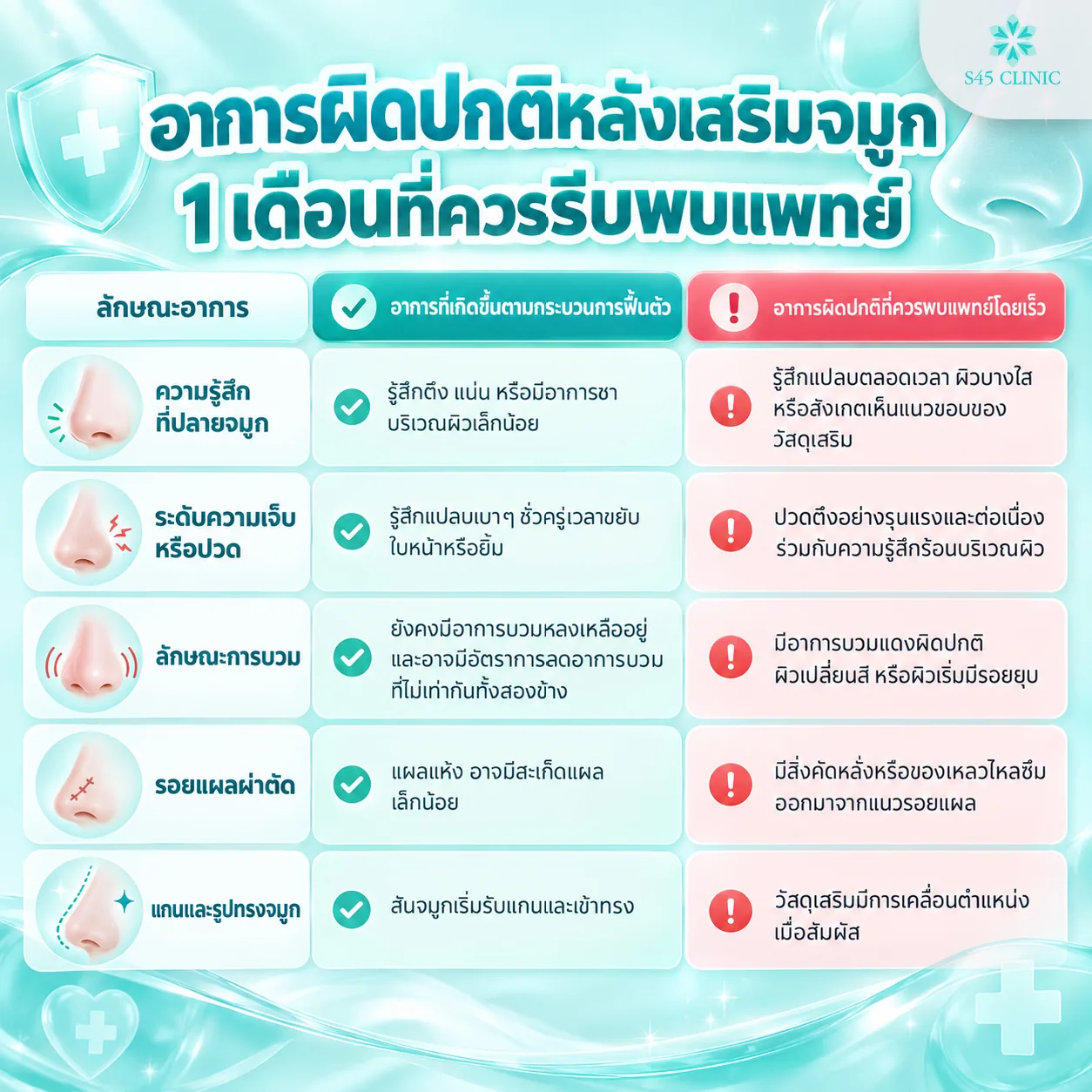
Although many symptoms are part of normal skin recovery, if you get a complication or notice anything unusual, seeing a doctor promptly for a diagnosis is an important step to lower the chance of damage to your nose shape.
| Feature | Symptoms of normal recovery | Unusual symptoms that need a doctor promptly |
|---|---|---|
| Tip sensation | Slight tightness, firmness or numbness of the skin | Constant tingling, thin see-through skin, or a visible edge of the implant material |
| Pain | A brief, light tingling when you move your face or smile | Severe, ongoing tight pain with a warm, hot feeling in the skin |
| Swelling | Some swelling remains, and it may go down at different speeds on each side | Unusual red swelling, skin changing colour, or skin starting to dent |
| Surgical scar | A dry wound, possibly with a few small scabs | Discharge or fluid oozing from the scar line |
| Nasal axis and shape | The bridge starts to settle and take shape | The implant material moves when touched |
Signs of Infection, Such as Throbbing Pain, Redness, Heat or Pus
Signs of a nose wound infection or inflammation at the surgical wound include:
- constant tight pain that gets steadily worse
- unusual redness and swelling of the skin on the bridge or tip, with the wound feeling warm or hot when touched
- cloudy yellow fluid or pus oozing from the surgical scar line
If you notice these symptoms, contact the clinic or hospital that cared for you promptly, as leaving them may affect how your skin recovers and the shape of your nose in the long term.
A Tilted Bridge, a Moving Implant or a Thin, See-Through Nose Tip
Physical changes such as the nasal axis tilting to one side, the implant moving when touched, or the skin at the tip becoming so thin that you can see the white shadow of the implant are signs of more pressure than usual under the skin.
In some cases, you may see a dark red patch at the tip, or the skin at the tip may start to dent, which raises the chance of implant extrusion (the implant pushing through the skin). See a doctor promptly to assess the right care.
Why Nose Recovery at 1 Month Differs From Person to Person
How long your nose takes to recover and what recovery looks like differ from person to person, because of how complex the procedure was, your body’s existing condition, and how closely you follow your doctor’s advice during recovery.
Differences in Surgical Technique and the Materials Used in Rhinoplasty
The surgical technique affects how long the wound takes to recover and how quickly swelling goes down. Closed rhinoplasty uses small incisions inside the nostrils and causes less disruption to the skin, so recovery time is usually shorter. Open rhinoplasty that reshapes the bones and cartilage, or techniques that use rib cartilage, such as hybrid rib rhinoplasty and total rib rhinoplasty, are more extensive operations that need a longer time for wound healing and recovery after rhinoplasty.
Your Existing Skin and How Your Body Responds
Skin thickness and flexibility are other factors that affect how long your nose takes to settle. People with thick skin and many oil glands may have swelling for longer than people with thin skin, because the fat layer under the skin can hold more fluid. People with thin skin on the nose may see the bridge take shape sooner, but need to take more care with the level of pressure on the skin at the tip.
1 Month After Rhinoplasty, Can You Sleep on Your Side, Wear Glasses or Exercise Yet?
At 1 month after rhinoplasty, the skin layers and nasal axis are healing and settling more, so many people can go back to daily activities almost as usual, depending on their doctor’s assessment.
However, the nasal axis and implant material are still settling, so you still need to take care in daily life to lower the chance of pressure or knocks directly on the nasal axis. Here is what to know about common activities:
- Sleeping: sleeping on your back is still the most suitable position during this period. Wait for your doctor to assess you before you start sleeping on your side after rhinoplasty, and take care that your face does not press into the pillow.
- Wearing glasses: avoid wearing heavy prescription glasses or sunglasses, as they may press on the bridge of your nose. If you need to wear them, talk to your doctor first and choose lightweight frames.
- Exercise: you can do light exercise, such as brisk walking, but avoid hard exercise such as running or weightlifting, and contact sports.
- Makeup: you can wear makeup and wash your face as your doctor advises, but avoid pressing, massaging, rubbing or scrubbing the bridge and tip of your nose.
How to Care for Your Nose in the First Month to Lower the Chance of Your Nose Shape Shifting
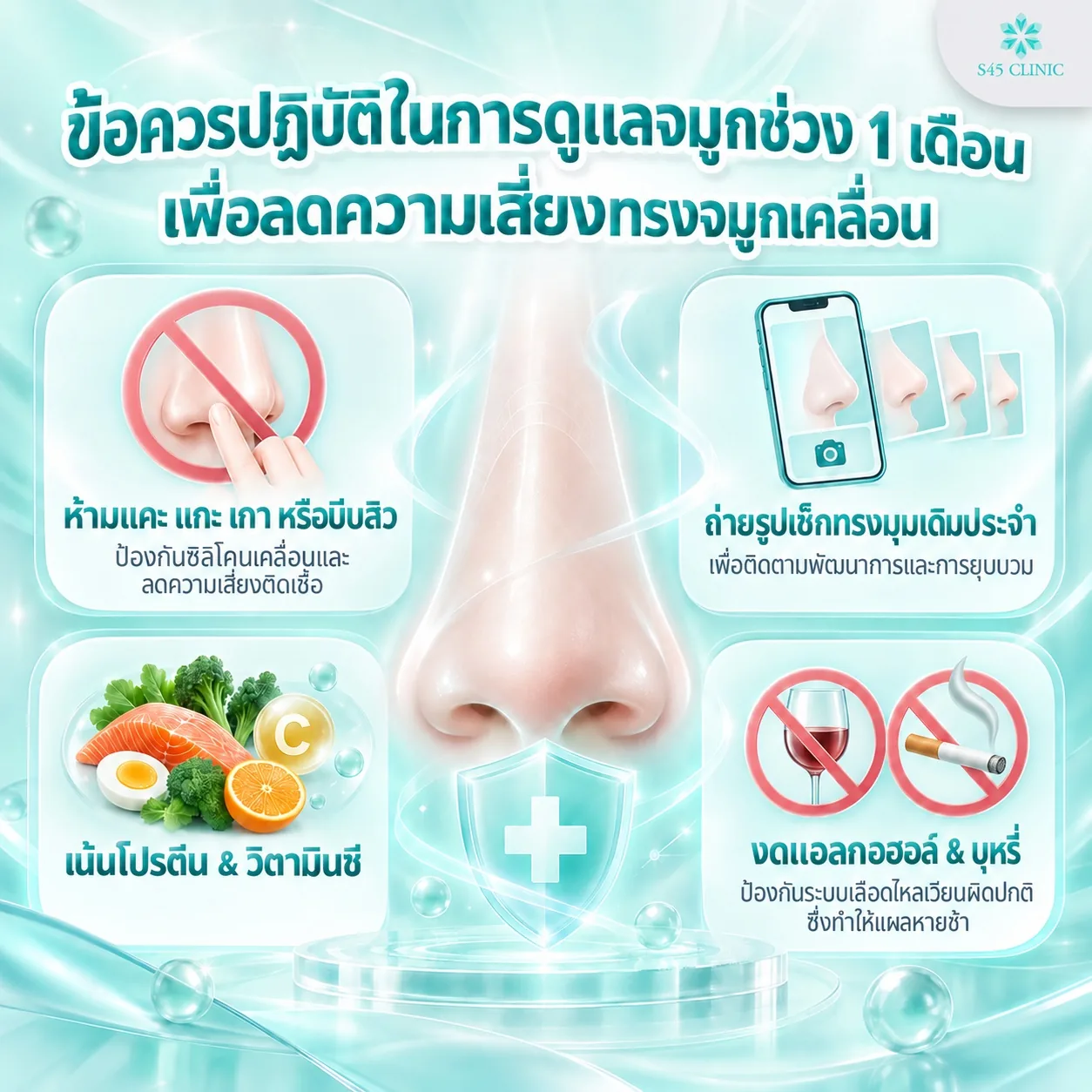
The first month after surgery is when the swelling in your nose starts to go down, and the skin layers and implant material still need time to keep joining together. Caring for your nose correctly in daily life is important for keeping its shape and helps lower the chance of the implant moving or of complications. To care for your nose:
- avoid picking, scratching or squeezing spots on your nose, as pressure may make the implant move and raise the chance of infection
- watch for changes in shape by taking photos from the same angle regularly, to follow how the swelling goes down each week
- eat a balanced diet, with food after rhinoplasty that includes protein, and fruit and vegetables with vitamin C, to support skin recovery
- avoid alcohol and smoking, as chemicals in alcohol and cigarette smoke disrupt blood circulation and slow wound healing
Nose Shape Assessment and Aftercare at S45 Clinic
Care and follow-up after rhinoplasty are important for how your nose settles, especially at 1 month, when the tissue starts to settle around the implant. At S45 Clinic, we place importance on assessing your progress from every angle, to help your nose shape recover properly.
Assessment of How Your Skin Layers Are Healing
At 1 month after rhinoplasty, the swelling in the skin layers starts to go down and the skin wraps closely around the implant. An assessment of your nose shape at this stage focuses on how the skin layers are healing, how dense the tissue is and how stable the cartilage framework is, to help the bridge and tip take shape in a way that suits each person’s anatomy.
Ongoing Follow-Up at Every Appointment
At S45 Clinic, we place importance on ongoing follow-up at every appointment. Your doctor checks how the swelling is going down on each side and how the skin at the tip is responding, and watches for any pulling under the skin. A careful assessment from the early stage helps your doctor advise you on self-care, rest and daily activities that suit your body, to help your nose settle as planned.
Self-Care and Lifestyle Advice for Each Person
Each person’s existing skin, tissue volume and surgical technique are different, so S45 Clinic focuses on individual care. You can talk to us and ask questions about the symptoms you notice each week, and get medical advice to help you care for your nose shape properly throughout recovery.
Meet the doctors who care for you: Our Doctors at S45 Clinic Bangkok
Frequently Asked Questions About Symptoms 1 Month After Rhinoplasty
1 Month After Rhinoplasty, Will the Swelling on the Bridge Go Down Any More?
Yes. The swelling on the bridge and tip can keep going down and tightening around the implant over time. The time it takes for the nose to settle and for the shape to become more clearly defined is about 3 to 6 months or longer, depending on each person’s body.
1 Month After Rhinoplasty, Can I Blow My Nose or Squeeze Spots on My Nose Yet?
Not yet. Do not blow your nose hard or squeeze spots on your nose, as the pressure and squeezing may disturb skin layers that are still joining together and raise the chance of bacteria getting into the nose, which may cause inflammation. If you have a runny nose, dab it gently with a cotton bud dipped in saline.
How Long Does It Take for a Rhinoplasty Scar to Fade?
The surgical scar slowly fades over about 3 to 6 months as part of the skin’s normal repair process. How long it takes depends on your existing skin and how you care for the wound after your stitches are removed. Applying scar-reducing medicine regularly, as your doctor prescribes, helps the wound heal better.
1 Month After Rhinoplasty, Can I Eat Pickled or Strongly Flavoured Food Yet?
Keep avoiding pickled food and strongly flavoured food for a while longer. Strongly flavoured food can trigger a runny nose, while pickled or uncooked food may carry a risk of contamination with germs, which may affect how your skin recovers.
What Should I Do If My Nose Gets Lightly Bumped 1 Month After Rhinoplasty?
If your nose gets lightly bumped, watch closely for a nosebleed, a swollen lump, or a crooked or tilted nose shape. If there is nothing unusual, apply a cold compress gently. If you feel severe, tight pain, contact the doctor who cares for you.
Do I Need to Massage a Tight Nose Tip at 1 Month?
No. Do not massage, bend or twist the tip of your nose yourself. Tightness is a normal reaction of skin layers that are adjusting and wrapping around the implant. Massaging without your doctor’s advice may make the implant move and change the shape of your nose. Wait for the skin to adjust and loosen gradually over the normal recovery time.
Summary
Most symptoms 1 month after rhinoplasty are part of the normal recovery of skin layers adjusting to the new shape. A tip that feels tight, firm or numb, or swelling that is slightly uneven, is common and usually improves gradually.
Watch for warning signs such as severe pain, red swelling, pus, or a bridge tilting to one side. If you notice any of these, contact a doctor promptly for the right advice and medical care.
Because every nose structure…
is different
An otolaryngologist with subspecialty training in facial plastic and reconstructive surgery assesses every case before treatment and gives advice based on your actual concerns.
“Reveal the beauty within you”
Message us online
Surgery and medical procedures carry risks. Find out about them and consult a doctor before you decide. Results depend on each person.