Open Rhinoplasty (Open Nose Surgery), What It Is, Is It Dangerous and How It Differs From Closed Rhinoplasty
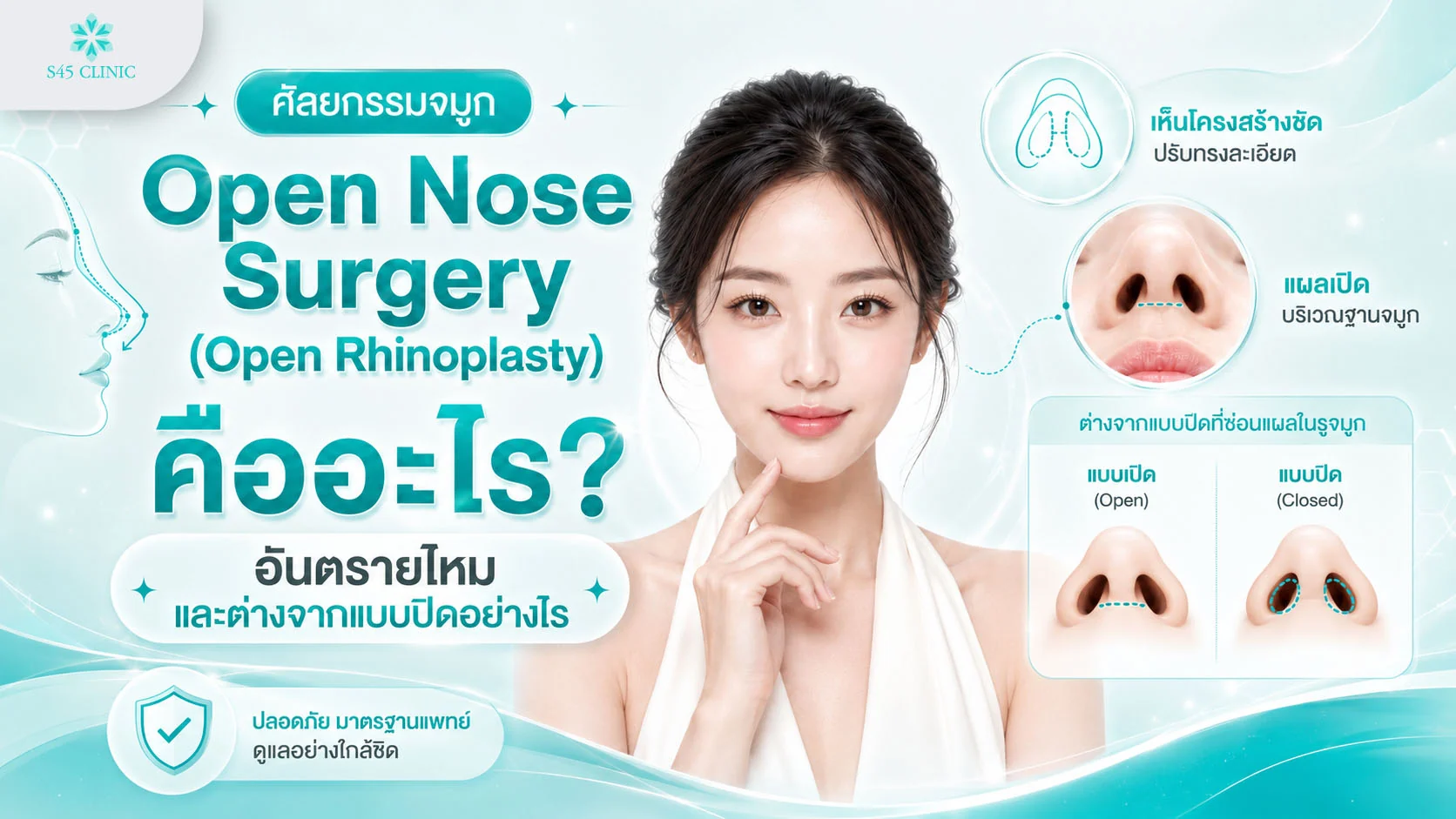
Many people who search for open nose surgery or rhinoplasty may be starting to research nose surgery and want to understand what the open technique is, how it differs from the closed technique, whether it is major or dangerous surgery, and whether it suits them.
Key points
- Open nose surgery, or open rhinoplasty, is a rhinoplasty technique in which a small incision is made at the base of the nose between the nostrils, so the surgeon can see the internal structure and reshape it in detail.
- There are 2 main types of nose surgery, open rhinoplasty and closed rhinoplasty, which differ in where the incision is and how much of the structure the surgeon can see.
- The open technique suits cases that need structural changes, such as a crooked nose, a short nose, a dorsal hump, thin nasal soft tissue or revision cases.
- It is surgery done under general anaesthetic and it carries the same risks as other surgery. How complex it is depends on each case, so it should be done by an experienced surgeon at a medical facility that meets medical standards.
- You are under general anaesthetic during the operation, so you are not awake. After surgery you may get some pain, tightness and swelling, which is normal for this procedure.
- The price of rhinoplasty in Bangkok and Thailand depends on the technique, the materials, how complex the case is and the surgeon who performs it. Ask the clinic directly for a price for your case.
This article brings together clear, straightforward information, from what open rhinoplasty is and how it differs from closed rhinoplasty, who it suits, its risks and how serious it is, its pros and cons, the steps, preparation and aftercare, to the price of rhinoplasty in Bangkok and Thailand, to help you decide with confidence.
In This Article
What Is Open Nose Surgery (Open Rhinoplasty)?
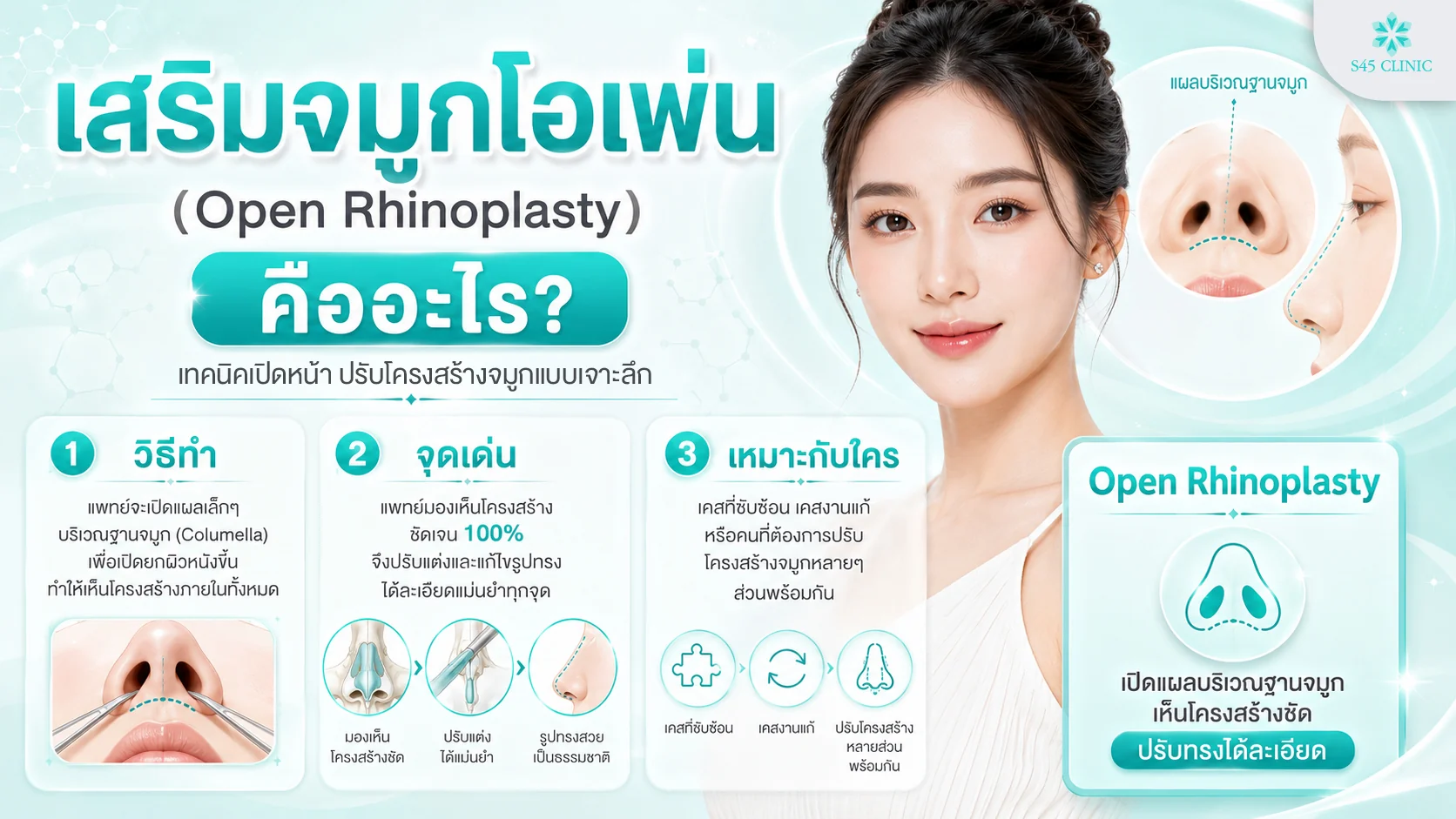
Open nose surgery, also called open rhinoplasty, is a rhinoplasty technique in which the surgeon makes a small incision at the base of the nose (the columella) between the 2 nostrils, together with incisions inside the nostrils, then lifts the skin so the whole internal structure of the nose can be seen.
As for what rhinoplasty is, in general it is surgery to change the shape or structure of the nose, and it can be done with several techniques. The open technique is one of the techniques that lets the surgeon see and adjust the structure in detail, so it suits cases that need several areas changed or complex cases.
The key feature of this technique is that when the surgeon can clearly see the internal structure, they can arrange the cartilage, adjust the nasal axis, refine the tip and place graft or implant material accurately in 1 operation. Read an overview of rhinoplasty at rhinoplasty (nose surgery)
How Many Types of Nose Surgery Are There, and How Do Open and Closed Differ?
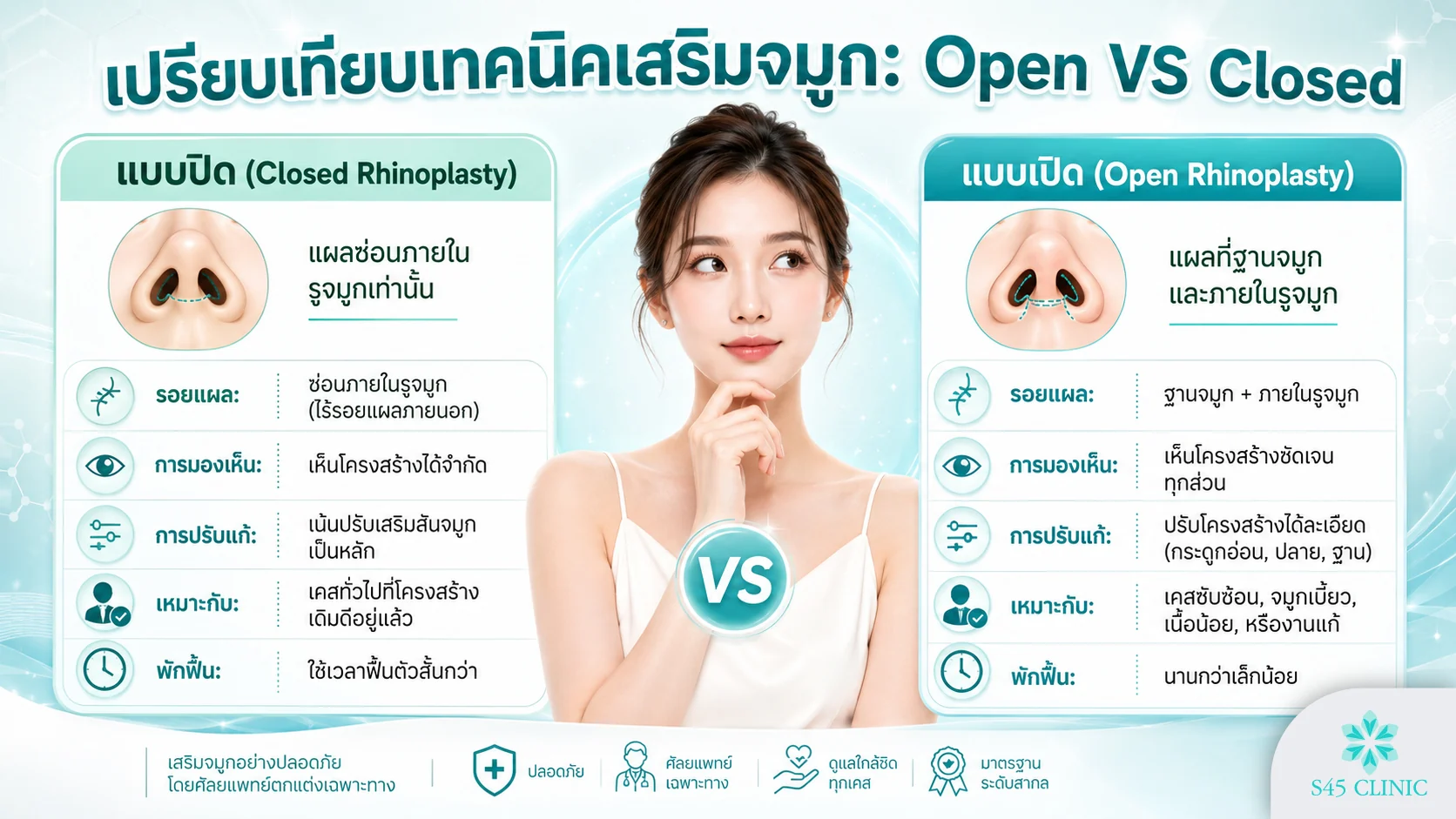
A common question is how many types of nose surgery there are. In general there are 2 main techniques, open rhinoplasty and closed rhinoplasty. Both aim to give the nose a good shape that suits the face, but they differ in where the incision is and how much of the structure the surgeon can see.
The closed technique uses incisions only inside the nostrils, so the incisions are inside and cannot be seen from outside. It suits cases where the existing nose structure is already good and only a small change to the bridge is needed. The open technique suits cases that need several parts of the structure changed, because the surgeon can see the whole picture more clearly.
| Details | Open rhinoplasty (open) | Closed rhinoplasty (closed) |
|---|---|---|
| Incision position | Base of the nose between the nostrils plus inside the nostrils | Inside the nostrils (cannot be seen from outside) |
| View of the structure | Every part can be seen clearly | Limited view |
| How precisely it can be adjusted | Cartilage, tip and base can be adjusted in detail | Mainly suits changes to the bridge |
| Suitable cases | Complex cases, crooked noses, thin nasal soft tissue, revision cases | General cases with a good existing structure |
| Recovery time | Slightly longer | Shorter |
The choice of technique depends on your existing nose structure and your goals. No technique suits everyone, and an accurate assessment needs a direct examination by the surgeon.
Who Is Open Nose Surgery Suitable For?
In general, open nose surgery suits cases that need detailed changes to the nose structure, where the surgeon needs a clear view of the internal structure to make accurate corrections. Groups that can benefit include:
- cases with structural problems of the nose, such as a crooked nose, a short nose, a dorsal hump or a wide base
- cases with thin nasal soft tissue or who want a projected tip, where your own cartilage is needed to support the tip, see more at sloped nose with a projected teardrop tip
- revision cases where a previous operation had problems, such as a shape that does not suit the face or scar tissue, see more at contracted nose (revision cases)
- cases that want a specific shape achieved precisely, such as a projected tip or a teardrop tip, where the details need to be controlled
On the other hand, if the existing structure is good and you only want a small augmentation of the bridge, the closed technique may be more suitable and usually has a shorter recovery time. An accurate assessment needs a direct examination by the surgeon.
Is Open Nose Surgery Dangerous, and Is It Major Surgery?
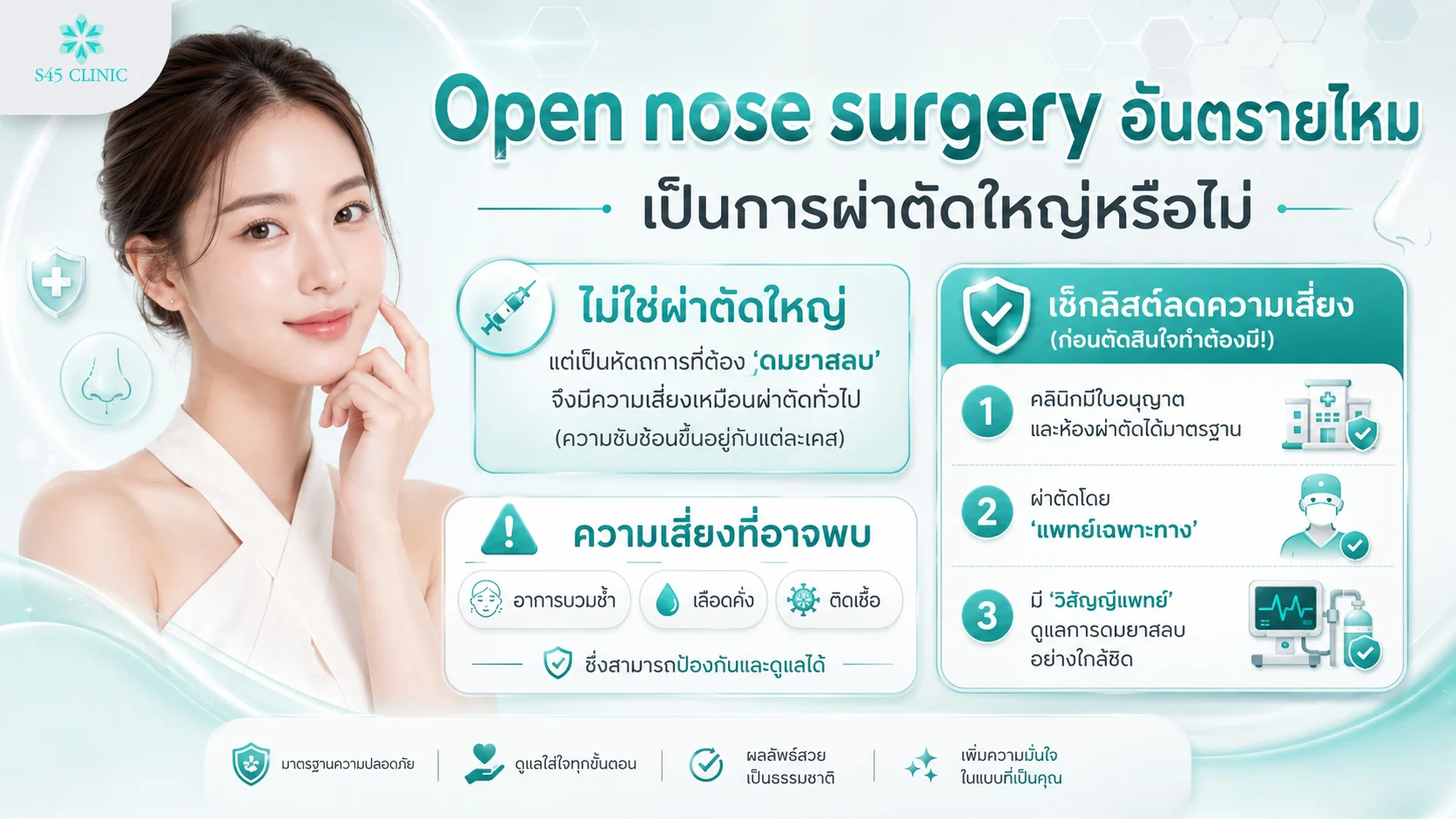
A question many people worry about is whether open nose surgery is dangerous and whether it is major surgery. The straightforward answer is that open rhinoplasty is surgery done under general anaesthetic and carries the same risks as other surgery, so it is not a procedure to take lightly. However, it is not classed as major surgery on the level of abdominal or internal organ surgery.
How complex it is depends on each case. Cases that need major structural changes, or revision cases, are more complex than general cases. Possible risks include infection, bruising and swelling, a collection of blood (haematoma), or a shape that has not yet settled in the early period. You can lower the chance of most of these by choosing a clinic that meets medical standards and following the surgeon’s advice.
To lower the risks of surgery, choose a medical facility with a valid licence, an operating theatre that meets medical standards, an anaesthetist team for cases under general anaesthetic, and care from an experienced surgeon trained in the relevant field who can assess the nose structure in detail.
Advantages of Open Rhinoplasty
The open technique attracts interest because it meets the needs of cases that require precision. The main advantages are:
- The whole structure can be adjusted in 1 operation, because the surgeon can see the internal structure clearly.
- The nasal tip can be worked on in detail, which suits creating a projected tip or a teardrop tip that needs precision.
- It helps lower the chance of the silicone implant pushing through the skin (implant extrusion) in the long term, when your own cartilage is used as a tip graft instead of letting the silicone touch the tip directly.
- It can handle complex revision cases, because the surgeon can see the actual internal condition and plan corrections accurately.
Disadvantages and Limitations of Open Nose Surgery
Besides the advantages, it is also important for your decision to understand the disadvantages honestly. They include:
- There is a small scar at the base of the nose, which fades over time with proper care, but it can still be seen in the early period.
- The operation and recovery take slightly longer than the closed technique, especially the swelling in the first week.
- It costs more than simpler techniques, because of the complexity of the technique and the general anaesthetic.
- It needs an experienced surgeon, because the result depends heavily on the surgeon’s assessment and skill.
Open Nose Surgery Steps
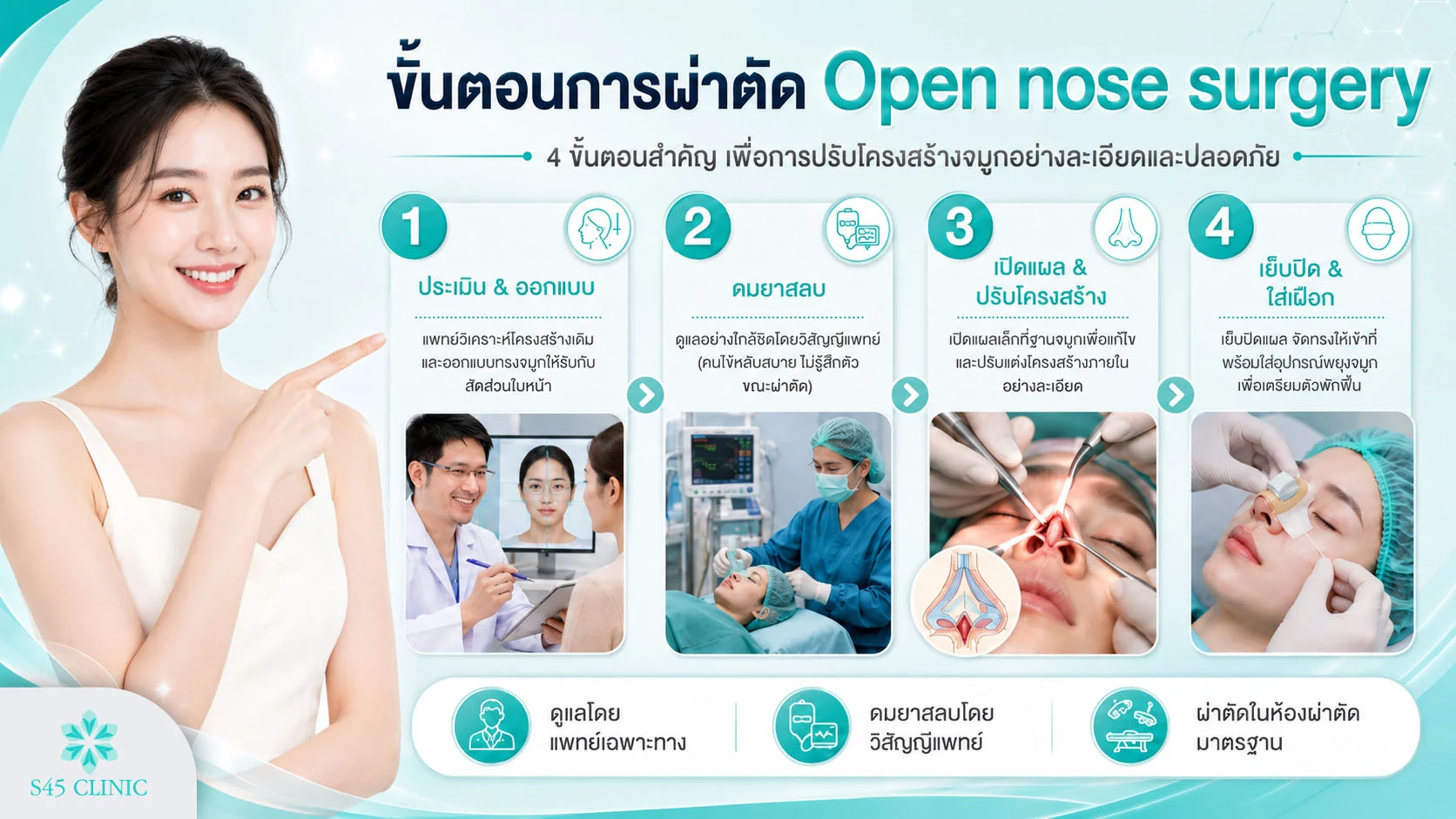
Although the details differ from case to case, the main steps of open nose surgery follow this order:
- Consultation and shape design The surgeon examines the nose structure and facial proportions, talks through your goals and designs a shape that suits your face.
- Preparation and general anaesthetic An anaesthetist looks after your general anaesthetic, and you are not awake for the whole operation.
- Incision and structural changes The surgeon makes a small incision at the base of the nose together with incisions inside the nostrils, lifts the skin to see the structure, then makes the planned corrections, such as adjusting the axis, refining the tip and placing graft or implant material.
- Closing the incision and fitting a support When the structure is in place, the surgeon closes the incision, puts the skin back in place and fits a support over the bridge (a nasal splint). Then the recovery period begins.
Preparation and Aftercare

Good preparation and proper aftercare help the operation go smoothly and support your recovery.
Before surgery, tell the surgeon about your health, including any long-term conditions, drug allergies and medicines you take. Stop smoking and drinking alcohol as the surgeon advises, and get enough rest.
After surgery, bruising and swelling usually improve within the first 1 to 2 weeks, the shape starts to settle within 1 to 3 months and fully settles in about 6 to 12 months, depending on each person. During recovery, keep the wound clean and follow the advice you are given, avoid knocks to the nose, avoid risky activities in the early period and attend your follow-up appointments. If you have unusual symptoms, such as a lot of swelling and redness, unusually severe pain or a fever, contact the surgeon straight away.
Open Nose Surgery Price in Bangkok and Thailand
People who search for rhinoplasty Bangkok or rhinoplasty Thailand often want to know the price first. The truth is that the price of open nose surgery varies with several factors, so it helps to understand them before comparing prices, and you can ask the clinic directly for a price for your case.
- Technique and complexity of the case. Structural or revision cases are more complex than general cases.
- Materials used. Silicone implant alone, compared with silicone combined with cartilage, or rib cartilage.
- The surgeon. The surgeon’s experience and field of training.
- Clinic standards. The licence, operating theatre and anaesthetist team.
Although Bangkok and Thailand are destinations many people consider for nose surgery, an unusually low price may reflect clinic standards or surgeon experience below the market level. For surgery with a long-term effect on your face, base your decision mainly on the service and the surgeon’s qualifications, not on price alone. See the overall price structure at rhinoplasty price
How to Choose Where to Have Open Nose Surgery
Choosing a clinic is as important a decision as choosing the technique, because the result depends on the surgeon’s assessment and skill. The criteria to consider are:
Criteria for Choosing a Clinic
- a valid licence, always check on the website of the Department of Health Service Support (DHSS) first
- operating theatre standards, with an anaesthetist team for cases under general anaesthetic
- transparent pricing, with a clear quotation and no charges added later
- a clear follow-up system, with follow-up appointments and aftercare
Qualifications the Surgeon Should Have
The surgeon should be experienced and trained in the relevant field, in particular otolaryngology (ear, nose and throat) with sub-specialty training in facial plastic and reconstructive surgery, which relates directly to the structure of the nose. For information on the procedure from an international perspective, read the ASPS Rhinoplasty Overview
Why Choose Open Nose Surgery at S45 Clinic
Open nose surgery needs careful design of the structure, bridge and nasal tip to suit each person’s face. S45 Clinic is a medical clinic that provides rhinoplasty, designing each shape for the individual rather than using a ready-made template, under our promise “Because all beauty comes from care”.
Surgeons Trained in the Relevant Field
Our surgeons are otolaryngologists with sub-specialty training in facial plastic and reconstructive surgery, ready to assess your nose structure and design a shape that suits your facial proportions.
Open Rib Rhinoplasty Technique
S45 Clinic uses the open rib rhinoplasty technique, which uses rib cartilage to build the nose structure. It suits cases that need a structure intended to last in the long term, cases with a flat nasal base, or cases with thin nasal soft tissue that need firm support for the tip.
Operating Theatre Standards and Aftercare
Our operating theatre meets medical standards, with an anaesthetist team providing one-to-one care for cases under general anaesthetic, and an aftercare system to follow up after the procedure, to help the result match the plan as closely as possible.
FAQ, Frequently Asked Questions About Open Nose Surgery
What Is Open Rhinoplasty?
It is a rhinoplasty technique in which a small incision is made at the base of the nose between the nostrils, so the surgeon can see the internal structure and reshape it in detail. It suits cases that need structural changes or complex cases.
Is Open Nose Surgery Major Surgery?
It is surgery done under general anaesthetic and carries the same risks as other surgery, but it is not classed as major surgery on the level of internal organ surgery. How complex it is depends on each case, so it should be done by an experienced surgeon at a medical facility that meets medical standards.
How Dangerous or Serious Is Open Nose Surgery?
The risks are the same as for other surgery, such as infection, bruising and swelling, or a shape that has not yet settled in the early period. You can lower the chance of most of these by choosing a clinic that meets medical standards and following the surgeon’s advice.
How Many Types of Nose Surgery Are There?
In general there are 2 main types, open rhinoplasty and closed rhinoplasty, which differ in where the incision is and how much of the structure the surgeon can see. The surgeon will recommend the technique that suits your nose structure.
How Much Does Rhinoplasty Cost in Bangkok?
The price depends on the technique, the materials, how complex the case is and the surgeon who performs it, so there is no fixed price. Ask the clinic directly for a price for your case, and be careful of unusually low prices.
Does Open Nose Surgery Hurt?
You are under general anaesthetic during the operation, so you are not awake throughout. After surgery, when the anaesthetic wears off, you may get some pain, tightness and swelling in the early period, which is normal for this procedure and can be eased with medicine and proper care.
Summary
Open nose surgery, or open rhinoplasty, is a rhinoplasty technique in which a small incision is made at the base of the nose so the surgeon can see and adjust the internal structure in detail. It suits cases that need structural changes, such as a crooked nose, a short nose, thin nasal soft tissue or revision cases. Compared with closed rhinoplasty, the open technique gives a clearer view of the structure but the recovery is slightly longer.
In terms of risk, it is surgery done under general anaesthetic and carries the same risks as other surgery, but it is not classed as major surgery on the level of internal organ surgery, and how complex it is depends on each case. The price of rhinoplasty in Bangkok and Thailand depends on several factors, so ask for a price for your case. The most important thing is to choose an experienced surgeon trained in the relevant field and a clinic that meets medical standards, and to understand the pros and cons realistically, because the result depends on each person’s nose structure and facial proportions.
Because every nose structure…
is different
An otolaryngologist with subspecialty training in facial plastic and reconstructive surgery assesses every case before treatment and gives advice based on your actual concerns.
“Reveal the beauty within you”
Message us online
Surgery and medical procedures carry risks. Find out about them and consult a doctor before you decide. Results depend on each person.