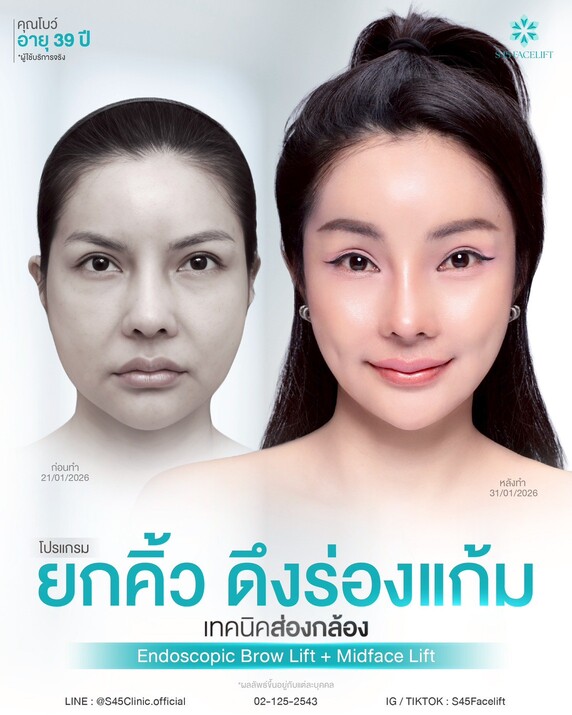
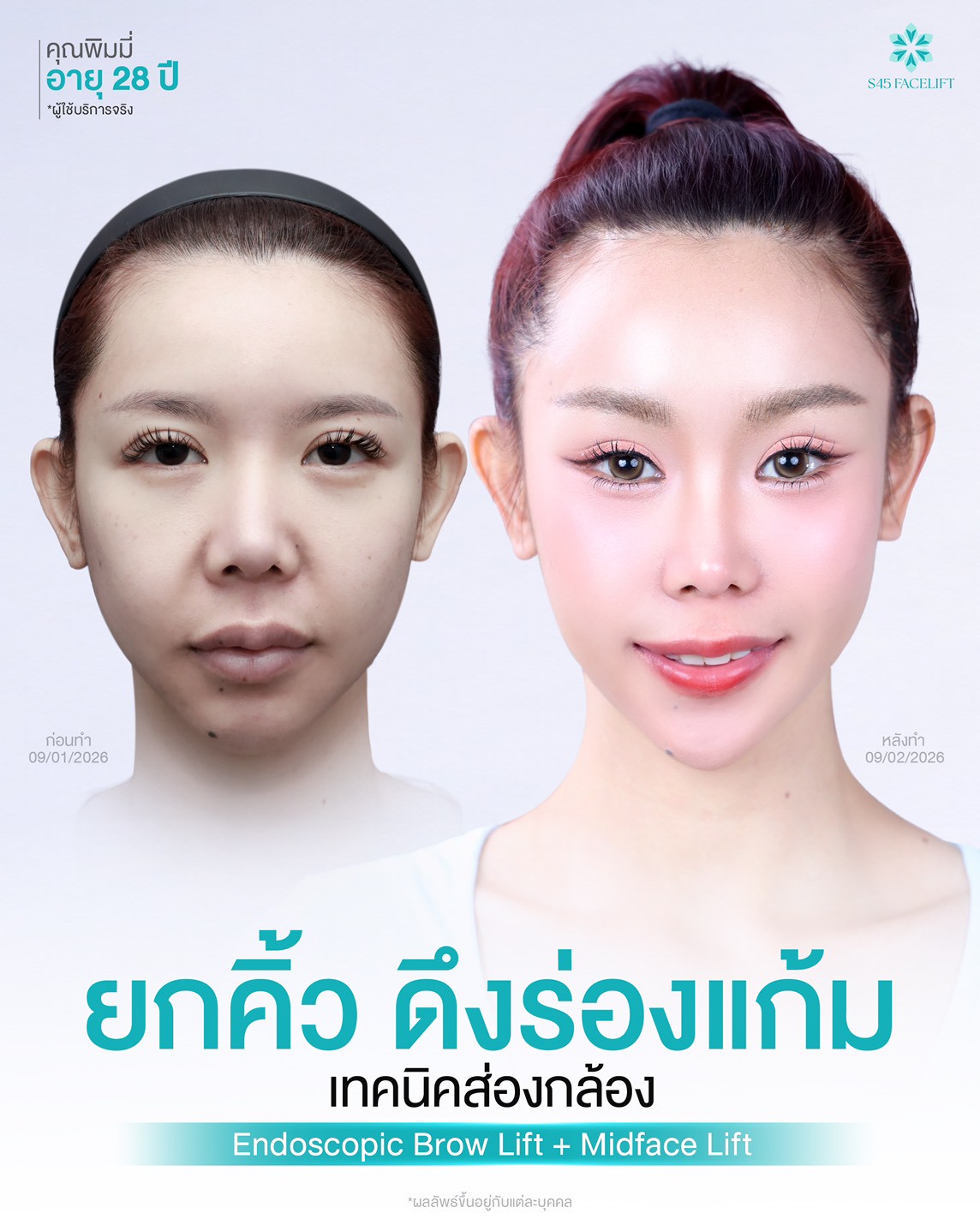
Why Choose S45 Clinic for a Brow Lift
If your face looks stern or tired because of drooping brows, drooping outer eye corners or deep forehead lines that make you look older or sad, an endoscopic brow lift and facelift is one option that can help lift the face. An endoscopic brow lift with Endotine, a fixation device, can help raise the brows to a suitable position for a more youthful look.
What Is an Endoscopic Brow Lift and Facelift, and How Can It Help?
An endoscopic brow lift and facelift is surgery to lift and tighten the skin and muscles of the forehead and brows, also called a forehead lift, and move them back to a more suitable position. It can help with drooping brows, drooping outer eye corners and forehead lines. The surgeon inserts an endoscope (a thin camera) through small incisions in the hairline to magnify the structures inside 10 to 15 times on an HD screen, which makes the surgery more precise.
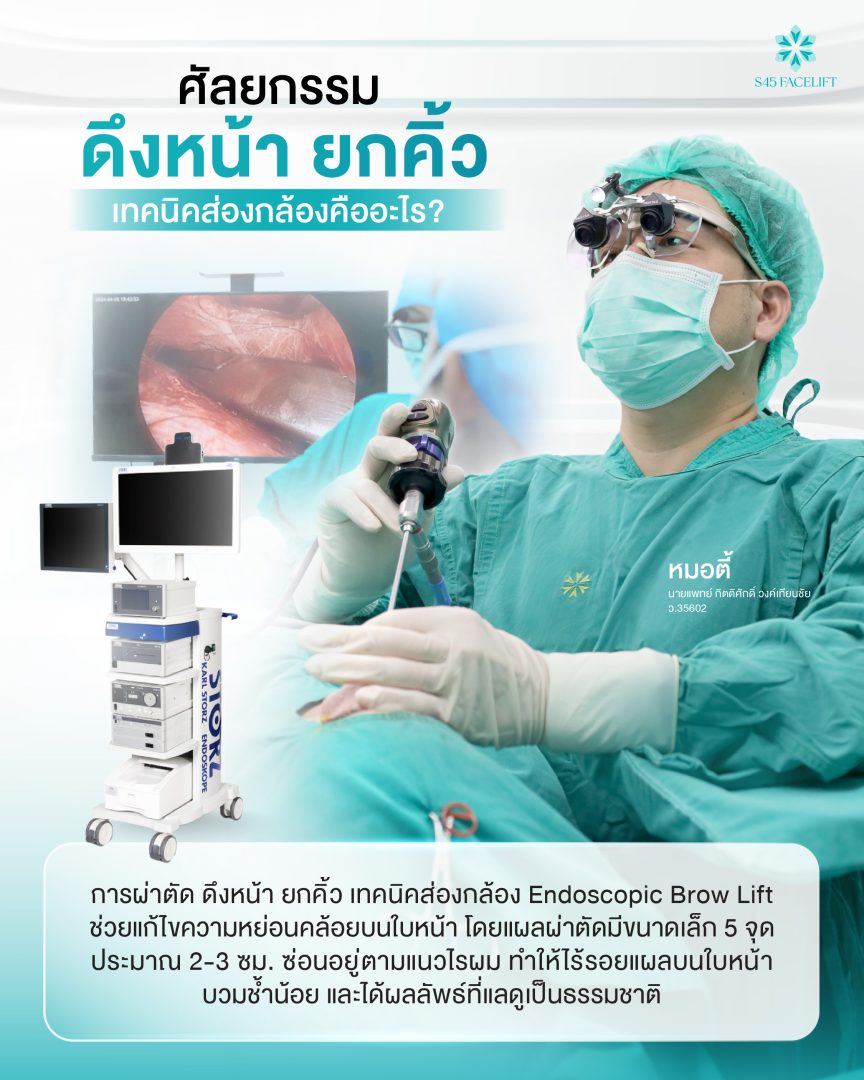
Advantages of an Endoscopic Brow Lift and Facelift
- Precision and a lower chance of nerve injury: the surgeon can see blood vessels and nerves clearly, which lowers the chance of cutting a nerve.
- No incisions on the face: the incisions are only 1cm to 2cm long (about 3 to 5 of them) and are hidden along the hairline.
- Recovery and swelling: because the incisions are small, there may be less swelling and bruising in some cases. Most people return to daily activities after 3 to 5 days of rest, depending on each person.
- Facial expression: the brows can be raised to a suitable position to help the face look brighter, and you can still make facial expressions.
Who an Endoscopic Brow Lift and Facelift May Suit

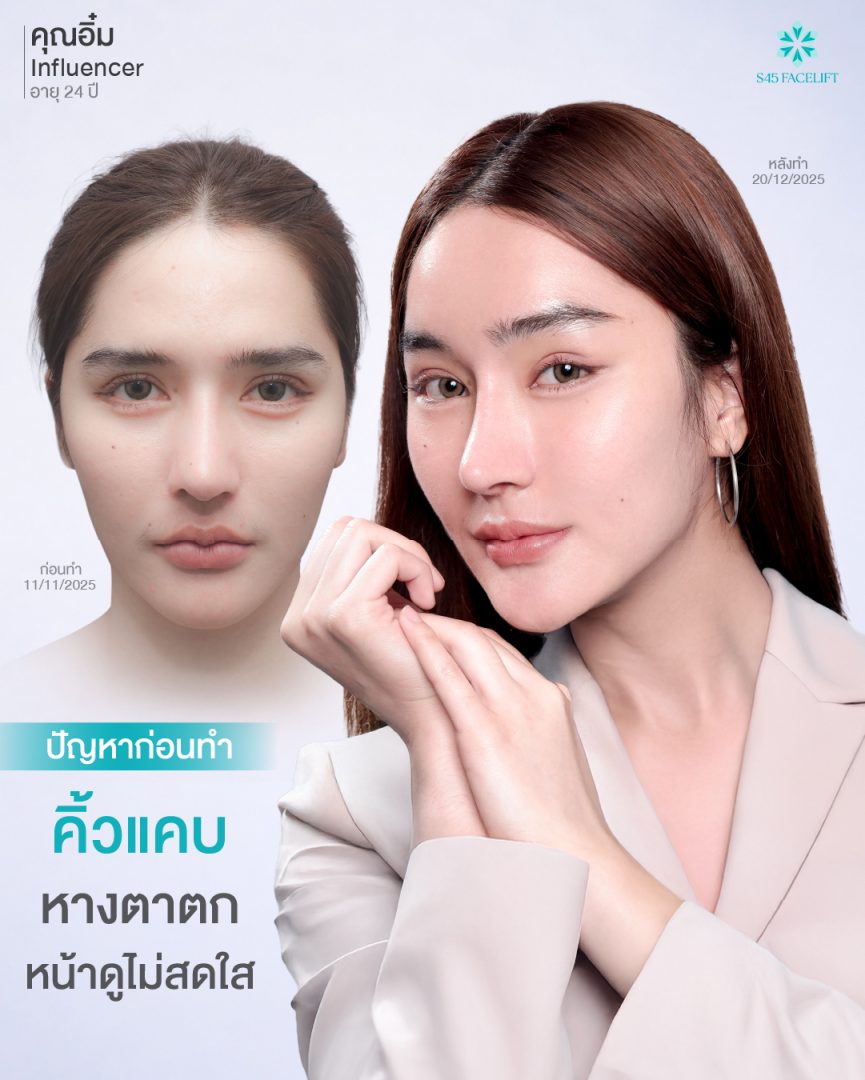
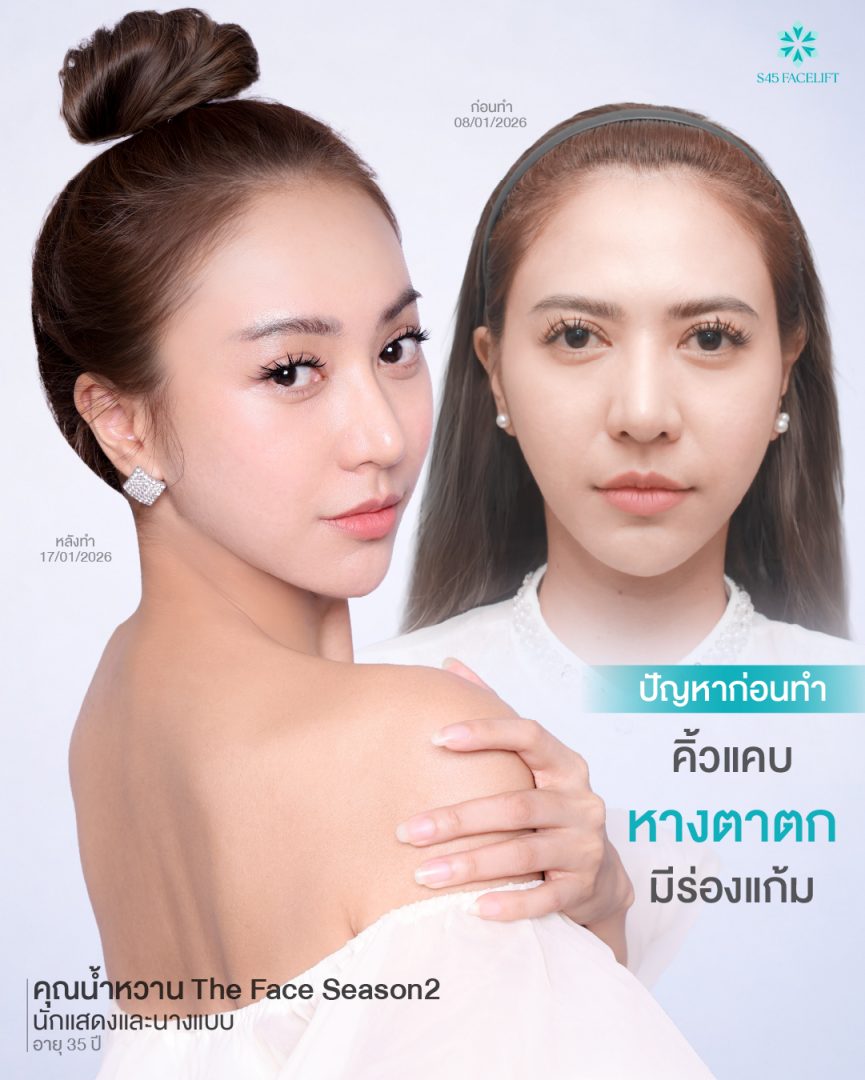

Who Is an Endoscopic Brow Lift and Facelift Suitable For?
- people with drooping brows or drooping outer eye corners, or a narrow space between the brows and the eyelid crease, which makes the face look stern or tired
- people with sagging eyelids, forehead lines, frown lines between the brows or deep nasolabial folds, which make the face look older
- people who want a long-lasting result
- people who want to change the look of their face to appear sharper and brighter
3 Fixation Materials for an Endoscopic Brow Lift and Facelift and Who Each Suits
Besides the surgical technique, another important factor in an endoscopic brow lift and facelift that affects how youthful the result looks, how long it lasts and how well it lifts is “the material used in surgery”. Your surgeon assesses your skin and concerns to choose the right material for you. There are 3 commonly used materials:

- Suture (a non-absorbable medical material): used in facelift and brow lift surgery for people aged 25 to 35 with mild to moderate sagging. It holds specific points well, and results can last around 5 to 8 years, depending on each person.
- Endofict (an absorbable medical material): used in facelift and brow lift surgery for people aged 30 to 45. It is a small anchor with tiny prongs that hold the tissue and spread the lifting force over a wide area, helping to hold the skin and muscles in place. Results can last around 8 to 10 years, depending on each person.
- Endotine (an absorbable medical material): suits all skin types, especially people with thick skin aged 35 to 65. Endotine is a medical device designed to grip the skin and spread the lifting force over a wide area, and it dissolves on its own within 6 to 12 months.
Which Procedures Can Be Combined With an Endoscopic Brow Lift and Facelift, Where Are the Incisions, and Why Combine Them?
An endoscopic brow lift and facelift can be combined with other procedures, such as frown muscle resection, midface lift, outer eye corner lift (Foxy Eyes), forehead augmentation and temple augmentation.
1. What is frown muscle resection?

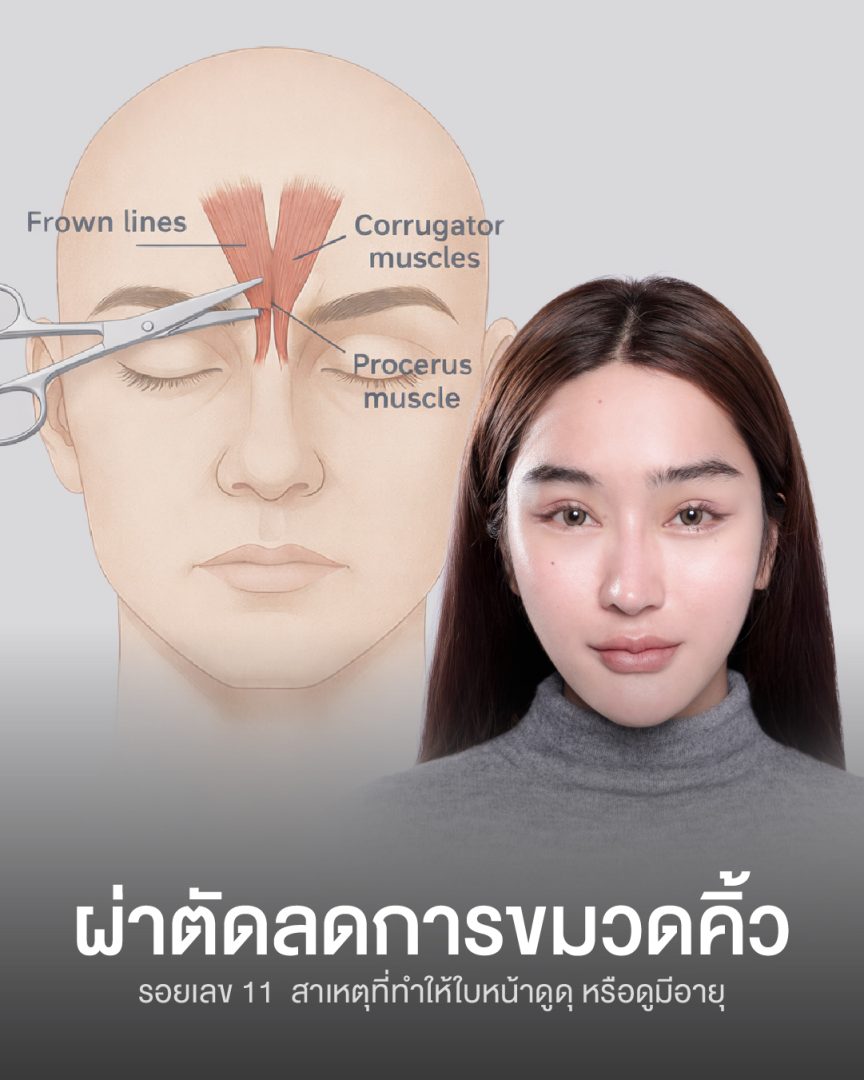
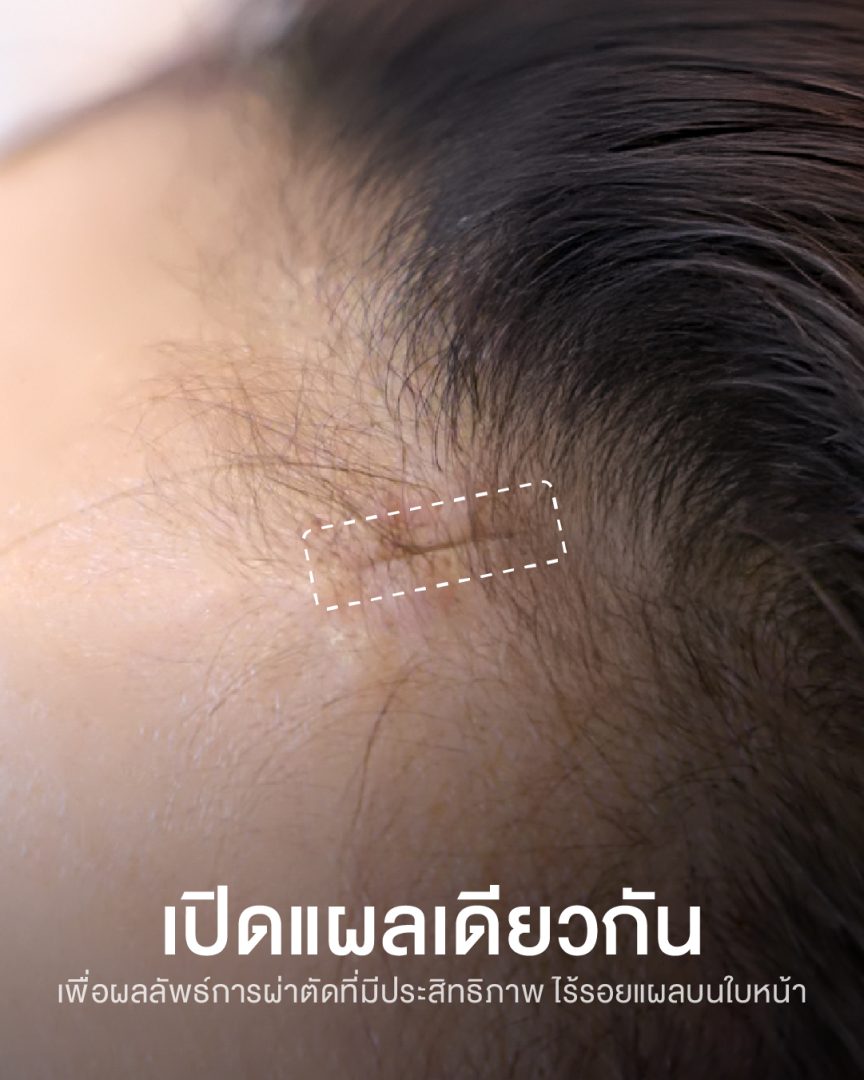
It is surgery to treat lines caused by the overactive muscles between the brows. The surgeon passes the endoscope through the same brow lift and facelift incisions and removes part of the muscle to reduce its movement, so you may not need regular botulinum toxin type A injections.
2. What is an outer eye corner lift (Foxy Eyes)?
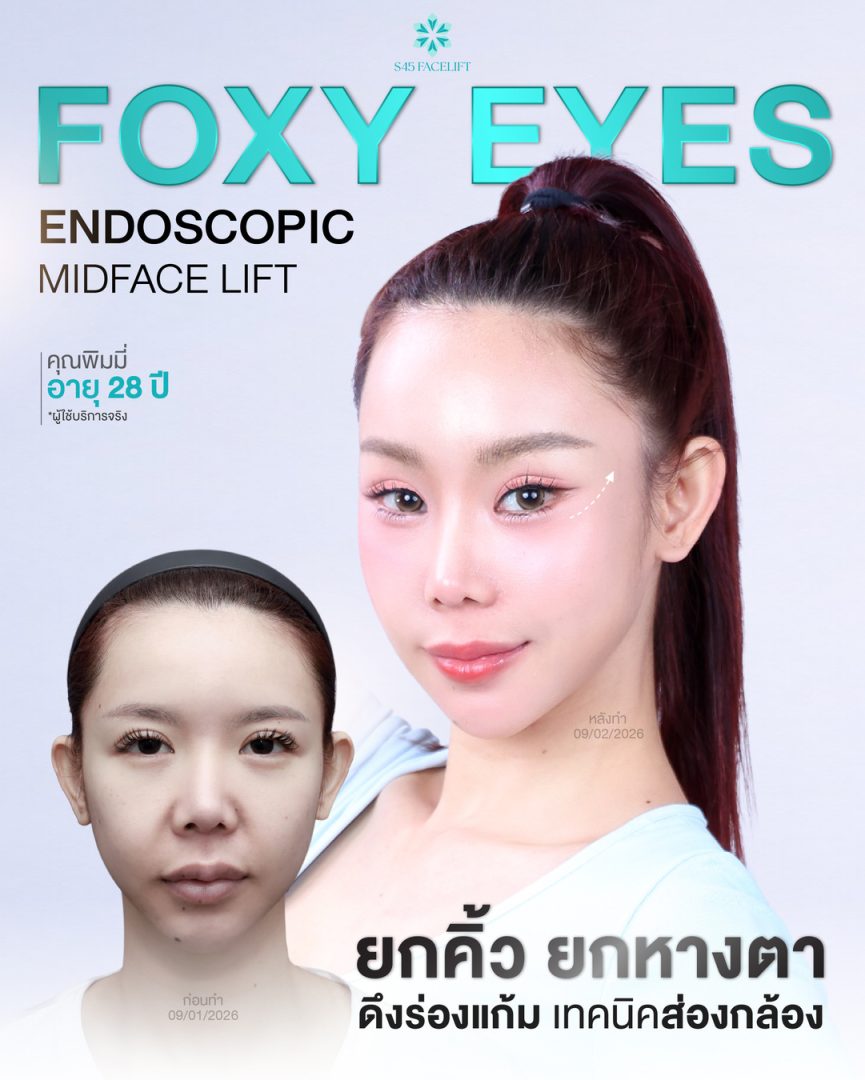
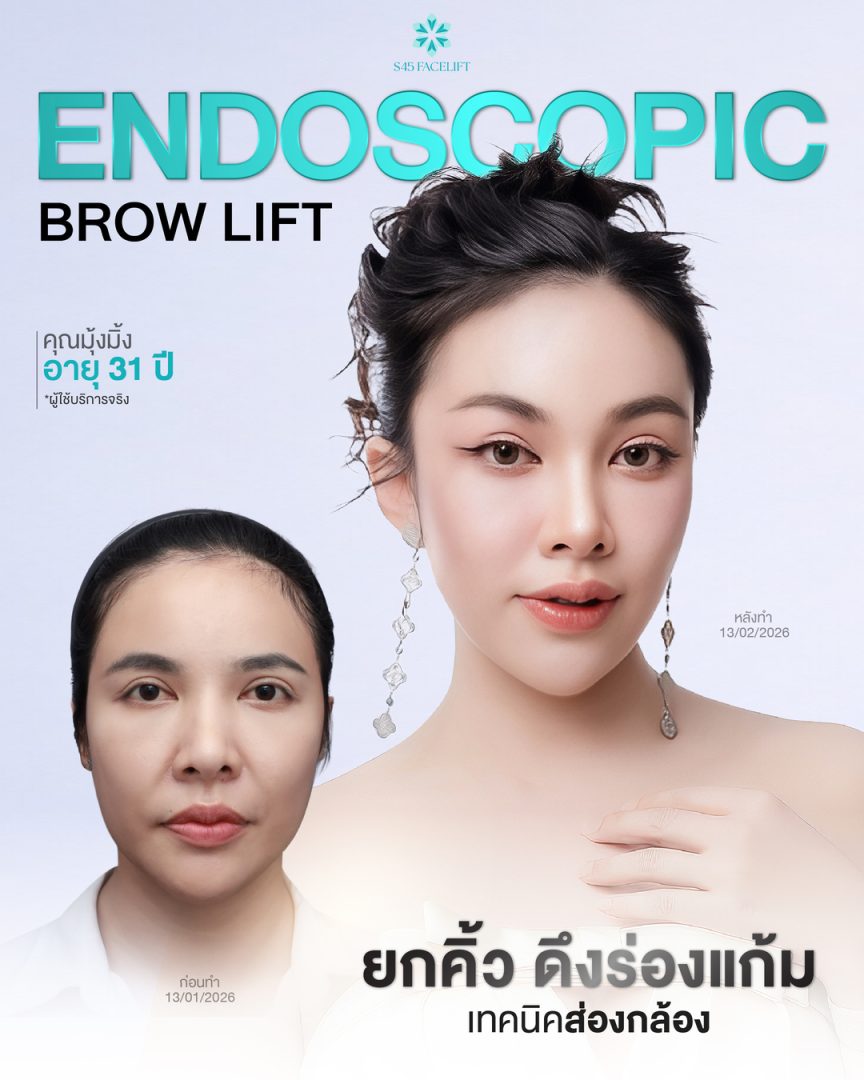

It lifts drooping outer eye corners and brow tails, which can make the eyes look sharper and brighter.
3. What is a midface lift and how many types of material are there?
A midface lift lifts sagging tissue in the middle of the face to soften deep nasolabial folds for a more youthful look. There are 3 types of medical fixation material used to hold tissue in an endoscopic lift:

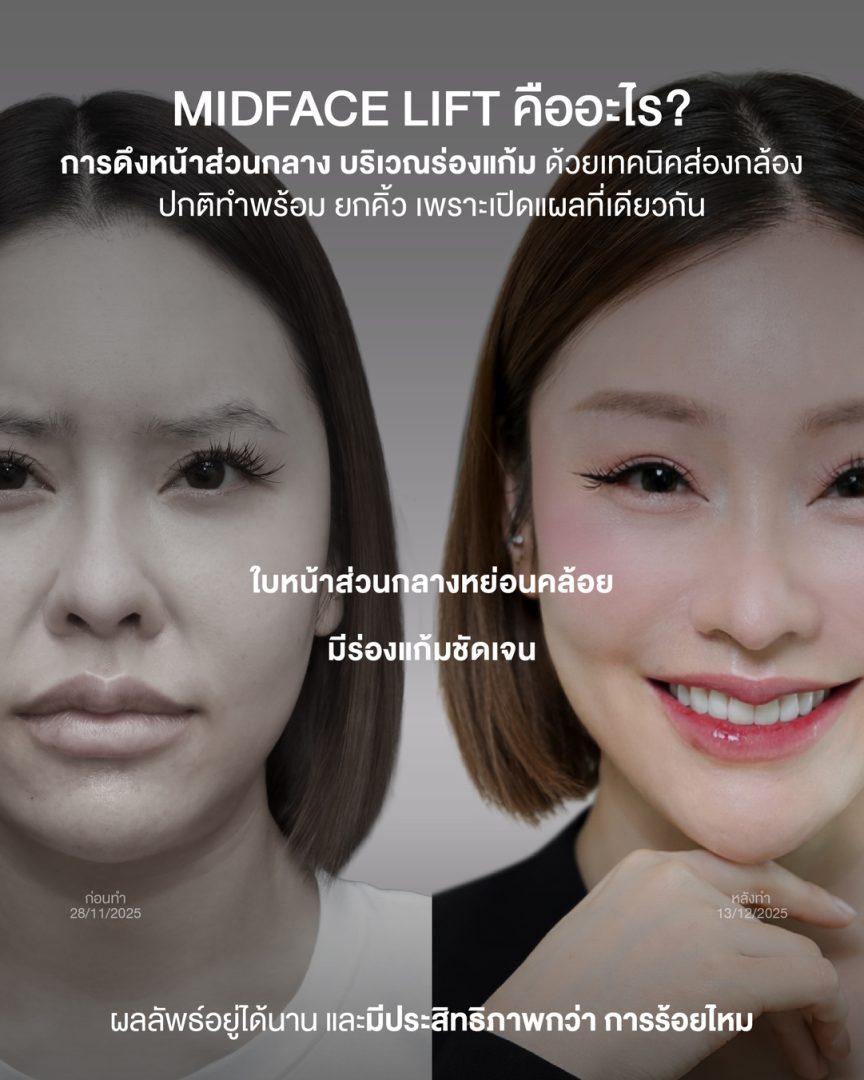
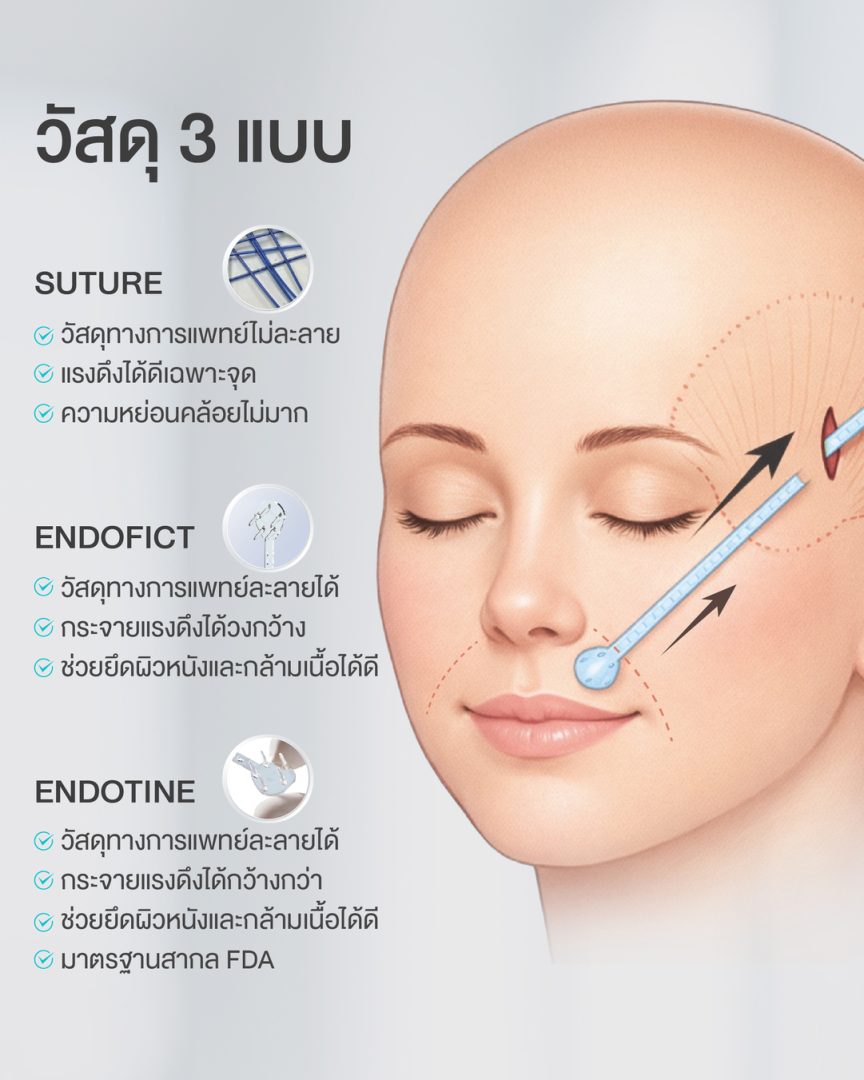
- Suture: suits people (aged 25 to 35) with mild sagging. It spreads the lifting force well at specific points and usually feels smooth, without visible bumps.
- Endofict: an anchor with protruding prongs that supports the skin and spreads the lifting force over a wide area. Results can last 5 to 10 years, depending on each person.
- Endotine: an anchor with protruding prongs that spreads the lifting force over a wide area and helps lift sagging skin. Results can last 10 to 15 years, depending on each person.
4. What are forehead and temple augmentation, and how many types of material are there?
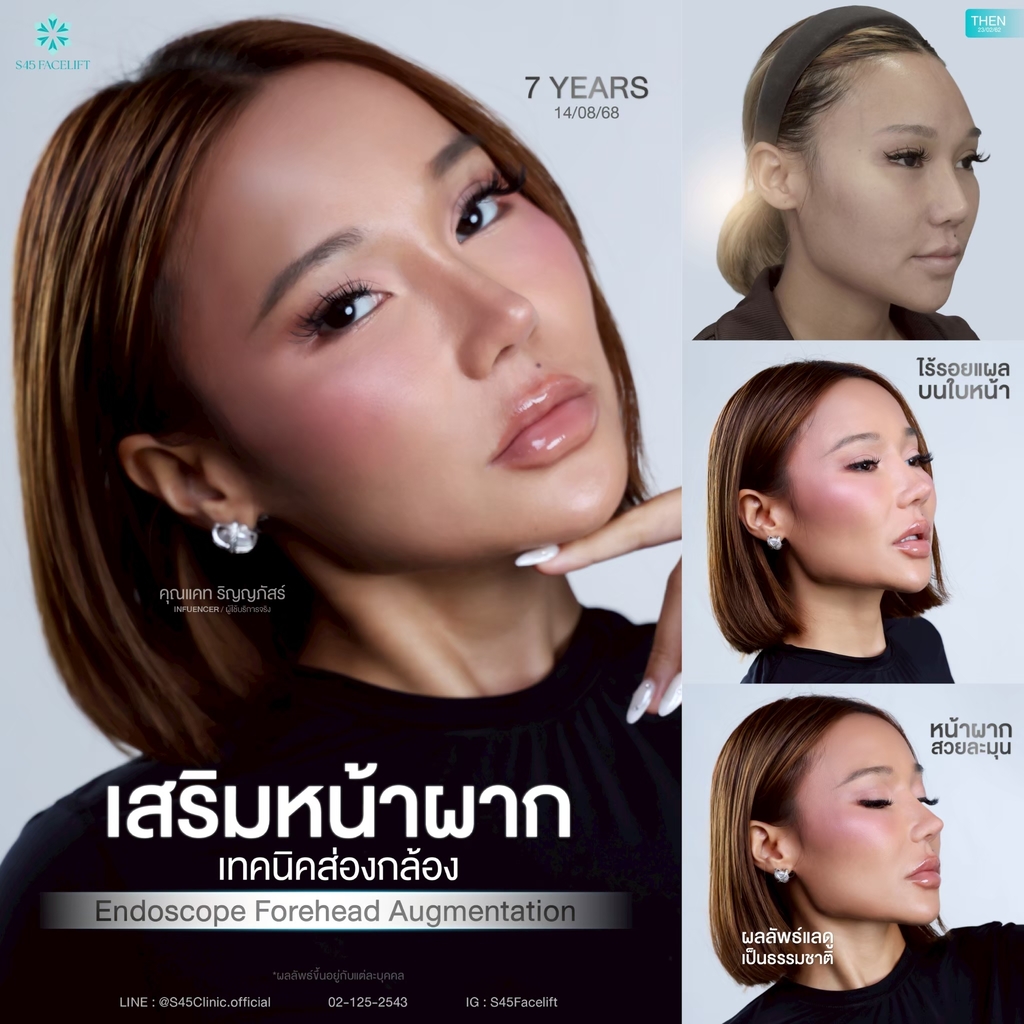
Forehead and temple augmentation is surgery to reshape the upper face and address a flat forehead or hollow temples, giving a rounded contour that suits the face.
S45 Clinic Uses 2 Materials:
- Custom silicone implant: the 4D CT FIT technique uses implant-grade material custom-made in Korea for each person from 3D CT scan images of the actual skull at 1:1 scale. The implant fits the forehead closely, which lowers the chance of it shifting or its edges showing.
- Ready-made silicone implant: available in 3 sizes, S, M and L, which the surgeon shapes to suit each person’s face.
Where Are the Brow Lift and Facelift Incisions?
The brow lift and facelift incisions are small, 1cm to 2cm long (about 5 of them), and hidden along the hairline: 2 to 3 at the top of the head and 2 at the temples. After a brow lift, the scars are usually hard to see.
Why Combine Procedures, and What Are the Advantages?
Some procedures can be done through the same incisions in the hairline, so no extra incisions are needed. This allows the procedures to be done in one continuous operation, reduces tissue injury and is more convenient for you.
Advantages of combining procedures
- a single general anaesthetic
- less total recovery time
- results planned together for a balanced look
- small incisions, with less swelling and bruising in some cases, and no incisions on the face
Which Previous Procedures Can Make Brow Lift Surgery More Difficult?
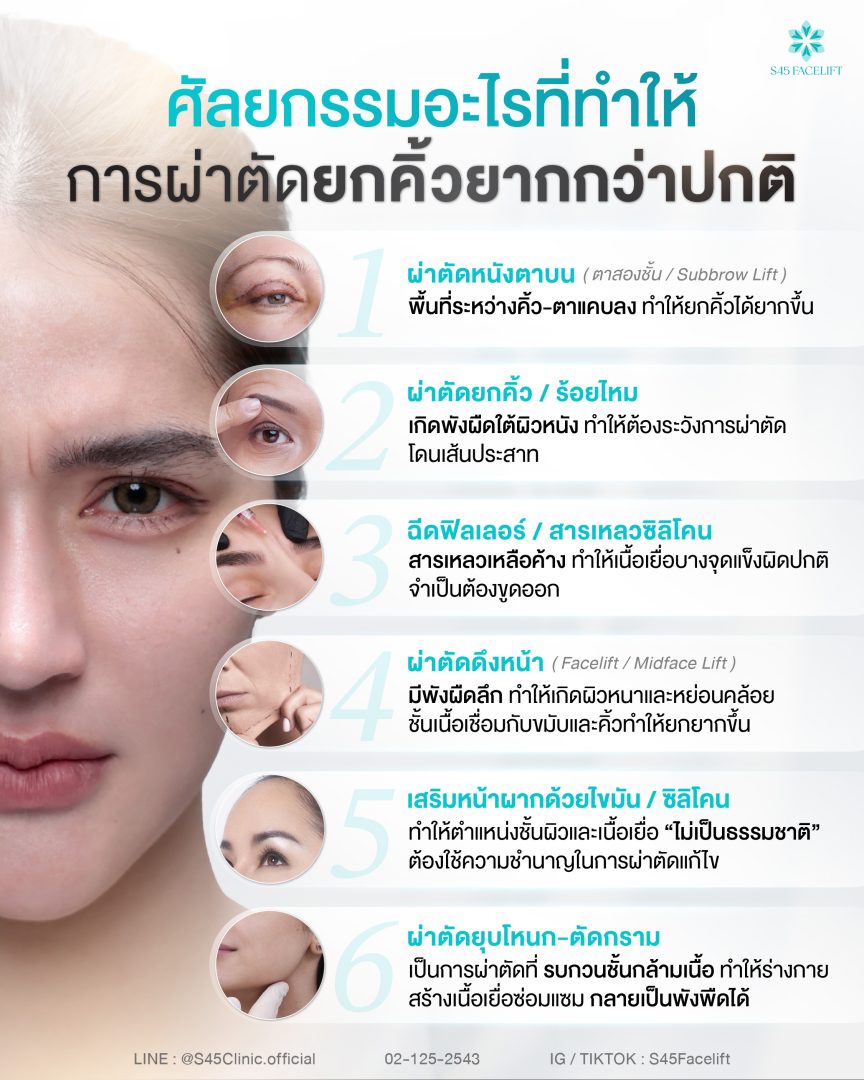
Previous procedures that can make brow lift surgery more complex and difficult include:
- Upper eyelid surgery (subbrow lift or double eyelid surgery) may leave scar tissue at the incision, so the tissue must be separated carefully, and there is less skin available for lifting. After surgery, you may not be able to close your eyes fully.
- A previous brow lift or thread lift may leave scar tissue under the skin, so the tissue must be separated carefully, and positioning the brows becomes more difficult.
- Filler injections or silicone injections in the forehead may change the tissue structure in that area, for example causing scar tissue, making the tissue layers harder to separate and making the tissue uneven.
- Facelift surgery (facelift or midface lift) may cause scar tissue in the layers under the skin, so the layers stick together more and are harder to separate in later surgery. The surgeon needs to operate with more care and planning.
- Forehead augmentation with a silicone implant or fat may leave scar tissue under the skin, so the tissue must be separated carefully, and positioning the brows becomes more difficult.
- Cheekbone and jaw reduction surgery can cause facial sagging, because the original facial structure has changed and scar tissue forms at the surgical site. The tissue must be separated carefully, which makes a facelift more difficult.
How Many Areas Can a Facelift Cover? The 4 Key Facelift Areas
An endoscopic brow lift and facelift can be planned to suit each person’s sagging skin. An Endotine facelift divides the lift into 4 key areas:
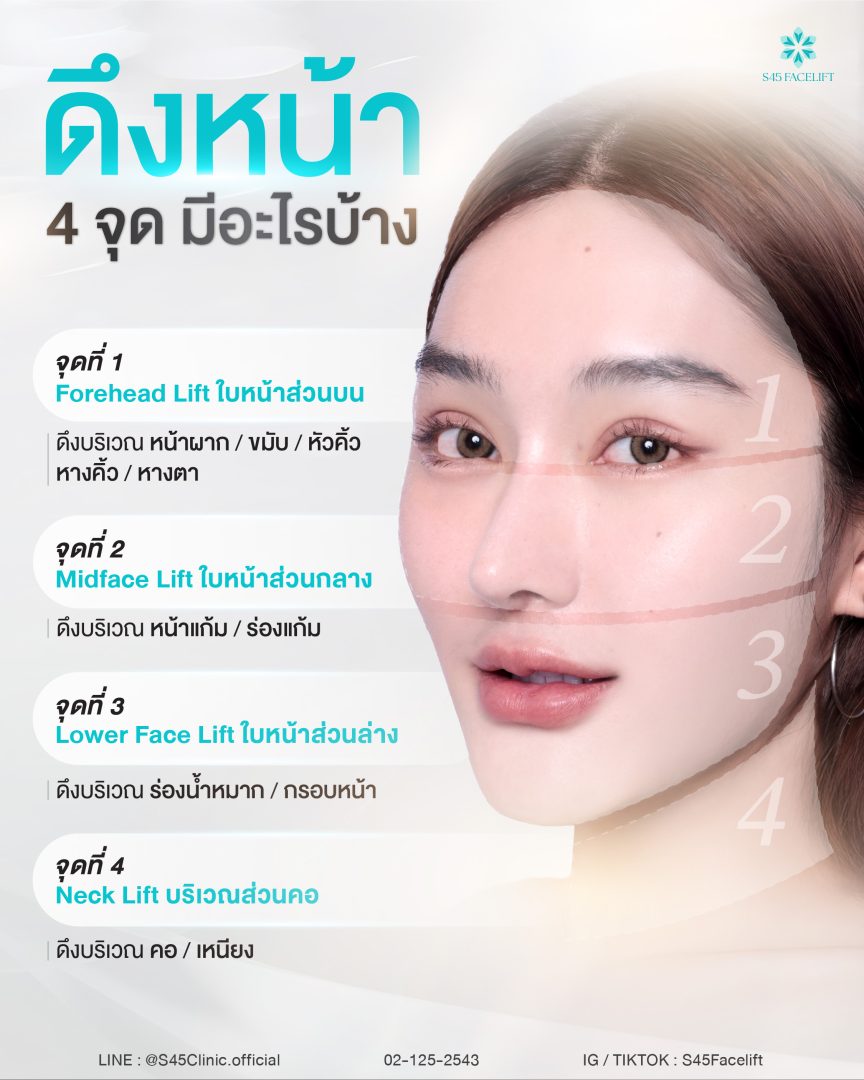
- Forehead lift (upper face): lifts the forehead, softens forehead lines and lines between the brows, and raises the brows so the face looks brighter and more youthful.
- Midface lift (middle of the face): lifts sagging cheeks and softens deep nasolabial folds for a more youthful look.
- Lower face lift (lower face): addresses sagging cheeks, nasolabial folds and marionette lines for a more youthful look.
- Neck lift (neck area): lifts the skin of the neck and under the chin, giving a more defined and slimmer jawline.
Preparation and Aftercare for an Endoscopic Brow Lift and Facelift
Preparing for an endoscopic brow lift and facelift
- Always tell your surgeon about any medical conditions, drug allergies, previous surgery and liquid injections.
- Stop aspirin, vitamins and supplements that affect blood clotting for at least 2 weeks.
- Stop smoking and drinking alcohol for at least 2 weeks.
- Do not eat or drink for at least 8 hours before surgery (because you will have a general anaesthetic).
Advice: before your brow lift and facelift, discuss the results you want and the surgical technique in detail with your surgeon at your consultation, so the treatment suits your facial structure.
Aftercare following an endoscopic brow lift and facelift

- Sleep with your head raised or on a high pillow for at least 2 weeks.
- Use cold compresses on the treated area consistently for the first 3 to 7 days to reduce swelling.
- Take your medicine exactly as your surgeon prescribes, and attend your follow-up appointments.
- For the first 1 to 3 days, you may have a drain to remove blood, and lymphatic drainage massage of the face may be recommended.
- Do not wash your hair for the first 3 to 10 days, to keep the wound dry and lower the chance of infection (as assessed by your surgeon).
- Avoid pickled and fermented foods, strongly flavoured foods, seafood, smoking and alcohol for at least 1 month.
- Recovery takes about 2 to 4 weeks. Swelling goes down gradually, and results become clearer over 3 to 6 months.
After a brow lift and facelift, attend every follow-up appointment and follow your aftercare advice closely. This helps the wound heal well, lowers the chance of infection and helps the treatment go as planned.