First Rhinoplasty With Semi-Open, Who Is It for and What to Know Before Surgery

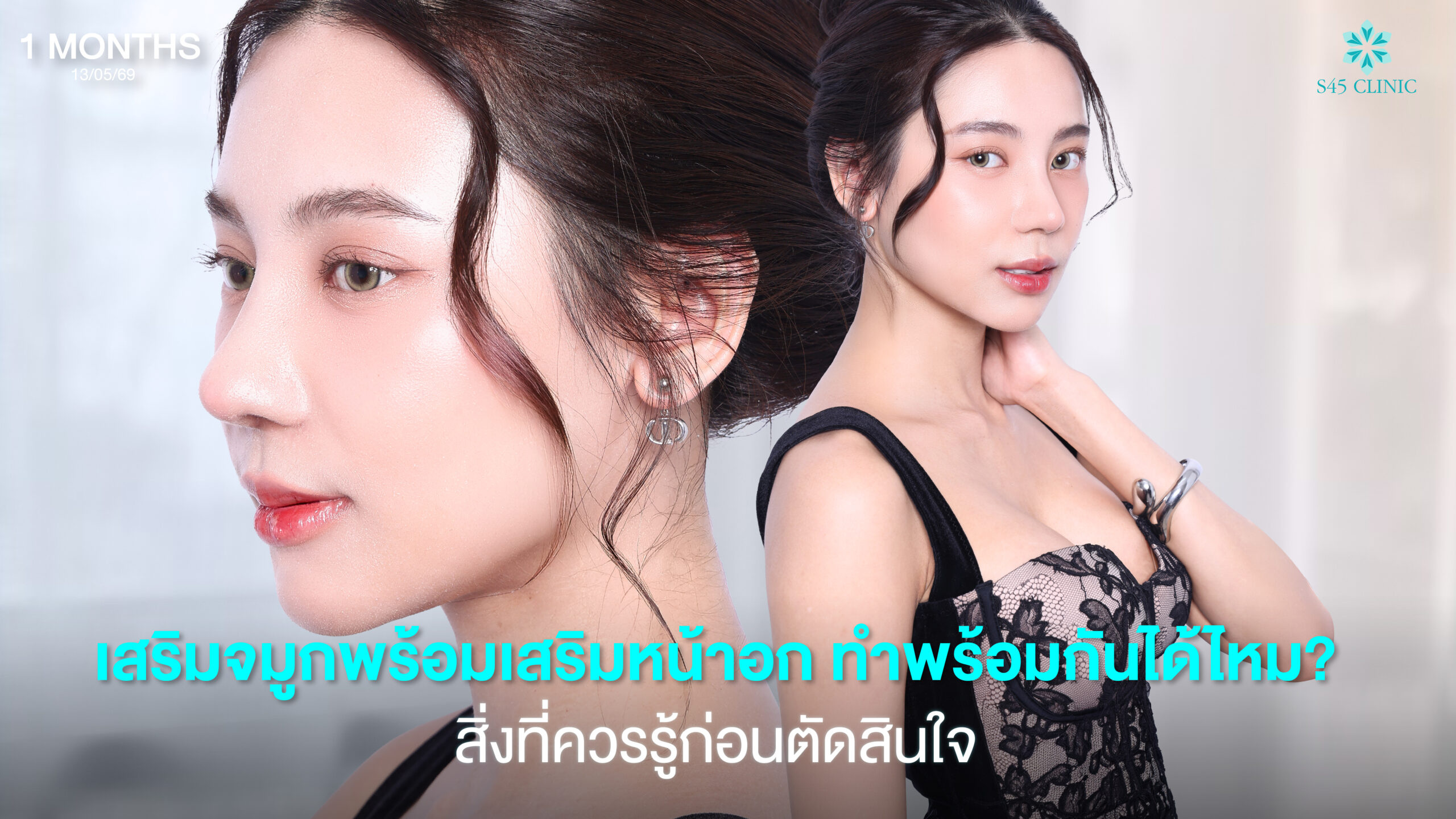
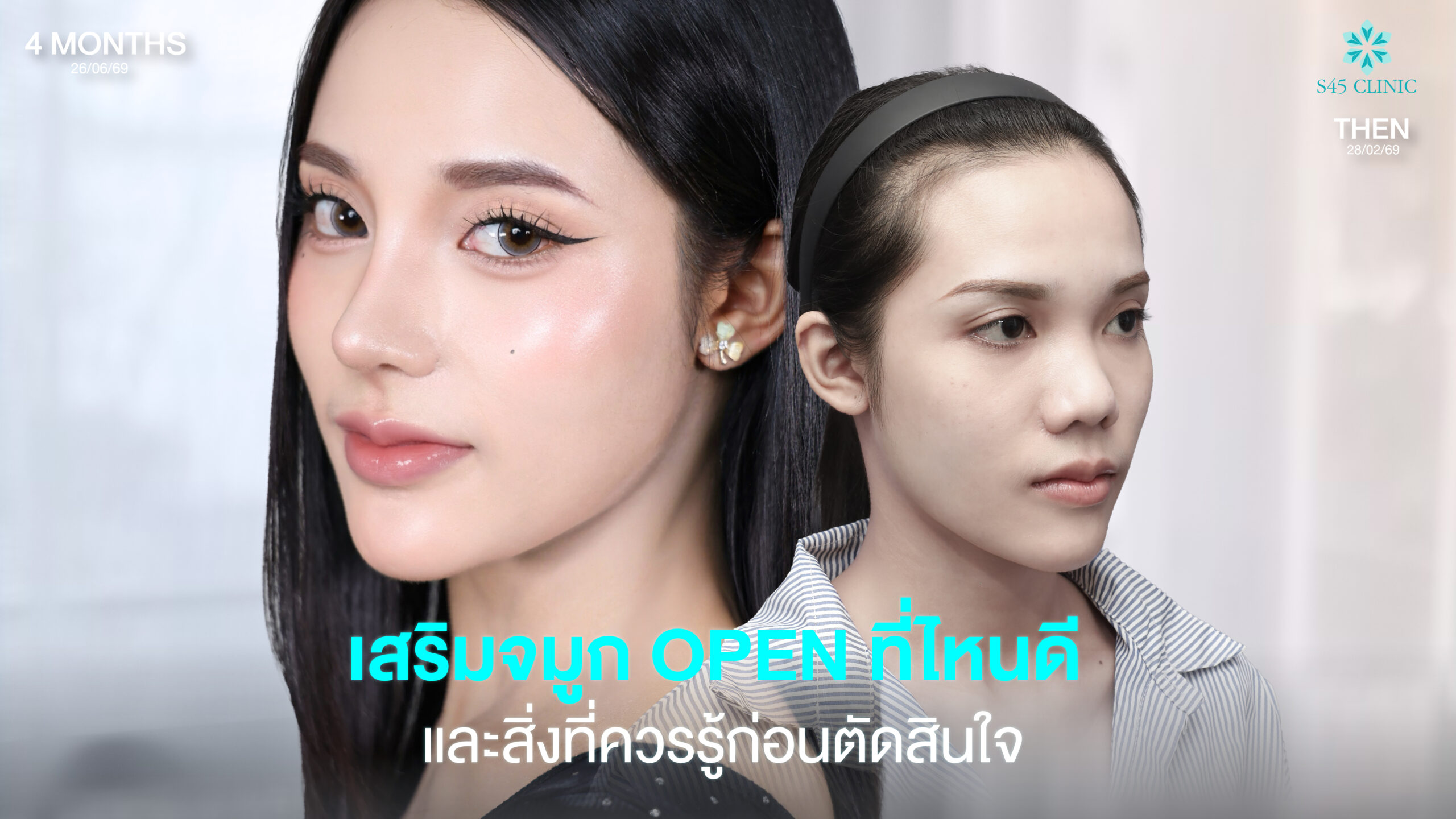
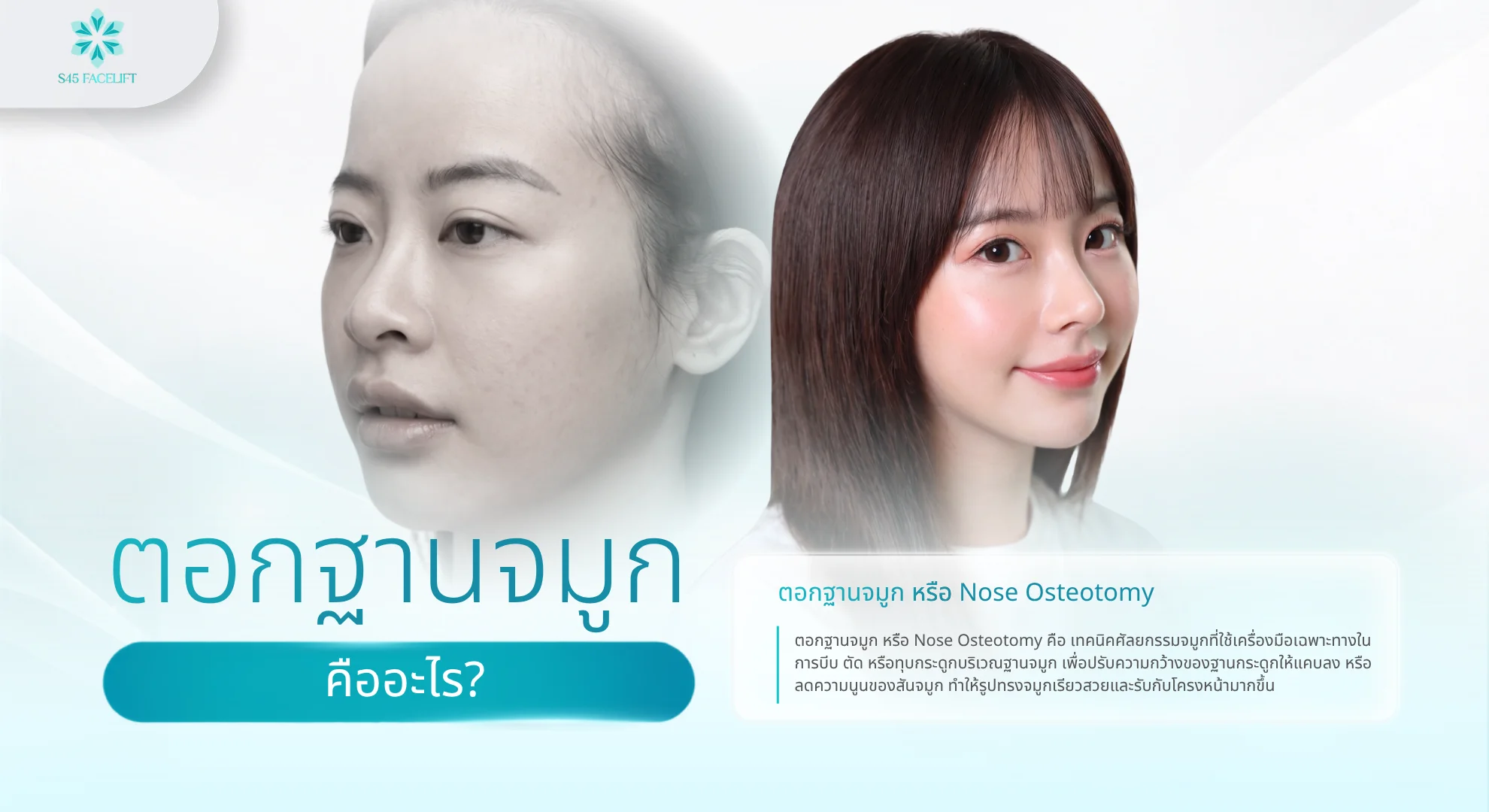
Example only. Results are for this individual patient.
Key points
- A first rhinoplasty with the semi-open technique suits people whose nose does not have major structural problems and who want the incisions to be inside both nostrils.
- Common worries for first-timers are scarring, a tilted implant and a shape that does not suit their face. You can ask the surgeon about all 3 at your consultation.
- At your consultation, ask the surgeon which technique suits you, how many days you need to recover, what the risks are, and what options you have if you are not happy with the result.
- Recovery takes about 3 to 7 days and stitches are removed after about 7 to 10 days, but it takes about 1 year for the nose to fully settle into its shape.
People who have never had nose surgery tend to have more questions than people who have, about the scar, the shape and which technique suits them. When you research a first rhinoplasty (also called primary rhinoplasty) with the semi-open technique, start by understanding what kind of nose you have before choosing a shape or a clinic.
In this article, S45 Clinic covers what to know before your first rhinoplasty, from the nose features that suit the semi-open technique, common worries, how to choose a shape and the questions to prepare for your surgeon, through to preparation and recovery, so you have information to help you decide before your consultation.
In This Article
What Is a First Rhinoplasty With the Semi-Open Technique?
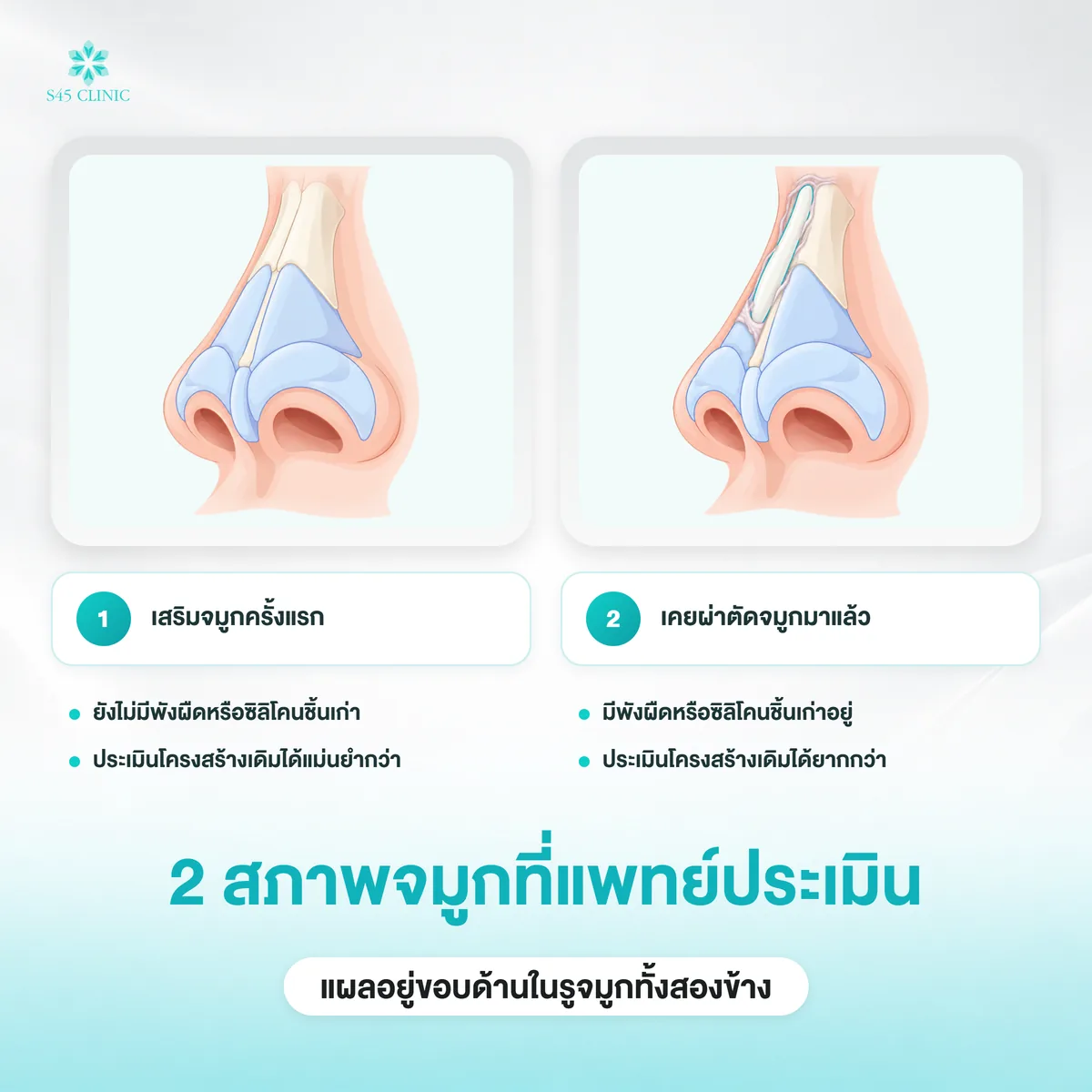
A first rhinoplasty with the semi-open technique is a partly open approach to rhinoplasty for people who have not had nose surgery before. The surgeon makes small incisions along the inside rim of both nostrils, so there is no incision in the outer skin at the base of the nose, and the surgeon can see the cartilage on both sides while placing the silicone implant.
If this is your first rhinoplasty, your nose does not yet contain scar tissue or an old silicone implant. The surgeon can assess your original nose structure more accurately than in noses that have had surgery before, and choose a technique that uses only the incisions needed.
To read about suturing the nasal tip, tip graft materials and how this technique differs from closed and open rhinoplasty, see our article on what semi-open rhinoplasty is. This article focuses on the decisions first-timers need to make before surgery.
Who Suits a First Rhinoplasty With the Semi-Open Technique?
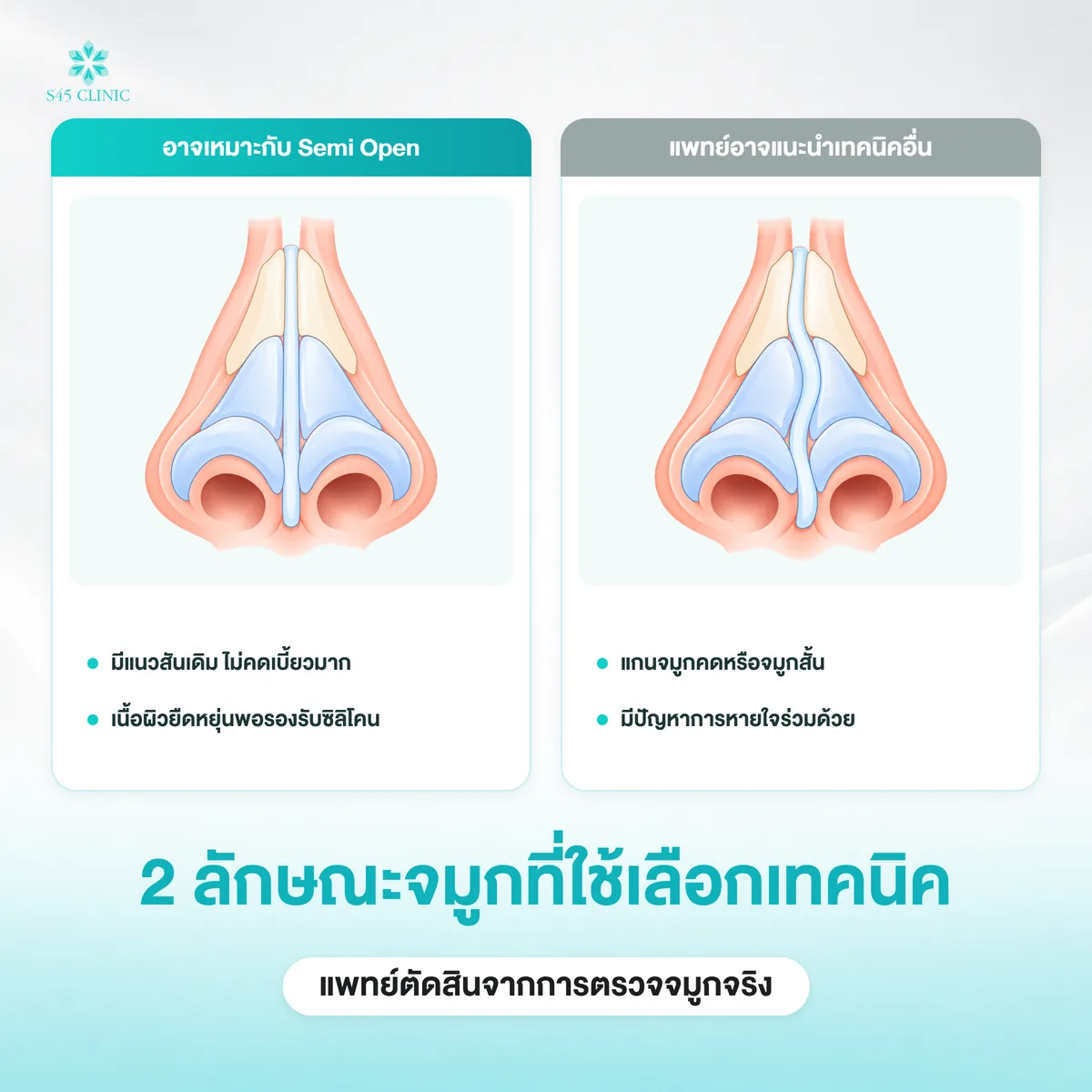
A first rhinoplasty with the semi-open technique suits people whose nose does not have major structural problems and who want to adjust the height of the bridge and the shape of the tip to suit their face. Whether this technique can be used is decided by the surgeon after examining your nose at your consultation.
Nose Features That Suit a First Semi-Open Rhinoplasty
A nose that suits a first semi-open rhinoplasty has an existing bridge line, is not very crooked, and has skin flexible enough to hold a silicone implant. S45 Clinic’s rhinoplasty service page states that if the nose does not have major problems, the closed or semi-open technique can be used.
In terms of general health, the American Society of Plastic Surgeons (ASPS) states that good candidates for nose surgery are people whose face has finished growing, who are in good health, who do not smoke and who have realistic expectations.
On age, S45 Clinic considers closed, semi-open and open rhinoplasty without structural correction based on the surgeon’s assessment of each person, looking at facial growth and health. If you are under 18, a parent or guardian needs to sign consent for the surgery.
When the Surgeon May Recommend Another Technique
The surgeon will recommend another technique instead of semi-open rhinoplasty when the nose has problems that need internal structural correction, for example a nasal axis that has been crooked since birth, a short nose where you want the tip lengthened, or breathing problems. Most of these cases need a wider opening so the surgeon can see the whole structure.
On the other hand, if you compare closed and semi-open rhinoplasty, for people who only want a little more height and whose nose already has a good shape, the closed technique, which uses smaller incisions, is another option. You do not need to choose a technique before your consultation. Ask the surgeon to explain which technique suits your nose and why.
What Do People Having Their First Rhinoplasty Usually Worry About?
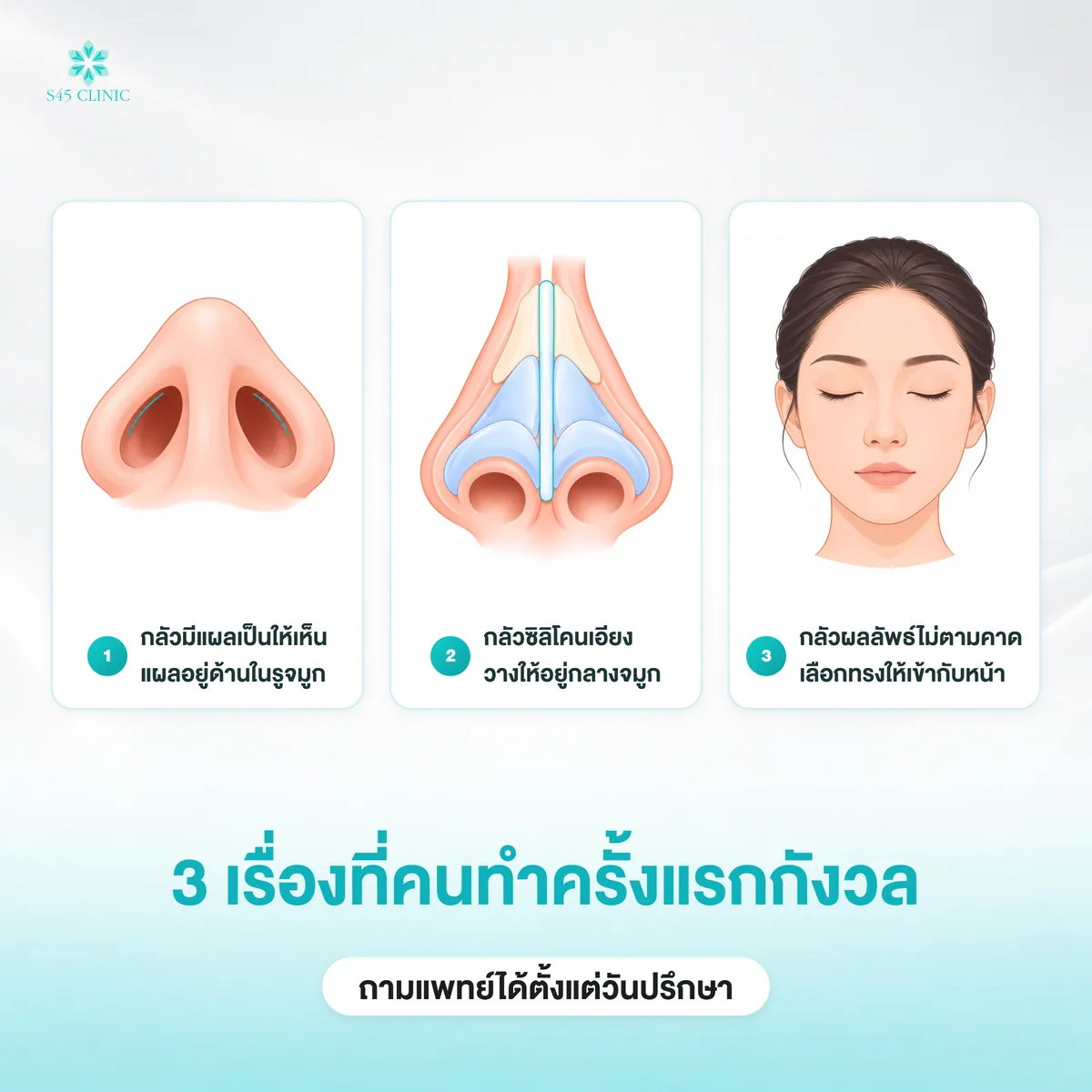
People having their first rhinoplasty usually worry about 3 things: visible scars, the implant tilting, and a result that is different from what they had in mind. You can raise each of these with the surgeon at your consultation.
Worry About Visible Scars
With semi-open rhinoplasty, the incisions are on the inside rim of both nostrils, and there is no cut in the outer skin at the base of the nose. After the wounds heal, how visible the scars are varies from person to person.
What helps the wounds heal well is the care you give them before stitch removal. S45 Clinic’s service page advises keeping the wounds dry until the stitches are removed, because damp wounds have a higher chance of inflammation and infection, and avoiding smoking and alcohol, which slow down healing.
Worry About the Implant Tilting or Becoming Crooked
Some cases of an implant tilting after surgery happen because the implant was not placed in the middle of the nose, or because it does not fit the existing bone line. Opening both sides lets the surgeon see the cartilage on both the left and the right, and place the implant in the middle of the nose during surgery.
Worry That the Result Will Not Meet Your Expectations
In many cases, a result that does not meet expectations comes from choosing a shape in your mind before your nose has been examined, rather than choosing a nose shape that suits your own face. A shape that looks attractive on someone else may not suit your facial structure or nasal tissue, and thin skin can only support a limited amount of height.
ASPS states that no one’s face is completely symmetrical, and results after surgery are not completely symmetrical either. The aim of surgery is facial balance. At your consultation, ask the surgeon what limitations your nose has, such as thin skin or an existing bone line that is tilted.
See our doctors: names and education of the doctors at S45 Clinic
How Should You Choose a Nose Shape for Your First Rhinoplasty?
Choosing a shape for your first rhinoplasty starts with your own facial structure and nasal tissue, with example photos used to help you communicate with the surgeon. The sections below explain how much example photos can help and what the surgeon looks at before designing the shape.
How Much Can Example Photos Help You Choose a Nose Shape?
Example photos can show the surgeon what bridge height and tip shape you like, but they cannot decide the final shape, because the person in the photo has a different facial structure, skin thickness and nasal base from you.
ASPS also warns that AI-generated face images show noses that are smaller, skin that is smoother and features that are more symmetrical than real faces. If you want to use photos when you talk to the surgeon, choose photos of real people whose facial structure is close to yours, and tell the surgeon which part of the photo you like, for example the curve of the bridge or a tip that does not project too much.
What the Surgeon Looks at Before Designing Your Nose Shape
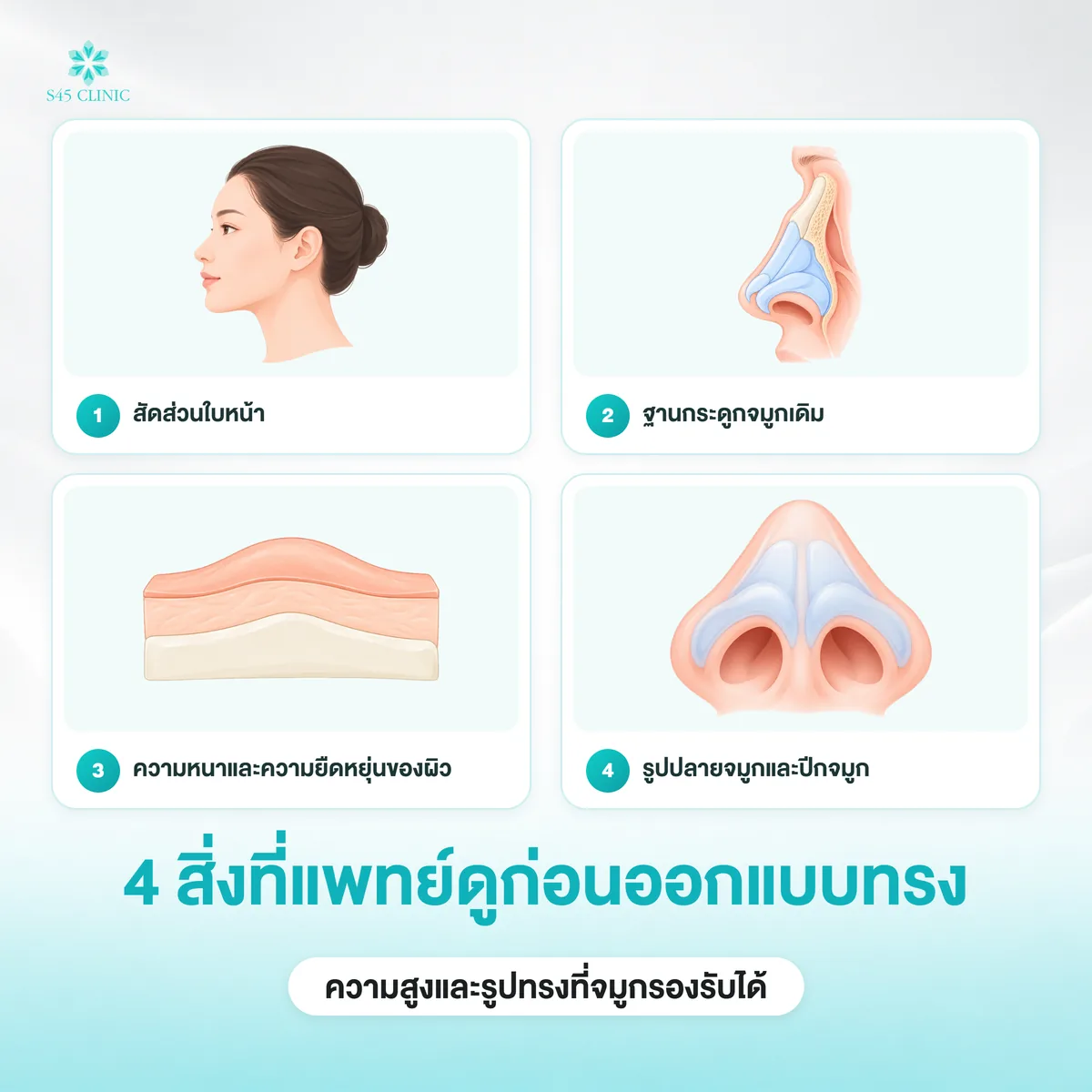
Before designing your nose shape, the surgeon looks at your face and your nose together, to work out the height and shape your nose can support. The surgeon looks at:
- facial proportions, including the height of the forehead, cheekbones and chin, which affect what bridge height looks balanced
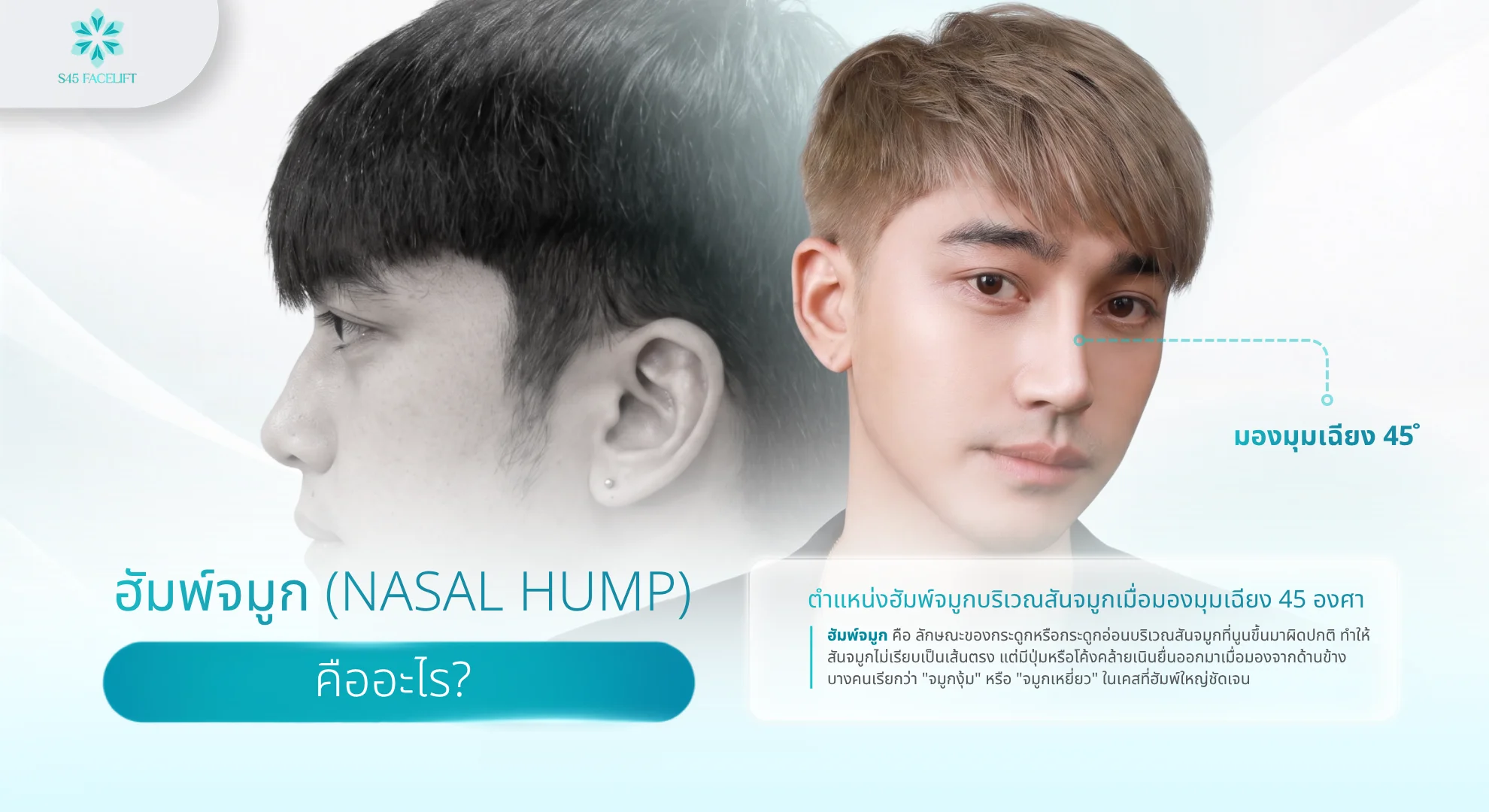
- the existing nasal bone base, whether the bone line is straight or tilted, and whether there is a bump on the bridge (dorsal hump) that needs adjusting before the implant is placed
- skin thickness and flexibility, as thin skin can support less height and some people also need tip graft material, a small piece of tissue placed at the tip for support
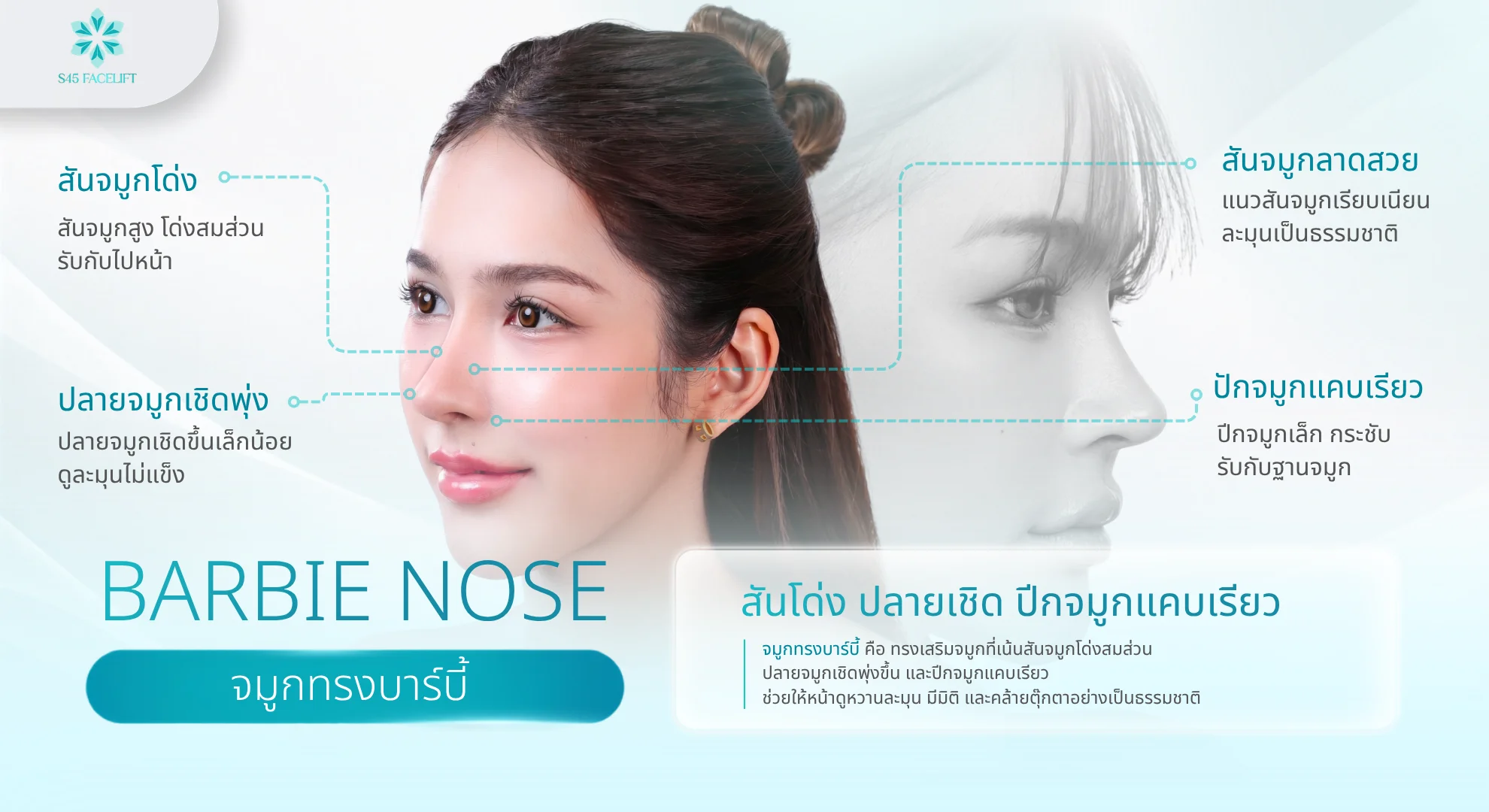
- the shape of the tip and the alae (the sides of the nostrils), as the width of the tip and nostrils affects the technique the surgeon chooses
What Should You Ask the Surgeon at Your First Rhinoplasty Consultation?
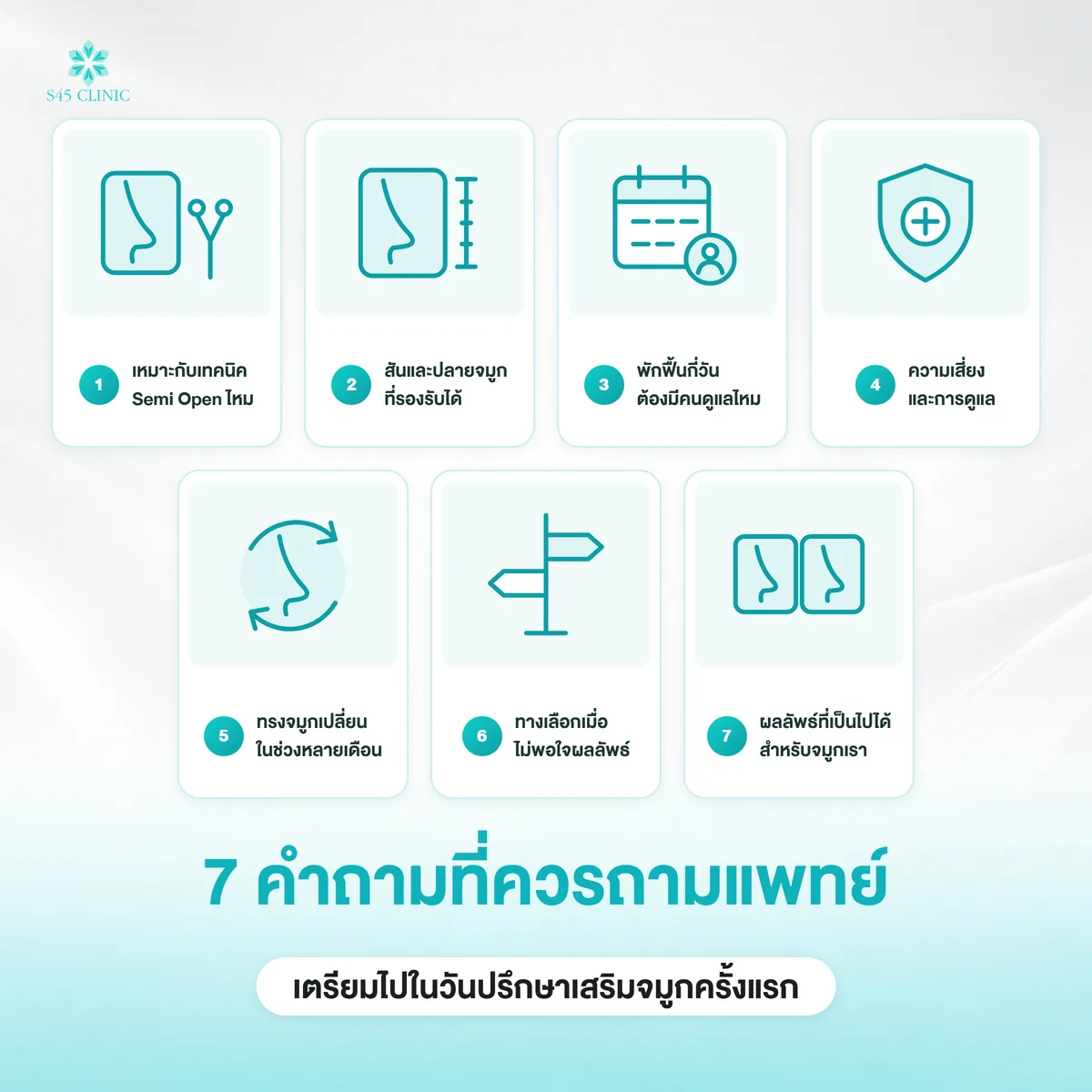
At your first rhinoplasty consultation, ask about whether the surgery suits you, the technique the surgeon recommends, recovery and risks. The questions below are adapted from the list ASPS recommends patients ask their surgeon:
- Does my nose suit semi-open rhinoplasty, or should I have another technique, and why?
- What bridge height and tip shape can my nose support?
- How many days will I need to recover, and will I need someone to look after me at first?
- What are the risks of this surgery, and how does the clinic look after me if complications happen?
- How will the shape of my nose change over the months after surgery?
- What options do I have if I am not happy with the result?
- Can I see before and after photos of cases with a nose similar to mine, and what results are possible for my nose?
Before your appointment, check the surgeon’s name on the Medical Council of Thailand’s online doctor checking system (checkmd.tmc.or.th). It shows the licence number and the specialties recognised by the Medical Council.
How Do You Prepare for a First Semi-Open Rhinoplasty?
Preparing for a first semi-open rhinoplasty has 2 parts: getting your body ready for surgery, and preparing things at home for recovery. Finish both before your surgery date.
Health Steps Before Your Surgery Date
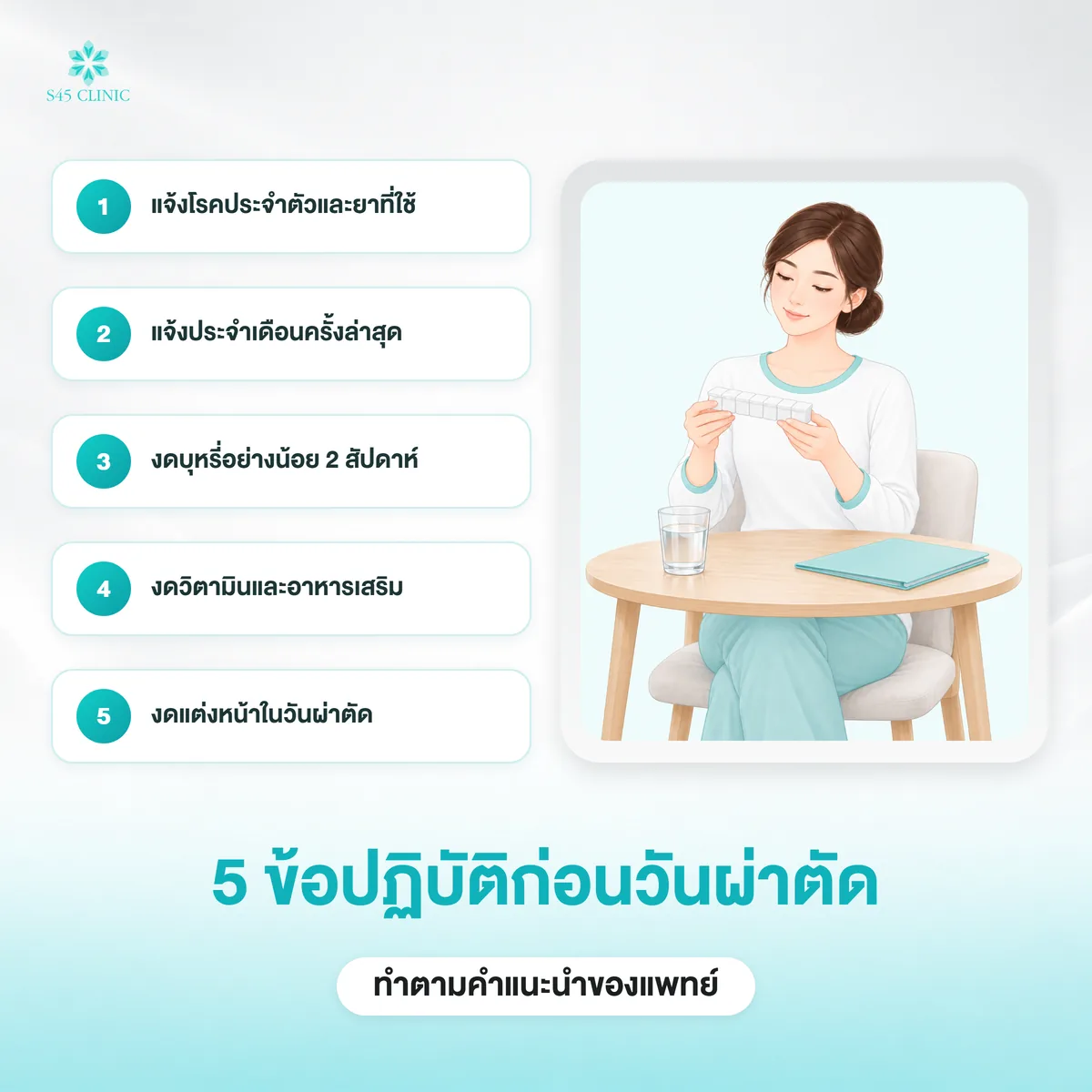
The steps below come from S45 Clinic’s rhinoplasty service page:
- Tell the surgeon about any health conditions, medicines you take regularly, herbal remedies, previous surgery, and whether you smoke or drink alcohol.
- Tell us the date of your last period. If you are pregnant, tell the anaesthetist, and let us know if you have any loose teeth.
- Stop smoking cigarettes and e-cigarettes at least 2 weeks before surgery.
- Stop taking vitamins, supplements and alcohol as your surgeon advises.
- On the day of surgery, do not wear make-up, nail polish, contact lenses or jewellery. Stop eating and drinking at the times your surgeon gives you.
Things to Prepare at Home
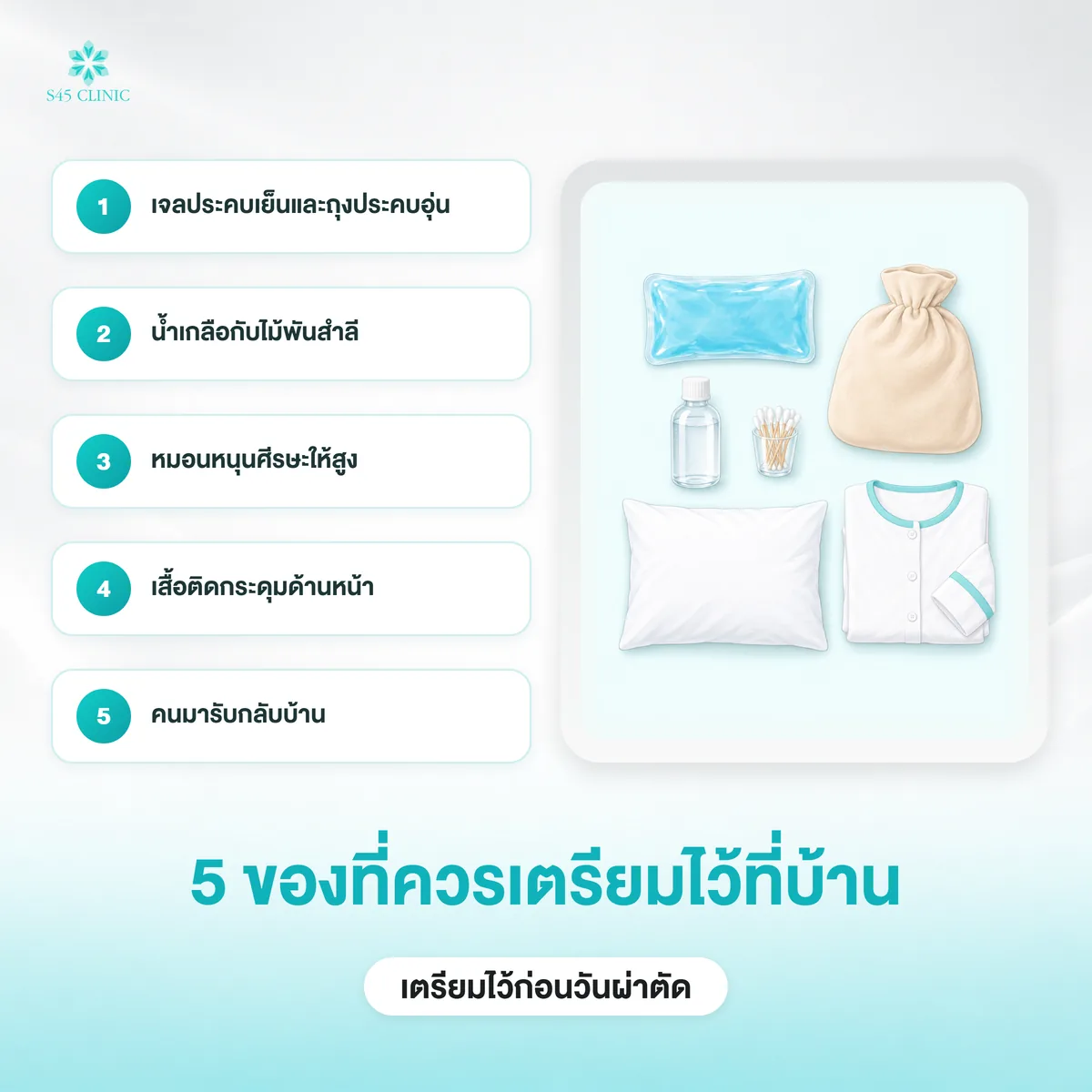
Most of these are for wound care and reducing swelling in the first week. Prepare them before surgery so you do not need to go out to buy them while your face is still swollen.
- cold gel compresses for the first week, and warm compresses for after day 7
- saline for cleaning the wounds, and small cotton buds
- pillows to keep your head raised while you sleep
- tops that button at the front, so you do not need to pull them over your head
- someone to take you home, as driving yourself after surgery is not advised
How Long Is Recovery After a First Semi-Open Rhinoplasty?
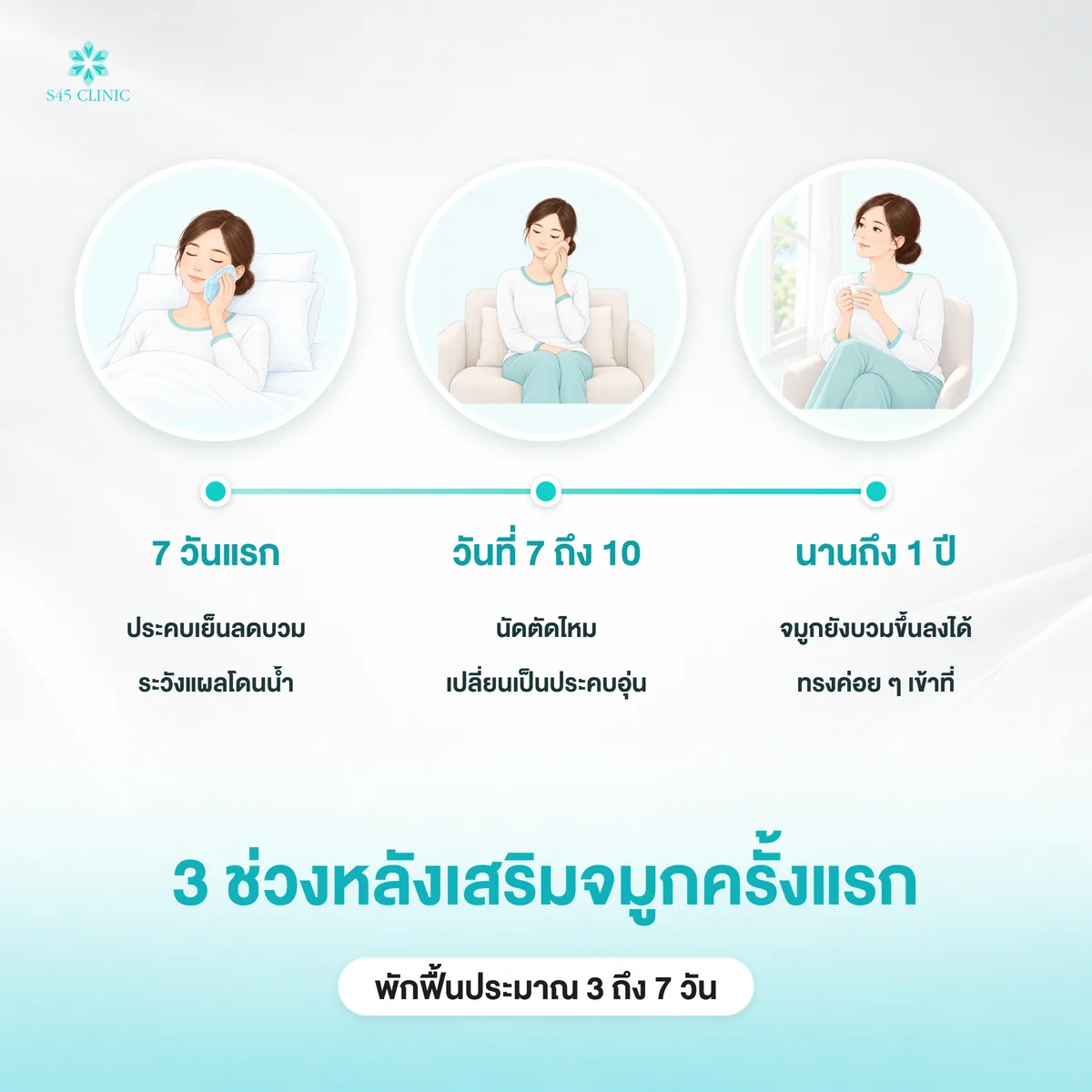
Recovery after a first semi-open rhinoplasty takes about 3 to 7 days, and most people go back to work or school within about 1 to 2 weeks, depending on how each person recovers and on your doctor’s advice. It takes several months for the nose to settle into its shape.
Looking After Yourself in the First Week
After surgery, you stay at the clinic for about 1 to 2 hours so we can monitor you before you go home to recover. For the first 7 days, use cold compresses to reduce swelling after surgery, and after 7 days switch to warm compresses.
During this time, keep the wounds dry until your stitches are removed. Stitch removal is usually scheduled for about 7 to 10 days after surgery. Sleep with your head raised and avoid sleeping on your side or front. Ask the surgeon at your appointment when you can sleep on your side, and avoid blowing your nose hard.
If the pain gets worse, or you notice redness, swelling, warmth, pus or bleeding that does not stop, contact the clinic straight away without waiting for your appointment.
The Months Until Your Nose Settles Into Shape
The initial swelling goes down within a few weeks, but ASPS states that swelling can come and go during the first year, especially in the morning, and it takes about 1 year for the nose to fully settle into its shape.
If this is your first rhinoplasty, do not judge the shape during the first week, and attend every follow-up appointment so the surgeon can monitor how your nose settles at each stage.
See example results: example rhinoplasty images from S45 Clinic patients (Results are specific to each patient.)
Why Choose S45 Clinic for Your First Rhinoplasty

At S45 Clinic, a doctor assesses your nose structure and plans your surgery individually, so first-timers know before surgery which technique suits their nose. Our approach includes:
- Assessment before choosing a technique. The surgeon examines your nose before recommending closed, semi-open or open rhinoplasty, rather than deciding the technique in advance. You can also send photos of your nose from 4 angles online for an initial assessment.
- Silicone implants shaped for each person. The implant is adjusted to fit each person’s nose structure according to the surgeon’s plan.
- Care after surgery. Follow-up care is provided after rhinoplasty in cases where the silicone implant tilts, the result is crooked or there is infection, under the clinic’s terms.
Frequently Asked Questions About a First Rhinoplasty
How Many Days off Work Do I Need for My First Rhinoplasty?
The first recovery period is about 3 to 7 days, which is the same period many people ask about when they want to know how long rhinoplasty recovery takes. Most people go back to work or school within about 1 to 2 weeks, depending on their swelling and bruising and on their doctor’s advice. If your work involves meeting clients or being photographed, allow time off until your stitches are removed.
If I Do Not Like the Shape After Surgery, How Long Do I Need to Wait Before It Can Be Revised?
Doctors at S45 Clinic advise waiting at least 3 months before revision rhinoplasty, so the wounds and tissue can heal and the swelling can go down first. You also need to come in for your nose to be examined, as some cases need to wait longer.
Do I Need a Health Check Before My First Rhinoplasty?
Before surgery, the surgeon asks about your health, any health conditions and the medicines you take, to assess whether your body is ready. Some people with health conditions need further tests as the surgeon advises. Bring a list of the medicines you take regularly to your consultation.
Summary
A first rhinoplasty with the semi-open technique suits people whose nose does not have major structural problems, and the surgeon decides after examining your nose. Choosing a shape starts with your facial structure and nasal tissue, with example photos used to help you communicate. Recovery takes about 3 to 7 days, while the nose takes several months to settle into its shape.
Before your consultation, note down the questions from this article and ask the surgeon to assess what shape your nose can support. Doctors at S45 Clinic assess every case before treatment, and results depend on each person.
Because every nose structure…
is different
An otolaryngologist assesses every case before treatment and gives advice based on your actual concerns.
“Reveal the beauty within you”
Message us online
Surgery and medical procedures carry risks. Find out about them and consult a doctor before you decide. Results depend on each person.