How to Prepare for Rhinoplasty Revision Surgery

Nose reshaping lets you change to a new nose shape that suits what you want. First, it is important to know why you need reshaping, whether it is personal preference or a problem from previous surgery.
Changing to a New Nose Shape, How to Prepare, How Painful It Is and What to Know Before Nose Reshaping
If you are having your nose reshaped to change to a new shape, preparation is similar to any rhinoplasty, but the surgeon may assess in more detail the existing nasal tissue and which new shapes are possible, to find a suitable technique for reshaping.
If you are having your nose reshaped because of problems such as a tilted axis, a crooked nasal base or tip extrusion, you need to prepare in several areas, including your health, your current nose shape and other factors.
Changing to a new nose shape is more painful than a first rhinoplasty
The steps are more complex and recovery takes longer
Preparing for nose reshaping after tip extrusion, a tilted axis or other problems involves more complex surgery, so it is important to prepare well.
How to Prepare Before Nose Reshaping
1. Consult a Surgeon Experienced in Nose Reshaping Who Can Design a Nose That Matches What You Want
- The surgeon asks in detail about the problems you have, how many times you have had nose surgery and the techniques used before, such as silicone implant rhinoplasty or open rhinoplasty, where cartilage was taken from and other details, to have the information needed for a detailed assessment before planning suitable correction.

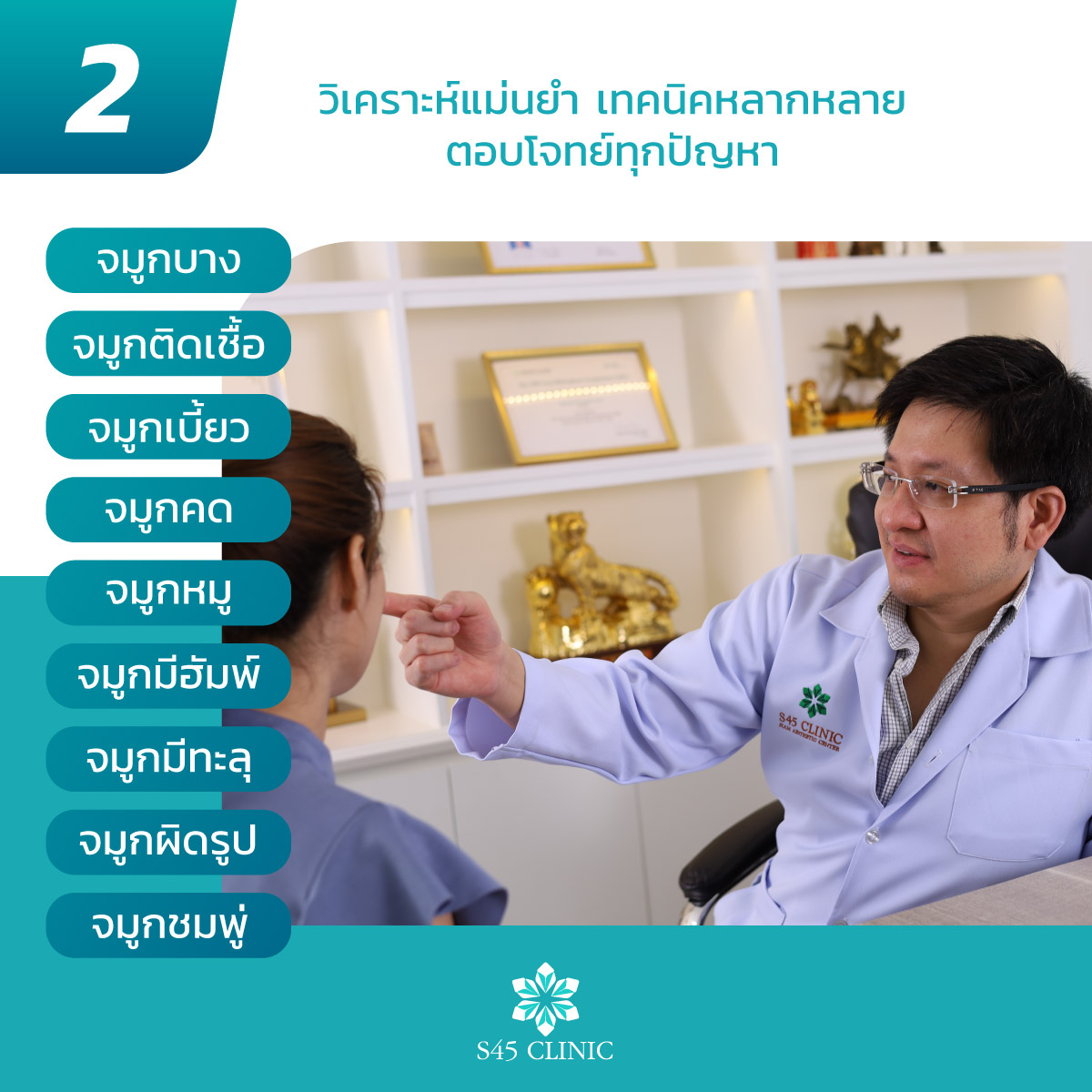

2. Preparing Before Nose Reshaping Surgery
- If you take medicines or supplements that affect blood flow, stop taking them as advised by the doctor.
- Stop smoking and drinking alcohol for at least 2 weeks.
- Revision nose surgery needs a longer recovery time than a first rhinoplasty, so plan your work around it.

3. Nose Reshaping Steps (Depending on the Doctor’s Assessment)
If your nose can be corrected straight away, the surgeon corrects it on the day of surgery using a suitable technique. If it cannot be corrected because of a previous problem, such as an infection or inflammation inside the nose:
- the surgeon carefully removes the silicone implant or cartilage used for the augmentation
- the tissue is left to heal fully before a new rhinoplasty, which may take about 1 to 3 months (depending on each person’s condition)
Looking After Yourself After Nose Reshaping
- Follow the doctor’s advice carefully.
- Take and apply the medicines the doctor prescribes exactly as directed.
- Avoid holding, pressing, rubbing or touching the nose, to avoid knocking the wound.
- Get plenty of rest to help your body recover and the wound heal.