Can I Eat Hot Pot After Rhinoplasty? A Checklist of Foods After Surgery

Key points
- Can I eat hot pot after rhinoplasty? The short answer is yes, but avoid very hot broth and the steam from the hot pot, which may increase blood flow and make the wound more swollen.
- Sit away from the cooking pot so the hot steam does not reach your face and nose directly during the first 1 to 2 weeks.
- Avoid very spicy dipping sauces and salty broth, because salt makes the body hold on to water, so the swelling around the wound goes down more slowly.
- Eat only meat and vegetables that are fully cooked and clean, and avoid half-cooked or raw food to lower the chance of infection.
Many people wonder whether they can eat hot pot (known in Thailand as suki) while recovering from rhinoplasty, because they worry the steam from the pot will affect the wound. You can eat it, but take extra care, because the heat and the high salt content of the broth may make the wound swollen and red. Knowing how to eat it correctly also helps you avoid hard sneezing or sniffing, which puts pressure on the nose.
In this article, S45 Clinic brings together what to avoid and how to eat hot pot, shabu and Thai barbecue in detail, with the food groups to avoid so the wound does not become inflamed. We also share aftercare advice to help the tissue settle around the implant into the planned shape during the first 14 days of self-care.
In This Article
Can I Eat Hot Pot After Rhinoplasty?

Can I eat hot pot after rhinoplasty? The answer is yes, you can eat it straight after surgery, but you need to change how you eat and take more care than usual with what goes into the broth, to prevent inflammation of the wound. In the first week, choose ingredients that are easy to chew, not tough, and boiled until soft, to reduce jaw movement that could jar the nasal bridge.
During the first 14 days, choose a broth that is not strongly flavoured and avoid using a lot of dipping sauce, because the high salt content makes the body hold on to water, so facial swelling and bruising last longer. We recommend a clear, mild broth and avoiding processed foods such as meatballs, to keep your salt intake as low as possible.
Cook meat in the pot until it is fully done, to prevent bacteria entering the body through a wound that has not fully closed. Being strict about what you eat during the first 1 to 2 weeks helps lower the chance of infection.
How Do Steam and Heat From the Hot Pot Affect the Wound?
Steam and heat from the hot pot make the small blood vessels in the face and nose widen, so the wound may become swollen and red and may ooze blood more easily. Breathing in warm steam for a long time raises the temperature of the skin around the nose, which disturbs the normal healing process under the skin.
The rising steam can also carry grease and bits of seasoning onto the skin, where they may build up around the stitches. This moisture increases the chance of bacteria growing and can make the wound soggy. Not sitting in front of a hot stove during the first 14 days helps the wound stay dry and lowers the chance of inflammation.
Can How You Sit and Eat Hot Pot Affect Your Nose Shape?
Bending your face down over the pot to eat hot food straight from it may affect your newly operated nose in unexpected ways. Keeping your head low for a long time increases blood pressure in the face, which can make the wound more swollen and raise the chance of the silicone implant shifting out of place.
Chewing meat that is too tough, or opening your mouth wide for large meatballs, pulls hard on the muscles around the nose and upper lip, which may cause an implant that has not yet settled to tilt or become crooked.
To prevent these problems, change how you eat: sit up straight and use a spoon and fork to cut food into small, bite-sized pieces, which helps keep facial muscle movement to a minimum during the first 14 days after surgery.
How Many Days Should I Wait Before Eating Hot Pot, Shabu or Thai Barbecue?
How long to avoid hot pot, shabu or Thai barbecue after surgery depends on how your body is recovering and on the type of stove used for the meal, because each type of food gives off different levels of heat, steam and smoke that affect the wound in different ways.
When it is suitable to join these meals again therefore depends mainly on how strong the wound is and how long the tissue takes to settle around the silicone implant, so that heat and smoke do not increase the swelling and bruising under the skin around the nose.
The guidance below divides when you can go back to boiled and grilled food into clear periods, to match how the wound heals at each stage. Following the instructions strictly helps lower the chance of the silicone implant tilting from strong jaw movement in the first week.
How to Eat Hot Pot in the First Weeks After Rhinoplasty
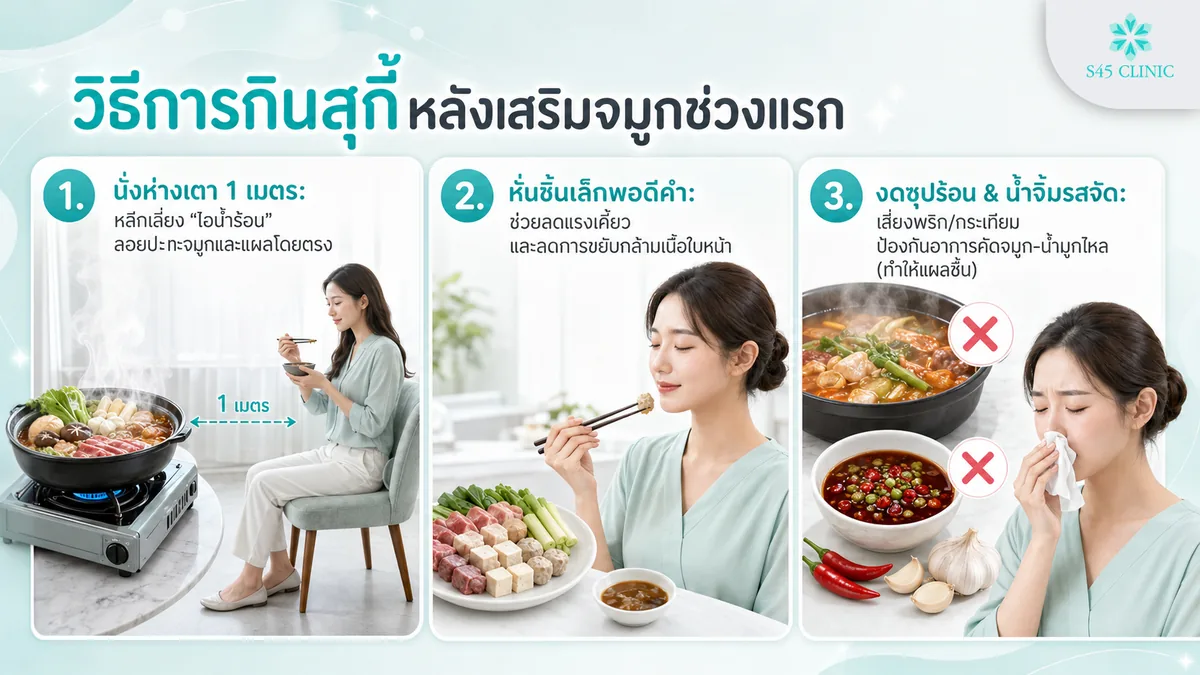
To eat hot pot correctly after surgery, take the meat and vegetables out into your own bowl and let them cool to room temperature before eating. This keeps heat away from your mouth and face and helps reduce the widening of blood vessels around the nose:
- Sit at least 1 metre away from the cooking pot, so hot steam does not reach the wound directly.
- Cut meat and vegetables into small, bite-sized pieces, to reduce chewing and facial muscle movement.
- Do not sip hot broth, and do not add dipping sauces with a lot of chilli or garlic during the first 14 days, to prevent a blocked or runny nose that could make the wound damp.
Foods to Avoid, From 7 to 14 Days Up to at Least 1 Month
What you eat after surgery directly affects how your wound recovers. Eating the wrong kinds of food may cause inflammation, swelling and bruising, or make the wound heal more slowly than usual.
Strictly avoid some food groups during the first 14 days, to avoid increasing blood circulation in a way that could open the wound and cause repeated inflammation at the nasal tip.
Very Spicy and Strongly Flavoured Foods That Cause a Runny Nose
Very spicy and strongly flavoured foods are the first thing to stop after surgery. Capsaicin in chillies stimulates the nerves, which makes the lining of the nose produce a lot of mucus. This mucus is mildly acidic and full of bacteria from the nasal cavity, which may get into the wound inside the nose and lead to inflammation and infection.
Spicy food also raises your body temperature and makes blood vessels widen quickly, so a nose that is starting to go down may swell and redden again, and blood may ooze from the stitches more easily.
If you want easy-to-chew food in the first week, choose very mild dishes, such as tofu and egg soup or clear soup with minced pork and no pepper, to avoid irritating the nasal cavity.
Pickled Foods, Seafood and Instant Foods
Pickled foods, seafood and instant foods should be avoided for at least 14 days after surgery, because they are high in salt and preservatives. These make the body hold more water in the face than usual, so the skin around the nose swells and becomes red and inflamed more easily.
Frozen seafood often contains phosphate additives, and instant foods such as instant noodles or canned fish contain a lot of flavour enhancer (MSG), which may slow down the swelling going down around the stitches.
Switching to freshly cooked, very mild food, such as rice porridge with minced pork and only a little light soy sauce, helps the wound stay dry and the swelling go down on schedule during the first 7 to 10 days.
Alcohol and Raw Foods That Increase the Chance of Infection
All alcoholic drinks and raw foods must be avoided for the first 14 days after surgery, because they increase the chance of serious inflammation and infection. Alcohol also widens blood vessels and increases blood flow, so a healing wound heals more slowly.
Raw or half-cooked foods, such as sashimi, raw prawns in fish sauce and pickled eggs, can carry bacteria and parasites that may enter the bloodstream and affect the stitched wound inside the nose.
Your immune system is weaker after surgery, so you are more likely to get an infection with pus that could affect your nose shape. We recommend freshly cooked hot food, such as clear soup with tofu and minced pork, to support wound healing.
Food Ideas to Support Healing After Rhinoplasty

Eating suitable food during the first 7 days after surgery helps support the repair of skin cells affected by placing the silicone implant.
Protein Foods to Help Repair the Skin
Eating good-quality protein is important for building new skin cells and helping the wound heal after surgery.
Amino acids from protein help repair tissue affected by placing the silicone implant and help stimulate collagen under the skin. Choose chicken breast, steamed tilapia or hard-boiled egg whites during the first 7 days, for protein that is low in fat.
Soft white tofu and low-sugar soy milk are good alternative sources of protein if you want to avoid meat, because they are easy to digest, so the body can absorb the nutrients to repair the stitched wound. Choosing soft dishes that need little chewing also helps reduce movement of the implant while the tissue is settling around it.
Gotu Kola Juice and Coconut Water to Help With Swelling and Bruising
Gotu kola (Asiatic pennywort) juice contains triterpenoids that may help blood circulation around the eyes and cheeks and help reduce bruising from inflammation under the skin after surgery. Drinking 1 to 2 glasses a day of fresh gotu kola juice without sugar in the first week may help dark purple bruises fade.
Coconut water is rich in potassium, which helps the body get rid of excess salt, so swelling along the nasal bridge and under the eyes gradually goes down. Choose fresh coconut water straight from the coconut rather than boxed coconut water with preservatives, to give your body nutrients that support lymphatic drainage during the first 5 days.
Rhinoplasty Aftercare Advice From S45 Clinic Surgeons
Looking after yourself after surgery helps your new nose shape settle as planned. Our surgeons at S45 Clinic recommend the following wound care, to help prevent the implant moving and to reduce swelling and bruising in the first week:
- Sleep on your back with your head raised on about 2 to 3 pillows for the first 5 days, to reduce fluid build-up and bruising around the eyes.
- Use cold compresses often on the forehead and on both cheeks for the first 72 hours, to help control inflammation around the nasal bridge.
- Gently clean dried blood from your nostrils with cotton buds dipped in clean saline twice a day, to keep the wound from getting damp, until your stitches are removed on day 14 after surgery.
- Do not lift heavy objects or do exercise that involves bending your head down for at least 30 days, to prevent a rise in blood pressure that could open the wound inside.
- Do not sleep on your side or on your front for at least 1 month, so the silicone implant does not move while the tissue around it is healing.
Common Questions About Eating After Rhinoplasty
Can I Really Eat Eggs and Chicken After Rhinoplasty?
Yes, you can eat eggs and chicken after rhinoplasty, because protein helps stimulate collagen to repair the wound and helps lower the chance of raised scars. Getting 1.2g of protein per kilogram of body weight each day helps the wound dry and be ready for stitch removal at 14 days.
Can I Eat Hot Noodle Soup After Rhinoplasty?
You can eat noodle soup after rhinoplasty, but wait until the broth is warm to almost cool, so the hot steam does not cause a runny nose that could lead to inflammation of the wound inside. Not adding chilli flakes or strong spices during the first 14 days helps lower the chance of wound infection and reduces the widening of blood vessels around the nose.
Can I Eat Durian and Other ‘Heaty’ Fruits After Rhinoplasty?
Avoid durian and fruits traditionally thought of in Thailand as ‘heaty’ for at least the first 14 days after surgery, because these raise body temperature, which can make the wound swollen, bruised and inflamed. Avoiding these fruits, including longan and jackfruit, helps keep blood circulation steady and helps prevent blood oozing from the wound.
Summary
Can I eat hot pot after rhinoplasty? The answer is yes, you can eat it straight after surgery, but you need to change how you eat strictly to protect the wound. Avoid the steam and heat from the pot, which may widen blood vessels and cause swelling and bruising, and avoid strongly flavoured food that causes a runny nose, which can lead to infection, during the first 14 days.
Looking after yourself by choosing clean, fully cooked food, sitting at least 1 metre away from the cooking pot and eating good-quality protein, such as fish or chicken breast, helps support wound healing. Following your surgeon’s advice strictly helps your nose heal and settle into the shape that was planned.
Because every nose structure…
is different
An otolaryngologist with subspecialty training in facial plastic and reconstructive surgery assesses every case before treatment and gives advice based on your actual concerns.
“Reveal the beauty within you”
Message us online
Surgery and medical procedures carry risks. Find out about them and consult a doctor before you decide. Results depend on each person.