Can I Eat Eggs After Rhinoplasty? The Medical Answer on Eating Eggs After Surgery, a Timeline and Foods to Eat or Avoid

After rhinoplasty, many people worry “can I eat eggs?” because they have heard it said that eggs make wounds heal slowly or cause raised scars. This worry makes people who have just had surgery overly cautious, and they may not get the nutrients their body needs during recovery.
In This Article
Key points
- You can eat eggs after rhinoplasty, and they can support wound healing because they contain high-quality protein, vitamin A, vitamin B12 and selenium, which the body needs to heal wounds. There is no medical evidence for the belief that “eating eggs causes raised scars”.
- You can eat them from the first day after surgery, but choose fully cooked eggs, such as boiled eggs, steamed eggs or soft-boiled eggs cooked through. Avoid raw eggs or half-cooked soft-boiled eggs for the first 14 days.
- Foods to avoid for 7 to 14 days after rhinoplasty are seafood, pickled and fermented foods, very spicy or very salty food, fried food, alcoholic drinks and cigarettes.
- You can eat chicken after rhinoplasty. As with eggs, choose chicken that is fully cooked and not fried. Nile tilapia is fine to eat because it is a freshwater fish, not seafood.
- Eating eggs or a food on the avoid list by mistake for 1 or 2 meals does not usually have serious effects, but go back to suitable food and watch for any unusual symptoms.
- Foods to focus on after rhinoplasty include water, good-quality protein, fruit and vegetables rich in vitamin C, gotu kola leaves, coconut water and foods containing iron and zinc.
This article clearly answers whether you can eat eggs after rhinoplasty based on medical principles. It explains a timeline of what you can eat on each day, foods that support wound healing and foods to avoid, and answers questions about foods people often ask about, such as chicken, Nile tilapia, fried food, noodles and sticky rice, so you can look after yourself correctly and confidently after surgery.
Can I Eat Eggs After Rhinoplasty? The Medical Answer
You can eat eggs after rhinoplasty, and eggs can in fact support wound healing. There is no medical evidence for the belief passed on over the years that eggs make wounds heal slowly, cause raised scars or cause inflammation in the nose. On the contrary, eggs are a source of high-quality protein that the body needs while wounds heal.
The belief that eggs cause raised scars probably came from observations in the past, when people may have seen some egg eaters develop raised scars (keloids). In fact, keloids depend on genetics and each person’s skin, and are not related to eating eggs. People who tend to get keloids will get them whether they eat eggs or not.
In medical practice worldwide, patients recovering from all kinds of surgery, whether rhinoplasty, caesarean section or general surgery, are advised to eat high-quality protein, including eggs, to help recovery. See more about nutrition for wound healing at Ohio State Wexner Medical, which states clearly that eggs are a suitable food during recovery.
How Eggs Support Wound Healing After Surgery
Eggs are not only a suitable food for people who have just had rhinoplasty. They are also a “recovery food” that many people overlook. Understanding the nutrients in eggs helps you see why doctors recommend eating eggs during recovery.
One egg contains several nutrients that work together to help wounds heal and help the body recover from the stress of surgery. Eating 1 to 2 eggs a day during recovery is therefore a simple way to help your body get the nutrients it needs.
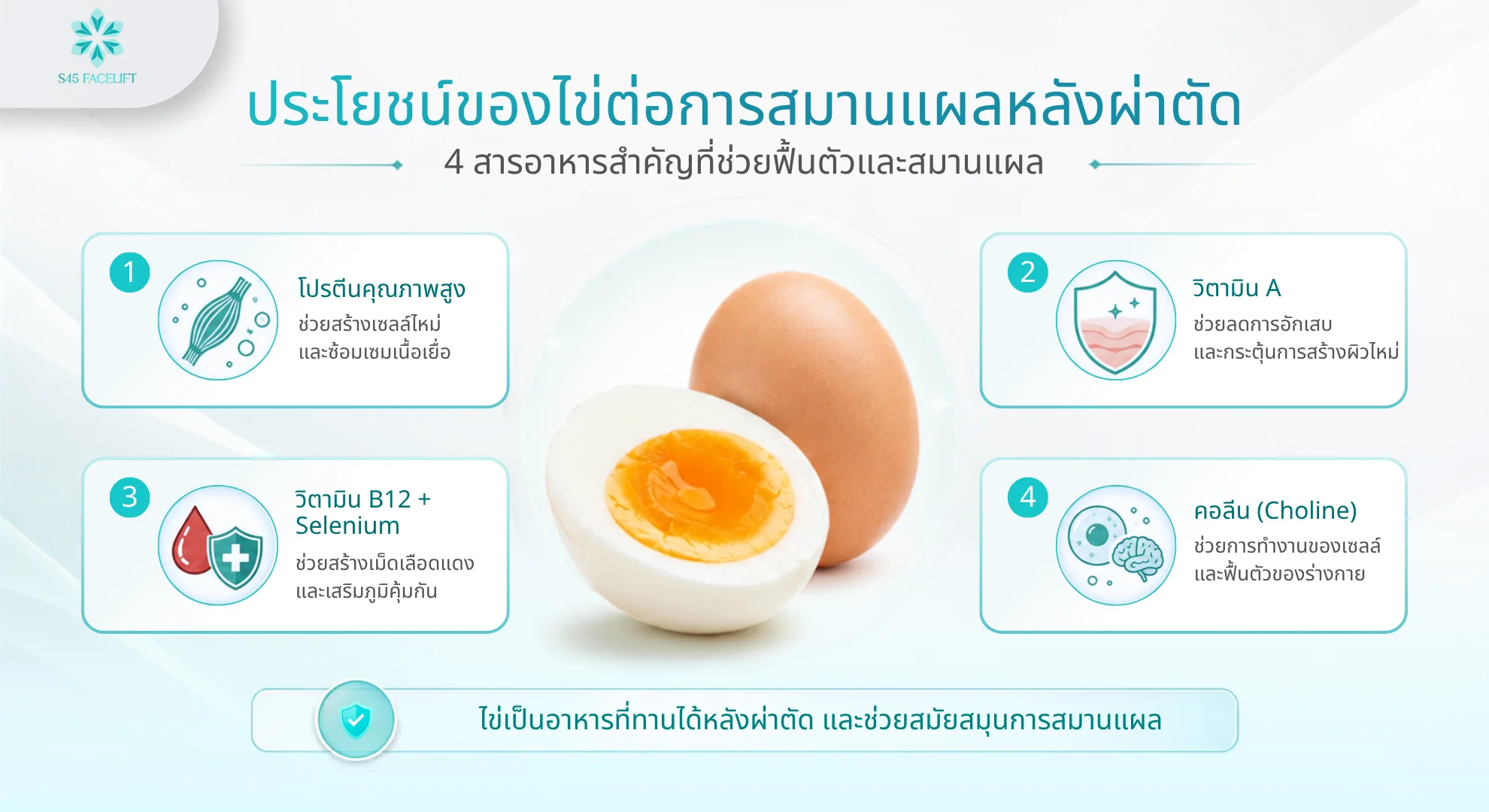
The main benefits of eggs for wound healing are as follows.
High-Quality Protein
An egg contains about 6g of protein, with all 9 essential amino acids the body needs. Protein is the main building material for new cells and for repairing tissue damaged by surgery, helping wounds close and new tissue become strong.
Vitamin A
Vitamin A in eggs helps reduce inflammation in wounds, stimulates new skin cells and supports the immune system so the body can resist infection. It is an important vitamin during wound healing that many people overlook.
Vitamin B12 and Selenium
Vitamin B12 helps the body make red blood cells and new cells, while selenium is an antioxidant mineral that helps reduce inflammation and supports the immune system. Both work together to help the body recover from surgery.
Choline
Egg yolks are high in choline, a nutrient that supports cell membranes and the nervous system and is important for making new cells throughout the body, including around the surgical wound.
Precautions When Eating Eggs After Rhinoplasty
Although you can eat eggs and they support wound healing, there are some precautions to follow so that you avoid problems and get the most benefit. Eating eggs the right way helps lower risks and supports wound healing.
In the first 7 to 14 days after surgery, the immune system is temporarily weaker, so choosing eggs that are fully cooked and prepared hygienically is more important than usual.
The main precautions are as follows.
Choose Fully Cooked Eggs
In the first 14 days, eat eggs that are fully cooked, such as hard-boiled eggs, steamed eggs, omelettes or soft-boiled eggs cooked through. Avoid raw eggs, half-cooked soft-boiled eggs and fried eggs with runny yolks, because they may contain salmonella bacteria, which can affect the immune system.
Recommended Amount
Eating 1 to 2 eggs a day is a suitable amount that helps your body get enough protein. Eating more does not make wounds heal faster and may raise cholesterol levels over the long term.
People With an Egg Allergy Need Extra Care
If you have a history of egg allergy, avoid eggs and choose other sources of protein instead, such as fish, cooked chicken or beans. Tell your doctor before surgery so they can plan suitable food for you.
When Can I Eat Eggs After Rhinoplasty? A 14-Day Timeline
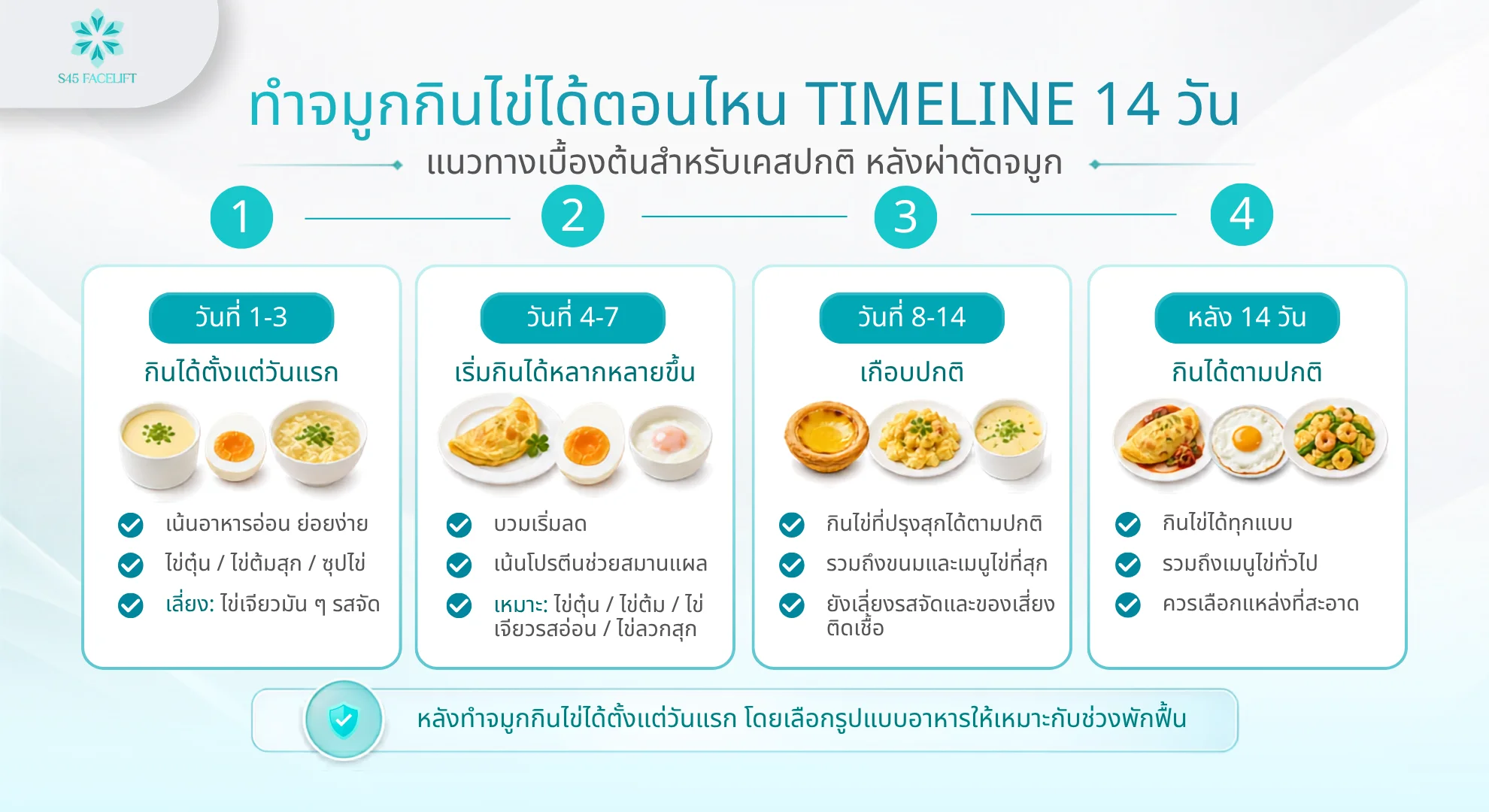
Many people wonder when to start eating eggs after rhinoplasty, whether they can eat them on the first day or need to wait some days. The answer is that you can eat them from the first day, but the suitable way to prepare them changes with the time since surgery.
Understanding the timeline helps you plan your meals for each stage and look after yourself properly. At each stage, your body has different needs and a different ability to take in food.
The following advice is an overview for typical cases. Some people may need to adjust it according to advice from their own doctor.
Days 1 to 3 After Surgery
During this time the wound is still new and the body is in the acute inflammatory stage. Focus on soft, easy-to-digest food to reduce swelling and avoid affecting the nose. You can eat steamed eggs, hard-boiled eggs or egg soup. Avoid omelettes cooked in oil and strongly flavoured food.
Days 4 to 7 After Surgery
Swelling starts to go down and the body starts the wound-healing stage. You can eat eggs in more ways, such as steamed eggs, mildly seasoned omelettes, boiled eggs or soft-boiled eggs cooked through. During this time, focus on protein to help repair tissue.
Days 8 to 14 After Surgery
You can eat almost normally, except for strongly flavoured food and foods with a chance of infection. All fully cooked eggs can be eaten as normal, including egg tarts, Thai egg cakes and other cooked egg dishes.
After 14 Days
You can eat eggs in any form as normal, including half-cooked soft-boiled eggs and dishes with raw egg (if the source is clean and your body has recovered well). At this stage, the internal wounds have started to heal and the body has recovered from surgery. See more advice on looking after yourself at How to reduce swelling after rhinoplasty
Can I Eat Chicken After Rhinoplasty?
Another question that goes with eggs is “can I eat chicken after rhinoplasty?”. The answer is yes. Chicken is another source of high-quality protein that supports wound healing, similar to eggs. There is also no medical evidence for the belief that chicken makes wounds itchy.
However, choosing the type of chicken and how it is cooked is as important as choosing eggs. Properly cooked chicken is suitable, but avoid fried chicken or chicken cooked in a lot of oil for the first 7 to 14 days, because fried food slows down the reduction of swelling and affects recovery.
The principles for choosing chicken after rhinoplasty are as follows.
Which Kinds of Cooked Chicken You Can Eat
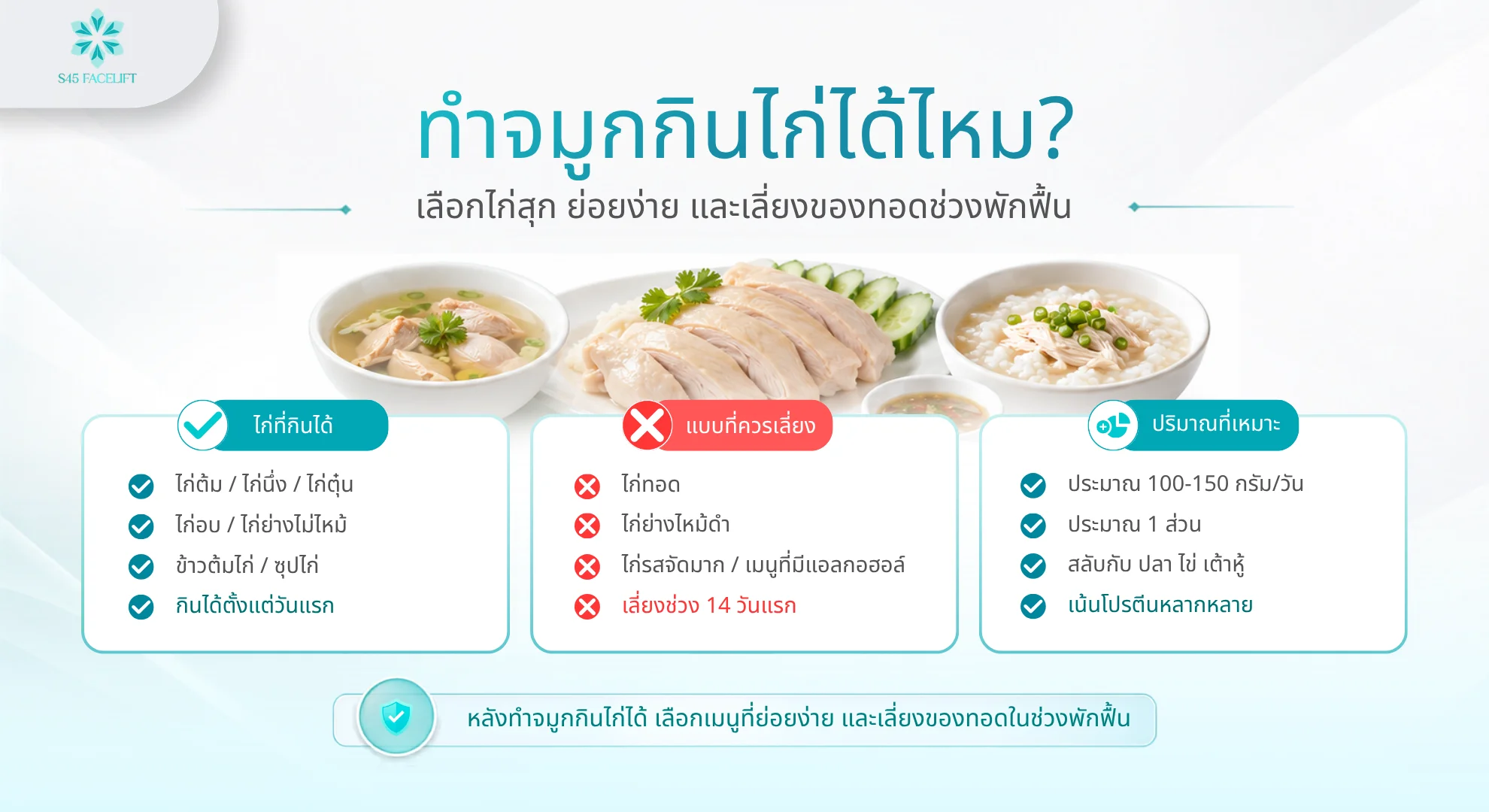
Boiled, steamed, stewed or baked chicken, grilled chicken that is not charred, and shredded chicken in rice porridge or soup can be eaten from the first day after surgery. They are high in protein, low in fat and easy to digest, which suits the recovery period.
Which Kinds of Chicken to Avoid
Avoid fried chicken, burnt grilled chicken, very strongly seasoned chicken, raw chicken and chicken in dishes that use alcohol as an ingredient for the first 14 days after surgery, because they may cause swelling or trigger inflammation.
Suitable Amount
You can eat 100g to 150g of chicken a day (about 1 portion), together with other kinds of protein so your body gets a variety of nutrients. You do not need to eat only chicken. You can alternate it with fish, eggs and tofu.
Other Foods People Often Ask About
Besides eggs and chicken, there are many other foods people often ask whether they can eat after rhinoplasty. Having a clear answer for each food makes it easier to plan your daily meals.
Each food involves different factors. For some it is about flavour, for some it is about hygiene, and for some it is about ingredients that affect swelling or inflammation.
Answers for the popular foods people ask about most are as follows.
Nile Tilapia
You can eat it because it is a freshwater fish, not seafood that may cause an allergic reaction or trigger inflammation. Nile tilapia is a good source of protein and easy to digest. It can be steamed, boiled or fried in a little oil. Avoid tilapia fried in a lot of oil for the first 7 to 14 days.
Noodles
You can eat them. Mildly flavoured noodles in clear broth can be eaten from the first day after surgery, but avoid strongly flavoured tom yum noodles or boat noodles for the first 7 days. Choose noodles with protein, such as shredded chicken or fish balls, to support wound healing.
Sticky Rice
You can eat it. Sticky rice does not affect the surgical wound and there is no medical reason to avoid it. You can eat it as a main meal with protein such as grilled chicken that is not charred or steamed fish. Avoid eating sticky rice with spicy papaya salad, because the strong flavour of papaya salad affects swelling.
Fried Food
Avoid fried food such as fried chicken, fried fish and fried pork for the first 7 to 14 days, because oil slows down the reduction of swelling and causes ongoing inflammation. After 2 weeks you can start eating it again, but choose food fried in clean oil and do not eat it too often.
Omelettes
You can eat them. An omelette made with little oil and mild seasoning can be eaten from day 4 or 5 after surgery. For the first 1 to 3 days, steamed eggs or boiled eggs are recommended instead to avoid oil.
Egg Tarts
You can eat them after 7 days. Freshly baked egg tarts from a clean shop can be eaten once the wound has started to heal. For the first 7 days, avoid them because the pastry and custard filling may be high in sugar and fat, which may affect recovery.
Papaya Salad With Salted Crab and Fermented Fish
Avoid for the first 14 days, because salted crab and fermented fish are fermented foods that may contain bacteria, and papaya salad has a strong flavour that affects swelling. See more at Can I eat papaya salad with fermented fish?
Durian
Avoid in the early period, because durian is traditionally considered a ‘heating’ food in Thailand and is high in sugar, which may affect inflammation and swelling. Read more at Can I eat durian after rhinoplasty?
Foods to Eat After Rhinoplasty to Support Healing
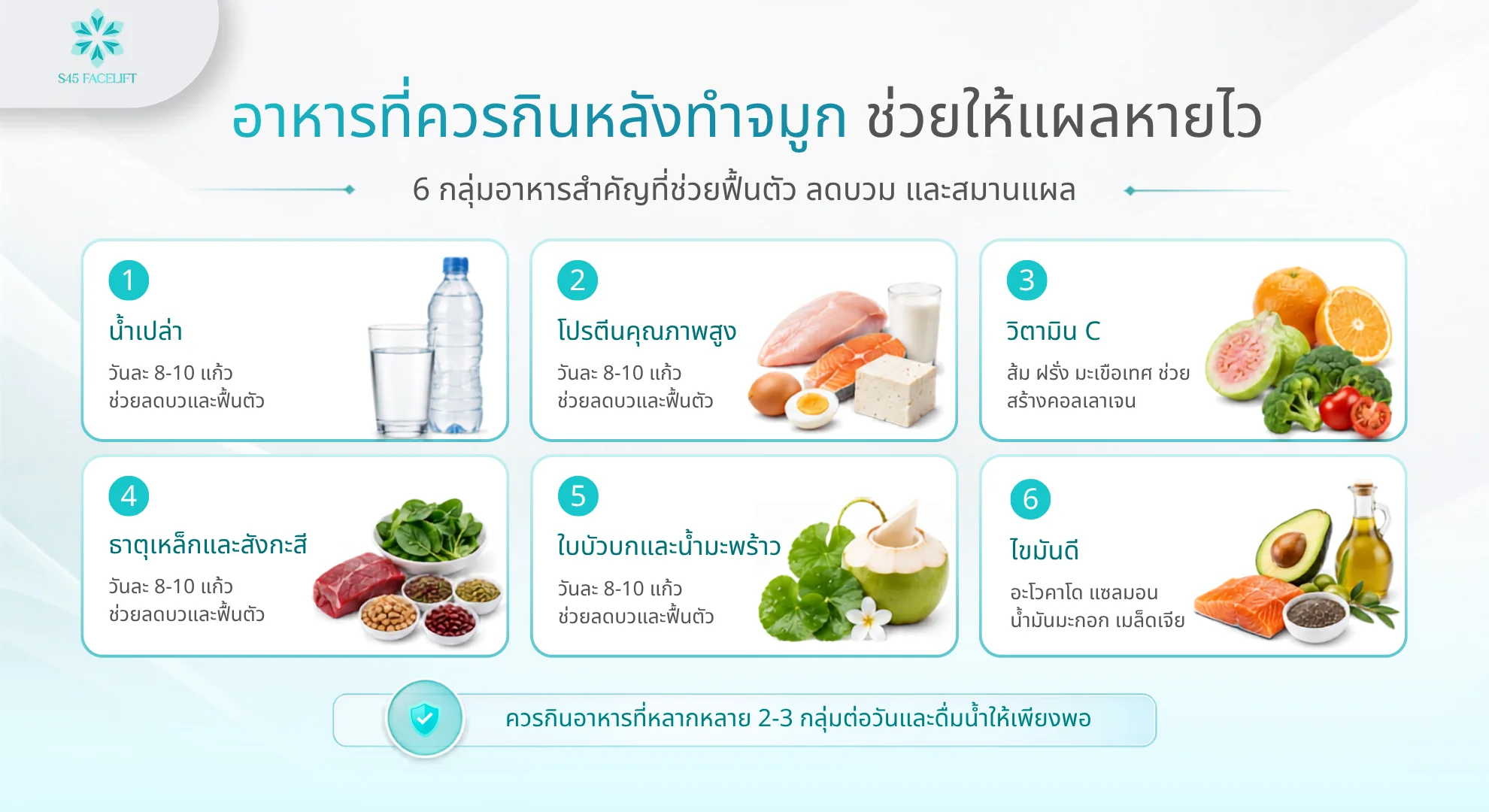
Now that you know eggs are fine to eat and good for wounds, the next step is to know which other foods to focus on to help your body recover and your wounds heal.
These recommended foods work together to build tissue, reduce inflammation and support the immune system so the body can resist infection. Eating a variety of foods from this group is more helpful than eating only one kind.
In the first 1 to 2 weeks after surgery, try to include at least 2 to 3 of these food groups in your daily meals.
1. Water
Drink 8 to 10 glasses of clean water a day (about 2 to 2.5 litres) so your body has enough fluid for wound healing. Skin cells need water to repair and build new tissue. Water also helps flush out waste and reduce swelling after surgery.
2. High-Quality Protein
Eggs, chicken, freshwater fish, lean pork, tofu and plain milk are sources of protein needed to build new cells. Eat 60g to 80g a day (about 3 to 4 portions), spread across your meals.
3. Vitamin C
Oranges, pineapple, guava, strawberries, sweet peppers, broccoli and tomatoes are sources of vitamin C, which helps build collagen, an important part of skin and tissue. Vitamin C also supports the immune system to help resist infection.
4. Iron and Zinc
Lean red meat, liver, dark green leafy vegetables, beans and whole grains provide iron and zinc, which are needed to make blood and support wound healing.
5. Gotu Kola and Coconut Water
Gotu kola (Asiatic pennywort) leaves contain substances that stimulate collagen production, and fresh coconut water is traditionally believed in Thailand to reduce inflammation, swelling and bruising. Both may help swelling go down in the first 7 to 14 days.
6. Healthy Fats
Avocado, salmon, olive oil and chia seeds are sources of healthy fats that help reduce inflammation and support new cell growth. Healthy fats are different from the trans fats in fried food, which are worth avoiding.
See a full list of recommended meals after rhinoplasty at What to eat after rhinoplasty
Foods to Avoid After Rhinoplasty
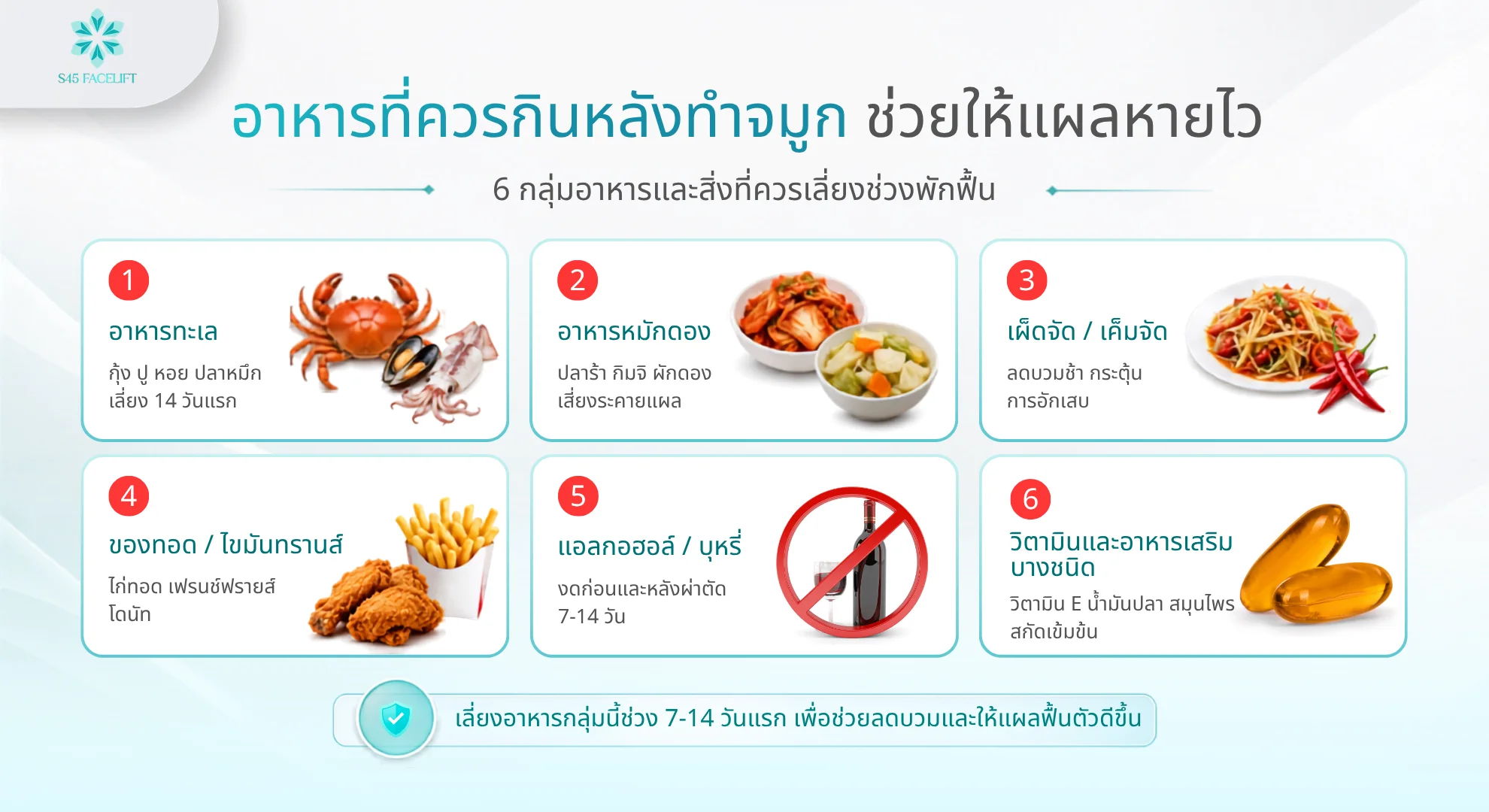
While many foods support wound healing, some foods have the opposite effect. They make wounds heal more slowly, raise the chance of inflammation or trigger swelling.
Avoiding these foods for the first 7 to 14 days is important, because this is when the wound is still delicate and the body is still in the acute inflammatory stage. Eating them may make recovery take longer than usual.
The foods to avoid are as follows.
1. Seafood
Avoid prawns, crab, shellfish, squid and all other seafood for the first 14 days, because they may trigger an allergic reaction and make the wound itchy or inflamed. Freshwater fish such as Nile tilapia, snakehead fish and red tilapia can be eaten as normal.
2. Pickled and Fermented Foods
Fermented fish, papaya salad with salted crab and fermented fish, kimchi, pickled vegetables and all other pickled or fermented foods may contain bacteria that can infect the wound. Strictly avoid them for the first 14 days.
3. Very Spicy and Very Salty Food
This includes spicy papaya salad, spicy tom yum, spicy curry, instant noodles and salty snacks. Very spicy food makes blood flow faster and triggers swelling, while high sodium makes the body retain water so swelling goes down more slowly.
4. Fried Food and Trans Fats
This includes fried chicken, fried pork, fried fish, chips (French fries), doughnuts and all other fried food, because oil causes ongoing inflammation and extends recovery. Avoid them for the first 14 days.
5. Alcohol and Cigarettes
Stop drinking beer, wine and spirits and stop smoking for at least 7 to 14 days before surgery and after it, because alcohol reduces blood clotting and smoking reduces blood flow. Both make wounds heal much more slowly.
6. Some Vitamins and Supplements
Vitamin E, fish oil (Omega-3 in supplement form), garlic extract and concentrated ginger extract may affect blood clotting. Stop taking them for at least 7 days before surgery and after it, or consult your doctor before taking them.
Summary Table of Foods to Eat and Foods to Avoid
To make it easier to plan your daily meals, the following table summarises each food and how to eat it at each stage after rhinoplasty. You can keep it for easy reference.
| Type of food | Days 1 to 3 | Days 4 to 14 | After 14 days |
| Boiled eggs / steamed eggs | OK to eat | OK to eat | OK to eat |
| Omelettes / well-cooked fried eggs | Limit | OK to eat | OK to eat |
| Raw eggs / half-cooked soft-boiled eggs | Avoid | Avoid | OK to eat |
| Cooked chicken | OK to eat | OK to eat | OK to eat |
| Fried chicken | Avoid | Avoid | OK to eat |
| Nile tilapia / freshwater fish | OK to eat | OK to eat | OK to eat |
| Seafood (prawns, crab, shellfish) | Avoid | Avoid | Watch for reactions |
| Noodles in clear broth | OK to eat | OK to eat | OK to eat |
| Spicy tom yum noodles | Avoid | Limit | OK to eat |
| Sticky rice | OK to eat | OK to eat | OK to eat |
| Spicy papaya salad with salted crab and fermented fish | Avoid | Avoid | Limit |
| General fried food | Avoid | Avoid | Limit |
| Egg tarts / Thai egg cakes | Limit | OK to eat | OK to eat |
| Pickled and fermented foods | Avoid | Avoid | OK to eat |
| Coconut water | OK to eat | OK to eat | OK to eat |
| Alcohol / cigarettes | Avoid | Avoid | Avoid for at least 1 month |
Why Consult S45 Clinic About Aftercare
Care after surgery is as important to the result of rhinoplasty as the skill of the surgeon. If you follow advice on food and self-care strictly, the result is more likely to match your expectations. S45 Clinic pays attention to care at every stage, under our promise “Because all beauty comes from care”
Surgeons Qualified in Their Fields
Our surgeons are qualified in otolaryngology (ear, nose and throat surgery) and in the subspecialty of facial plastic and reconstructive surgery, focus on nose cases, and give advice on self-care and suitable food at each stage of recovery. See more about the service at Rhinoplasty (nose surgery)
An Aftercare System With Ongoing Follow-Up
S45 Clinic has a dedicated aftercare team that follows your recovery and answers questions about self-care, including food, for 1 year after surgery. You can ask about anything that worries you, so you can go through recovery with confidence. See more about recovery time at How many days rib rhinoplasty recovery takes
Individual Advice Based on the Technique Used
Each rhinoplasty technique (closed, open and open rib rhinoplasty) has a slightly different recovery period and food advice. Our surgeons give advice that matches your case, rather than standard advice that may not suit your individual situation.
Frequently Asked Questions About Eating Eggs After Rhinoplasty
What Happens If I Eat Eggs by Mistake After Rhinoplasty?
Nothing harmful. Eggs do not harm the surgical wound, so there is no need to worry if you eat them by mistake. Your body in fact gets protein and vitamins that support wound healing. What matters more is eating seafood, fermented food or strongly flavoured food by mistake in the first 14 days.
Can I Eat Chicken After Rhinoplasty, and After How Many Days?
You can eat chicken from the first day after surgery. Chicken is a source of high-quality protein, similar to eggs, that supports wound healing. Choose chicken cooked by boiling, steaming, stewing or baking, and avoid fried or charred chicken for the first 14 days.
What Can I Eat During the First Week After Rhinoplasty?
During the first week after surgery, eat soft, easy-to-digest food, with a focus on protein, vegetables, fruit and plenty of water. Examples include chicken rice porridge, steamed eggs, steamed Nile tilapia, noodles in clear broth, stir-fried vegetables and seasonal fruit. Avoid strongly flavoured food, fried food, seafood and fermented food.
Can I Eat an Omelette After Rhinoplasty?
You can eat it from day 4 or 5 after surgery, because an omelette is fried in oil. Use little oil and mild seasoning. For the first 1 to 3 days, eat steamed eggs or boiled eggs instead to avoid oil.
Can I Eat Eggs After Any Type of Plastic Surgery?
You can eat eggs from the first day after any type of surgery, not just rhinoplasty, because eggs are a source of protein that supports the body’s wound healing. This includes caesarean section, general surgery and other aesthetic surgery. Fully cooked eggs are recommended for the first 14 days.
Can I Eat Egg Whites or Egg Yolks When I Have a Wound?
You can eat both egg whites and egg yolks as normal when you have a wound. Egg whites are high in protein, while egg yolks contain protein, vitamins and choline. Both parts help wound healing. There is no medical evidence for the belief that you need to eat only one part.
What Can I Eat After Rhinoplasty to Support Healing?
Foods that support wound healing well are those with high-quality protein (eggs, chicken, fish), vitamin C (oranges, guava, strawberries), gotu kola, coconut water, iron and zinc, along with drinking plenty of water. Eating a variety of foods from this group is more helpful than eating only one kind.
What Can I Eat 14 Days After Rhinoplasty?
After 14 days you can eat almost normally. Eggs in any form, cooked chicken and meat, all kinds of fish, vegetables and fruit, noodles and desserts can be eaten as normal. What still needs care is alcohol and cigarettes. Avoid them for at least 1 month so the internal wounds can fully strengthen.
Summary
You can eat eggs after rhinoplasty, and eggs support wound healing because they contain high-quality protein, vitamin A, vitamin B12 and selenium, which the body needs to heal wounds. There is no medical evidence for the belief that eggs make wounds heal slowly or cause raised scars. You can eat cooked eggs, such as boiled eggs, steamed eggs or omelettes, from the first day after surgery.
Besides eggs, many other foods support wound healing, such as protein from chicken and fish, fruit and vegetables rich in vitamin C, gotu kola, coconut water and foods containing iron and zinc. Avoid seafood, pickled and fermented foods, very spicy food, fried food, alcoholic drinks and cigarettes in the first 7 to 14 days. As for chicken, Nile tilapia, noodles in clear broth and sticky rice, you can eat them from the first day, but avoid fried food, spicy papaya salad with salted crab and fermented fish, and durian during recovery.
The key is to follow your doctor’s advice and watch for symptoms. If you have unusual symptoms such as redness, swelling and warmth, severe pain, fever or a food allergy, contact the clinic straight away. Looking after yourself properly, together with choosing an experienced surgeon and a clinic with a good aftercare system, is key to helping the surgical result match your expectations.
Because every nose structure…
is different
An otolaryngologist with subspecialty training in facial plastic and reconstructive surgery assesses every case before treatment and gives advice based on your actual concerns.
“Reveal the beauty within you”
Message us online
Surgery and medical procedures carry risks. Find out about them and consult a doctor before you decide. Results depend on each person.