Spicy Food After Rhinoplasty, Can You Eat Thai Papaya Salad? What to Know and When You Can Eat It

Example image used in advertising. Not a real patient.
Key points
- Can you eat Thai papaya salad after rhinoplasty? You can start eating it from 14 days after surgery, or after your stitches have been removed and the wound is completely dry. Choose a mild version that is not very spicy or very salty.
- Ingredients in Thai papaya salad such as dried shrimp and peanuts carry a risk of allergy and contamination, salt (sodium) may trigger swelling from fluid retention, and chillies may give you a runny nose.
- A timeline for eating papaya salad: avoid all types of papaya salad for the first 14 days, at 1 month you can start eating Thai papaya salad with its usual flavour, and at 2 months you can start eating strongly flavoured papaya salad or dishes with pla ra. Follow the advice of the doctor looking after you.
- Avoid papaya salad with pla ra for 1 to 2 months, to avoid bacterial and parasite infections and the histamine often found at high levels in fermented and pickled foods.
- If you eat it by mistake, stop eating straight away, drink clean water to help flush out sodium, and watch for red swelling or fluid leaking from the wound. If you notice anything unusual, see a doctor promptly.
Food is one of the first things to be careful about for people who have just had rhinoplasty. A bold, tangy dish like papaya salad (som tam) can leave many people wondering whether they can eat Thai papaya salad after rhinoplasty. Although Thai papaya salad does not contain pla ra (Thai fermented fish) or pickled ingredients, its strong seasoning, dried ingredients and high sodium may still affect how the wound heals and how the swelling in your nose goes down during recovery.
In this article, S45 Clinic shares what to know about the ingredients in Thai papaya salad, a recovery timeline for when you can start eating it, and how it compares with papaya salad with pla ra, to help you plan your aftercare in the right way.
In This Article
Can You Eat Thai Papaya Salad After Rhinoplasty, and When Can You Start?
Can you eat Thai papaya salad after rhinoplasty? In general, yes, you can, but you need to wait 14 days or more, or until your stitches have been removed and the surgical wound is completely dry. Avoid it during the first week, because the skin and the inner lining are still in the early stage of healing. Eating sour, salty or spicy food may increase blood flow, which can make the wound red and swollen or cause some bleeding. Your doctor will assess you and tell you the right timing for your case.
Thai papaya salad is a more suitable choice than pickled dishes or pla ra, but make it milder, use fewer chillies, avoid very salty seasoning and choose freshly prepared ingredients, to lower the chance of irritation to your airways and the skin around your nose.
Which Ingredients in Thai Papaya Salad Carry Risks for the Surgical Wound?
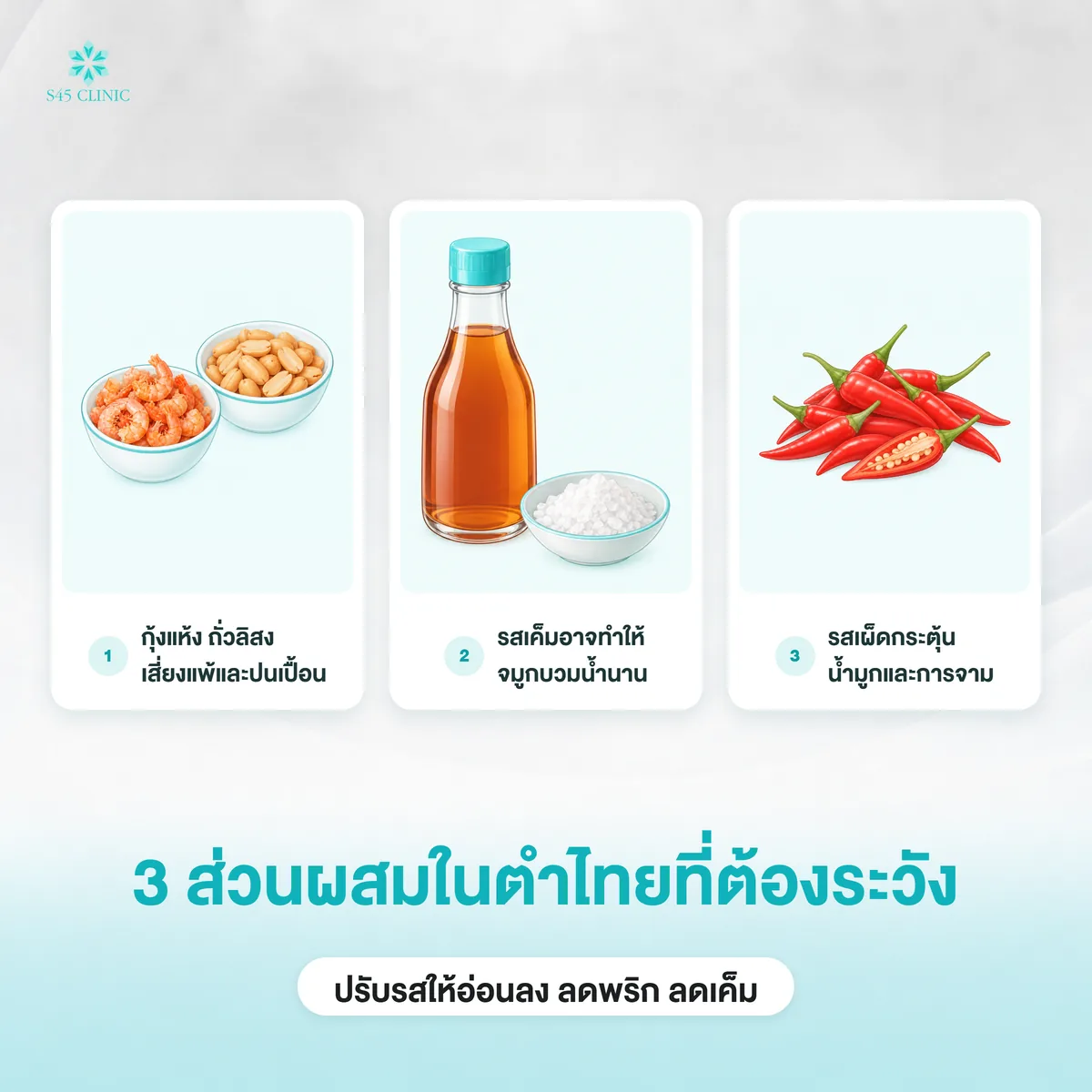
After rhinoplasty, Thai papaya salad contains several ingredients and seasonings that may affect how the surgical wound heals. Although it does not contain raw pla ra, its main ingredients, such as dried shrimp, peanuts, salt (sodium) and chillies, need care, because they carry a risk of inflammation and swelling in the skin of your nose.
Dried Shrimp and Peanuts, Ingredients With a Risk of Allergy and Contamination
Dried shrimp and peanuts can trigger allergic reactions and carry a risk of contamination with mould. Some dried shrimp may have added colouring and be high in sodium. If you have a history of seafood allergy or food colouring allergy, your body may release substances that cause an allergic reaction, giving you an itchy rash, sneezing or red swelling of the skin around the surgical wound.
Peanuts stored in hot, humid conditions may also contain aflatoxin (a toxin made by certain moulds), which research in animals has found to weaken the immune system. During your recovery, avoid peanuts that have been stored for a long time or smell musty. If you want to eat Thai papaya salad, choose clean, freshly roasted peanuts, or ask the shop to leave out the dried shrimp and peanuts for now.
Salty Flavours and Sodium May Keep Your Nose Swollen for Longer
The high sodium content from fish sauce and dried shrimp in Thai papaya salad may make your body hold on to water under the skin, known as fluid retention, because sodium draws water into the spaces between cells. This can make the skin on the bridge and tip of your nose, where you have just had surgery, feel swollen and tight, and the swelling may go down more slowly than usual.
Eating very salty food in the first 1 to 2 weeks after surgery may also make your body hold on to more water and slow down how quickly the swelling goes down. If you are wondering how many days it takes for rhinoplasty swelling to go down, avoid salty flavours during this time.
Very Spicy Flavours Trigger a Runny Nose and Sneezing That May Put Strain on the Wound
Capsaicin (the substance that makes chillies taste hot) stimulates the nasal lining and blood vessels, which may make your nose run heavily while you eat. Wiping, dabbing or blowing your nose may increase the pressure inside your nose and put strain on the stitches inside.
Spicy food may also make you sneeze. Each sneeze tightens your facial muscles and sends a jolt through the cartilage and the skin of your nose, which may affect the stitches or cause a little bleeding from the nose (a nosebleed). This is why it is recommended to avoid chillies or keep them to a very small amount.
How Many Days After Rhinoplasty Can You Eat Papaya Salad? A Recovery Timeline
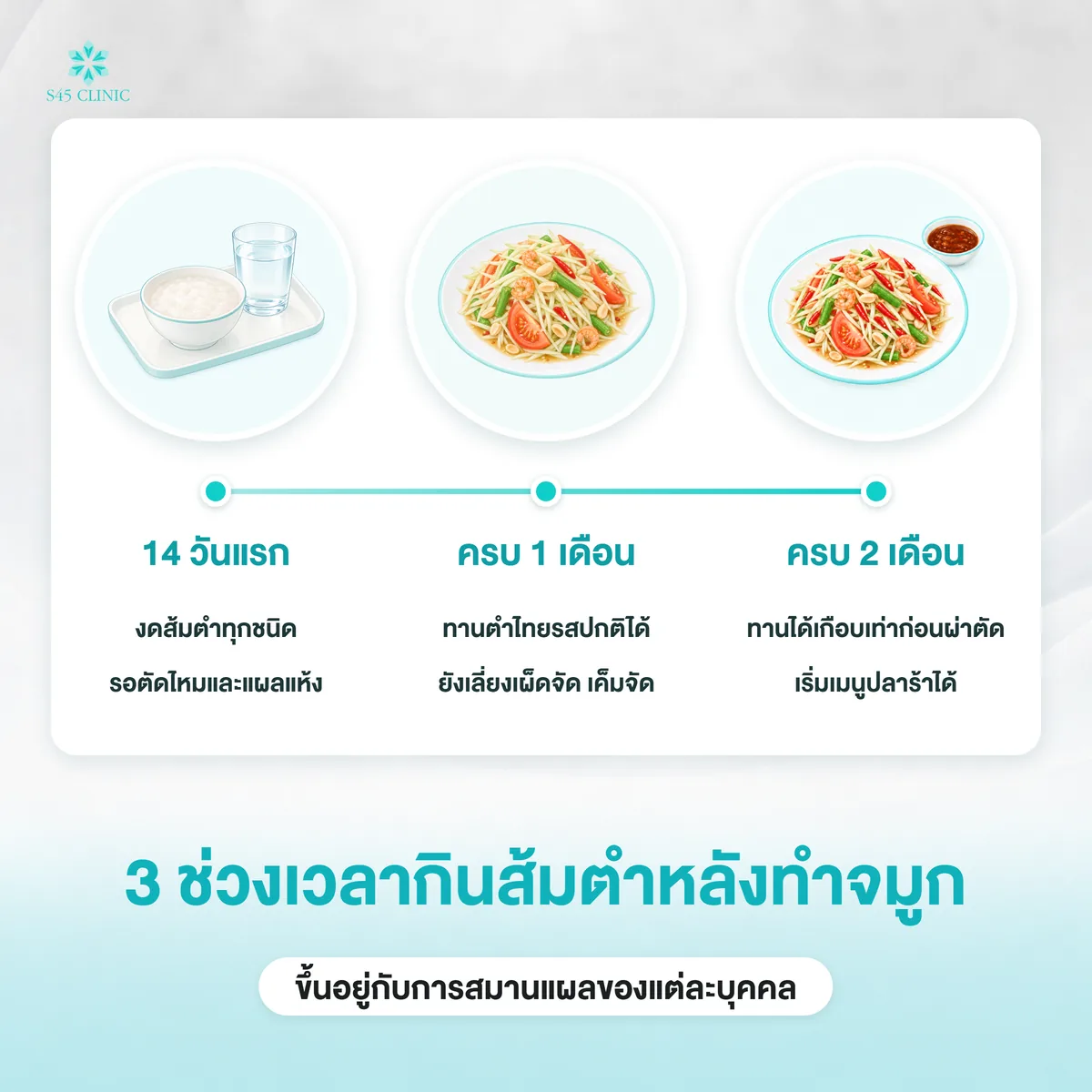
How many days after rhinoplasty you can eat papaya salad depends on how your surgical wound heals and the condition of your skin, which differ from person to person. Understanding the timing of each stage helps you judge when your body is ready, step by step.
The First 14 Days After Surgery and the Time Before Stitch Removal
Avoid all types of papaya salad during the first 14 days after surgery, because the surgical wound is not yet completely dry, especially before your stitches are removed. If you are wondering how many days after rhinoplasty the stitches are removed, it is usually around 7 to 10 days after surgery. During this time, the skin inside is still delicate and has a risk of inflammation.
If you are wondering when you can eat papaya salad after rhinoplasty, waiting the full 14 days and having your stitches checked and removed is a suitable starting point. Once the wound is completely dry, you can gradually start eating mild Thai papaya salad that is not very spicy or very salty. Avoid chewing raw papaya strips that are very hard or crunchy, to reduce movement around the base of your nose.
Read more about food: 7-Eleven Food After Rhinoplasty, What You Can Eat and Easy Meals for Recovery
What Kind of Papaya Salad Can You Eat 1 Month After Rhinoplasty?
If you are wondering whether you can eat papaya salad 1 month after rhinoplasty, the answer is that you can start eating it. At 1 month, the skin and the outer surgical wound have healed and become stronger, so you can go back to eating Thai papaya salad with its usual flavour, corn papaya salad or fruit papaya salad with a well-balanced flavour, as suits you. Your doctor will assess you and tell you the right timing for your case.
However, still be careful with very spicy or very salty papaya salad, because the swelling in the skin under your nose is still going down. Drink plain water after meals, as it helps your body flush out extra sodium and lowers the chance of fluid build-up at the tip of your nose.
Can You Eat Papaya Salad as Usual 2 Months After Rhinoplasty?
At 2 months after rhinoplasty, the surgical wound and your existing bone structure inside have gradually become stronger. If you are wondering whether you can eat papaya salad 2 months after rhinoplasty, in general you can go back to eating papaya salad almost as you did before surgery, in both spiciness and the range of dishes. Follow the advice of the doctor looking after you.
Still pay attention to how your body responds. If the tip of your nose feels tight or more swollen after eating strongly flavoured food, drink a suitable amount of clean water and make your next meal less strongly flavoured.
How Long After Rhinoplasty Can You Eat Pla Ra, and Why Do You Need to Wait Longer Than for Thai Papaya Salad?
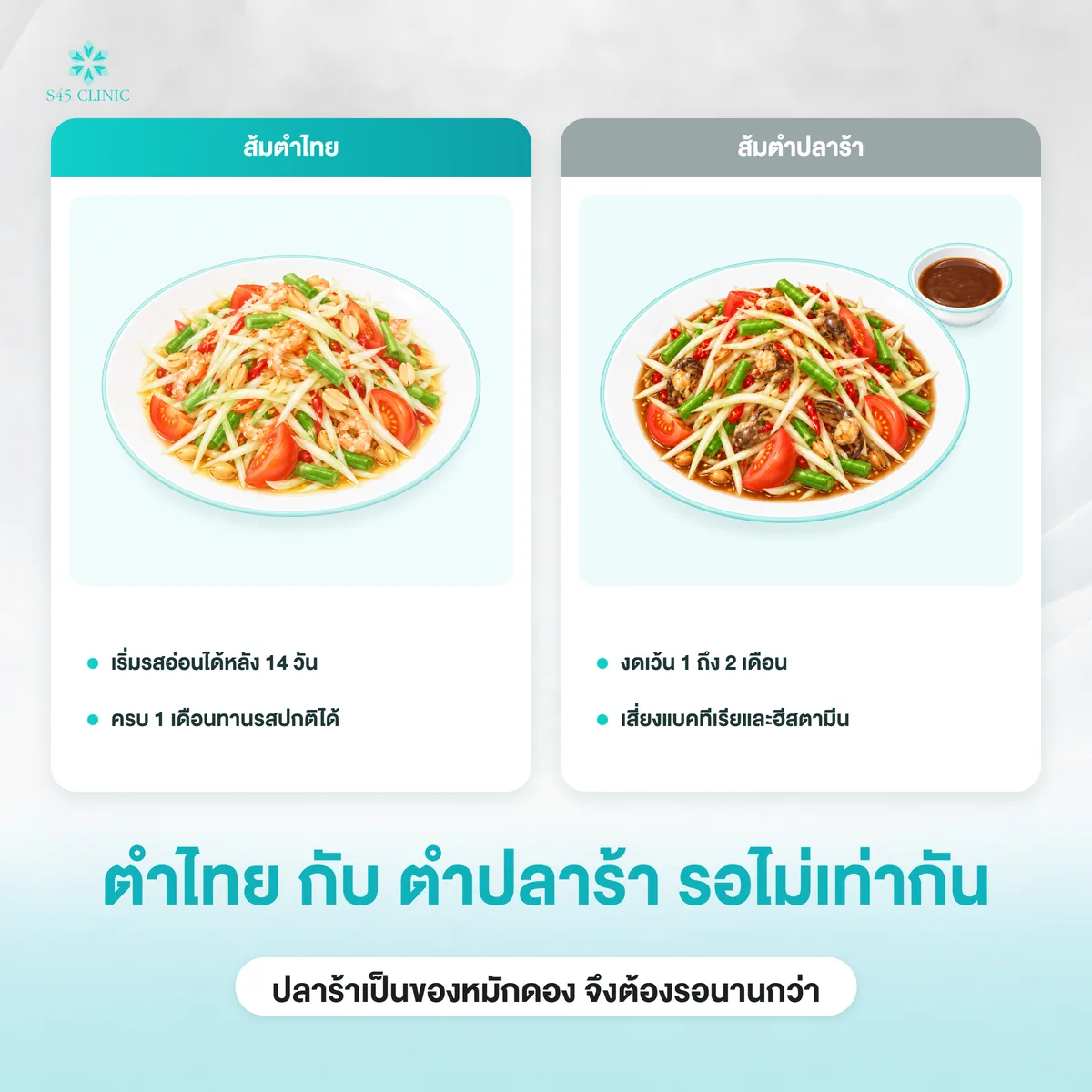
If you are wondering how long after rhinoplasty you can eat pla ra, papaya salad with pla ra generally has stricter medical limits than Thai papaya salad, and doctors usually advise avoiding it for longer. This is because the way pla ra is produced and fermented involves factors that may affect how the surgical wound heals and your immune system.
Why You Need to Avoid Papaya Salad With Pla Ra and Pickled Foods
Avoiding papaya salad with pla ra and pickled foods is an important way to lower the risk of bacterial and parasite infections, because raw pla ra and pickled raw crab can carry many kinds of microorganisms. If you get an infection that causes gastroenteritis (a stomach upset) or diarrhoea, your immune system becomes weaker, which may affect how the surgical wound heals.
Many fermented and pickled foods may also contain high levels of histamine (a substance that widens blood vessels and can cause itching). Together with their high sodium content, this is why doctors usually advise avoiding fermented foods for around 1 to 2 months, so the skin around your nose and the surgical wound can heal step by step.
Does Cooked Papaya Salad With Pla Ra Affect Wound Healing After Rhinoplasty?
Boiling pla ra until cooked can reduce some of the bacteria and contamination. However, if you are wondering whether you can eat cooked pla ra after rhinoplasty, it is still not recommended during the first month after surgery, because the heat from boiling cannot reduce the very high sodium content or break down the histamine that has built up. Your doctor will assess you and tell you the right timing for your case.
If you eat boiled pla ra too early, the sodium may still make your nose swell from fluid retention, and the histamine, which heat cannot destroy, also stays in the food. If you want to eat boiled pla ra, wait until after 1 month, or until 2 months. Follow the advice of the doctor looking after you.
Check foods to avoid: Can I Eat Eggs After Rhinoplasty? Foods to Eat and Avoid After Rhinoplasty
Can You Eat Papaya Salad Before Rhinoplasty? What to Watch Before Your Surgery Day
Can you eat papaya salad before rhinoplasty? Yes, you can, but avoid strongly flavoured papaya salad, pickled foods and half-cooked seafood for 1 to 2 days before surgery. Eating very spicy food or papaya salad with raw pla ra before surgery may raise the risk of diarrhoea or sudden inflammation of the bowel, which makes your body lose water and minerals and may mean your surgery has to be postponed.
Follow the instructions on how to prepare for rhinoplasty carefully, especially the instruction to stop eating and drinking anything for at least 8 hours before your surgery time if you are having an anaesthetic. Choosing food that is clean, freshly cooked and easy to digest for 1 to 2 days before surgery helps your body get ready and supports your recovery after surgery.
What to Do If You Have Already Eaten Thai Papaya Salad or Som Tam
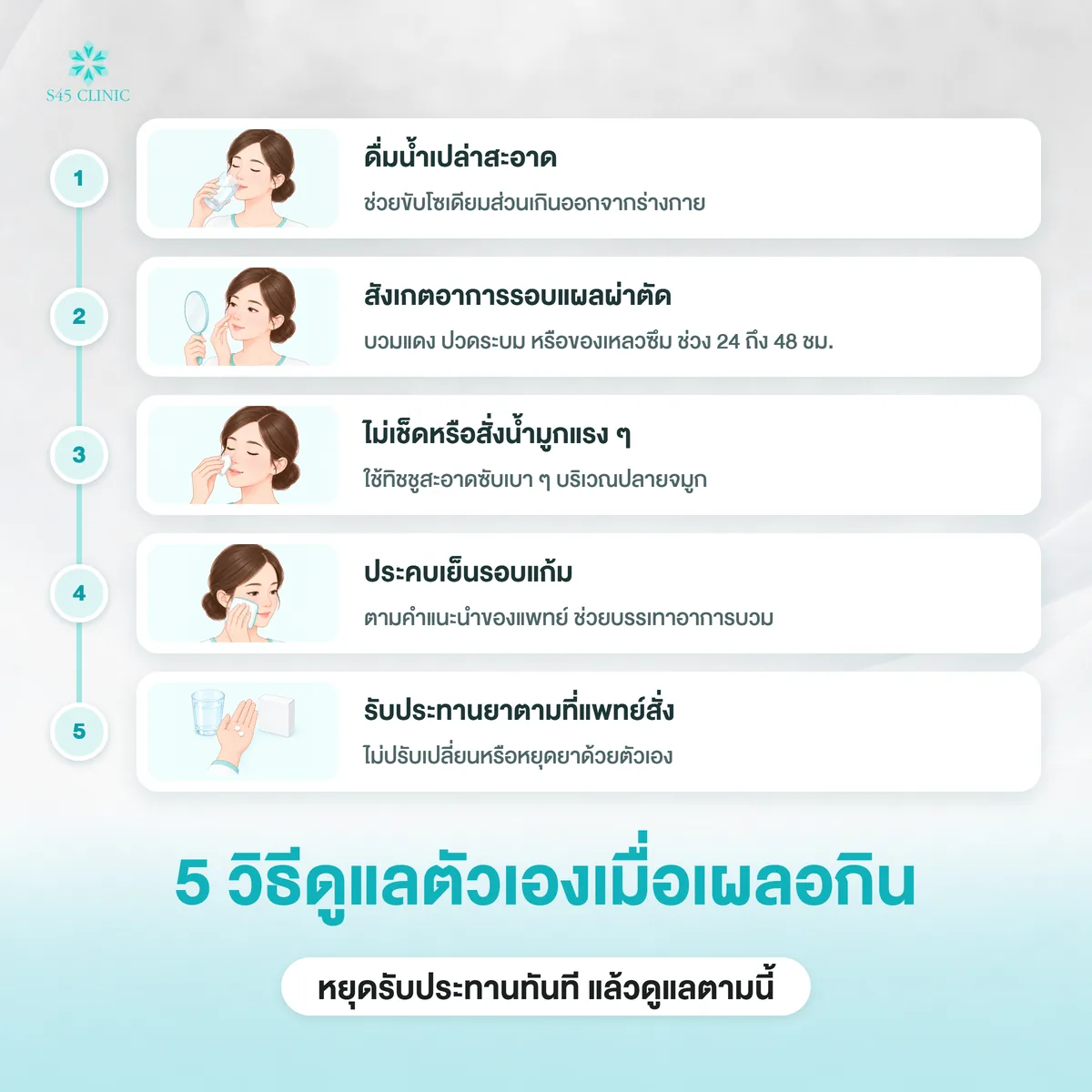
If you eat a small amount of Thai papaya salad or som tam after rhinoplasty by mistake, stop eating straight away and follow these steps to help reduce the effect on the surgical wound:
- drink clean, plain water to help your kidneys flush extra sodium out of your body and lower the chance of swelling from fluid retention under the skin
- watch the area around the surgical wound closely for 24 to 48 hours, checking for red swelling, soreness or fluid leaking
- avoid wiping, rubbing or blowing your nose hard, and if the spice gives you a runny nose, dab the tip of your nose gently with clean tissue
- use compresses around your cheeks or the sides of your nose as your doctor advises, usually cold compresses in the first week and warm compresses after 7 days, to help reduce swelling after surgery
- keep taking the medicines your doctor prescribed, and do not change or stop them yourself
Warning Signs After Eating Strongly Flavoured Food That Mean It Is Time to See a Doctor
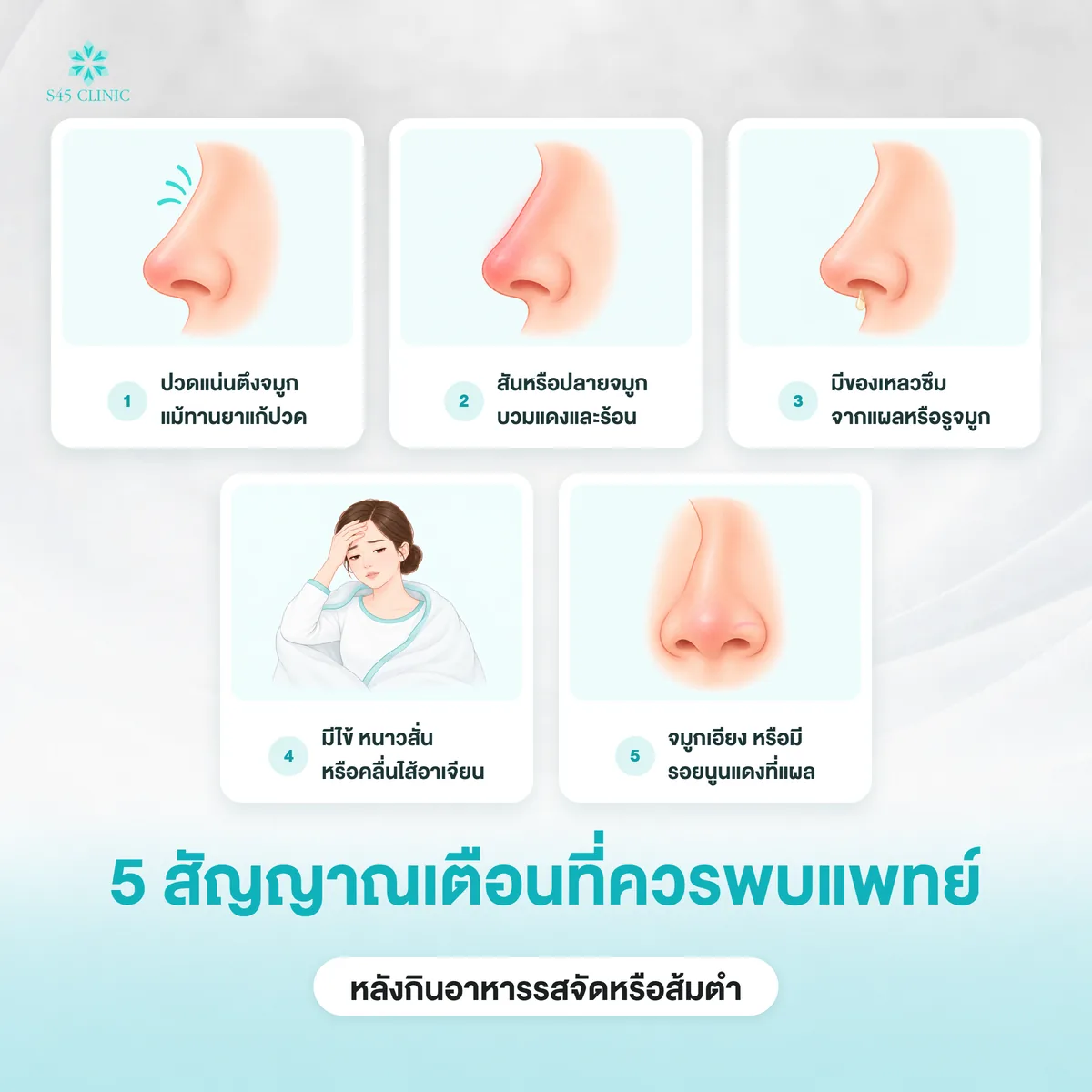
After rhinoplasty, if you notice anything unusual on your face after eating strongly flavoured food or papaya salad, contact a healthcare provider or see a doctor promptly to check whether your nose wound is infected. Warning signs not to ignore include:
- pain, pressure or tightness in your nose that keeps getting worse even after taking painkillers
- red, warm swelling of the skin on the bridge or tip of your nose that is spreading
- clear fluid, blood or pus leaking from the surgical wound or your nostrils
- fever, chills, feeling unwell, or nausea and vomiting
- your nose looking tilted, or an unusual red raised area near the surgical scar line
Aftercare and Recovery Follow-Up at S45 Clinic


For people who have had rhinoplasty, S45 Clinic places importance on continuous follow-up and assessing your progress after surgery. Your doctor checks how your skin is recovering and how your nose is settling at every appointment. Recovery differs from person to person, depending on the surgical technique and your existing anatomy, and your doctor can give you individual advice on aftercare and nutrition that suits each week of your recovery. For a list of foods you can eat after surgery, read the article on what to eat after rhinoplasty.
As for how long rhinoplasty recovery takes, recovery after rhinoplasty using rib cartilage varies from person to person and depends on the technique used. General sources state that rhinoplasty may need about 1 to 2 weeks off work. Your doctor will tell you the period that suits your case, and stitch removal is scheduled as your doctor advises. After that, the surgical scar gradually heals and fades over around 3 to 6 months, depending on each person’s skin. Following your doctor’s advice and having regular check-ups helps your nose settle into shape as it should.
Frequently Asked Questions About Eating Papaya Salad After Rhinoplasty
Can I Eat Pla Ra 1 Month After Rhinoplasty?
You can start eating a small amount if the outer and inner surgical wounds are completely dry, but choose pla ra that has been boiled until cooked and clean, and do not make it too spicy or too salty. If possible, waiting until 2 months lowers the risk of swelling from fluid retention in the skin even further. Your doctor will assess you and tell you the right timing for your case.
Can I Eat Raw Pla Ra 1 Month After Rhinoplasty?
Eating raw pla ra or pickled raw crab is still not recommended, even 1 month after rhinoplasty, because raw fermentation still carries a risk of contamination with bacteria and parasites, which may cause diarrhoea and affect the immune system as your wound heals.
Can I Eat Pla Ra 2 Months After Rhinoplasty?
At 2 months after rhinoplasty, most of the inner surgical wound and the skin around your nose have healed, so you can go back to eating papaya salad with pla ra as usual. Still choose a shop that cooks it thoroughly and keeps it clean, and always watch for tightness or swelling after meals. Follow the advice of the doctor looking after you.
Summary
Can you eat Thai papaya salad after rhinoplasty? You can start eating mild Thai papaya salad 14 days after surgery or after your stitches have been removed. Even without pla ra, spicy flavours, sodium, dried shrimp and peanuts are still factors that may trigger swelling from fluid retention.
Avoid papaya salad with pla ra and pickled foods for 1 to 2 months, to lower the chance of bacterial infection and avoid high levels of histamine and sodium. See your doctor at your scheduled appointments to check how your skin is recovering, which helps your nose recover as expected. Your doctor will assess you and tell you the right timing for your case.
Because every nose structure…
is different
An otolaryngologist assesses every case before treatment and gives advice based on your actual concerns.
“Reveal the beauty within you”
Message us online
Surgery and medical procedures carry risks. Find out about them and consult a doctor before you decide. Results depend on each person.