Can I Eat Fish After Rhinoplasty? Tilapia and a Guide to Eating After Rhinoplasty

Many people who have just had rhinoplasty worry about food, because the information they find online often contradicts itself. Some sources say to avoid all seafood, others say only sea fish. So what about tilapia, which is a freshwater fish? Can you eat it?
Key points
- You can eat tilapia after rhinoplasty. Tilapia is a freshwater fish, not a sea fish from the group of foods to avoid after rhinoplasty. Tilapia is also an easy-to-digest protein that supports wound healing.
- Tilapia is not one of the foods traditionally avoided after surgery in Thailand for people with no history of fish allergy, but cook it well, keep it clean and avoid very strong flavours in the first 1 to 2 weeks.
- Grilled, fried, steamed and boiled tilapia can all be eaten, but steaming or boiling is recommended because it is easier to digest and uses less oil. If you eat grilled tilapia, choose pieces that are not charred.
- The main foods to avoid after rhinoplasty are seafood (short mackerel, prawns, shellfish and crab), pickled and fermented foods, strongly flavoured food, alcohol and very sweet food, for at least 1 month.
- Foods you can eat that support wound healing include eggs, chicken, green leafy vegetables, coconut water, gotu kola juice, easy-to-digest protein and vitamin C.
- Timeline for going back to your usual diet: the first 7 days are strict, from 14 days you can start to relax, and at 1 month you can eat almost normally, except alcohol and pickled or fermented food.
This article brings together answers from a medical point of view on the main questions people have after rhinoplasty, from tilapia and other types of fish, foods to eat to help the wound heal, foods to avoid and hygienic ways to cook, to a timeline of what you can eat at each stage after rhinoplasty, so you can look after yourself properly.
In This Article
Can I Eat Tilapia After Rhinoplasty? The Short Answer
You can eat tilapia after rhinoplasty if you have no history of freshwater fish allergy. Tilapia is a freshwater fish and an easy-to-digest protein that helps the wound heal and new layers of skin form after surgery, which is what your body needs while you recover.
The advice to “avoid seafood for 1 month” that doctors often give after rhinoplasty means seafood such as sea fish, prawns, shellfish and crab, which have a higher chance of causing allergic reactions in some people and a chance of contamination with certain bacteria that can make the wound inflamed. Tilapia is not in this group.
However, choose clean tilapia, cook it thoroughly and avoid very strong seasoning in the first 1 to 2 weeks after surgery, so the wound can heal smoothly.
Why Food Matters After Rhinoplasty
Many people wonder why doctors pay so much attention to food after rhinoplasty. What you eat has a direct effect on how quickly the wound heals, how much swelling and bruising you get and your chance of infection.
While you recover, your body needs nutrients to form new layers of skin and repair the areas affected by surgery. If you eat the right foods, the wound heals and the shape of your nose settles as planned with your surgeon. On the other hand, some foods may trigger inflammation, make swelling last longer or raise the chance of infection.
Doctors therefore divide food after rhinoplasty into 3 main groups, so it is easy for you to understand and follow. Each group plays a different role in your recovery.
Group 1, Foods That Help the Wound Heal
Foods rich in easy-to-digest protein, vitamin C, vitamin E and zinc help stimulate collagen production, support new cells and reduce inflammation, such as eggs, freshwater fish, chicken breast, green leafy vegetables and dark-coloured fruit.
Group 2, Foods to Avoid
Foods that trigger inflammation, raise the chance of allergy or may be contaminated with bacteria, such as seafood, pickled and fermented foods, strongly flavoured food and alcohol.
Group 3, Foods You Can Eat as Usual
This group includes most everyday foods that are not in the 2 groups above, such as rice, rice noodles, pork and ordinary fruit. Choose food that is freshly cooked and clean.
Is Tilapia a Food to Avoid After Surgery? Why Many People Are Confused
The confusion about whether tilapia should be avoided mostly comes from people hearing advice to “avoid fish” or “avoid seafood” after surgery, without it being made clear whether this means sea fish or freshwater fish.
In Thailand, foods traditionally avoided after surgery usually means foods that may trigger inflammation or allergy, or slow down healing in some people. From a medical point of view, tilapia is not in this group for most people who are not allergic to freshwater fish. In fact, tilapia is a good-quality source of protein that helps the wound heal.
The belief that “all fish should be avoided” is a common misunderstanding. In fact, only sea fish and seafood that are high in histamine, which can trigger allergy-like reactions, need to be avoided. Freshwater fish such as tilapia, catfish, snakehead fish and red tilapia can be eaten.
Common Myths
- “All fish make the wound itchy”: not true. Most itching comes from sea fish in people who are allergic.
- “Tilapia makes the wound heal more slowly”: there is no medical evidence for this. On the contrary, protein helps the wound heal.
- “No fish at all for 1 month”: the main fish to avoid is sea fish.
Who Needs to Take Extra Care
If you have a history of freshwater fish allergy, or have had allergic reactions to several foods before, consult a doctor before eating tilapia in the first 1 to 2 weeks, because an allergic reaction during this time may affect the surgical wound.
Tilapia vs Sea Fish, What Is the Difference?
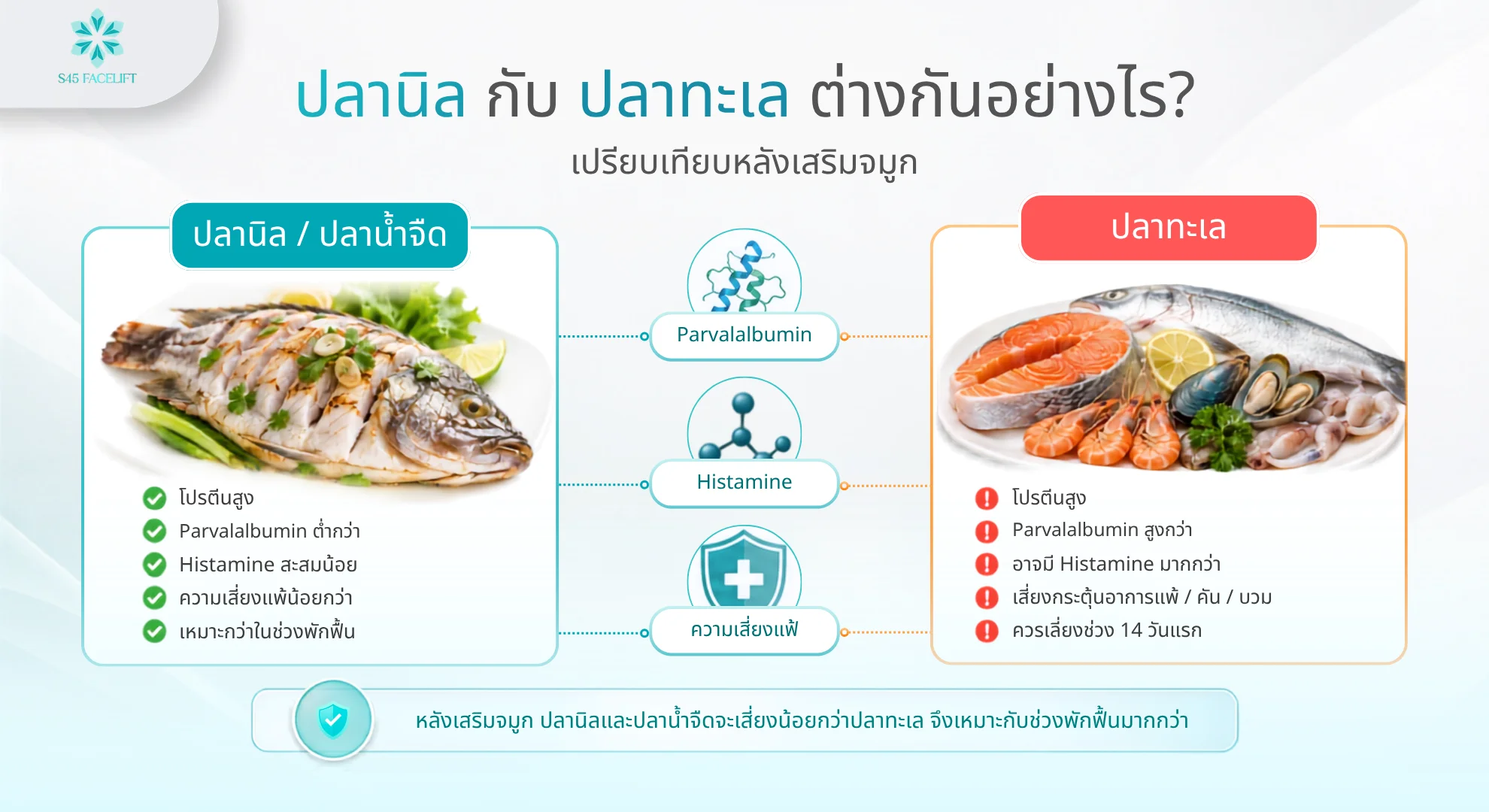
You may wonder why doctors say to avoid sea fish but not tilapia, when both are fish. The difference is in their chemical make-up and their chance of causing allergy.
Sea fish contain high levels of parvalbumin, a protein that triggers allergic reactions in many people, as well as histamine, which can cause allergy-like symptoms even in people who are not truly allergic. These symptoms may make the surgical wound more swollen, itchy or inflamed.
On the other hand, tilapia and other freshwater fish contain lower levels of parvalbumin and rarely build up histamine, so they carry less risk and are usually suitable for people who have just had rhinoplasty.
Comparison Table, Tilapia vs Sea Fish
| Feature | Tilapia (freshwater) | Sea fish |
| Food group after rhinoplasty | Can be eaten | Avoid for 1 month |
| Parvalbumin protein | Low | High |
| Histamine | Low | High, especially fish that has not been stored well |
| Chance of allergy | Low | Medium to high |
| Effect on the wound | Helps the wound heal | May cause swelling, itching and inflammation |
| Examples | Tilapia, catfish, snakehead fish, red tilapia | Short mackerel, salmon, king mackerel, bonito |
A Special Case, Farmed Fish in Closed Systems
Sea fish farmed in closed systems, such as Norwegian salmon, still need to be avoided for the first month. Even though they are cleaner, their protein structure can still trigger allergy in some people.
Which Fish Can I Eat After Rhinoplasty? Comparing 5 Commonly Eaten Fish
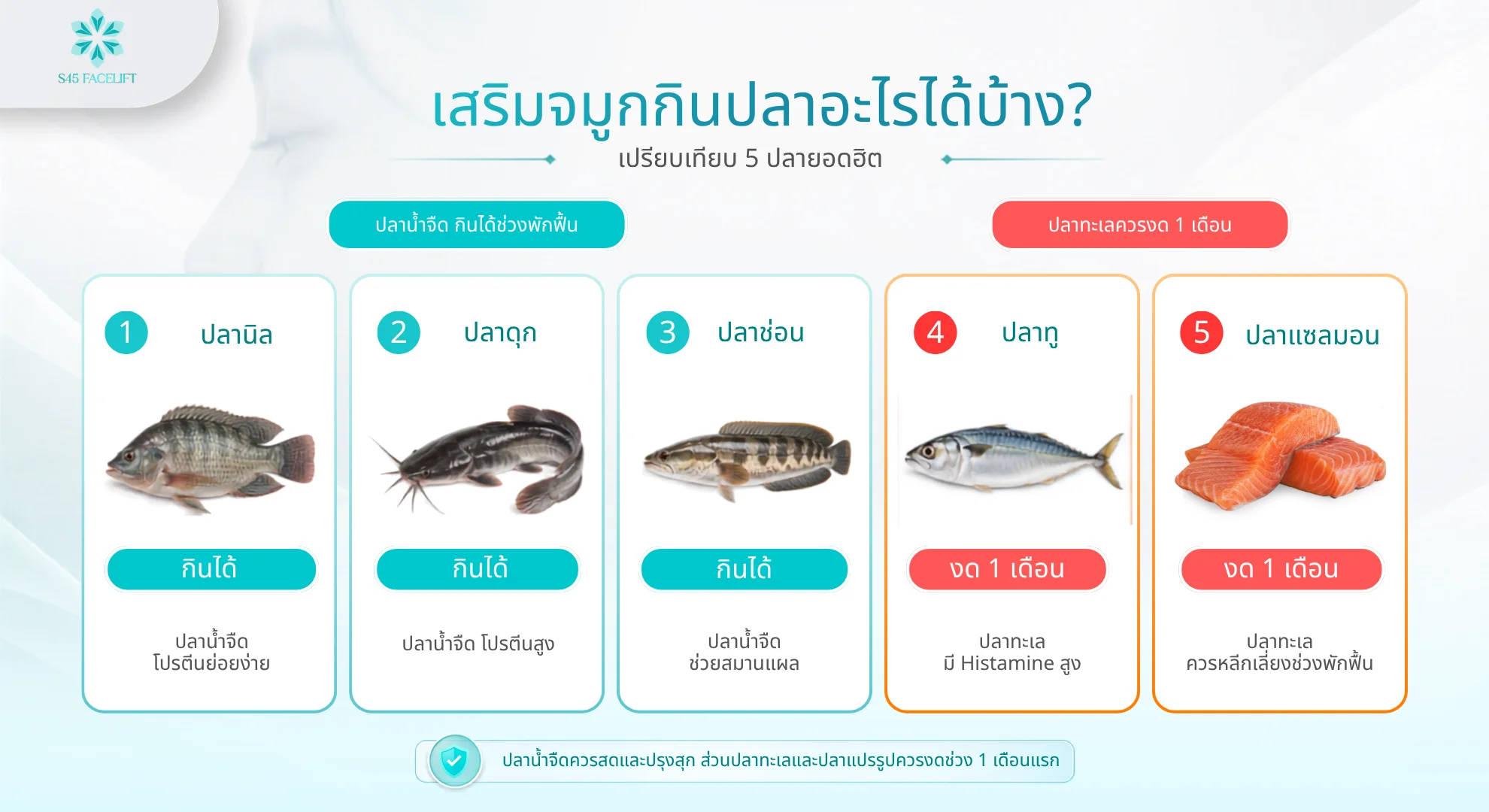
Apart from tilapia, many people also wonder whether other fish they often eat are allowed. Knowing which group each fish belongs to makes it easier to plan your meals while you recover.
Although the general advice is to “avoid sea fish for 1 month”, some fish fall in between, such as red tilapia, which is sometimes a freshwater fish and sometimes a brackish-water fish, or salmon, which is a cold-water fish, and this can be confusing.
The comparison table below groups fish by how suitable they are after rhinoplasty, to make it easier for you to decide.
Summary Table of Each Type of Fish
| Fish | Can be eaten during recovery | Reason |
| Tilapia | Can be eaten | Freshwater fish, easy-to-digest protein |
| Catfish | Can be eaten | Freshwater fish, high in protein |
| Snakehead fish | Can be eaten | Freshwater fish, regarded as a tonic in traditional Thai medicine |
| Red tilapia | Can be eaten | Farmed freshwater fish, good protein |
| Short mackerel | Avoid for 1 month | Sea fish, high in histamine |
| Salmon | Avoid for 1 month | Sea fish, even when farmed in closed systems |
| King mackerel | Avoid for 1 month | Sea fish, high in histamine |
| Bonito and tuna | Avoid for 1 month | Sea fish, often eaten raw as sashimi |
Freshwater Fish We Recommend in Particular
Snakehead fish is recommended in traditional Thai medicine for people who have had surgery, because it contains amino acids that support wound healing. Tilapia and catfish are also good-quality protein and low in fat.
A Note on Processed Fish
Canned fish, sour fermented fish (pla som) and dried fish are not suitable in the first month, even when they come from freshwater fish, because they are high in sodium and may contain preservatives that can cause swelling. If you want to eat fish, fresh fish that you cook yourself is a better choice.
Can I Eat Grilled Tilapia After Rhinoplasty? Suitable Ways to Cook Tilapia
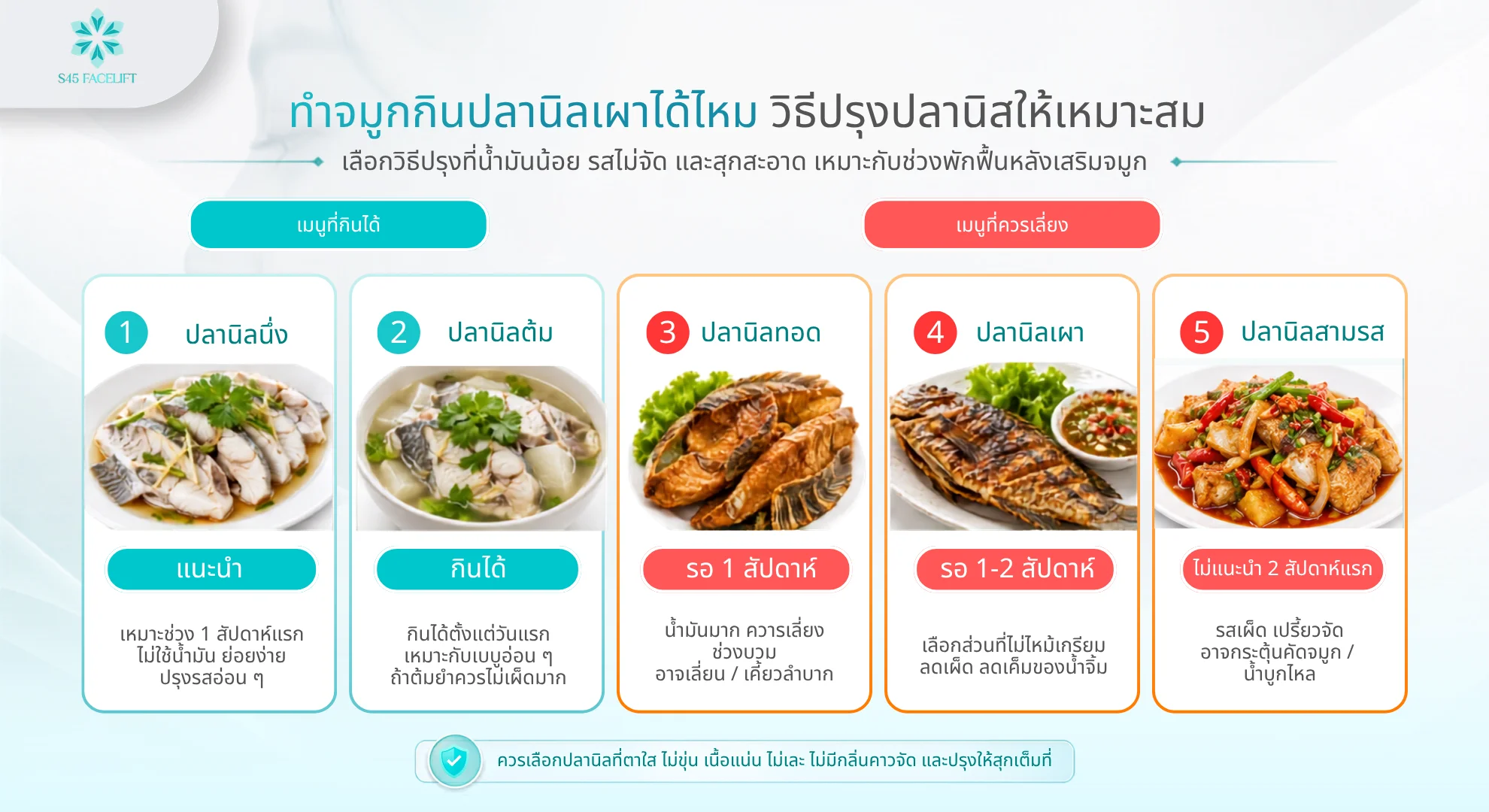
Although you can eat tilapia after rhinoplasty, the way it is cooked also affects your recovery. Grilled tilapia, which many people enjoy, can be eaten, but there are some precautions to know.
Each way of cooking tilapia has its own strengths and limits. Some methods are easier to digest and cleaner, while others may involve oil or smoke that is not ideal while you recover. Choosing a suitable method lets you eat fish with peace of mind.
Choose cooking methods that use little oil, are mildly seasoned and are hygienic. In the first 1 to 2 weeks, cook tilapia in the following ways.
Steamed Tilapia (Recommended in Particular)
Steaming is a suitable cooking method for the first week, because it keeps the nutrients well, needs no oil, is easy to digest and lets you keep the seasoning as mild as you like. For steamed tilapia with lime, make it less sour and do not add many bird’s eye chillies.
Boiled Tilapia
Suitable for clear soup or tom yum that is not strongly seasoned. It is a mild dish you can eat from the first day after rhinoplasty. If you have tom yum, choose the clear-broth version and keep it mild.
Fried Tilapia
You can eat it, but wait at least 1 week, because the frying oil may cause spots on your face or make the food feel too greasy. While there is still swelling, chewing crunchy food may affect your nose.
Grilled Tilapia
You can eat it after 1 to 2 weeks. Choose pieces that are not charred, because charred parts contain substances that may trigger inflammation, and make the seafood dipping sauce served with it less spicy and less salty.
Three-Flavour Tilapia (Spicy)
Not recommended in the first 2 weeks, because very spicy and sour flavours may cause a blocked or runny nose, which may affect the wound inside your nose. If you really want to eat it, wait until 1 month has passed.
Tips for Choosing Fresh Tilapia
If you are wondering whether you can eat tilapia after rhinoplasty, choose tilapia that is fresh and clean, with clear rather than cloudy eyes, firm rather than mushy flesh and no strong fishy smell. Cook it thoroughly before eating, for example by steaming, boiling or grilling until cooked through, and avoid raw or undercooked fish while you recover after rhinoplasty.
What Can I Eat After Rhinoplasty?
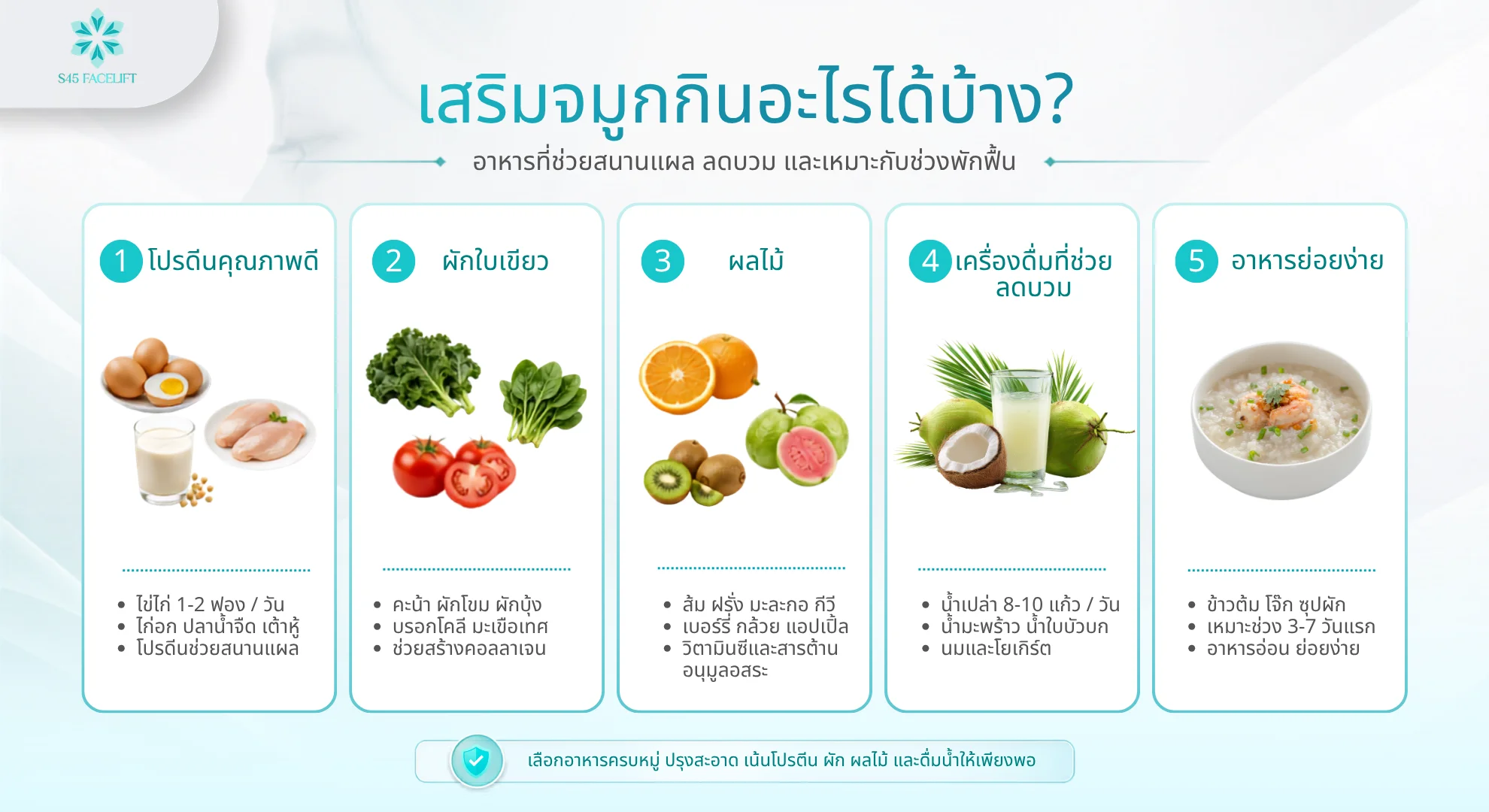
Apart from tilapia, many other foods help the wound heal and reduce swelling and bruising. Eating these foods regularly may help support your body’s recovery.
According to trusted medical centres such as the Wexner medical centre at Ohio State University, foods with good-quality protein and a full range of vitamins and minerals help support the body’s own wound-healing process.
These foods are easy to find in everyday life. Choosing a balanced diet and eating food that is well cooked and clean is enough. See more advice in what to eat after rhinoplasty.
Good-Quality Protein
- Eggs: can be eaten and are very good. Protein helps the wound heal. 1 to 2 eggs a day is recommended, always cooked.
- Chicken breast: high in protein, low in fat, easy to digest and good for recovery.
- Cooked freshwater fish: tilapia, catfish, snakehead fish.
- Tofu and soya milk: easy-to-digest plant protein, suitable if you do not want to eat much meat.
- Pork tenderloin: can be eaten as usual. Choose lean cuts.
Green Leafy and Dark-Coloured Vegetables
- Chinese kale, spinach and morning glory contain beta-carotene and vitamin C, which help collagen production.
- Broccoli contains vitamin C and anti-inflammatory compounds.
- Tomatoes contain lycopene, which helps reduce inflammation.
Recommended Fruit
- Oranges, guava, papaya and kiwi are high in vitamin C.
- Berries such as blueberries and strawberries contain antioxidants.
- Bananas, apples and other everyday fruit can be eaten as usual and are easy to digest.
Drinks That Help Reduce Swelling
- Water: drink at least 8 to 10 glasses a day to help carry nutrients around the body and remove waste.
- Coconut water: helps reduce swelling and supports wound healing. Fresh coconut water straight from the coconut is recommended.
- Gotu kola juice: helps reduce bruising and inflammation.
- Milk and yoghurt: add protein and beneficial bacteria for your body.
Easy-to-Digest Food in the Early Days
In the first 3 to 7 days, rice soup, rice porridge, vegetable soup or other soft foods are recommended, so your digestive system has less work to do and your body can focus on healing the wound.
What Foods to Avoid After Rhinoplasty
While many foods help the wound heal, there are also many that need to be avoided while you recover, because they may slow down healing, trigger swelling or raise the chance of infection.
You do not need to avoid these foods for good, only during the first month, when your body is especially sensitive. After that you can eat them as usual again, except alcohol, which needs to be avoided for longer.
Foods to avoid fall into 6 main groups, each with a clear medical reason.
1. Seafood
All sea fish, prawns, shellfish, crab and squid need to be avoided for at least 1 month, because they contain proteins that often trigger allergy and may make the wound itchy, swollen or inflamed.
2. Pickled and Fermented Foods
Can I eat papaya salad with salted crab and fermented fish? Fermented fish (pla ra), papaya salad with salted crab and fermented fish, fermented pork sausage (naem), pickled vegetables, kimchi and sour fermented fish (pla som) are high in sodium and may be contaminated with bacteria, which can make the wound swell or become infected.
3. Strongly Flavoured Food
Spicy papaya salad, larb, chilli dips and spicy sour soup (tom saep). Very spicy food may cause a runny nose, and mucus that gets into the wound inside your nose may cause inflammation and infection.
4. Very Sweet Food
Desserts, cakes and sweet drinks. High sugar makes inflammation worse and may slow down wound healing. Cut down on sugar while you recover.
5. Durian and ‘Heating’ Fruits
Can I eat durian after rhinoplasty? Durian is traditionally regarded in Thailand as a ‘heating’ fruit, which in some people may make the wound dry more slowly and not close fully. There is no clear medical research on this yet, but based on the cases we have seen, avoiding it for the first month is recommended.
6. Alcohol and Caffeine
After rhinoplasty, avoid alcohol such as beer, wine and spirits for about 1 month, or as your doctor advises, because it may interfere with wound healing and raise the chance of swelling and bruising in some people. Cut down on coffee and tea in the first week, especially if they keep you awake or stop you getting enough rest.
Borderline Foods Many People Ask About
Noodle soup, meatballs, fried rice and sticky rice can be eaten if they are clean, freshly cooked, not very spicy, not very salty and not too hot. Avoid Thai barbecue hotpot (moo kratha) or shabu in the first 2 weeks, because they are often high in sodium, involve smoke and heat, and need more chewing than usual.
What Can I Eat at Each Stage After Rhinoplasty? Timeline at 7, 14, 20 and 30 Days
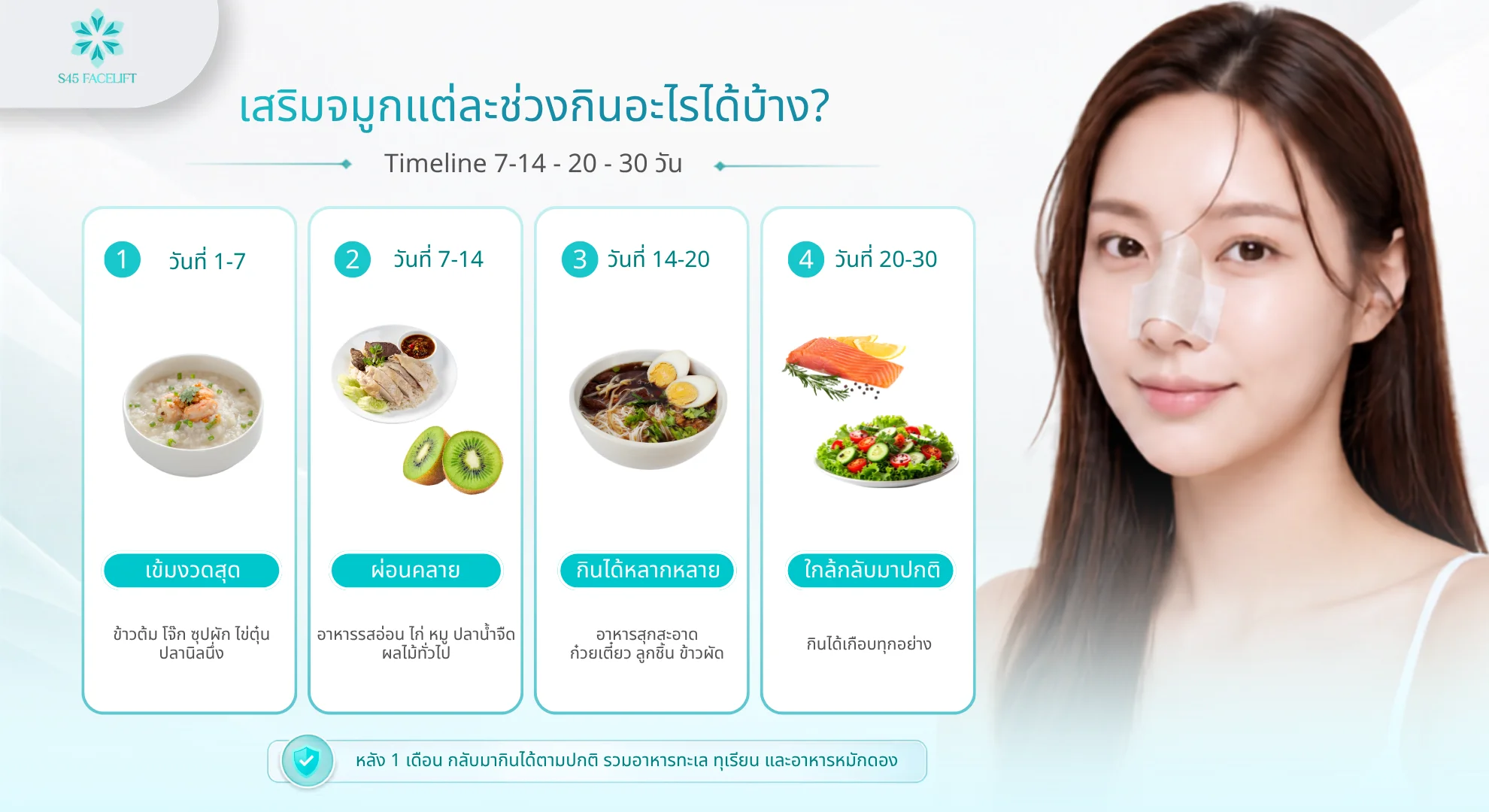
Food restrictions after rhinoplasty are not equally strict at every stage. You need to take extra care at first, then you can gradually relax as the wound heals. Understanding the timeline makes it easier to plan your meals.
Each stage has a different focus, from the strict first week, when soft food is the priority, to 1 month, when you can eat almost normally again.
These time frames are general standards for a typical recovery. If rib cartilage or the open rib rhinoplasty technique was used, recovery may take a little longer.
Days 1 to 7 (Very Strict)
The wound is still fresh, so recovery needs extra care.
- Can eat: rice soup, rice porridge, vegetable soup, steamed egg custard, steamed tilapia, green leafy vegetables, water, coconut water.
- Avoid: all seafood, pickled and fermented food, strongly flavoured food, hard or crunchy food that needs hard chewing, alcohol, caffeine.
- Tip: focus on soft food that is freshly cooked, and drink plenty of water.
Days 7 to 14 (Slightly More Relaxed)
The outer wound starts to heal and the swelling has gone down by about 60% to 70%.
- Can eat: most everyday food that is not strongly seasoned, chicken, pork, all freshwater fish, ordinary fruit.
- Avoid: seafood, pickled and fermented food, durian, very spicy food, alcohol.
- Tip: you can start eating fried or grilled tilapia, but without strong flavours.
Days 14 to 20 (A Wider Range of Food)
The inner wound is still healing, but the outside has settled.
- Can eat: almost anything that is well cooked and clean, including grilled food that is not charred, noodle soup, meatballs and fried rice.
- Avoid: seafood, pickled and fermented food, alcohol and very strongly flavoured food.
- Tip: still take care with allergies if you have a history of food allergy.
Days 20 to 30 (Almost Back to Normal)
The structure of the nose starts to settle and only a little swelling remains.
- Can eat: everything except the foods listed to avoid.
- Avoid: seafood, alcohol, durian.
- Tip: if you have no unusual symptoms, you can try other foods a little at a time.
From 1 Month Onwards
- Can eat: everything as usual, including seafood, durian and pickled or fermented food.
- Still avoid: drinking large amounts of alcohol until month 2 to 3, so the inner wound can fully settle.
- Tip: listen to your body. If you notice anything unusual, cut back and consult your doctor.
Symptoms to Watch for If You Eat a Food You Were Told to Avoid
Even when you are careful, you may sometimes eat a food you were told to avoid by accident, for example eating at a friend’s home and finding prawns in a dish, or eating food seasoned with fermented fish sauce (pla ra).
The important thing in this case is not to panic. Eating a small amount of the wrong food does not always mean there will be a problem. Allergic reactions or other effects often do not appear straight away, and depend on the amount and on how sensitive each person is to the food.
However, watch your symptoms closely for the next 24 to 48 hours. If you notice anything unusual, contact the clinic straight away.
Symptoms to Watch For
If you accidentally eat a food you were advised to avoid after rhinoplasty, such as seafood, pickled or fermented food or strongly flavoured food, there is no need to panic straight away, because not everyone will get unusual symptoms. Watch yourself for 24 to 48 hours. If the wound becomes swollen, red, hot or itchy, you get a rash, the wound becomes more painful, you have a fever, or the wound leaks fluid or has an unusual smell, contact the clinic or see a doctor to have it checked.
What to Do If You Eat Something by Accident
As soon as you realise you have eaten a food you were advised to avoid, stop eating that dish, drink enough water, rest and watch the wound closely for 24 to 48 hours. If you notice anything unusual, do not wait for it to go away on its own, and do not buy antihistamines or antibiotics to take yourself without consulting a doctor.
Looking After Yourself After Rhinoplasty, Beyond Food
Food is only one part of looking after yourself after rhinoplasty. Other things also affect your recovery, such as sleep, exercise and cleaning the wound.
Taking care of every aspect helps your rhinoplasty result follow the plan made with your surgeon and lowers the chance of complications. The main things to take care with are:
Sleep and Rest
Sleep with your head raised on high pillows for the first 1 to 2 weeks, and avoid sleeping on your front or on your side with your face pressed down, to reduce pressure on your nose. Also get enough sleep, about 7 to 8 hours a night, to give your body time to recover after the procedure.
Exercise
Avoid strenuous exercise for the first 2 weeks, and avoid sports with a chance of impact to the face for at least about 1 month, or as your doctor advises. If you want to move around, you can start with gentle walking once the early stage has passed, as suits you.
Cleaning the Wound
Clean the wound exactly as your doctor advises, and avoid touching, pressing, squeezing or moving your nose unnecessarily for the first month. Also avoid wearing glasses that press on the bridge of your nose for about 4 to 6 weeks, or for as long as your doctor advises. See more detailed self-care advice in how to reduce swelling after rhinoplasty.
Rhinoplasty Aftercare Consultation at S45 Clinic
Good aftercare after rhinoplasty is key to helping your result follow the plan made with your surgeon. S45 Clinic is a plastic surgery clinic focused on nose surgery that places importance on ongoing care for you, from before surgery through to long-term follow-up, under our promise “Because every kind of beauty comes from care”.
Our Surgeons and Their Specialty Training
Our surgeons are doctors trained in otolaryngology (ear, nose and throat medicine) with subspecialty training in facial plastic and reconstructive surgery, who focus on nose cases and give detailed advice on looking after yourself after surgery. See more information on rhinoplasty (nose surgery).
Ongoing Aftercare
S45 Clinic has a dedicated aftercare team and a LINE Official Account where you can ask about food and self-care throughout your recovery. We follow up with you for 3 to 6 months after surgery to check that your recovery is going as planned with your surgeon.
Personal Advice for Your Case
Every case is different. For example, cases using rib cartilage need extra wound care, and people with a history of food allergy need to take extra care. Our surgeons give advice that suits your case, not one-size-fits-all advice.
FAQ About Eating Tilapia and Food After Rhinoplasty
Can I Eat Tilapia After Rhinoplasty?
Yes. Tilapia is a freshwater fish, not a sea fish that needs to be avoided. It is a good-quality protein that helps the wound heal and new layers of skin form, which makes it suitable during recovery after surgery. Choose fresh fish, cook it well and avoid strong seasoning in the first 1 to 2 weeks.
Is Tilapia a Food to Avoid After Surgery?
No, not for people with no history of freshwater fish allergy. The belief that all fish make the wound itchy or slow down healing is a misunderstanding. The main foods to avoid are sea fish and seafood that are high in histamine. In fact, tilapia is a source of protein that helps the wound heal.
Can I Eat Grilled Tilapia After Rhinoplasty?
Yes, but wait at least 1 to 2 weeks after rhinoplasty, because charred parts may trigger inflammation and the seafood dipping sauce served with it is usually strongly flavoured. Choose pieces that are not charred and make the dipping sauce less spicy. In the first week, steamed or boiled tilapia is recommended instead.
Can I Eat Short Mackerel After Rhinoplasty?
It is not recommended in the first month, because short mackerel is a sea fish that is high in histamine and may trigger allergy. Even if you have never been allergic to short mackerel before, there is a chance that an allergic reaction could be more severe than usual while the wound is still fresh. Avoid all seafood for at least 1 month.
Which Fish Can I Eat After Rhinoplasty?
The fish you can eat are freshwater fish, such as tilapia, catfish, snakehead fish, red tilapia and silver barb. The fish to avoid are all sea fish, such as short mackerel, salmon, king mackerel, bonito and tuna. Even sea fish farmed in closed systems need to be avoided for 1 month.
What Can I Eat After Rhinoplasty to Support Wound Healing?
Foods that support wound healing include good-quality protein (eggs, chicken, freshwater fish, tofu), green leafy vegetables (Chinese kale, spinach), fruit high in vitamin C (oranges, guava, kiwi), fresh coconut water and gotu kola juice, and drinking plenty of water, at least 8 to 10 glasses a day.
Can I Eat Durian After Rhinoplasty?
It is not recommended in the first month. There is no clear medical research yet showing that durian slows down wound healing, but based on the cases we have seen, durian is a ‘heating’ fruit in Thai tradition that may make the wound dry more slowly and not close fully. Avoid it as your doctor advises.
Can I Eat Noodle Soup After Rhinoplasty?
Yes, it is not a food you need to avoid, but choose a clear broth with mild seasoning, do not eat the soup very hot, and avoid chilli flakes and vinegar at first, because strong flavours may cause a runny nose and affect the wound inside your nose.
Can I Eat Eggs After Rhinoplasty?
Yes, and they are very good. Eggs are a high-quality protein that helps the wound heal and new layers of skin form. The belief that eggs slow down healing or cause scars is a misunderstanding. 1 to 2 eggs a day is recommended, always cooked, such as steamed egg custard, boiled eggs or steamed eggs.
Can I Eat Chicken After Rhinoplasty?
Yes. Chicken is a good-quality protein, especially the breast, which is low in fat and easy to digest. Choose chicken that is cooked thoroughly, and avoid raw or undercooked chicken because of the chance of infection.
What Can I Eat 14 Days After Rhinoplasty?
After 14 days, you can eat a wider range of food, such as chicken, pork, all freshwater fish cooked in any way, noodle soup, fried rice, meatballs and ordinary fruit. You still need to avoid seafood, pickled and fermented food, alcohol, durian and very spicy food until the full 1 month has passed.
What Can I Eat 1 Month After Rhinoplasty?
After 1 month, you can go back to eating almost normally, including seafood, pickled and fermented food and durian. However, start with small amounts and watch for symptoms. Keep alcohol to smaller amounts and do not go back to heavy drinking straight away until month 2 to 3, so the inner wound can fully settle.
Can I Eat Prawns After Rhinoplasty?
Not in the first month. Prawns are seafood that often trigger allergy, especially sea prawns, and may make the wound itchy, swollen or inflamed. After 1 month you can eat them again, but start with small amounts.
Summary
You can eat tilapia after rhinoplasty, because tilapia is a freshwater fish that is not in the group of foods to avoid after rhinoplasty. On the contrary, it is a good-quality protein that helps the wound heal and new layers of skin form. You can eat it steamed, boiled, fried or grilled, but steaming or boiling is recommended in the first week.
The beliefs that “all fish make the wound itchy” or that “tilapia should be avoided after surgery” are misunderstandings. The seafood you really need to avoid is sea fish, prawns, shellfish and crab, which are high in histamine, while freshwater fish such as tilapia, catfish and snakehead fish are sources of protein that doctors recommend.
What matters is looking after yourself in every way, not just with food. Getting enough sleep, avoiding knocks to your nose, cleaning the wound and going to your follow-up appointments with your doctor are key to helping your new nose heal as planned with your surgeon. Results depend on each person. If you have specific questions about looking after yourself, consult the surgeon who treated you directly, because every case is different.
Because every nose structure…
is different
An otolaryngologist with subspecialty training in facial plastic and reconstructive surgery assesses every case before treatment and gives advice based on your actual concerns.
“Reveal the beauty within you”
Message us online
Surgery and medical procedures carry risks. Find out about them and consult a doctor before you decide. Results depend on each person.