Which Nose Shape Suits Your Face for a Softer, Balanced Look?

Illustrative image for advertising purposes, not an actual patient.
Key points
- Balanced rhinoplasty means designing a nose shape that suits your forehead, eyes and chin, so it sits in harmony and balance with your own face.
- A doctor needs to assess your facial features in detail, to plan a shape that works with your existing bone structure.
- Open rhinoplasty reshapes the nose through an open approach and uses rib cartilage to help the surgeon build a nasal structure that supports the shape to suit each person. Rib cartilage is firmer than ear cartilage but may bend out of shape, so the surgeon chooses how to carve the cartilage to help lower this chance.
- Shaping the nose to a suitable size helps reduce skin tension at the nasal tip, which is one factor linked to the risk of the tip skin becoming thin or the implant pushing through the skin (implant extrusion), although results depend on each person.
If you want to reshape your nose but worry that silicone will look too high and obvious or may push through the skin in the future, choosing a soft, balanced shape that suits your forehead, eyes and chin can help ease this concern. This style of rhinoplasty does not focus only on height but on the balance of your face as a whole.
In this article, S45 Clinic brings together information about popular soft nose shapes that suit Asian faces and the differences between open and closed techniques, to give you information to help you choose a shape that suits your own face.
In This Article
What Is Balanced Rhinoplasty?
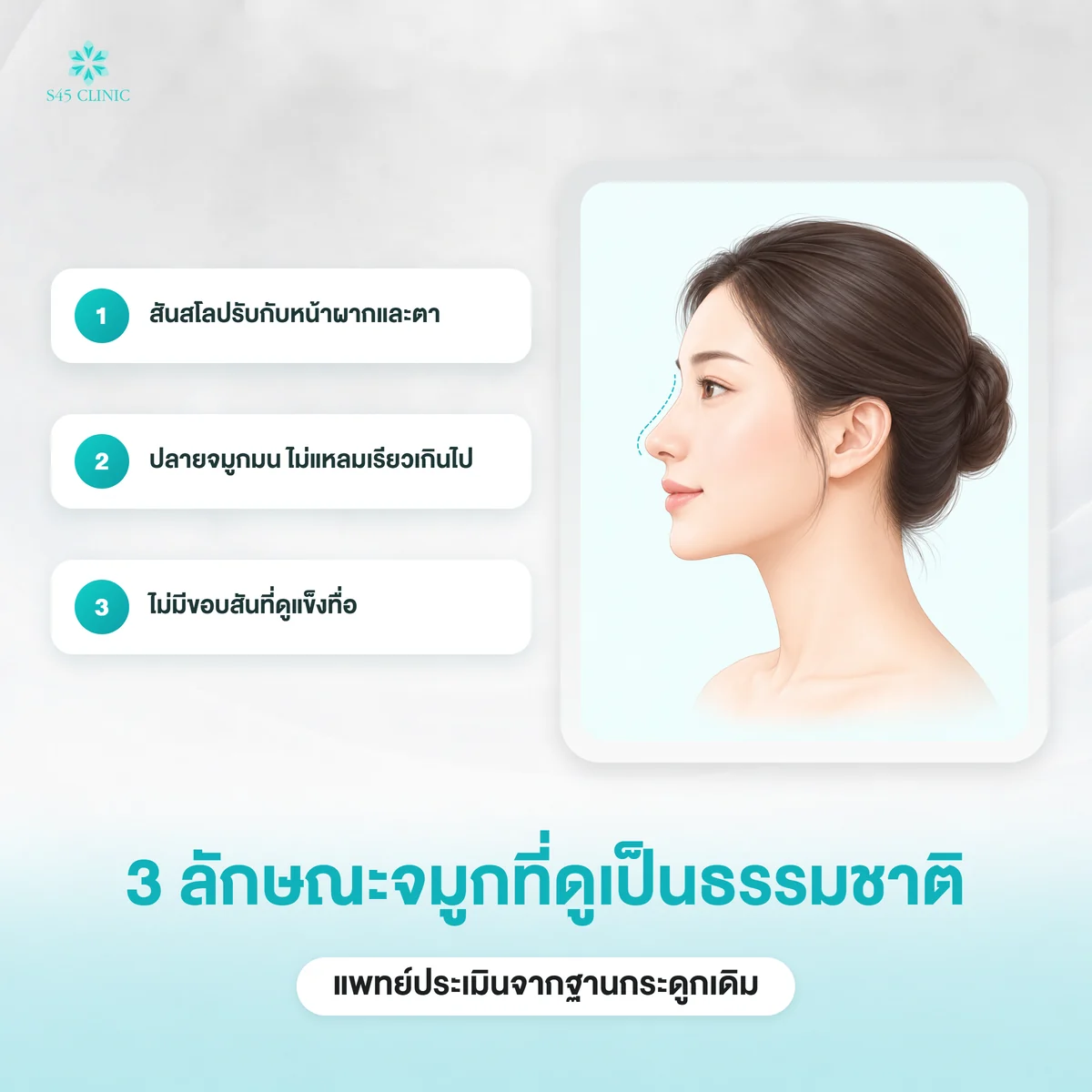
Balanced rhinoplasty means reshaping the nose so it works in balance with the other features of your face. The focus is on a gentle slope from the inner corners of the eyes down to the nasal tip, so the nose looks connected with your forehead, eyes and chin as one whole, without a stiff, sharp ridge.
Your surgeon assesses your existing bone structure and how elastic your skin is, to design a shape that highlights the features you like and softens the ones you like less.
This approach usually avoids stretching the skin at the tip too far, which helps lower the chance of the skin at the nasal tip becoming tight or thin.
What a Soft, Balanced Nose Shape Looks Like
A soft, balanced nose shape has a gently curved slope from the inner corners of the eyes down to the nasal tip. There is no sharp silicone edge along the bridge and no obvious join between the forehead and the nasal bridge. The tip is rounded, with a slight teardrop shape, similar to the structure of a nose that has not had surgery.
Proportion is another important factor. The nasal bridge is not higher than the level of the forehead, and the tip is not an overly long, pointed teardrop that looks out of shape. Your facial expressions look normal, and the surgeon plans to lower the chance of pulling at the alae (the sides of the nostrils) or a dimple at the tip when you talk or smile. A capsule around the silicone implant that tightens a lot may make the nose shorter in some people, and results depend on each person.
For women, a tip angled slightly upwards may help the face look softer and gentler. Shaping the nose this way helps avoid a shiny tip, or skin so thin that the silicone implant shows through when seen from the side.
How a High, Projected Nose Shape Differs From a Soft, Balanced Shape
A high, projected nose shape and a smooth, soft shape differ clearly, both in how they look on the face and in how much they stretch the skin. Your doctor will assess the shape that suits each person.
| Comparison point | High, projected nose shape | Smooth, soft nose shape |
|---|---|---|
| Nasal bridge | Bridge fairly high and clearly straight from the inner corners of the eyes | Gently sloping bridge that suits the forehead and eyes |
| Tip projection | Tip pushed forwards to a sharp point for a bold, angular look | Rounded tip with a slight teardrop tip shape |
| Skin limits | Needs thick skin to cope with the stretching | Shaped to the elasticity of your existing skin, without forcing it |
| Long-term risk | Thin, see-through tip skin and a clearly visible silicone edge over time | Choosing a suitable implant size can help lower the chance of extrusion, because most complications are linked to an implant that is too large and where it is placed. Your doctor will assess each person. |
Why Many People Are Interested in Balanced Rhinoplasty
Many people are interested in balanced rhinoplasty because they want a soft nose shape that does not look obvious. Shaping the nose to fit your existing proportions also helps avoid a stiff-looking implant along the bridge and helps reduce tension on the skin.
Skin Tension at the Nasal Tip and the Risk of Silicone Extrusion
Balanced rhinoplasty may help reduce skin tension at the nasal tip, which is one factor linked to the risk of the silicone implant pushing through the skin, although results depend on each person. Shaping the bridge to a height that suits the elasticity of your skin helps spread pressure evenly, so the skin at the tip is not stretched tight and does not keep getting thinner.
Avoiding a thick silicone implant, or a height that forces the skin, helps reduce stress building up under the skin. Using ear cartilage from the bowl of the ear to shape and support the tip (a tip graft) adds a layer that takes the pressure. This keeps the silicone from touching the skin directly and helps lower the chance of red spots and thinning skin.
Designing to Suit Asian Faces
Balanced rhinoplasty can be adapted easily to Asian faces, which tend to be flatter with less projection in the middle of the face.
The shape is based on a suitable angle between the forehead and the nasal bridge for Asian faces, which the doctor assesses for each person. This kind of nose shape can make wide alae look narrower without alar base reduction, bringing the width of the nose to a proportion that suits each person’s face.
Which Soft Nose Shapes Are Popular?

When choosing a shape for balanced rhinoplasty, the focus is on designing the curve of the bridge to suit the angle of the forehead and the mouth symmetrically. The shapes many people ask about today usually soften the angle of the tip to reduce a hard look across the whole face.
Soft Slope Nose With a Gently Projecting Tip
The slope nose with a projecting tip, or soft slope shape, grades the bridge in a rounded curve that follows the forehead and then lifts the tip slightly, which can make the face look longer and more defined.
A Teardrop Tip Can Make the Face Look Softer
Adding a teardrop tip lengthens a short tip so it slopes down slightly and covers the nostrils, which can help the middle of the face look more balanced and longer in proportion. Angling the nostrils to suit the axis of the nose helps reduce a hard look, so the face looks gentler and friendlier overall.
A Gently Sloping Nose Shape With a Low Bridge Line
This gently sloping shape creates a bridge with only a slight slope from between the eyebrows down to the tip, to reduce a hard look. The silicone line starts slightly lower than the level of the upper eyelid margin, which helps the fairly flat forehead common in Asian faces blend well with the bridge.
Which Techniques Are Used for a Soft, Balanced Nose?
Balanced rhinoplasty needs several techniques combined to reduce the stiff look of a silicone implant. Your surgeon assesses the details, from the base cartilage and the tip to the thickness of your skin, to create proportions that fit your existing bone structure in all 3 main areas.
Using Your Own Cartilage to Shape the Tip Instead of Silicone
Shaping the tip with your own cartilage helps reduce skin tension and avoid thin tip skin caused by synthetic silicone. The cartilage usually comes from the septum or ear cartilage and is carved to lengthen the tip in proportion. This cartilage is very flexible and bends much like the nose’s own framework, and because it is your own tissue the chance of rejection is lower than with synthetic materials.
Reshaping the Nasal Structure With Open Rhinoplasty
Open rhinoplasty reshapes the nasal structure through an incision at the base of the nostrils, so the surgeon can reach and rearrange the cartilage inside. This lets the surgeon see the whole inside of the nose clearly, so a crooked or deviated base can be straightened and balanced with the forehead in more detail from the foundations. If rib cartilage is used, it may bend out of shape, and the surgeon can lower this chance with suitable techniques. Results depend on each person.
Nasal Osteotomy to Narrow a Wide Bridge
Nasal osteotomy (reshaping the nasal bones) brings wide side bones inwards so the nose looks slimmer without a thick silicone implant. It reduces the width of side bones that spread outwards, which often make the middle of the nose look thick and heavy from the front. Reshaping the existing base can help the top of the bridge look more defined and suit the forehead better.
Refining the Tip Tissue so It Blends In
Refining the tip tissue helps reduce thick, heavy skin layers and shapes the tip to taper in balance with the bridge. The surgeon removes excess fatty tissue from a thick or wide tip so it looks smaller. This part of balanced rhinoplasty helps avoid pulling on the skin, so the nose looks smooth overall.
How Do Closed and Open Rhinoplasty Differ?

Closed and open rhinoplasty differ clearly in where the incision is made and how much of the inner structure can be reshaped:
Semi-Open and Closed Techniques for People Whose Nasal Base Is Already Thick or High
Closed and semi-open rhinoplasty can reshape the nose of people whose nasal base is already thick or high into a slim, sloping shape without working on the central structure inside. These methods add height only where it is needed and help reduce skin tension at the tip. Balanced rhinoplasty with this approach uses a thin silicone implant to improve the balance of the nose from the front.
Open Rhinoplasty for Reshaping the Nasal Structure
Balanced rhinoplasty with the open approach lets the surgeon see the structure inside the nose clearly through an incision on the strip of skin between the nostrils.
This approach can help correct a crooked or tilted nose, reduce a thick dorsal hump by reshaping the bone, and use septal extension to lift the tip softly. It focuses on using rib cartilage or ear cartilage to strengthen the structure instead of relying on synthetic materials alone.
The open view lets the surgeon suture and adjust the angle of the tip cartilage in detail. The external scar under the base of the nose heals gradually. A study of Asian patients who had open rhinoplasty found that redness of the scar returned to normal after an average of 66.7 days, and some people had problem scars. How long the scar takes to fade differs from person to person.
What Does Balanced Rhinoplasty at S45 Clinic Involve?
Balanced rhinoplasty at S45 Clinic pays close attention to readiness for surgery, with suitable medical equipment, and general anaesthetic is given by an anaesthetist.
S45 also offers open rhinoplasty and structural rhinoplasty using rib cartilage, and doctors assess your nasal structure and plan the surgery to suit you at every step.
A Detailed Nose Design for Each Person
The individual assessment starts with measuring real angles rather than judging by eye, from the curve of the forehead and the angle at the inner corners of the eyes to the lift of the tip, with the doctor setting the angle that suits each person’s face.
It also covers the thickness of your skin and how strong the tip cartilage is, to work out how to combine silicone with ear cartilage suitably, so the sloping nose shape is in balance with your cheekbones and chin.
How Doctors Assess Thai Nasal Anatomy
Surgeons at S45 Clinic analyse your face in detail to shape a nose that suits the particular features of Thai faces. Nasal anatomy differs from person to person. Some people have thin nasal skin, a fairly flat bridge or wide alae, which the doctor assesses for each person.
The design therefore needs to avoid forcing your existing skin and to add only what fits your real bone structure, for long-term care.
How to Prepare and Look After Yourself for the Nose Shape You Want
The result of your nose shape depends on the material, the condition of your tissue and each person’s care. Follow the instructions strictly before and after surgery. Understanding how to prepare and caring for the wound correctly helps the skin heal. Bruising and swelling around the eyes may last about 3 weeks, and recovery time differs from person to person.
Preparing for Rhinoplasty
Preparing for rhinoplasty starts with stopping medicines and supplements that affect blood clotting, to reduce swelling and bruising:
- Tell your doctor about all medicines and supplements you take. You may need to stop aspirin-type medicines, ibuprofen and vitamin E about 2 weeks before surgery, as your doctor advises, to lower the risk of slow clotting.
- Stop smoking and drinking alcohol of any kind for at least 2 weeks, to lower the chance of infection and help the wound heal.
- Wash your hair and shower before you come to the clinic, because the wound must be kept dry at first.
- Do not wear make-up or jewellery of any kind on the day of surgery, to keep the operating room clean.
Wearing a top that buttons at the front on the day of surgery means you do not need to pull clothes over your head, which could rub against your newly operated nose.
Caring for Your Wound After Surgery to Reduce Swelling and Bruising
Caring for your wound correctly after surgery helps reduce swelling and supports the skin layers to heal:
- Use cold compresses on the cheeks and forehead for the first 3 days to narrow the blood vessels and ease swelling and bruising. From day 4, switch to warm compresses to help clear pooled blood and help bruises fade.
- Sleep with your head raised on at least 2 to 3 pillows, or use a neck pillow to keep your head upright, for the whole first week. This helps stop fluid collecting in the face and reduces morning swelling.
- Clean the wound with cotton wool dipped in sterile saline twice a day, morning and evening, gently wiping away dried blood and scabs to keep the drainage clear and lower the chance of bacteria building up around the nostrils.
- Keep the wound away from water until the day your stitches are removed. Clean your face with wet wipes or a clean, damp cloth instead of washing it normally, to stop the wound getting wet and inflamed.
Common Questions About Balanced Rhinoplasty
I Have Had Filler Injections or a Thread Lift on My Nose Before. Can I Have Balanced Rhinoplasty?
Yes. Your surgeon first assesses whether extra steps are needed, for example to dissolve previous filler injections or remove old threads, to see the structure and tissue under the skin. After that, the surgeon plans how to carve the silicone or reshape the structure for a smooth shape.
Is Balanced Rhinoplasty for Men Different From Women?
Yes, nose shapes for men and women differ. Men’s nose shapes usually have a straight bridge or a slight dorsal hump to keep a masculine look, and the tip is usually less lifted and less teardrop-shaped than for women, with a strong, defined look that suits the forehead and chin. Women’s nose shapes usually focus on a slope near the inner corners of the eyes and a soft tip, with a slight teardrop shape or a slight lift for a sweeter look.
Can Silicone Push Through the Skin After Balanced Rhinoplasty?
A balanced shape with a suitably sized implant may help lower the chance, because most silicone complications are linked to an implant that is too large and where it is placed, but the chance is not zero. The risk may go down when the surgeon assesses your nasal tissue correctly and does not force in silicone that is thicker or longer than your skin can take. A tip graft using ear cartilage also helps reduce friction between the silicone and the skin at the tip.
Can I Have Balanced Rhinoplasty If I Have Thin Nasal Skin?
Your doctor will assess which nose shape suits your existing nasal tissue for each person. In general, people with thin nasal skin are usually not suited to a nose that is forced too high. A gentle slope with a light teardrop tip that suits your existing tissue may help lower the chance of extrusion, although results depend on each person.
Summary
Balanced rhinoplasty is a way of reshaping the nose that focuses on harmony with your own face, adjusting angles and proportions to balance with your forehead, eyes and chin.
Reshaping the structure with open rhinoplasty and your own cartilage, such as rib cartilage or ear cartilage, helps reduce pressure on the skin at the tip, which helps reduce factors linked to thin tip skin or the silicone implant pushing through the skin, although results depend on each person.
Because every nose structure…
is different
An otolaryngologist assesses every case before treatment and gives advice based on your actual concerns.
“Reveal the beauty within you”
Message us online
Surgery and medical procedures carry risks. Find out about them and consult a doctor before you decide. Results depend on each person.