Red Nose Tip After Rhinoplasty With Acellular Dermal Matrix, Is It Normal? Causes, Healing Time and Treatment

If you have recently had rhinoplasty with an acellular dermal matrix (a processed tissue graft) under the nasal tip and notice that your nose tip is red, you may worry whether this is normal or a warning sign. Try to stay calm first, because redness of the nose tip in the first period is common and is often normal, but there are some signs to watch for that mean it is time to see a doctor.
Key points
- An acellular dermal matrix tip graft is a material placed under the nasal tip to reduce pressure from the silicone implant on the tip, helping lower the chance of the tip skin thinning or implant extrusion in the long term.
- Redness of the nose tip in the first period after rhinoplasty is common, because more blood flows to the reshaped area and the tissue is being stretched. It usually improves gradually on its own.
- Redness to watch for includes redness that does not fade at all, redness that lasts longer than 1 month, or redness together with swelling, unusually severe pain, pus, or skin so thin that the edge of the material shows.
- A red nose tip without pain can be either normal in the first period or a sign to keep watching, so look at it together with other symptoms and how long it lasts.
- If the redness is unusual, do not wait to see or buy medicines to use yourself. See a doctor for an assessment, because it may be a sign of inflammation or infection.
- Treatment depends on the cause and how severe it is, and the result depends on the condition of each person’s nose.
This article brings together clear, referenced information, from what an acellular dermal matrix tip graft is, what causes a red nose tip and the difference between normal redness and infection, to how long redness should take to fade, warning signs, advantages and disadvantages, and how to care for and treat it, to help ease your worries and help you look after yourself the right way.
In This Article
What Is an Acellular Dermal Matrix Tip Graft?

An acellular dermal matrix tip graft is a material placed under the nasal tip to reduce the pressure that the silicone implant puts directly on the tip skin. It is often used in cases where the nasal tip skin is thin or where the tip needs more support, helping lower the chance of the tip thinning or implant extrusion in the long term. It is one of the techniques used in rhinoplasty
The principle of an acellular dermal matrix tip graft is to add a supporting layer between the silicone implant and the skin of the nasal tip, to spread the pressure and help the tip look softer. In some cases the surgeon may use your own cartilage instead of, or together with, acellular dermal matrix, depending on your existing nose.
Because the skin of the nasal tip is fairly thin and sensitive to change, changes around the tip, such as a change in skin colour in the first period, are easy for many people to notice. See options for rhinoplasty when there is little nasal soft tissue in sloped nose with a lifted teardrop tip
What Causes a Red Nose Tip After Rhinoplasty With Acellular Dermal Matrix?

Many people search for what causes a red nose tip after rhinoplasty with acellular dermal matrix. In fact, it can have several causes, some normal and some worth watching. Understanding the difference can help ease your worries.
Normal Redness in the First Period
In the first period after rhinoplasty, placing an acellular dermal matrix tip graft under the nasal tip stretches the tissue in that area, and more blood flows to the reshaped area, which can make the nose tip red. This is generally common and improves gradually on its own.
Redness From Inflammation or Infection
Redness caused by inflammation or infection usually comes with other symptoms, such as swelling, unusually severe pain, heat, pus, or redness that does not fade and lasts longer than 1 month. If you have any of these signs, see a doctor for an assessment. For severe cases where an infection spreads, see more in tissue necrosis of the nose
Redness From Thin Skin or a Thin Nasal Tip
When the skin of the nasal tip is thin, the colour of the material or the blood supply may show through the skin as red or pink more easily than usual, which is different from inflammation. Assessing this needs an examination by a doctor.
Red Nose Tip From Allergies or Irritation
Some people wonder whether a red nose tip is linked to allergies. In some cases, skin irritation or a reaction of the body may make the skin in that area red. A doctor can help assess the cause and how to care for it.
How Long Does a Red Nose Tip Take to Fade?

A common question is how many days a red nose tip takes to fade after rhinoplasty. In general, normal redness in the first period gradually fades within a few weeks to about 1 month, depending on each person’s skin and aftercare.
However, some people search for a red nose tip 4 months after rhinoplasty or a red nose tip 2 years after rhinoplasty because the redness is still there. This is worth watching, because redness that lasts a long time, or appears later and does not fade, may be linked to pressure on the tip, thinning skin or inflammation, and should be assessed by a doctor.
In short, redness that gradually improves over time is normal, while redness that does not fade, lasts unusually long or gets worse is a sign to see a doctor.
Red Nose Tip Without Pain, Is It Abnormal?
Many people worry when their nose tip is red but not painful and wonder whether this is normal. The answer is that redness without pain can be normal in the first period because of the extra blood supply to the tip, and in some cases it can also be an early sign worth watching.
What to look at is how long it lasts and how it changes. If the redness gradually fades over time, it is normal. But if one spot stays red and does not fade, the skin becomes so thin that the edge of the material shows, or other symptoms follow, see a doctor, because pressure on the tip can build up gradually without clear pain at first.
So a red nose tip without pain does not always mean there will be no problems later, and it does not always mean something is wrong. Watching it over time and seeing a doctor when you are unsure is the sensible approach.
Which Kinds of Redness Are a Warning Sign, and Could It Lead to Implant Extrusion?
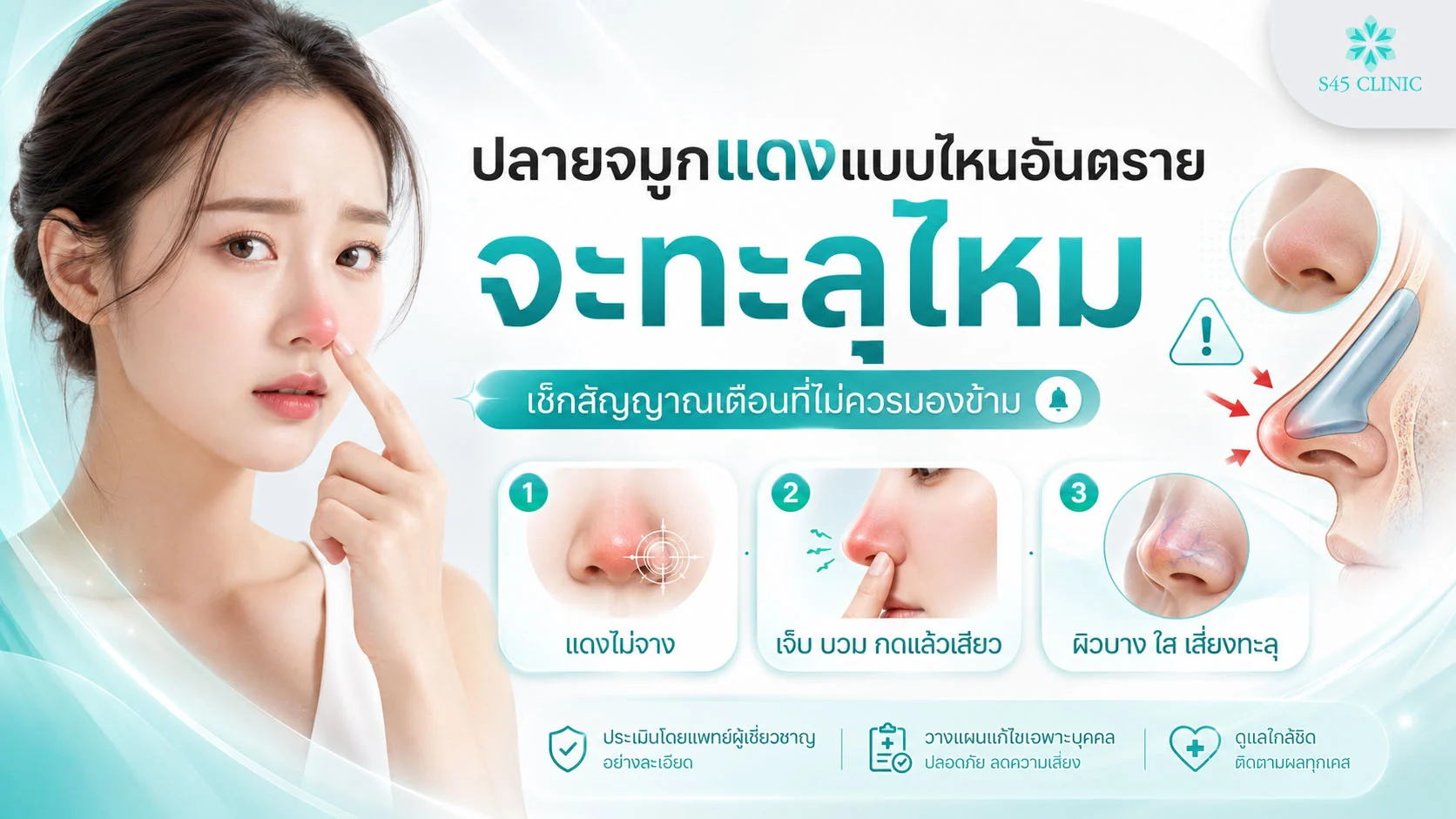
A question that worries many people is whether a red nose tip means the implant will push through the skin, and which kinds of redness are a warning sign. The answer is that redness does not always lead to implant extrusion, especially normal redness in the first period that gradually improves, but there are some signs that a doctor should assess promptly. See the signs of implant extrusion through the nose as well.
Signs that may be abnormal include one spot on the nose tip that stays red and does not fade at all, tip skin that becomes thinner or shiny so that the edge of the material shows, redness together with swelling, unusually severe pain or pus, or redness that lasts longer than 1 month. These symptoms may be linked to inflammation, infection or too much pressure on the tip. If you have had rhinoplasty with a silicone implant, see more about signs of silicone implant extrusion inside the nostril
On the other hand, redness that gradually fades over time, with no other symptoms and skin that is still in good condition, is normal during recovery. If you are unsure or notice a worrying sign, the sensible approach is to see a doctor for an assessment rather than waiting to see or worrying on your own.
How to Tell If the Nasal Tip Skin Is Thin
A related question is how to tell if the nasal tip skin is thin, because a thin nasal tip has a higher chance of redness and problems at the tip than usual. You may notice that the tip skin looks thin or shiny, that the colour of the material or blood vessels shows through the skin easily, or that the tip skin feels tight.
However, whether the nasal tip is thin enough to need extra care has to be assessed by a doctor, who looks at the thickness of the skin, the condition of the tissue and the pressure from the material together.
Will an Acellular Dermal Matrix Tip Graft Shrink?
A common question is whether an acellular dermal matrix tip graft will shrink. In general, acellular dermal matrix used under the tip gradually integrates with the body’s own tissue, and its volume may change somewhat depending on the type of material and each person’s body, much like the question many people have about how many years a silicone nose implant lasts
This change differs from person to person. In some cases it may keep its shape well in the long term, while in others it may shrink a little. The surgeon explains the material used and the changes that may happen before you decide, so talking with the surgeon beforehand helps you understand and set realistic expectations.
Rhinoplasty With Acellular Dermal Matrix, Advantages and Disadvantages
Understanding both the advantages and the disadvantages of rhinoplasty with acellular dermal matrix in a straightforward way helps you decide and set suitable expectations.
Advantages of an Acellular Dermal Matrix Tip Graft
- It helps reduce pressure from the silicone implant directly on the nasal tip, so it helps lower the chance of the tip thinning or implant extrusion in the long term.
- It suits cases where the nasal tip skin is thin and the tip needs more support.
- In many cases, it can help the nasal tip look softer.
Disadvantages and Limitations
- The nose tip may be red in the first period. This usually improves gradually, but it can worry some people.
- Long-term changes in the material, such as shrinking, differ from person to person.
- Using materials that do not meet medical standards, or unsuitable aftercare, may increase the chance of inflammation or infection, so choose materials that meet medical standards and have the procedure with an experienced surgeon.
How to Treat a Red Nose Tip
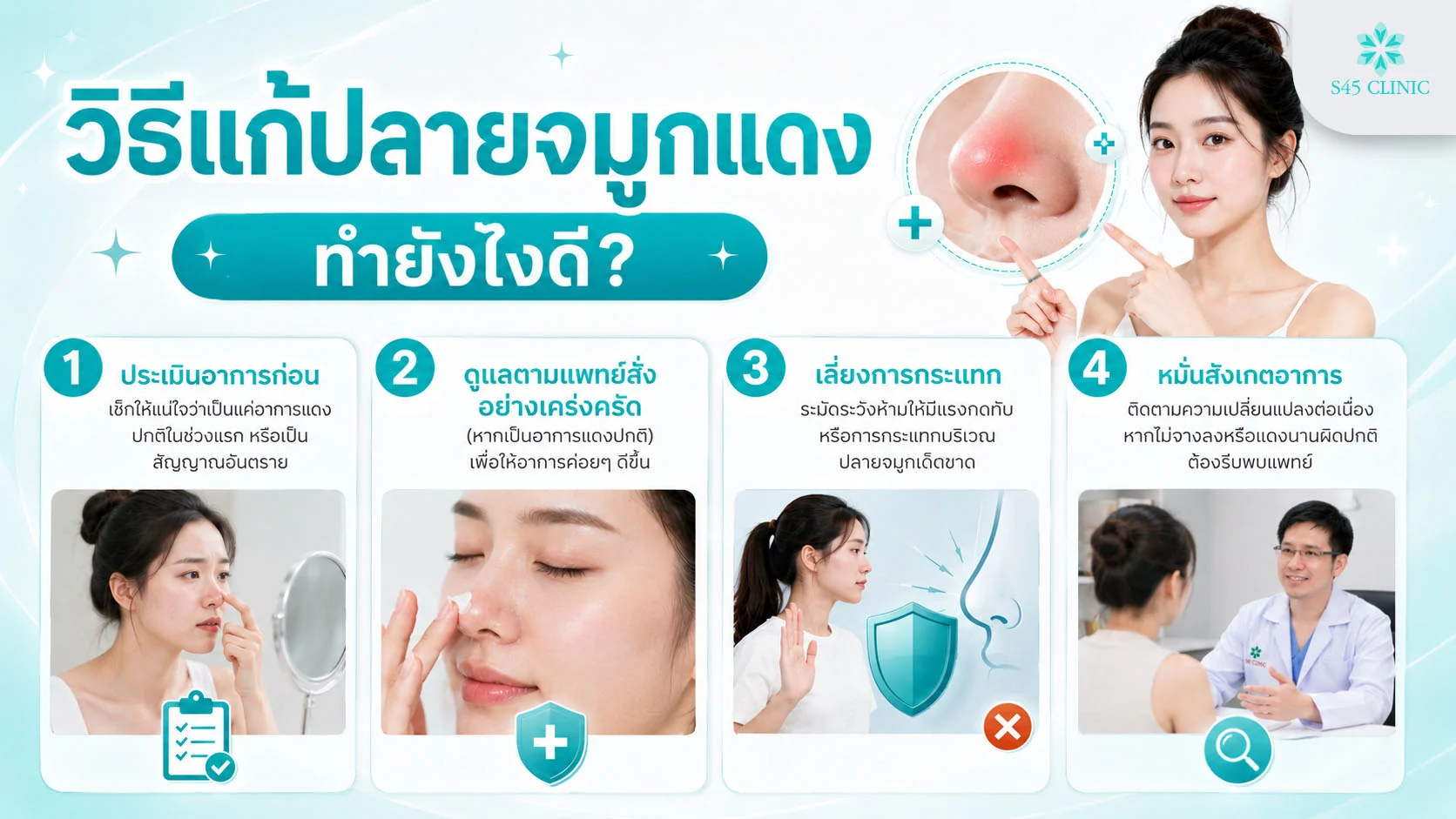
When your nose tip is red, the next question is how to treat it. The approach depends on the cause, so start by assessing whether it is normal or a sign that needs care.
First Care as Your Doctor Advises
If it is normal redness in the first period, following your doctor’s advice, avoiding knocks or pressure on the tip and keeping an eye on it helps the redness gradually improve.
See a Doctor If You Notice Unusual Signs
If the redness does not fade, lasts unusually long, or comes with swelling, severe pain or pus, see a doctor to find the cause. Do not buy medicines to use yourself, because an infection needs proper treatment. See more about wound care in caring for scabs to avoid a raised scar
Cases That Need the Structure Corrected
When the problem is linked to pressure from the material or the structure of the tip, the surgeon may assess options for correcting it. Most of these are revision cases that need planning for each individual case. See more about nose procedures in contracted nose (revision cases). The approach and result of revision depend on the cause, how severe it is and the condition of each person’s nose.
Prevention and Choosing Materials With Your Surgeon
Although not every symptom can be prevented, you can lower the risk by making careful choices from the start:
- choosing materials that meet medical standards, to help lower the chance of inflammation or irritation
- having a consultation with an experienced surgeon trained in the relevant field who assesses the thickness of the tip skin and chooses an approach that suits your nose structure
- not making the nose higher or pushing the tip further than the tissue can support, to reduce pressure on the tip
- looking after yourself after surgery as advised, avoiding knocks and keeping an eye on any symptoms
- going to your follow-up appointments, so any problems can be found early
Read more about the steps and risks of rhinoplasty from an international perspective in ASPS Rhinoplasty Overview
Why Choose S45 Clinic for Consultation and Care
Cases involving a red nose tip, or revision cases, need a detailed assessment of the tip skin, the tissue and the nose structure. S45 Clinic is a medical clinic that offers nose procedures, with care and plans designed for each individual, under our promise “Because all beauty comes from care”.
Surgeons With Training in the Relevant Fields
Our surgeons include otolaryngologists with sub-specialty training in facial plastic and reconstructive surgery, who assess your symptoms and plan an approach that suits each case.
Materials and Techniques Chosen for Each Person
The surgeon assesses the thickness of the tip skin and the nose structure to choose a suitable tip graft material, or uses your own cartilage in suitable cases, to help reduce pressure on the tip and lower the chance of problems.
Operating Theatre Standards and After Care
Our operating theatre meets standards and has a care team, with an After Care system to follow up after the procedure, so any problems can be found early and cared for continuously.
FAQ, Frequently Asked Questions About a Red Nose Tip After Acellular Dermal Matrix
What Causes a Red Nose Tip?
There are several possible causes, including normal redness in the first period from extra blood supply and stretched tissue, thin tip skin that lets colour show through, irritation, or inflammation and infection. Look at other symptoms and how long it lasts as well.
How Many Days Does a Red Nose Tip Take to Fade After Rhinoplasty?
Normal redness in the first period gradually fades within a few weeks to about 1 month. If it lasts longer than that or does not fade, see a doctor for an assessment.
Is a Red Nose Tip Without Pain Abnormal?
It can be either normal in the first period or something to keep watching. Look at how long it lasts and how it changes. If the redness does not fade or other symptoms follow, see a doctor.
Will a Red Nose Tip Lead to Implant Extrusion?
Redness does not always lead to implant extrusion, especially normal redness that gradually improves. But if one spot stays red and does not fade, the skin becomes so thin that the edge of the material shows, or there are other symptoms, see a doctor.
Will an Acellular Dermal Matrix Tip Graft Shrink?
Its volume may change somewhat depending on the type of material and each person’s body, and this differs from person to person. Have a consultation with the surgeon to understand the material used.
What Are the Disadvantages of Rhinoplasty With Acellular Dermal Matrix?
The nose tip may be red in the first period, long-term changes in the material differ from person to person, and using materials that do not meet medical standards may increase the chance of inflammation, so choose materials that meet medical standards and have the procedure with an experienced surgeon.
My Nose Tip Has Turned Red Months or Years After Rhinoplasty. Is This Abnormal?
Redness that appears later, or lasts a long time without fading, is a reason to see a doctor, because it may be linked to pressure on the tip, thinning skin or inflammation.
Summary
A red nose tip after rhinoplasty with acellular dermal matrix is common in the first period, because more blood flows to the reshaped area and the tissue is being stretched. It generally improves gradually on its own within a few weeks to about 1 month, so there is not always a reason to panic.
However, redness that does not fade, lasts unusually long, or comes with swelling, unusually severe pain, pus, or skin so thin that the edge of the material shows is a sign to see a doctor, because it may be linked to inflammation, infection or pressure on the tip. What matters is keeping an eye on the symptoms and seeing a doctor when you are unsure, rather than waiting to see or buying medicines to use yourself. The result depends on the condition of each person’s nose.
Because every nose structure…
is different
An otolaryngologist with subspecialty training in facial plastic and reconstructive surgery assesses every case before treatment and gives advice based on your actual concerns.
“Reveal the beauty within you”
Message us online
Surgery and medical procedures carry risks. Find out about them and consult a doctor before you decide. Results depend on each person.