Primary Rhinoplasty, Is a Good Result the First Time Possible?

Rhinoplasty, or nose surgery, is often the first option people choose to improve their appearance and personality. The nose is the first point the eye is drawn to in a well-proportioned face, so after rhinoplasty the change is clearly visible, even when the shape changes only slightly, and the face gains more depth. Results depend on each person.
If your facial structure and original nasal structure have no problems, one primary rhinoplasty may be enough for a good result. If the nasal structure has problems, such as a tilted nasal structure, contracted scar tissue or a deviated septum, the surgeon needs to consider correcting them together with rhinoplasty, which makes surgery more complex. This does not mean the nose shape after the first rhinoplasty cannot add depth to the face. At S45 Clinic, experienced surgeons analyse your facial structure, overall proportions and nasal structure to choose a rhinoplasty technique that suits you.



Rhinoplasty at S45 Clinic in a Relaxed Setting
Aiming for a Good Nose Shape From the First Operation
What Helps You Avoid Nose Reshaping After Your First Rhinoplasty?

1. Choosing a Surgeon Experienced in the Nose Shape You Want
- at least 10 years of experience in nose surgery
- results in nose shapes you like, and experience correcting misshapen nasal structures
- approachable, explains clearly and designs a nose shape that suits your facial structure
2. Planning Your Rhinoplasty
- a detailed analysis of your facial structure and proportions
- a clear explanation of the steps and risks
- time to consider and answers to all your questions
- prepare example photos of the nose you want
- tell the surgeon about all your problems and concerns
- ask about a backup plan if the result is not as expected
- ask to see results on faces similar to yours
- ask in detail about the rhinoplasty techniques the surgeon will use
3. Being Ready for Surgery
- You need to be 18 to 20 years old or older, when the bone structure has finished growing, so the shape is less likely to change.
- If you are pregnant or breastfeeding, avoid surgery.
- If you have health problems, take anticoagulants (blood thinners) or have a blood vessel disorder, tell the surgeon.
- If you have a long-term condition such as diabetes, high blood pressure or heart disease, consult the surgeon to plan suitable care.
- If you have a cold or an infected wound on the day of surgery, recover fully before having rhinoplasty.
4. Cases That Are Usually Simpler to Correct in One Operation
- a flat nose that you want to suit your face better
- a wide, rounded nasal tip that you want slimmer
- a long nose that you want shorter
- a curved bridge that you want straighter
Complex Cases or Cases With Other Problems Need Detailed Assessment by the Surgeon to Lower the Chance of Repeated Nose Reshaping
- nose reshaping (revision rhinoplasty) several times before
- problems in several areas at once, such as infection or a contracted nasal tip
- very unbalanced facial proportions
- thin skin or unusually thick skin
Read more about aftercare after rhinoplasty to help swelling go down
Warning Signs When Choosing a Nose Surgery Clinic
- the surgeon agrees without looking at the details
- prices that are unusually low compared with the market
- no results to show, or very few results
- pressure to decide quickly
- no explanation of the risks
Follow-Up After Surgery
- Weeks 1 to 2: a lot of swelling and bruising
- Month 1: you can see the rough shape
- Month 3: about 70% of the result
- Month 6: about 90% of the result
- Year 1: the final result (100%)
Symptoms That Mean You Need to See a Surgeon for Advice After Rhinoplasty
- swelling that does not go down after 2 weeks
- unusually severe pain
- signs of infection
- a crooked or asymmetric shape
- difficulty breathing
Before deciding on rhinoplasty, both you and the surgeon need to prepare well. The most important factor is choosing an experienced surgeon who truly understands what you want.
If Your First Rhinoplasty Did Not Go Well, Can You Have a New Shape?
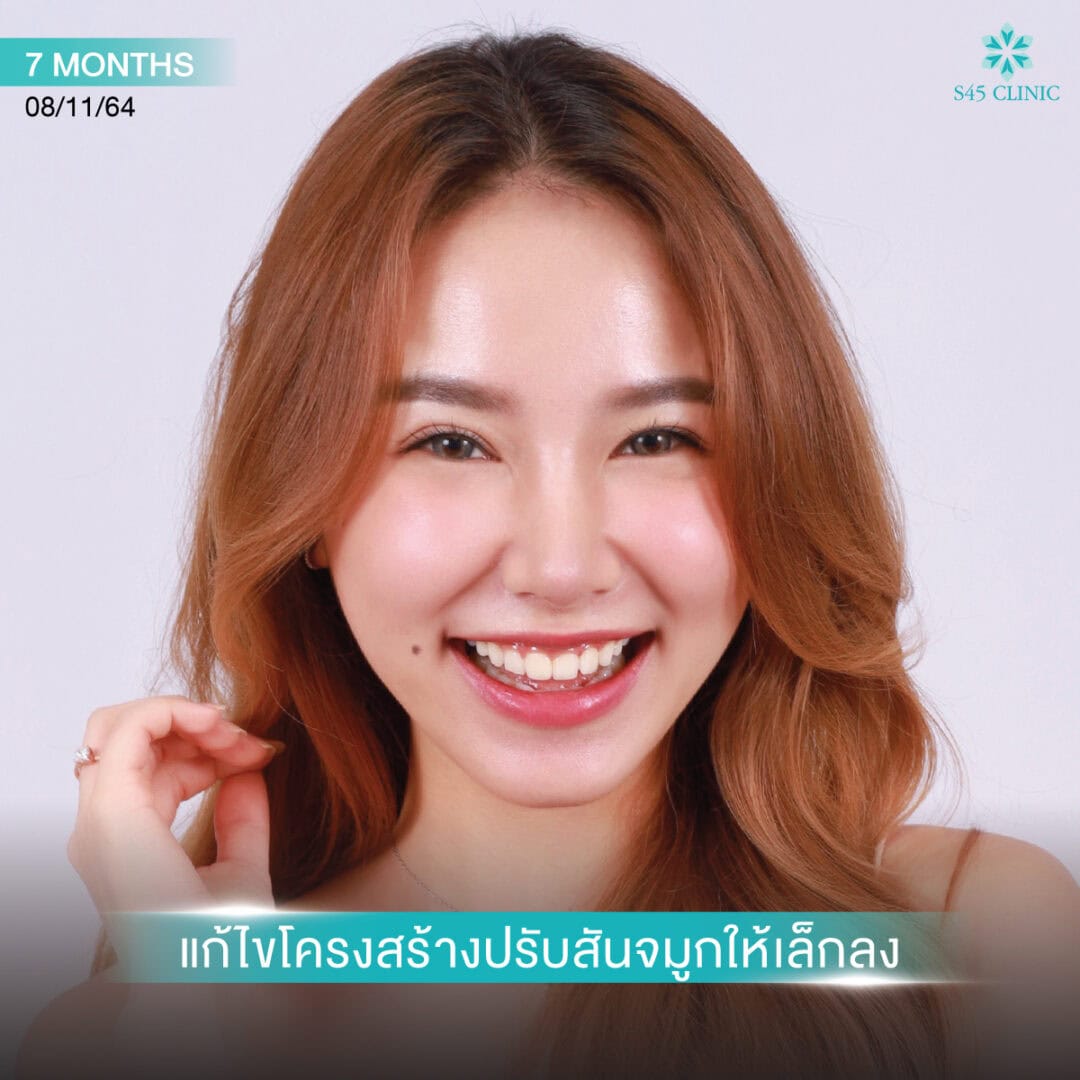
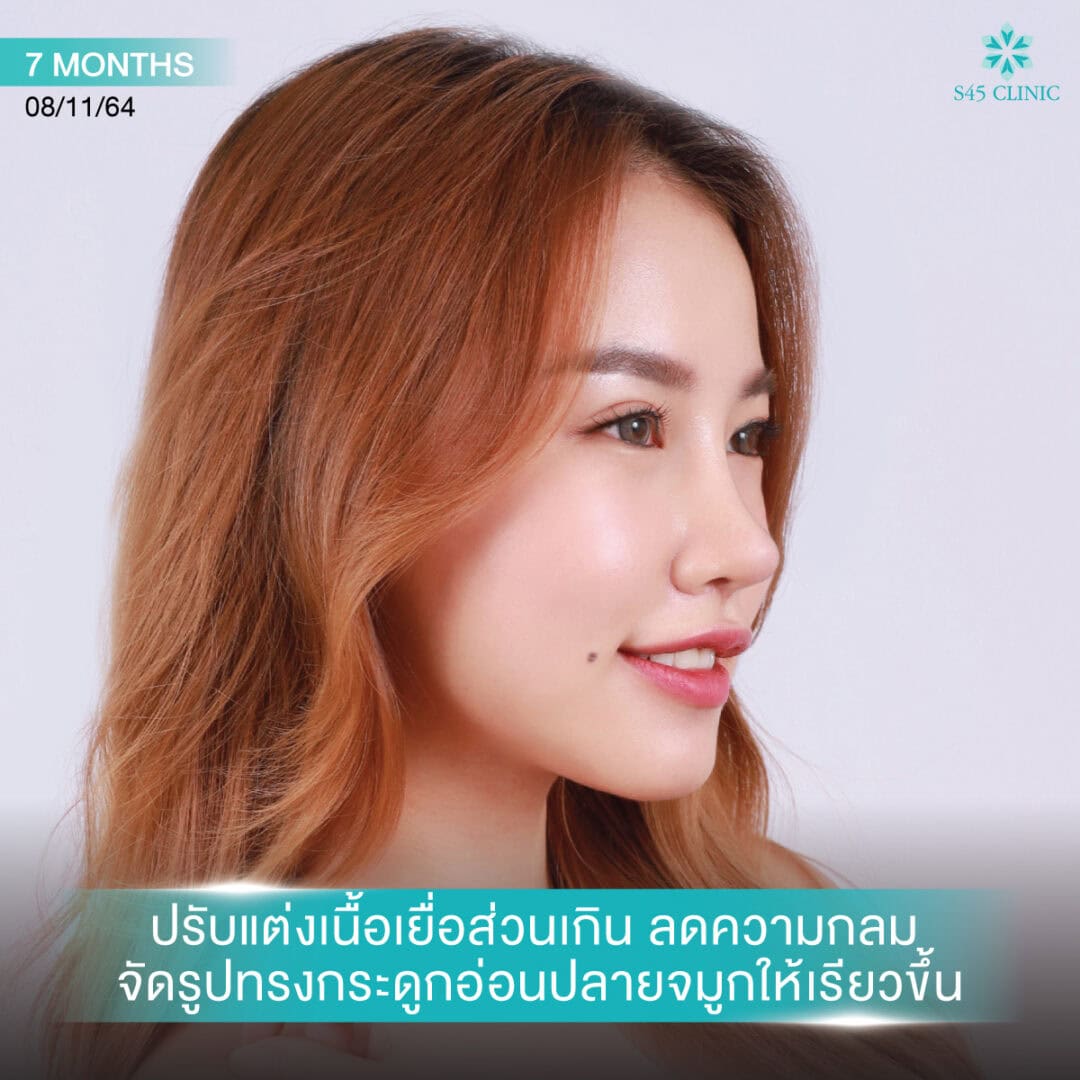
Open nose reshaping for Khun Pleng using septal extension, updated 7 months after reshaping
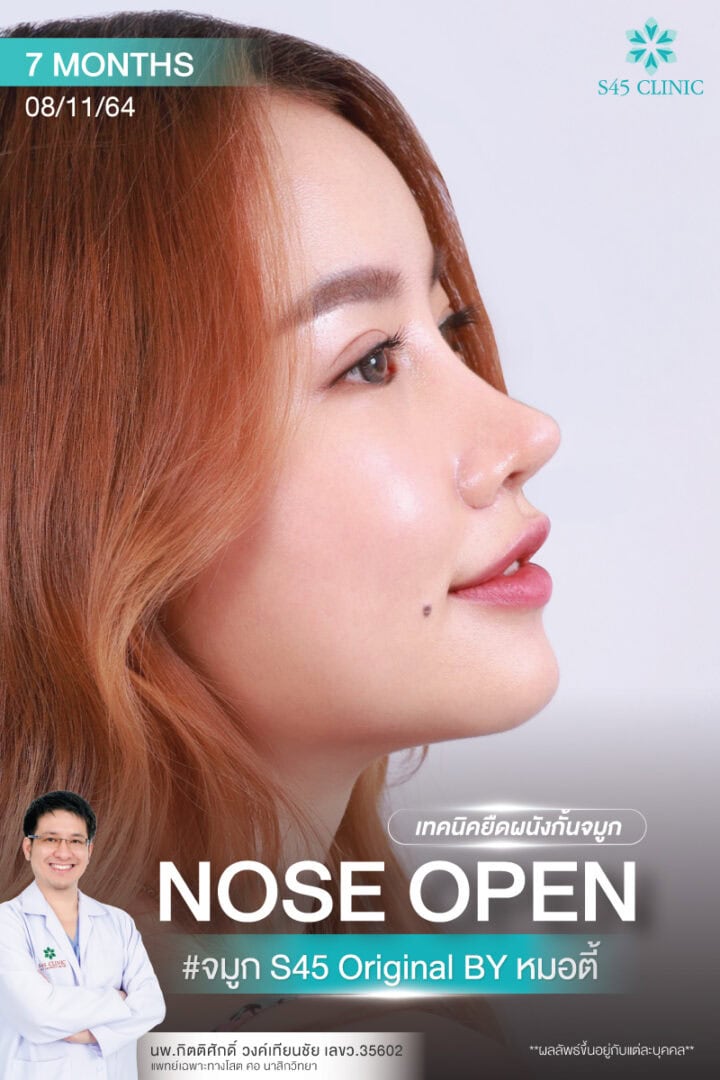
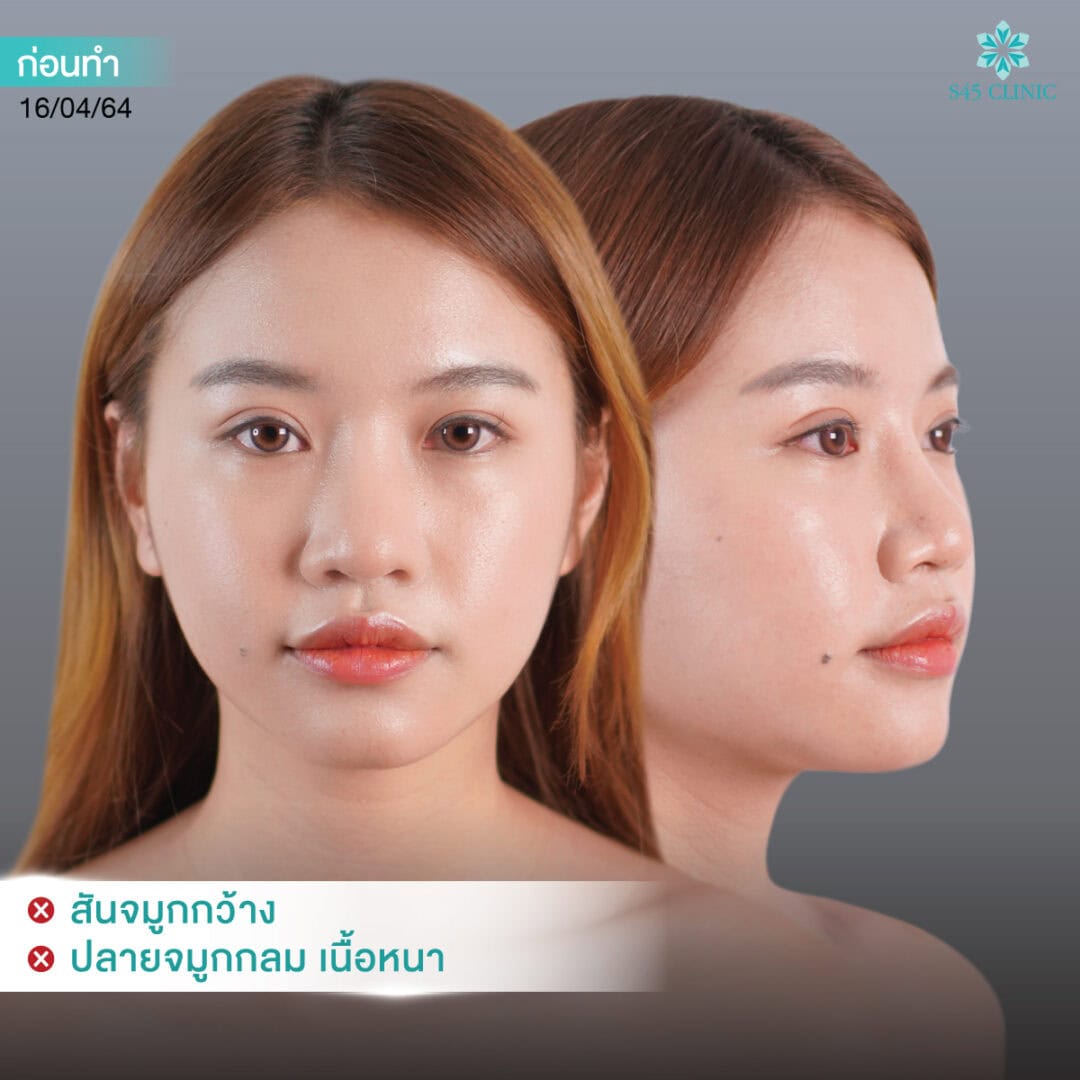
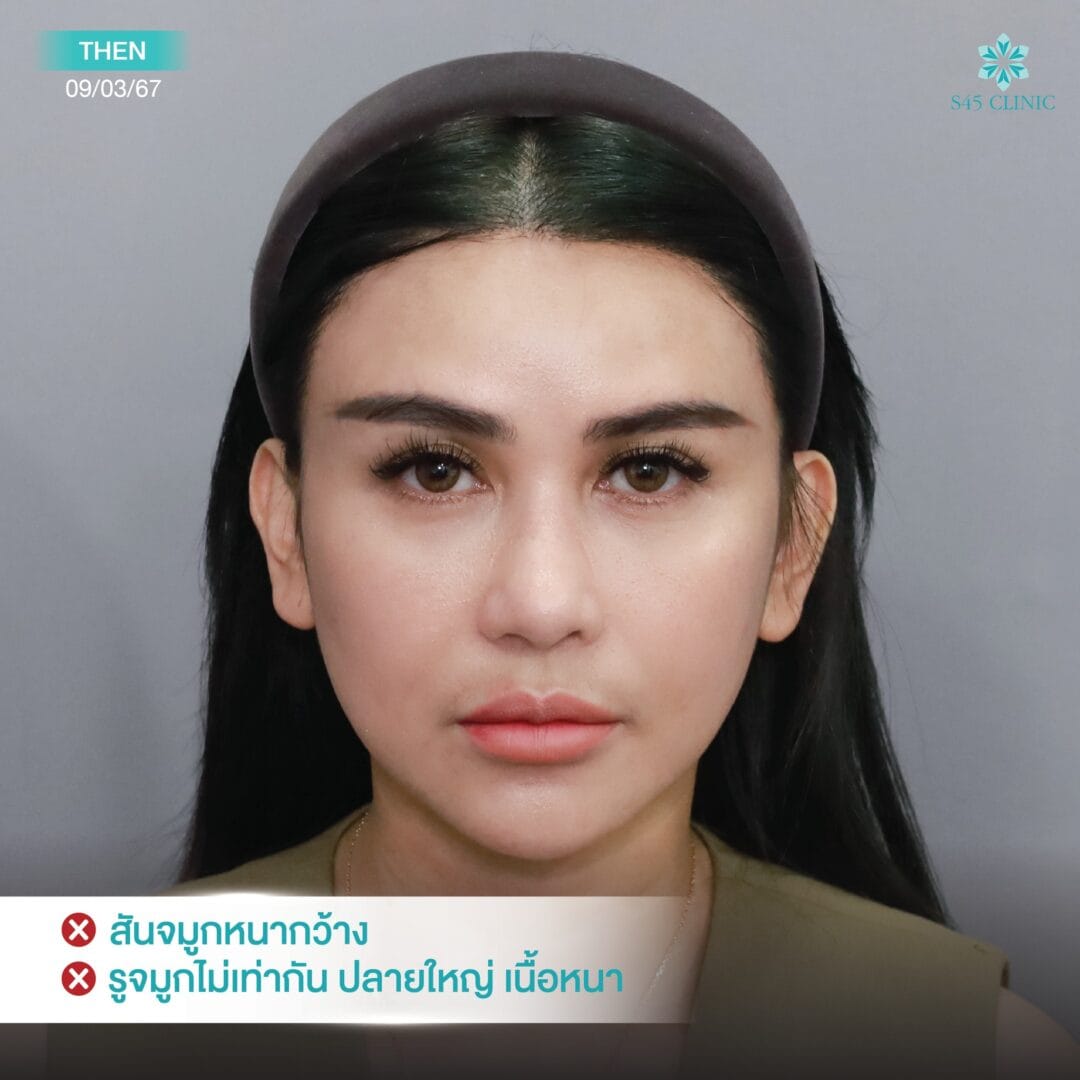
Concerns Before Nose Reshaping, Assessed by Dr. Ty
- a wide nasal bridge
- a round nasal tip with thick soft tissue
- structural correction to make the bridge narrower
- refining excess soft tissue to reduce roundness
- reshaping the tip cartilage to make it slimmer
Why Choose Open Rhinoplasty With Rib Cartilage at S45 Clinic?
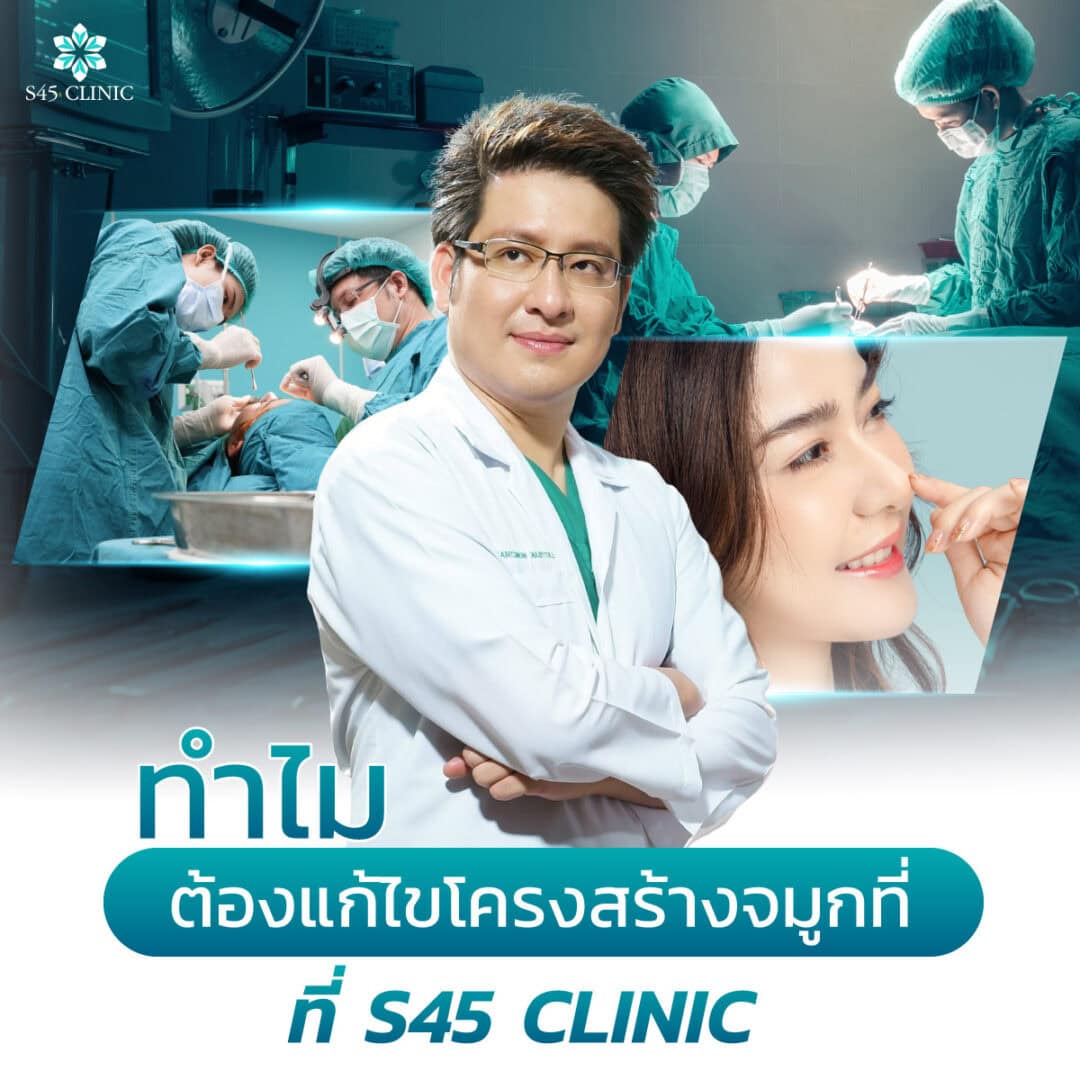


- surgery by doctors trained in facial plastic and reconstructive surgery
- with a focus on rhinoplasty and nasal structure correction
- more than 15 years of experience in surgery and patient care
- a range of nose techniques for first-time rhinoplasty, revision cases, complex cases and medical treatment cases
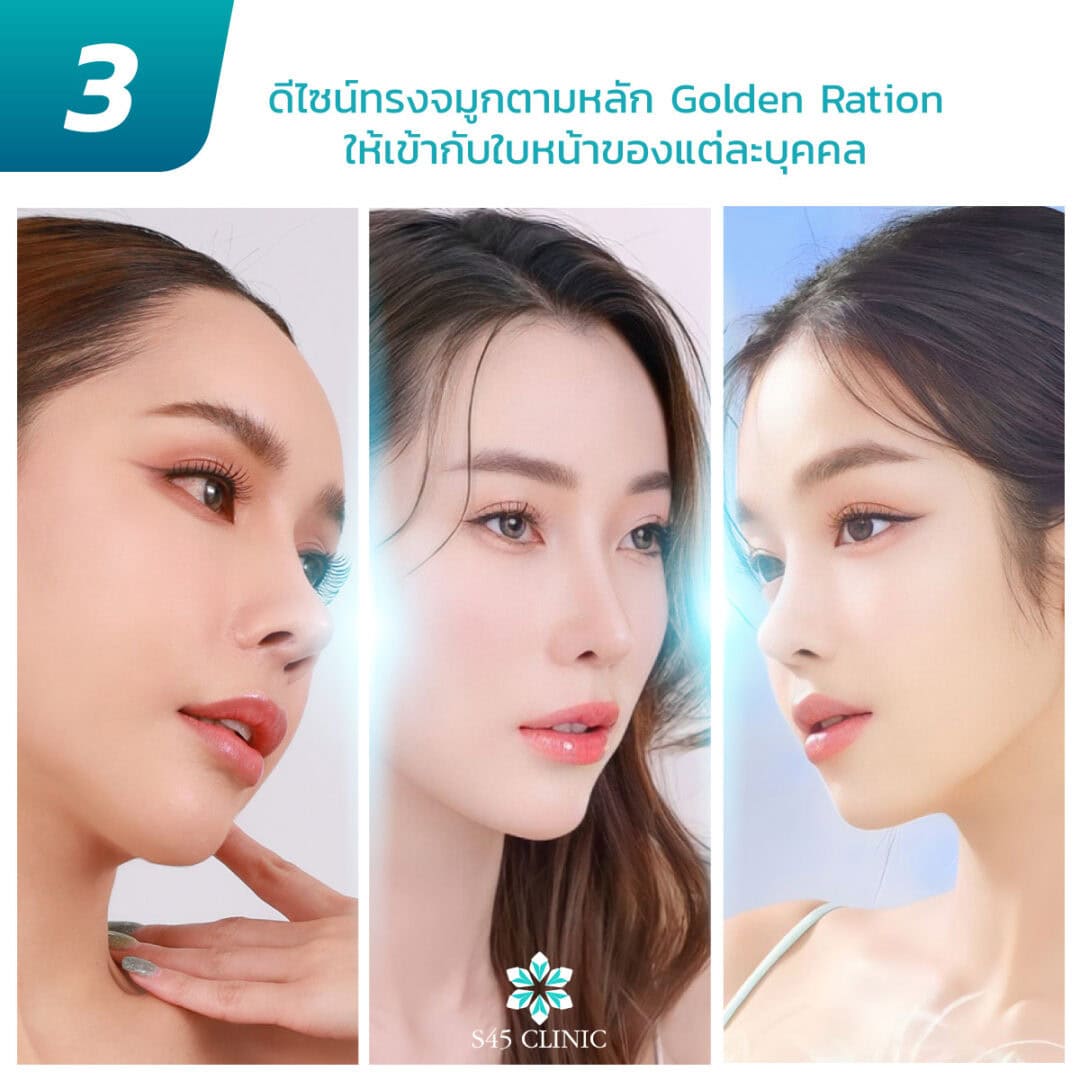
- a focus on designing the nasal structure to suit each person’s face
- detailed analysis of nose problems and targeted correction, aiming for the result you want
- correction of the actual nasal structure, not just an open incision technique
- a small incision of only 1cm to 3cm under the breast crease
- an operating theatre that meets the same standards as a hospital
- general anaesthetic under the care of an anaesthetist in every case
- easy to reach, in the heart of the city near The Em District
**Results depend on each person.**
Choose the Right Clinic and Feel Confident From Your First Rhinoplasty, Book a Consultation
Note: Repeat nose surgery, which many people know as ‘nose reshaping’, is surgery for people who have had nose surgery before and need a further assessment by a surgeon. The approach to care depends on the original concern, the nasal structure and the surgeon’s judgement in each case.