Nose Necrosis, What Causes It? Symptoms, Warning Signs, Prevention and Treatment

If you have just noticed that your nose is still red and swollen, unusually painful or has a smell after rhinoplasty, and you are starting to worry that it could be ‘nose necrosis’, try to stay calm. Not all swelling means nose necrosis, but this condition needs attention, and if you have any worrying signs, see a doctor as soon as possible.
Key points
- Nose necrosis is a condition where the tissue of the nose is damaged or dies because of infection or a poor blood supply. It can happen after rhinoplasty when there are complications.
- Symptoms to look out for include a nose that stays red and swollen even after several weeks, unusually severe pain, and inflamed spots or pus-filled bumps on the nose.
- Signs that need a prompt visit to a doctor include pus, a foul smell, skin on the nose that turns dark or changes colour, or a fever.
- Most cases are caused by bacterial infection, pressure that reduces the blood supply, materials or techniques that do not suit the nose structure, and how the nose is cared for after surgery.
- This condition needs prompt medical attention. Do not buy medicine to use on your own or wait to see what happens. See a doctor for an assessment and care as soon as possible.
- Treatment depends on how severe the condition is and the state of each person’s tissue. In most cases the infection is treated first, and revision surgery (revision rhinoplasty) is planned afterwards.
This article brings together easy-to-understand, referenced information, from what nose necrosis is, its symptoms and warning signs, causes, how it differs from normal swelling and what a foul smell means, to treatment and prevention, to help you make an initial assessment and decide how to look after yourself in time.
In This Article
What Is Nose Necrosis?
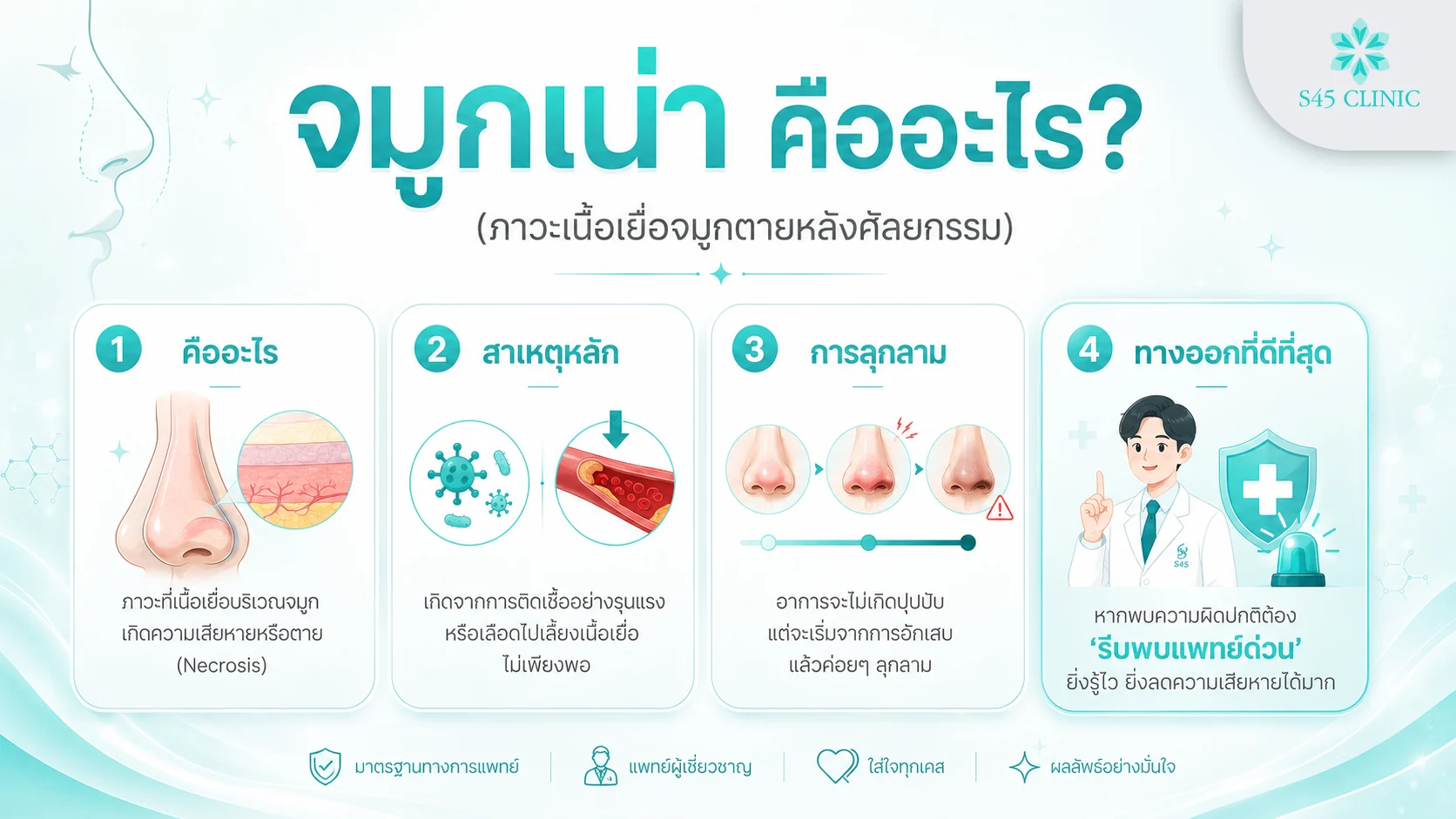
Nose necrosis is a condition where the tissue of the nose is damaged or dies (necrosis) as a result of infection or an insufficient blood supply to the tissue. It is commonly seen in plastic surgery, where it develops after rhinoplasty in cases with complications.
Nose necrosis after rhinoplasty usually does not happen straight away. It develops gradually, starting with inflammation or an infection that spreads until it affects the tissue, skin or cartilage of the nose. Without proper care, the damage can spread further.
This is why it is so important to understand what nose necrosis is and to spot the signs early. The sooner you see a doctor for an assessment and care, the more this helps to limit how severe it becomes and the damage to the tissue. See an overview of rhinoplasty at rhinoplasty (nose surgery).
Nose Necrosis Symptoms and Signs to Look Out For

Many people search for nose necrosis symptoms to make an initial self-assessment. In general, the symptoms range from early signs you can notice to signs that need a prompt visit to a doctor.
Early Signs
In the early stage, common symptoms include a nose that stays red and swollen even after several weeks, when swelling after surgery would normally improve gradually, pain around the nose together with swelling, and possibly inflamed spots or larger pus-filled bumps on the nose. These signs are the point at which to consult a doctor.
Signs That Need a Prompt Visit to a Doctor
If symptoms get worse, such as pus draining out, an unusual foul smell, skin on the nose that turns darker or changes colour, skin at the tip or bridge of the nose starting to open into a wound, or a fever, these are signs of infection or tissue damage. See a doctor as soon as possible and do not wait to see what happens.
Cartilage Death and Tissue Damage
In some severe cases, tissue or cartilage in the nose may be damaged or die, which affects both the shape and the health of the nose. This makes it even more important to get a doctor’s care quickly, to limit the damage and plan suitable care.
What Does a Foul Smell From the Nose Mean?
A foul, rotten smell from the nose is a sign not to ignore, because an unusual smell is mostly linked to infection or damaged tissue. This is why many people search for what causes a bad smell from the nose and how to deal with it.
In general, an unusual foul smell around the nose after rhinoplasty may come from an internal infection, a build-up of pus or tissue that is starting to be damaged. This is different from an ordinary smell caused by a temporary lack of cleanliness. The right way to deal with a foul smell from the nose is not to mask the smell or buy medicine to use on your own, but to see a doctor to find the real cause and treat the symptoms.
If you have an unusual foul smell together with swelling, pain, pus or a fever, see a doctor promptly, because it may be a sign of an infection that needs care quickly.
What Causes Nose Necrosis?
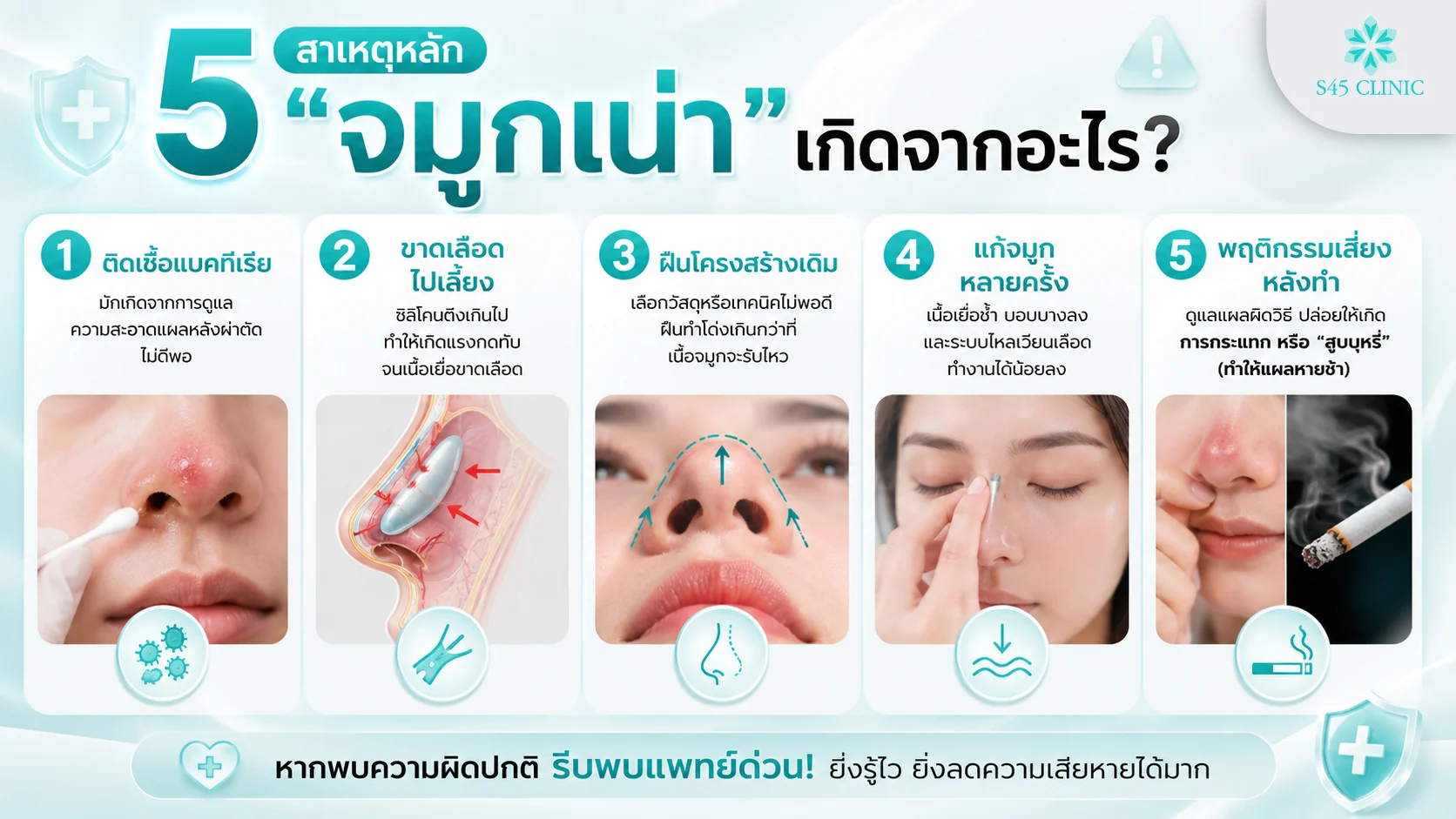
Understanding the causes helps you assess the risk and prevent it better. In general, nose necrosis is mostly the result of several factors together rather than a single cause. These include:
- Bacterial infection is a common cause, especially when an infection after surgery is not treated.
- A poor blood supply to the tissue can result from too much pressure from the material or from an augmentation that is tighter than the tissue can support, so the tissue lacks blood and is damaged.
- Materials or techniques may not suit the nose structure, such as a material that is the wrong size or making the nose higher than the original structure can support.
- Several previous operations can leave the tissue and its blood supply more fragile than usual.
- Unsuitable aftercare can play a part, such as a wound infection, a knock to the nose or smoking, which affects blood flow and wound healing.
You can lower the risk from the start by consulting an experienced surgeon to choose a technique and material that suit your nose structure. If you have thin nasal soft tissue and want a suitable structure, read more at a sloped nose with a projecting teardrop tip.
Nose Infection, How Do the Symptoms Differ From Normal Swelling?
Many people cannot tell whether what they have is normal swelling or a warning sign. Understanding the symptoms of a nose infection helps reduce unnecessary worry and helps you make the right decision.
In general, normal swelling after surgery improves gradually over the first few weeks, with no pus, no unusual smell, and pain that keeps easing. Symptoms that point to infection include redness and swelling that keep getting worse instead of better, warmth around the nose, unusually severe pain, pus or unusual fluid, a smell, or a fever. If you are not sure whether your symptoms are normal, having a doctor assess you is the right step. For basic wound care, read more at wound care to prevent raised scars.
Can Nose Necrosis Be Treated and Corrected?
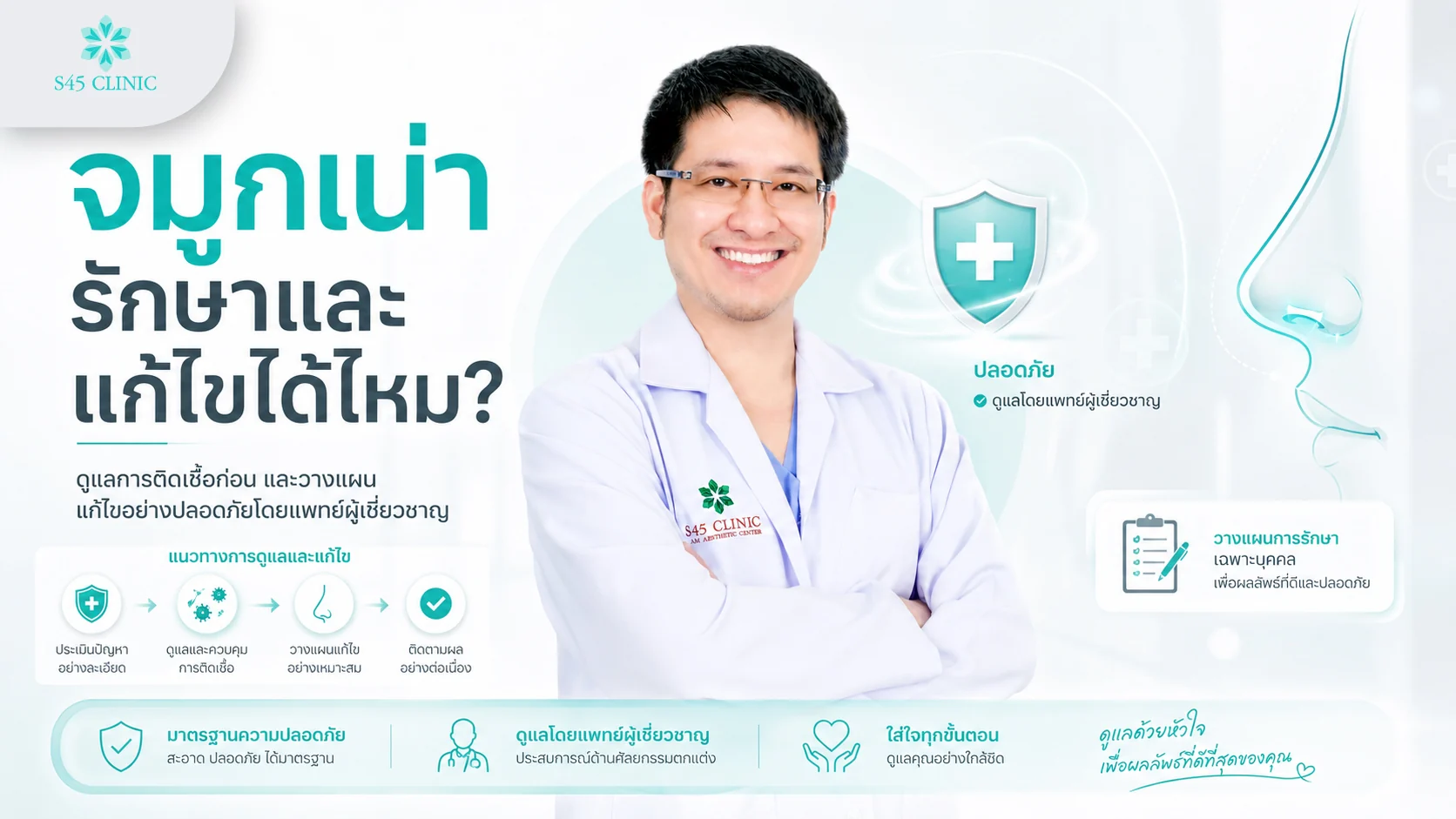
If you suspect nose necrosis, the next question is how it is treated. The main approach is to see a doctor quickly to assess how severe it is. Do not treat it yourself or leave it, because this condition needs prompt medical attention.
See a Doctor for a Prompt Assessment
The important first step is for a doctor to assess whether there is infection and how much tissue is damaged, so that suitable care can be planned. The sooner it is found, the more this helps limit the damage.
Treating the Infection and Removing the Original Material
In many cases, the doctor may treat the infection first, for example with medicine prescribed by the doctor and wound cleaning, and may also remove the original material to relieve pressure and let the tissue recover.
Revision Surgery (Revision Rhinoplasty)
Once the infection has been treated and the tissue has recovered enough, the doctor assesses rebuilding the structure with cartilage. This needs a waiting period so the tissue is ready, and counts as a revision case that needs a detailed assessment. See more about our nose procedures at rhinoplasty (nose surgery). The approach and results of treatment depend on how severe the condition is, the state of the tissue and the doctor’s assessment.
How to Prevent Nose Necrosis
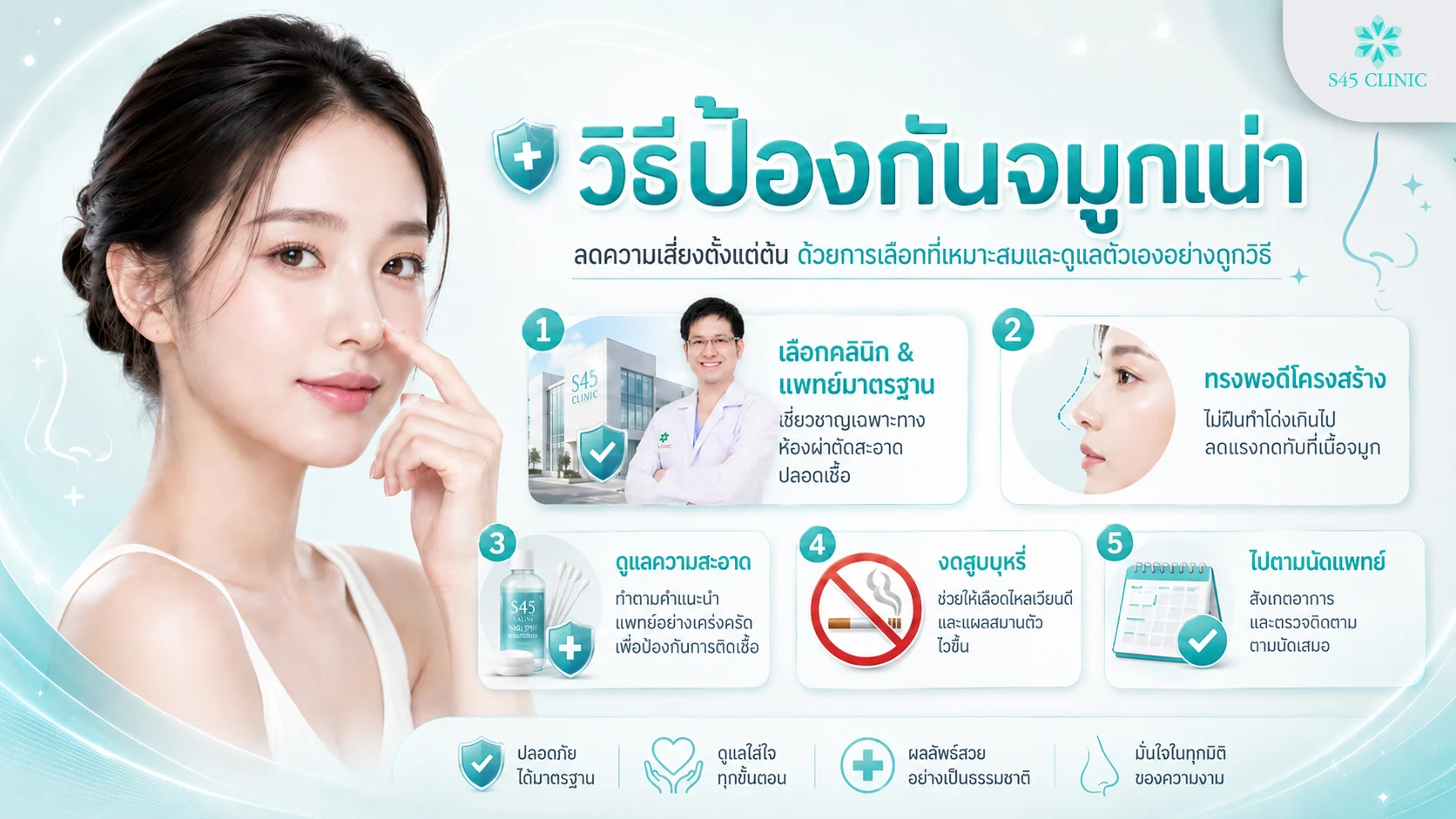
Although it cannot always be prevented, you can lower the risk with care from before to after the procedure:
- Choose an experienced surgeon with specialty training and a clinic that meets standards, with clean operating theatres and contamination control.
- Choose a technique and material that suit your nose structure, and do not raise the nose higher than the tissue and skin can support, to reduce pressure.
- Keep the area clean and follow the aftercare advice strictly to lower the chance of infection.
- Stop smoking as the doctor advises, because smoking affects blood flow and wound healing.
- Watch for symptoms and attend your follow-up appointments, so any problem can be found early.
For information about rhinoplasty steps and risks from an international perspective, read the ASPS Rhinoplasty Overview.
Worried About a Misshapen Nose and the Cost, What Can You Do?
Common worries with this condition are that the nose will lose its shape and be hard to correct, and the cost of correction. These feelings are understandable. The important thing is not to panic, because seeing a doctor early helps you get care in time before the damage spreads.
What helps is to see a doctor quickly to assess the actual situation, because knowing exactly where you stand helps you plan to the point and reduces worry from guessing. For costs, ask the clinic clearly about the approach and the terms of care, so you can plan with peace of mind.
Why Choose S45 Clinic for Consultation and Revision?
Cases involving nose necrosis, infection or revision surgery need a detailed assessment of the tissue and nose structure. S45 Clinic is a medical clinic that provides nose procedures, with care and an approach designed for each person, under our promise “Because every kind of beauty comes from care”.
Surgeons With Specialty Training
Our surgeons include otolaryngologists (ear, nose and throat surgeons) with sub-specialty training in facial plastic and reconstructive surgery, who assess your symptoms and plan an approach that suits each case.
Step-by-Step Care for Revision Cases
In revision cases, the doctor assesses the tissue and plans in stages, from treating the original problem to rebuilding the structure when the tissue is ready, with a plan designed for each person based on the existing nose.
Operating Theatre Standards and Aftercare
Our operating theatres meet standards, with a care team and an aftercare system to follow up after your procedure, so any problem can be found early and cared for continuously.
FAQ About Nose Necrosis
What Are the Symptoms of Nose Necrosis?
Symptoms to look out for include a nose that stays red and swollen even after several weeks, unusually severe pain, and inflamed spots or pus-filled bumps on the nose. If it gets worse, there may be pus, a foul smell or skin that turns dark or changes colour, which need a prompt visit to a doctor.
What Causes Nose Necrosis?
Most cases are caused by bacterial infection, a poor blood supply to the tissue from pressure of the material, materials or techniques that do not suit the structure, as well as smoking and how the nose is cared for after surgery.
How Do I Deal With a Foul Smell From My Nose?
Do not mask the smell or buy medicine to use on your own. See a doctor to find the real cause, because an unusual smell may be linked to infection or damaged tissue.
How Is Nose Necrosis Different From Normal Swelling?
Normal swelling improves gradually, with no pus or unusual smell. Worrying signs are redness and swelling that keep getting worse, warmth, unusually severe pain, pus, a smell or a fever, which need a doctor’s assessment.
Can Nose Necrosis Be Treated and Corrected?
Treatment depends on how severe the condition is and the state of each person’s tissue. In most cases the infection is treated first and revision surgery is planned afterwards. Results depend on the doctor’s assessment, so see a doctor promptly to plan care for your case.
Can Nose Necrosis Be Prevented?
You can lower the risk by choosing an experienced surgeon and a clinic that meets standards, choosing a technique and material that suit your structure, keeping the wound clean after surgery, not smoking and attending your follow-up appointments.
Summary
Nose necrosis is a condition where the tissue of the nose is damaged or dies because of infection or a poor blood supply. It can happen after rhinoplasty when there are complications. Symptoms to look out for are a nose that stays red and swollen, unusually severe pain and inflamed spots, and if it gets worse there may be pus, a foul smell or skin that turns dark or changes colour.
However, not all swelling means nose necrosis, so it is important to tell normal swelling apart from signs of infection. If you have worrying signs, see a doctor promptly rather than waiting or buying medicine to use on your own, because this condition needs prompt medical attention. Treatment starts with treating the infection, then planning revision surgery when the tissue is ready, and results depend on how severe the condition is and the state of each person’s nose.
Because every nose structure…
is different
An otolaryngologist with subspecialty training in facial plastic and reconstructive surgery assesses every case before treatment and gives advice based on your actual concerns.
“Reveal the beauty within you”
Message us online
Surgery and medical procedures carry risks. Find out about them and consult a doctor before you decide. Results depend on each person.