Structural Rhinoplasty vs Silicone Rhinoplasty, How They Differ

Rhinoplasty can help boost your confidence and give the face more definition. As well as improving appearance, it can also help correct a misshapen nose caused by illness, an accident or other causes.
In any case, if you decide to have rhinoplasty, you can tell the surgeon the nose shape you want. The surgeon will also assess whether that shape suits you, because what looks good also depends on each person’s face shape.
Current rhinoplasty techniques include closed rhinoplasty, which is a relatively simple procedure that takes less time, does not need a general anaesthetic and can give you a new nose in a short time (depending on each person’s case). However, closed rhinoplasty may suit people who do not have a misshapen nasal structure and who have enough nasal tissue, in other words people whose nasal structure is already good and who want only a small change.
If you want rhinoplasty and the surgeon finds that your nasal structure is incomplete, for example a short septum, little tissue at the nasal tip, a deviated or tilted septum or other problems, the surgeon will consider structural rhinoplasty, or open rhinoplasty. Open rhinoplasty involves a small incision so that the surgeon can see the whole nasal structure and adjust it as needed. The surgeon will explain this to you before surgery.
How the Surgeon Analyses Your Nose Shape
- the surgeon talks with you in detail about what you want, to analyse it and choose a technique that suits you
- for rhinoplasty, the nose shape is designed based on your face, for a soft look
- the analysis and design focus on how the nose relates to the whole face, to add definition
- the analysis is based on the proportions and angles that suit you, so the right nose is different for each person and you may not get exactly the shape you first asked for. Your new nose is designed to suit your own face
- if you have little tissue, the surgeon will not force more projection than your nose can support
For open rhinoplasty, you have a general anaesthetic given by an anaesthetist, which S45 Clinic considers important. We use an anaesthetist to look after you during surgery. After rhinoplasty, this can help reduce discomfort, and in some cases you do not need a long recovery and can go home and follow the surgeon’s advice.
Rhinoplasty, Nose Reshaping, Structural Correction and Septal Extension
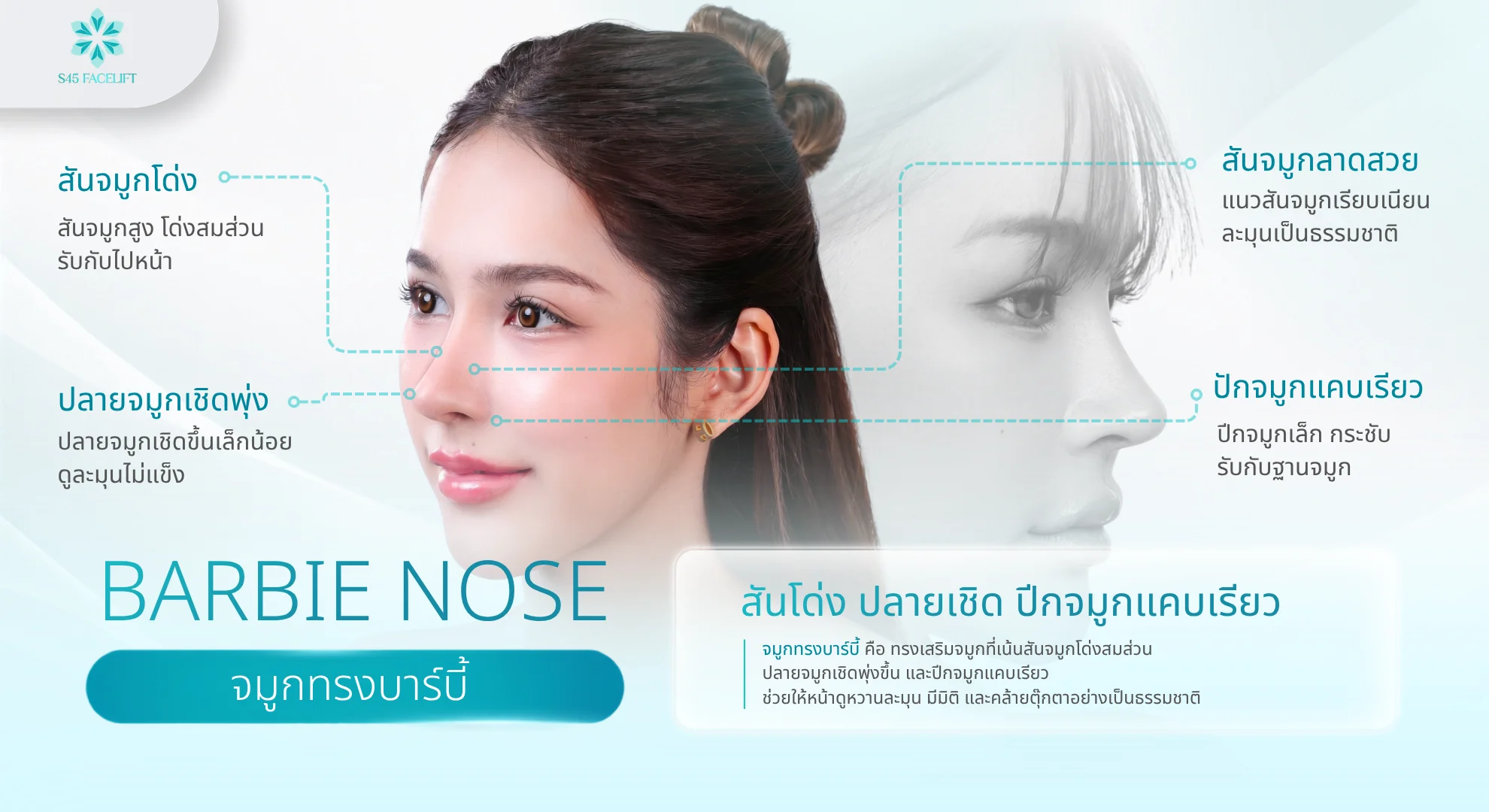
Many people are choosing structural rhinoplasty. It combines a silicone implant along the bridge with your septum and tissue to build the structure of the nasal tip, which makes the tip strong and lowers the chance of it pushing through the skin, because it uses your own tissue. This gives the nose a soft look (‘Lamoon nose’) with a teardrop tip.
As a result, many people who want structural correction, rhinoplasty or nose reshaping are interested in this technique.
Who Structural Rhinoplasty May Suit
- people with a short or contracted nose
- people with a thin nasal tip
- people who have had liquid injections in the nose before
- people who want a teardrop tip with more projection
Closed Silicone Rhinoplasty and Nose Reshaping
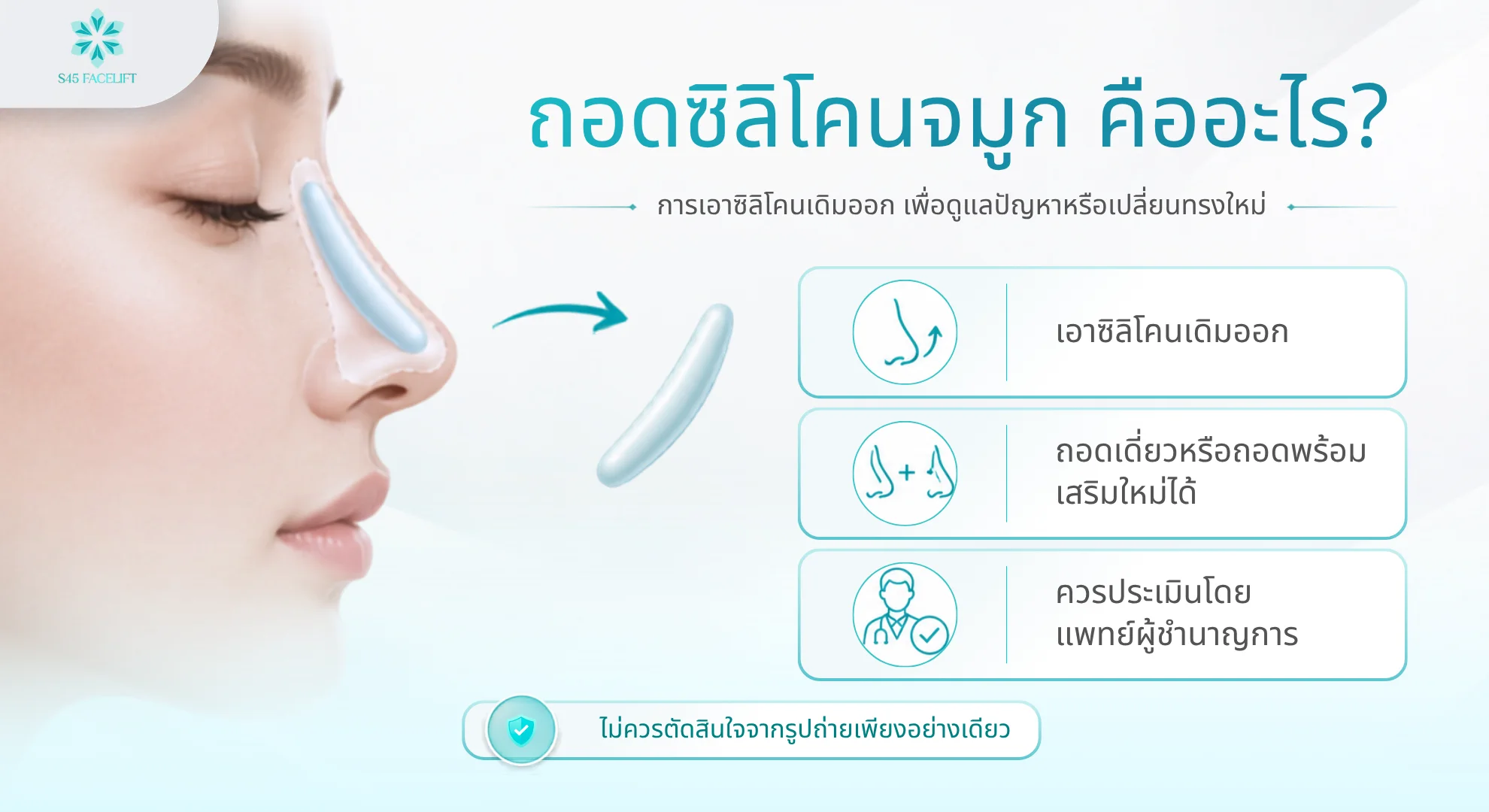
Closed rhinoplasty has been a common technique for many years. An experienced surgeon carves a single piece of silicone into the shape needed, makes an incision on one or both sides inside the nose (as the surgeon decides), and inserts the carved silicone implant into the nose to create the planned shape.
With this technique, if the surgeon is not experienced, the implant is not carved into a suitable shape, or the silicone does not meet standards, the nose may become misshapen and the structure inside the nose may be damaged. At S45 Clinic, we use implant-grade silicone, quality techniques, and materials and equipment that meet medical standards, designed to stay in the body for the long term.
Differences Between Rhinoplasty With Septal Extension and Silicone Rhinoplasty
| Structural rhinoplasty with septal extension | Closed silicone rhinoplasty | |
| Advantages | Uses your own tissue, so there is a low chance of allergy or irritation and less friction from a foreign material. It can correct tip extrusion or a nasal tip that is too large, and add projection for a teardrop tip. | A shorter procedure, recovery time depends on each person, and a lower cost |
| Disadvantages | There are 2 incisions on the nose, which fade once the wounds have fully healed (depending on the surgeon’s experience). The cost may be higher than other techniques, you may need recovery time, and swelling may take longer to go down and the nose may take longer to settle than with other techniques. | Some people may be allergic to silicone, which can cause the body to reject it and lead to infection. Over a long time, the silicone can move and change the shape of the nose, and the implant size may not fit well if the surgeon is not experienced. |
| Recommendations | Choose an experienced surgeon and follow the surgeon’s advice strictly. | Ask about the details of the silicone, check that it meets standards, and have a detailed consultation with the surgeon about aftercare. |
Structural rhinoplasty with septal extension, open septorhinoplasty, structural correction with no silicone at the tip. At S45 Clinic, the surgeon assesses every case in detail, considering the nasal structure together with your face structure and nasal tissue, to aim for a result you are happy with
Structural rhinoplasty with open surgery costs more than silicone rhinoplasty, because the surgery is more detailed and involves adjusting and shaping the structure inside the nose.
If you are looking for open rhinoplasty, message S45 Clinic for information about our services
Note: Revision rhinoplasty, which many people know as ‘nose reshaping’, is surgery for people who have had nose surgery before and need further assessment by a surgeon. The approach depends on the original problem, the nose structure and the surgeon’s judgement in each case.