Rhinoplasty Consultation and What the Surgeon Assesses Before Designing Your Nose Shape

A rhinoplasty consultation is an important step before you decide on surgery, because designing a nose shape is not only about “which shape you want” or “which reference photo you like”. The surgeon also needs to assess your existing nasal structure, facial proportions, nasal soft tissue, health history, and your goals and expectations as an individual.
If you are researching where to have rhinoplasty, are interested in open rhinoplasty, or want to know what to know before rhinoplasty, this article explains what the surgeon assesses at a consultation before planning a nose design that suits you.
Why a Consultation With a Surgeon Before Rhinoplasty Matters
Many people start by looking at reviews or nose shapes they like, which is a good starting point for explaining what you want. But a decision about rhinoplasty should look beyond example photos, because each person’s facial and nasal structure is different. A consultation helps answer questions such as:

- whether the shape you like suits your face
- what limitations your existing bridge, nasal tip and nasal base have
- how much change your nasal soft tissue and skin can support
- which technique should be used to plan a result that suits you as an individual
- whether there is any health history or other factor you need to tell the surgeon about before you decide
What to Prepare Before a Rhinoplasty Consultation
Before your rhinoplasty consultation, it helps to prepare some basic information in advance, so the surgeon can assess you in more detail and the discussion matches what you want more closely.


1. Nose shapes you like or reference photos of what you want
You can bring photos of nose shapes you like to show the surgeon, such as a shape that looks soft, a shape that looks more defined, or a shape that suits your existing face.
However, reference photos are only a “guide”. They are not a result that will match 100%, because each person’s facial structure, nasal soft tissue, nasal skin and nasal base are different.
2. What concerns you about your nose now
Take some time to notice which areas concern you most, for example:
- the bridge does not look defined
- the nasal tip is not yet the shape you want
- the nasal base looks wide
- your face does not look balanced from the front and the side
- you want a nose shape that suits your face better
Explaining your concerns clearly helps the surgeon understand what you want and make a more focused assessment.
3. Your health history, medicines and supplements
Give full details about your health, such as any long-term conditions, drug allergies, medicines you take regularly, supplements and any previous surgery, because this information affects the assessment of whether a procedure is suitable for you.
4. Any previous nose surgery or procedures
If you have had nose surgery before, give the surgeon full details, such as when you had surgery, which rhinoplasty technique was used, what materials were used and any problems or concerns you have, so the surgeon can assess your nasal structure and its limitations before planning your nose surgery.
What the Surgeon Assesses Before Designing Your Nose Shape

Designing a nose shape that suits each person means assessing several elements together, not only the height of the bridge. These include:
1. Your overall facial structure
The surgeon looks at your overall facial proportions, such as your forehead, cheekbones, lips, chin and side profile, to assess which nose shape will blend most smoothly with your existing face.
A suitable nose does not always need to be very high. It should be a shape that works with the other features of your face.
2. Your existing bridge
The bridge affects the dimension of your face. The surgeon assesses its height, line and width, as well as your forehead, to plan how the bridge should be adjusted to suit your face.
3. The nasal tip
The nasal tip is an area of fine detail, because it involves cartilage and the skin of the nose. The surgeon assesses each person’s nasal tip, for example whether it is rounded, pointing downwards, upturned, droopy or thin, to decide on a suitable approach to reshaping it.
4. The nasal base and nostrils
The nasal base affects how your face looks from the front. The surgeon assesses the width of the nasal base, the shape of the nostrils and the balance between left and right, to plan a nose shape that suits your face.
5. Nasal soft tissue and skin
The nasal soft tissue and the thickness of the skin are important limits when designing a shape. If your skin is thin or you have little nasal soft tissue, the surgeon assesses this carefully to plan a shape that suits the condition of your tissue.
6. Your expectations
The surgeon talks with you to understand what you want and the look you expect, such as a softer-looking face, more dimension along the bridge, or a nose shape that blends better with your existing face.
The surgeon then assesses this together with your actual nasal structure, nasal soft tissue, skin, nasal base and facial proportions to plan a suitable approach for you. The surgeon also explains how far the shape you want can be achieved, what the limitations are, and which technique fits your existing structure.
Who Open Rhinoplasty May Suit and What the Surgeon Considers
Open rhinoplasty is one of the techniques the surgeon may consider in some cases, especially cases that need detailed assessment and planning of the nasal structure, such as the bridge, nasal tip and nasal base, or cases with previous nose surgery.
The surgeon may consider several factors together, such as:
- your existing nasal structure
- the strength of your cartilage
- the condition of your tissue and nasal skin
- the nose shape you want
- any previous surgery
- which materials are suitable for you as an individual
In some cases, the surgeon may consider open rhinoplasty with rib cartilage as one option, but this does not mean everyone needs it, because the choice of technique and material should depend on the surgeon’s assessment of each person.
How the Surgeons at S45 Clinic Plan Your Nose Shape
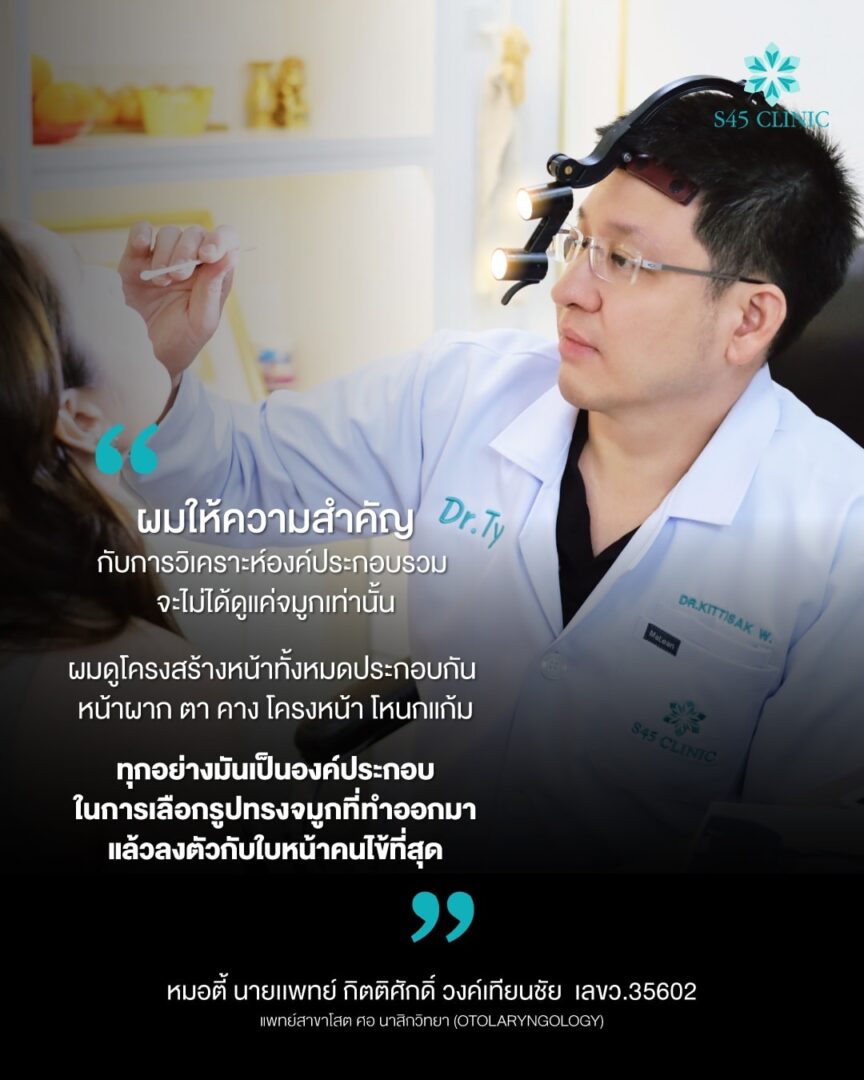
At S45 Clinic, designing a nose shape starts with assessing your existing structure together with what you want, so the plan suits your face rather than choosing a shape from example photos alone.
In their assessment, the surgeons at S45 Clinic focus on:
- your actual face
- your existing bridge, nasal tip, nasal base and nasal soft tissue
- your face from the front and from the side
- your health history and surgical history
- whether the shape you want is achievable
- your individual limitations
Questions to Ask the Surgeon Before Deciding on Rhinoplasty
Before you decide on rhinoplasty, prepare your questions in advance so you get complete information and understand the treatment plan better. Questions to ask include:
- What limitations does my nasal structure have?
- Does the nose shape I like suit my face?
- Which technique suits me?
- How do I need to prepare before the procedure?
- How should I look after myself afterwards?
- What is recovery usually like?
- What are the risks or precautions?
- If I have had nose surgery before, what else does the surgeon need to assess?
Preparing questions before your consultation helps you understand the treatment plan, the limitations of your existing nose and the options that suit you, so your decision is careful and confident before you plan rhinoplasty.
Summary
A rhinoplasty consultation is an important step for anyone planning nose surgery, because it helps you understand what to consider when choosing a nose shape that suits you, including your facial structure, bridge, nasal tip, nasal base, nasal soft tissue, skin, health history and individual wishes.
If you are researching where to have rhinoplasty, are interested in open rhinoplasty, or want to know what to know before rhinoplasty, starting with a consultation and a detailed assessment by a surgeon will help you understand the approach that suits you.
FAQ Frequently Asked Questions
Reveal your hidden beauty Reveal the beauty within you
If you are planning rhinoplasty, or are not yet sure which nose shape suits your face,
you can book a consultation with a surgeon at S45 Clinic to assess your actual nasal structure
and plan an approach that suits you as an individual.