Crooked Nose After Rhinoplasty, a Tilted Nose or an Uneven Base, Can Open Revision Rhinoplasty Help?

Revision rhinoplasty
A crooked or tilted nose can have several causes, such as an uneven existing nasal structure, a tilted bony base, an existing implant that has moved, or changes in the internal tissue after previous surgery. Some people notice it most from the front, some only from the side, and some feel that after rhinoplasty the shape has started to tilt away from how it was.
This article explains what can cause a crooked nose or a tilted nose after rhinoplasty, what should be assessed before planning open revision rhinoplasty, and how open rhinoplasty helps the surgeon see the nasal structure to plan the correction, with a focus on assessment based on the cause and the existing condition of the nose in each case.
What Can Cause a Crooked or Tilted Nose?
Many people who wonder what causes a crooked nose may think it comes only from how the silicone implant was placed. In fact, a crooked or tilted nose may involve several factors together, including the existing structure, the nasal base, the materials used and changes in the tissue after surgery.
An Uneven Existing Nasal Base
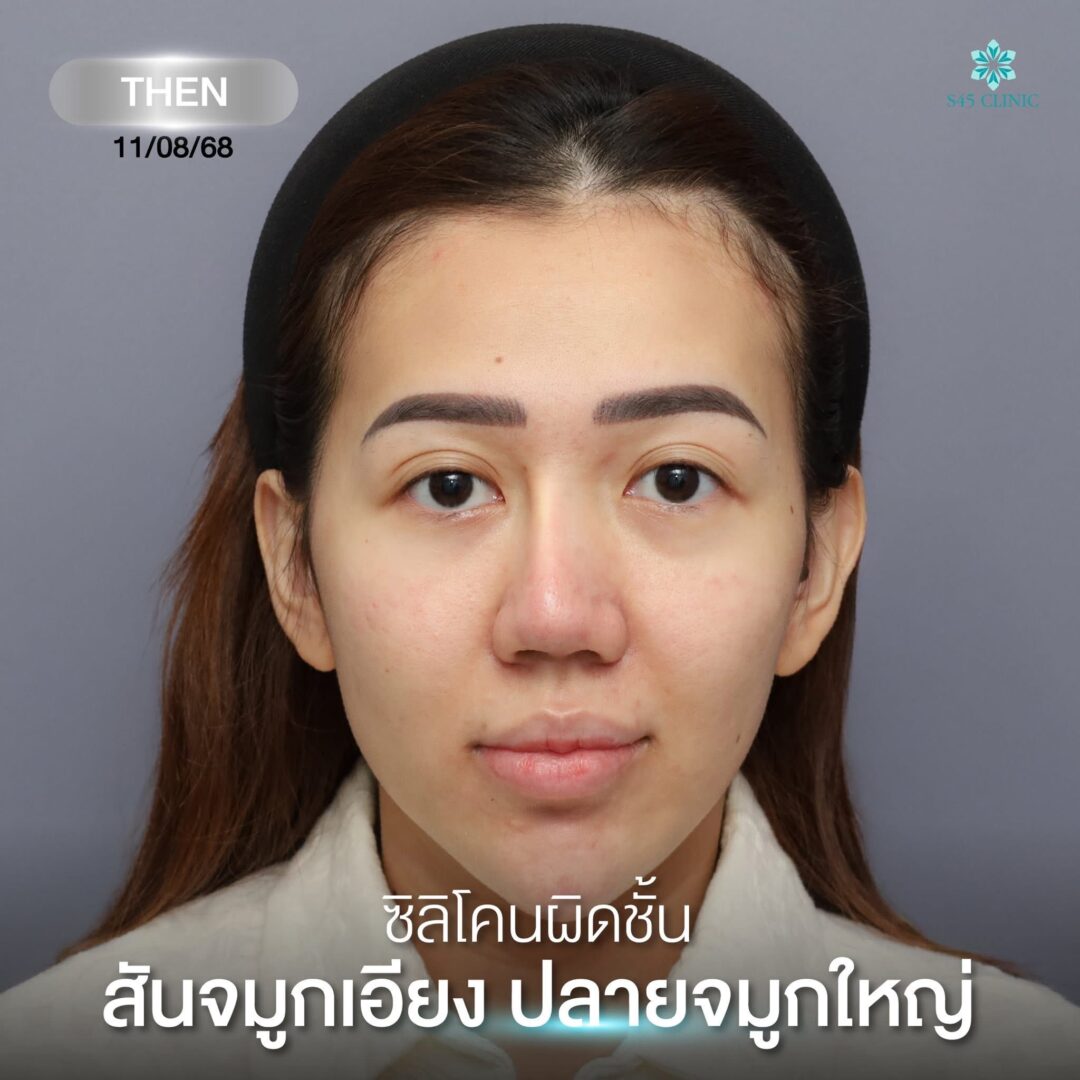
Some people have an asymmetric bony base or nasal structure even before any nose surgery. From the front, the line of the bridge may look tilted to one side, or both sides of the nasal base may look uneven.
In this case, planning rhinoplasty or revision rhinoplasty should include an assessment of the nasal base, the nasal axis, the nasal tip and the overall facial proportions, not only the bridge.
A Tilted Implant After Previous Rhinoplasty
In some cases, a crooked nose after rhinoplasty may be related to the existing implant, for example when the implant was not placed in line with the nasal axis, has moved from its position, or the existing nasal base does not fit the material used.
Scar tissue after surgery may also pull on the tissue, changing the nose shape over time or causing a tilted nose after rhinoplasty in some people.
Changes in the Tissue After Surgery
People who have had nose surgery before may have scar tissue, internal tissue or nasal skin that has changed, which may affect the nose shape, bridge, nasal tip or nasal axis. Some cases may have related problems, such as a tilted nose together with a change in tip shape, or a droopy nasal tip after rhinoplasty, so several areas should be assessed together before planning a correction.
What Should Be Assessed Before Correcting a Tilted Nose?

Before planning to correct a tilted nose or an uneven nasal base, assess everything, including the front and side views, the nasal axis, the nasal base, existing materials and surgical history, because a problem seen from the outside may be caused by more than one part of the internal structure.
Front and Side Views
Assessing from several angles helps show where the nose is crooked or tilted, for example:
- a tilted bridge
- a tilted nasal tip
- an uneven nasal base
- alae (the sides of the nostrils) that do not match each other
- existing asymmetry of the face as a whole
Looking from only one angle may not show every cause, so photos, an in-person examination and an assessment by the surgeon should be used together.
The Nasal Base and Nasal Axis
The nasal base and nasal axis are key points when planning to correct a tilted nose. The surgeon assesses which way the nasal axis deviates, whether both sides of the nasal base are even, and how much reshaping the existing structure can support.
When the nasal base is uneven, choosing only an attractive nose shape from reviews may not be enough, because a suitable shape should also match the nasal base and the limits of the existing structure.
Existing Materials and Surgical History
For revision rhinoplasty, give the surgeon full details, such as:
- which material was used in your previous rhinoplasty
- how many times your nose has been reshaped
- whether you have had inflammation, infection or slow wound healing
- whether you have had problems with the implant moving, becoming tilted or its edges showing
- whether the tip has changed shape or you have a droopy nasal tip after rhinoplasty
This information helps the surgeon plan in more detail and choose a correction that suits the existing condition of your nose.
Why Open Revision Rhinoplasty Helps With Planning for a Crooked or Tilted Nose

Open rhinoplasty is a technique that may help the surgeon see the internal structure of the nose in more detail, especially for a crooked or tilted nose or a nose that has had surgery before. It therefore suits correction planning in cases where several factors need to be assessed together.
It Helps the Surgeon Assess Several Structures Together
The open technique may help the surgeon assess several structures in more detail, such as:
- the bridge
- the nasal tip
- the nasal base
- the nasal axis
- the cartilage at the nasal tip
- the internal tissue
- existing materials in revision cases
Seeing several structures together helps the surgeon plan more thoroughly, especially in cases where the problem is not only a tilted bridge.
Planning the Correction by Cause, Not Only by the Outer Shape
Each tilted nose may have a different cause. Some come from the existing nasal base, some from the existing implant, some from scar tissue, and some are related to the overall facial structure.
Revision rhinoplasty should therefore start by assessing the main cause, not only by choosing a new shape from the outside, because good planning should match the actual structure and the limits of each case.
Suited to Complex Cases or Noses That Have Had Surgery Before
Cases that have had surgery before usually have more details to assess than first-time cases, such as existing materials, scar tissue, internal tissue or a nasal structure that has changed after surgery. In this group, open rhinoplasty may be useful for planning, because it helps the surgeon assess the internal condition and plan the correction in more detail. Whether the technique is suitable should depend on the surgeon’s assessment.
What Does the Surgeon at S45 Clinic Assess Before Open Revision Rhinoplasty?
If you are worried about a crooked or tilted nose or an uneven nasal base, the surgeon at S45 Clinic assesses the problem for each person, to see whether the main cause is the existing structure, the existing implant, the internal tissue or a combination of factors.


Assessing the Existing Nasal Structure
The surgeon looks at how the bridge, nasal tip, nasal base and nasal axis relate to one another, to assess the limits of the existing structure and the direction the correction should take.
Assessing Existing Materials in Revision Cases
Whether you had your previous nose surgery at S45 Clinic or elsewhere, the surgeon checks whether the existing implant is still in a suitable position, whether it has moved or become tilted, and whether there is scar tissue as well.
If needed, the surgeon may consider adjusting the existing implant, removing it or making a new plan based on the actual condition of your nose.
Assessing Expectations and the Limits of the Result
Correcting a tilted nose should not suggest that every nose can be made 100% straight, because the result depends on several factors, such as the existing structure, the thickness of the nasal soft tissue, existing scar tissue, surgical history and how your body heals.
The surgeon should therefore explain the limits clearly before planning, so that you understand the treatment approach and can make a suitable decision.
Frequently Asked Questions About a Crooked or Tilted Nose
If you have a crooked nose, a tilted nose or a tilted nose after rhinoplasty, you can book a consultation with a surgeon at S45 Clinic
to assess your nasal structure and plan open revision rhinoplasty to suit the cause in your case.
Note: Repeat nose surgery, which many people know as ‘nose reshaping’, is surgery for people who have had nose surgery before and want a further assessment by a surgeon. The approach to care depends on the original problem, the nasal structure and the surgeon’s judgement in each case.