Nose Bridge Pain After Rhinoplasty and When to See a Doctor

Plastic surgery can help you feel more confident, whether it is rhinoplasty, chin augmentation, breast augmentation, forehead augmentation or any other procedure. As well as preparing before treatment, you also need to look after yourself after surgery. So if you notice anything unusual while you recover, such as pain after rhinoplasty, have a consultation with your surgeon about your symptoms.
After plastic surgery such as rhinoplasty, chin augmentation, forehead augmentation or other procedures, the surgeon and team usually give you aftercare advice to follow strictly, to lower the risk of infection, inflammation or other problems that may come later.
Rhinoplasty in particular is one of the procedures many people are interested in to boost their confidence. As well as researching the clinic, the surgeon’s experience, the shape you want, the technique and other factors, anyone considering rhinoplasty also needs to learn how to look after themselves afterwards.
How to Choose a Rhinoplasty Clinic With Confidence and Lower Risk
- a clinic or hospital that meets standards and can be checked
- you can check the names of the surgeons
- read reviews and look at cases treated at that clinic to help you decide
- have a consultation with the surgeon for an assessment that suits you
- learn about the different rhinoplasty techniques to find the one that suits you
What to Do After Rhinoplasty
- avoid strongly flavoured food, foods traditionally avoided after surgery in Thailand, seafood, pickled foods and alcohol, because they may trigger wound inflammation and lead to infection
- avoid touching, stroking or scratching your nose, to lower the risk of inflammation
- be careful of accidents that could knock or put strong pressure on your nose, including exercise, facial massage, yoga or even coughing and sneezing
- get enough rest, and sleep on your back with your head raised on a high pillow
- apply cold compresses as often as you can
- avoid getting the wound wet
- clean the wound every day with cotton wool soaked in saline
- do not use your fingers or cotton buds, other than the kit provided by the clinic, to pick at, poke or wipe inside your nose
- do not wear glasses for at least 2 months
- take your medicine strictly as your surgeon prescribes
- do not exercise for at least 2 months
- do not take supplements for 1 month
- avoid hot places and activities, such as saunas and cooking, for at least 2 months
- see your surgeon at your follow-up appointments
Common Symptoms After Rhinoplasty
- swelling and bruising (which usually improve within 7 to 14 days after rhinoplasty)
- pain around the nose wound, which improves in 2 to 3 days
- a tight feeling around the nose
- itching around the surgical wound
- clear fluid or a clear runny nose from the nose or the surgical wound (take medicine for a runny nose to stop it reaching the wound)
Which Symptoms Are Dangerous and Need a Doctor Straight Away?
- your nose is still swollen after 14 days
- your nose looks crooked or tilted
- spots or pimples 14 to 20 days after rhinoplasty
- pain and swelling at the nasal tip
- discharge or bleeding inside the nose or from the surgical wound, with pain, swelling and redness
- the skin colour on your nose changes and becomes clearly darker
- a tight, tense feeling on the nose (if you had rhinoplasty a long time ago), which may mean a risk of tip extrusion
- if you had silicone rhinoplasty and feel that the implant has moved when you touch it, or you notice a thin bridge or a translucent nasal tip
- pus or bleeding from the nose, with more swelling than usual
Side effects can take many forms. You can lower the chance of possible risks by following the aftercare advice strictly and choosing a medical facility that meets standards for rhinoplasty, with care from an experienced surgeon. At S45 Clinic, we care about every case.
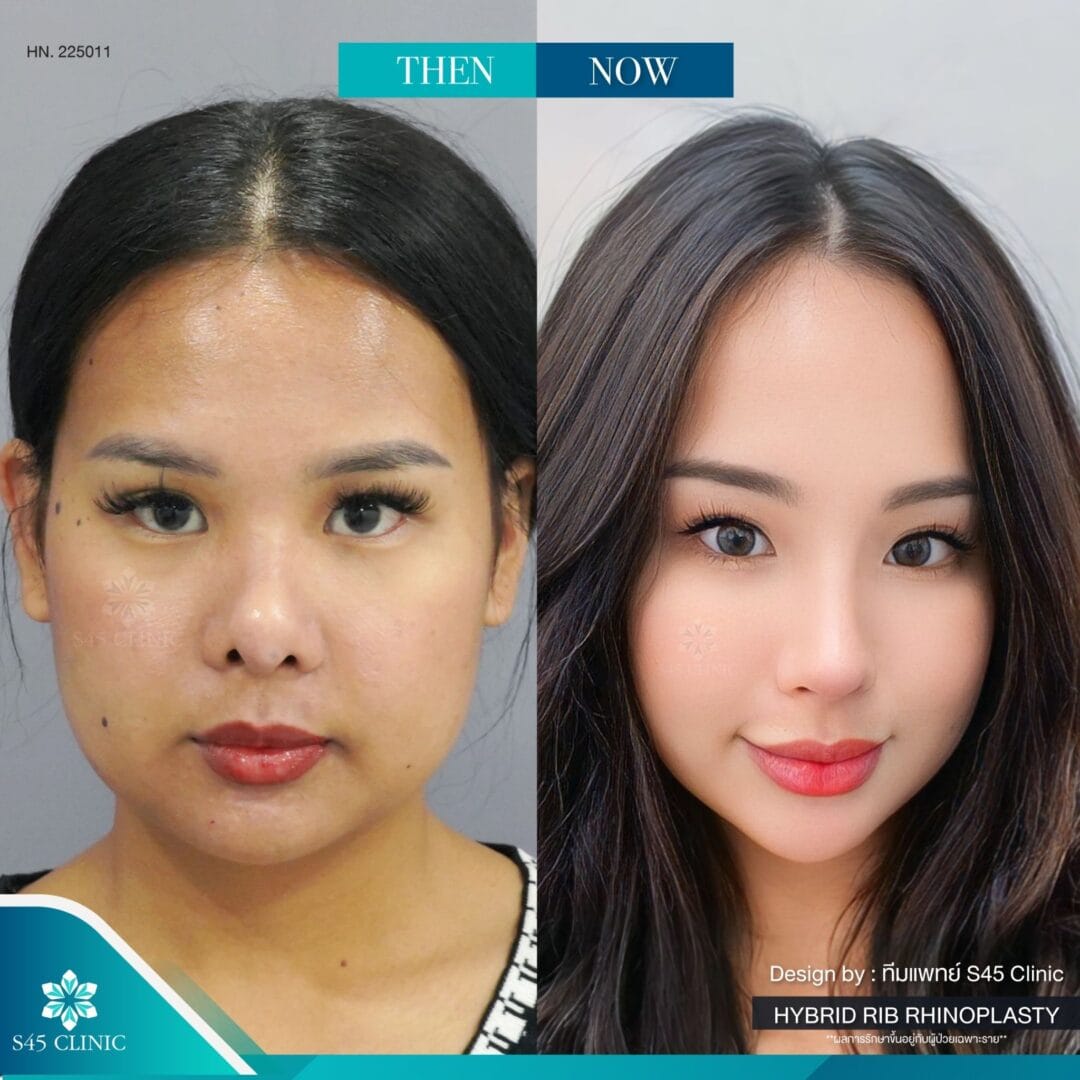
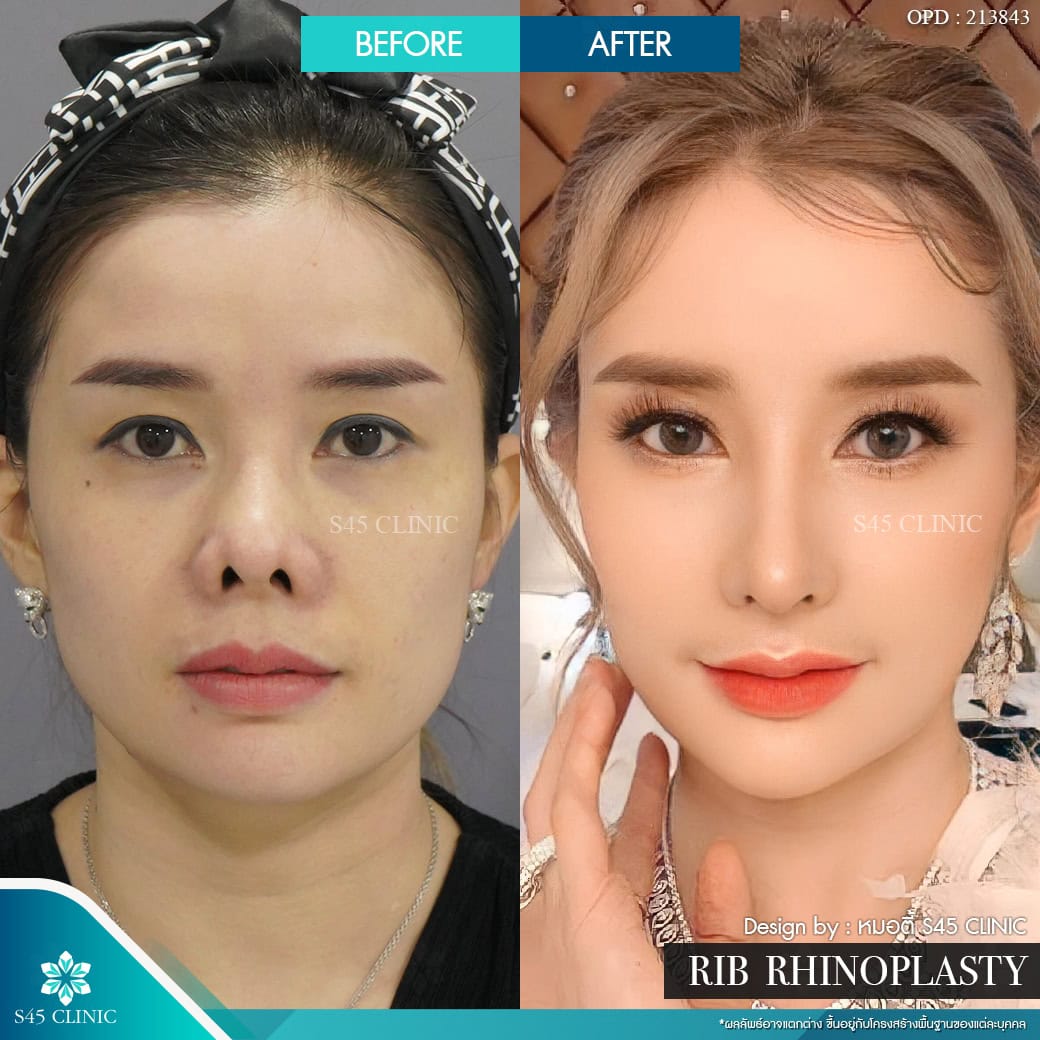
Nose Reshaping Case Reviews
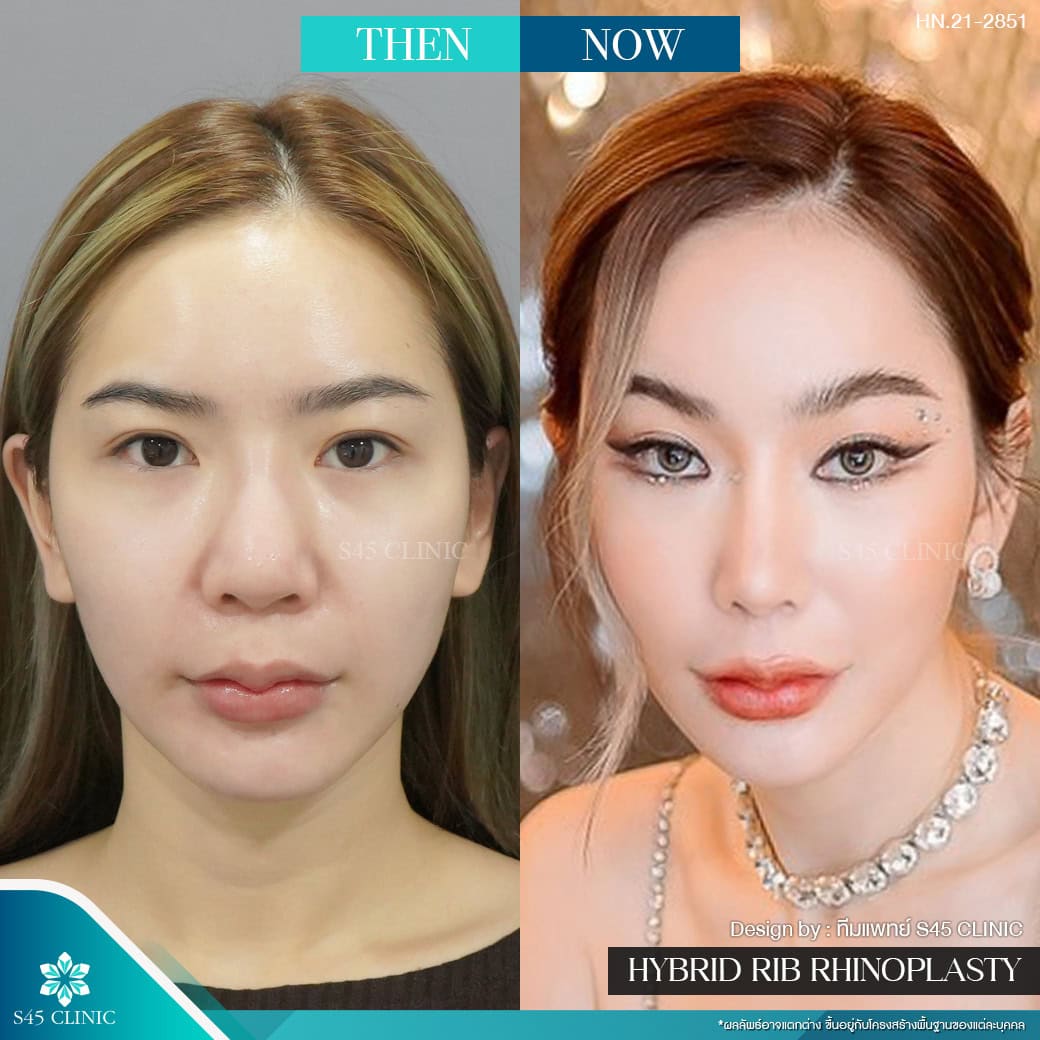

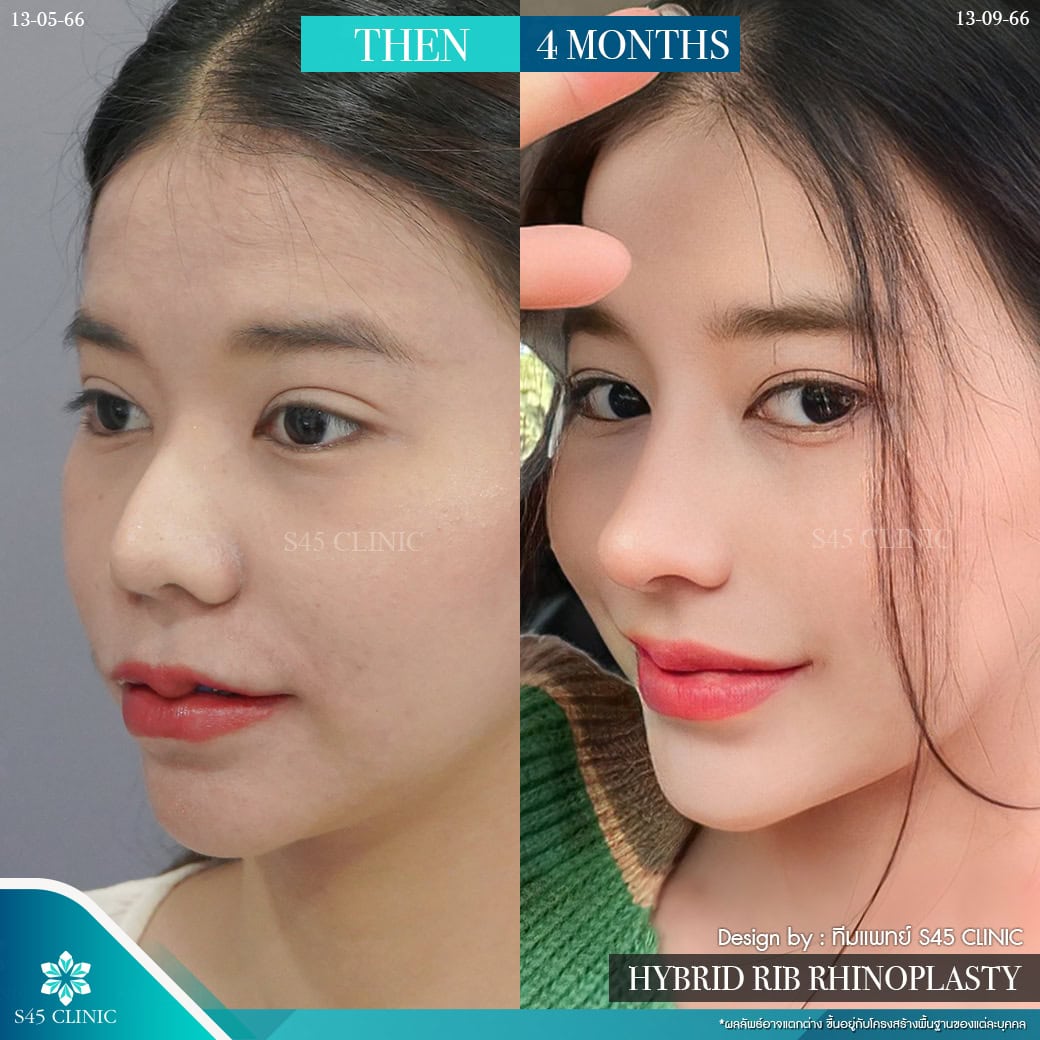
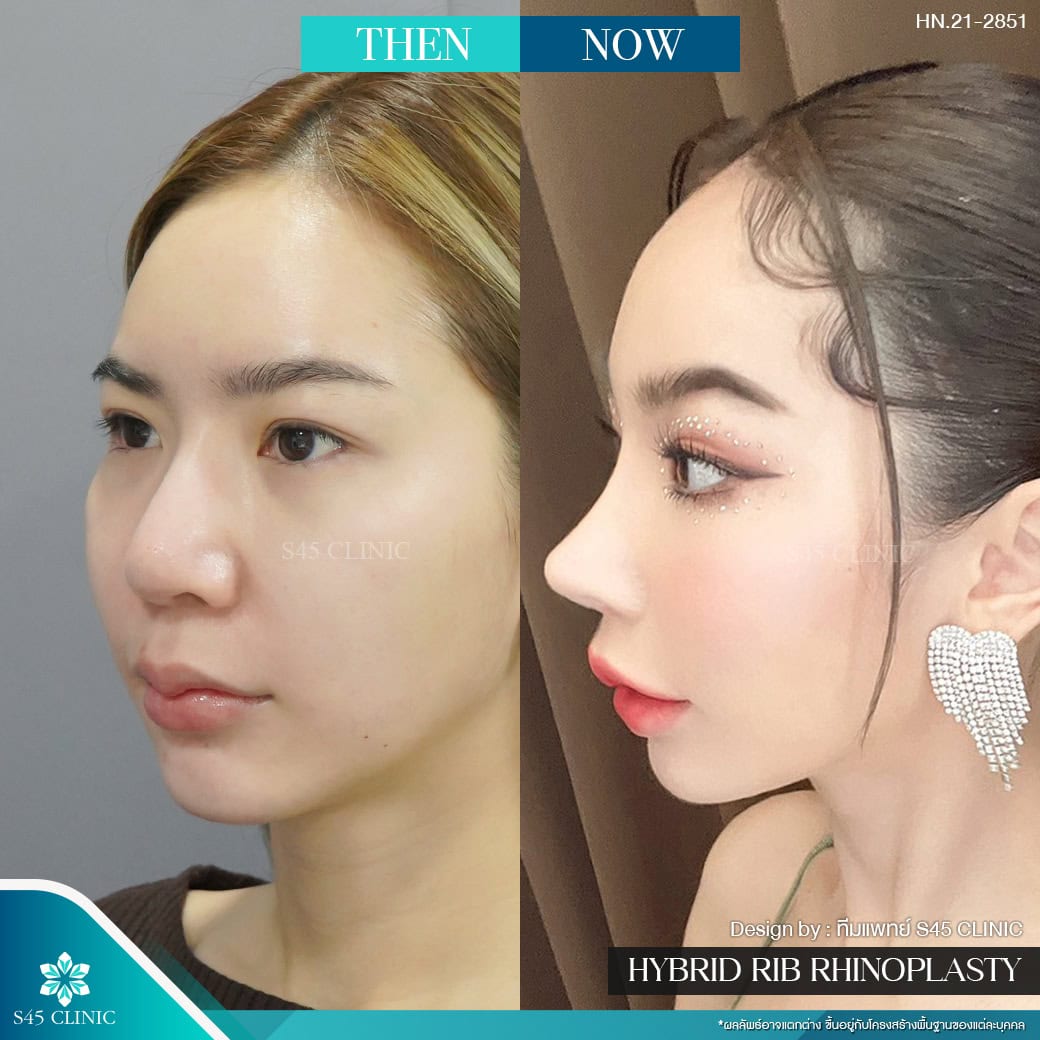
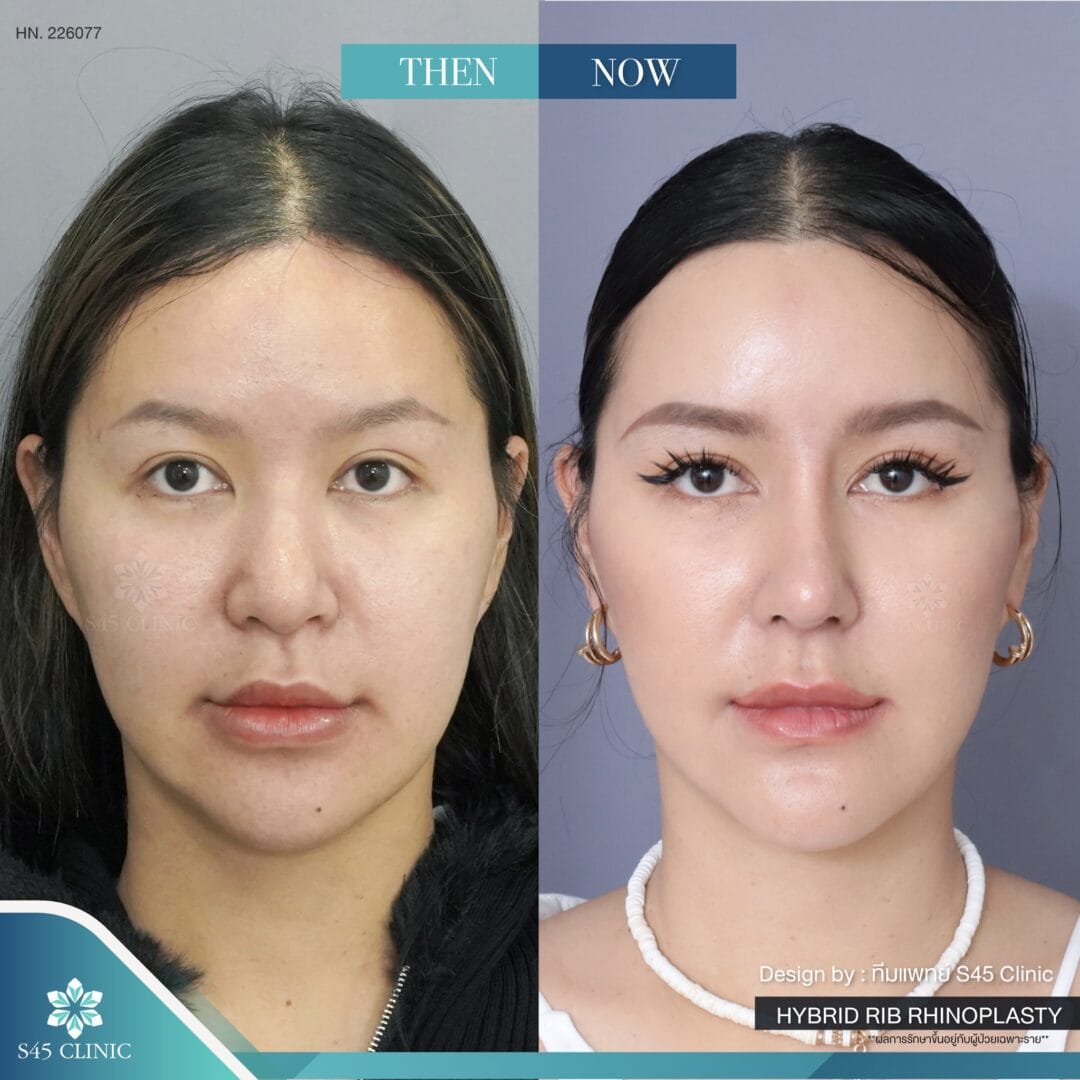
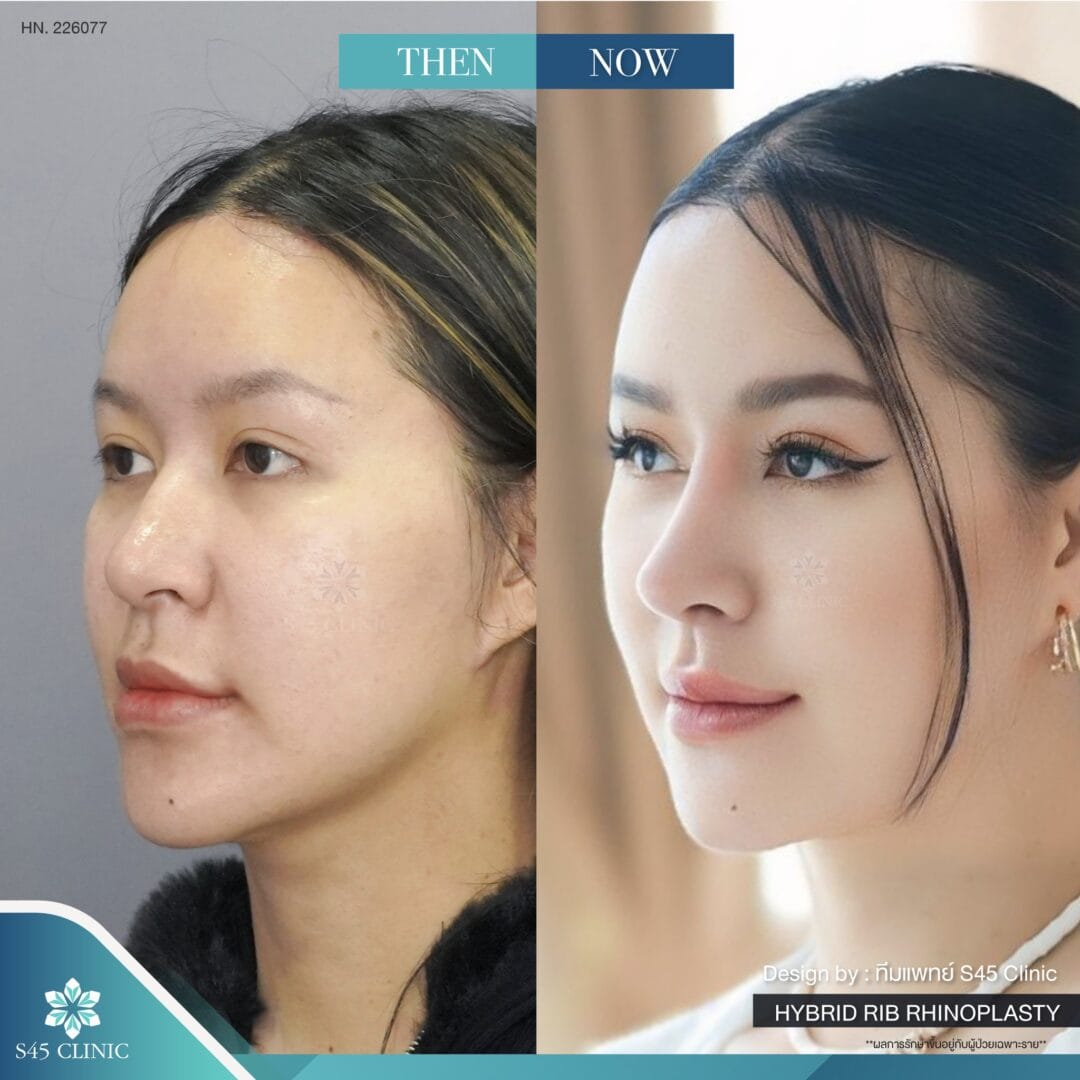
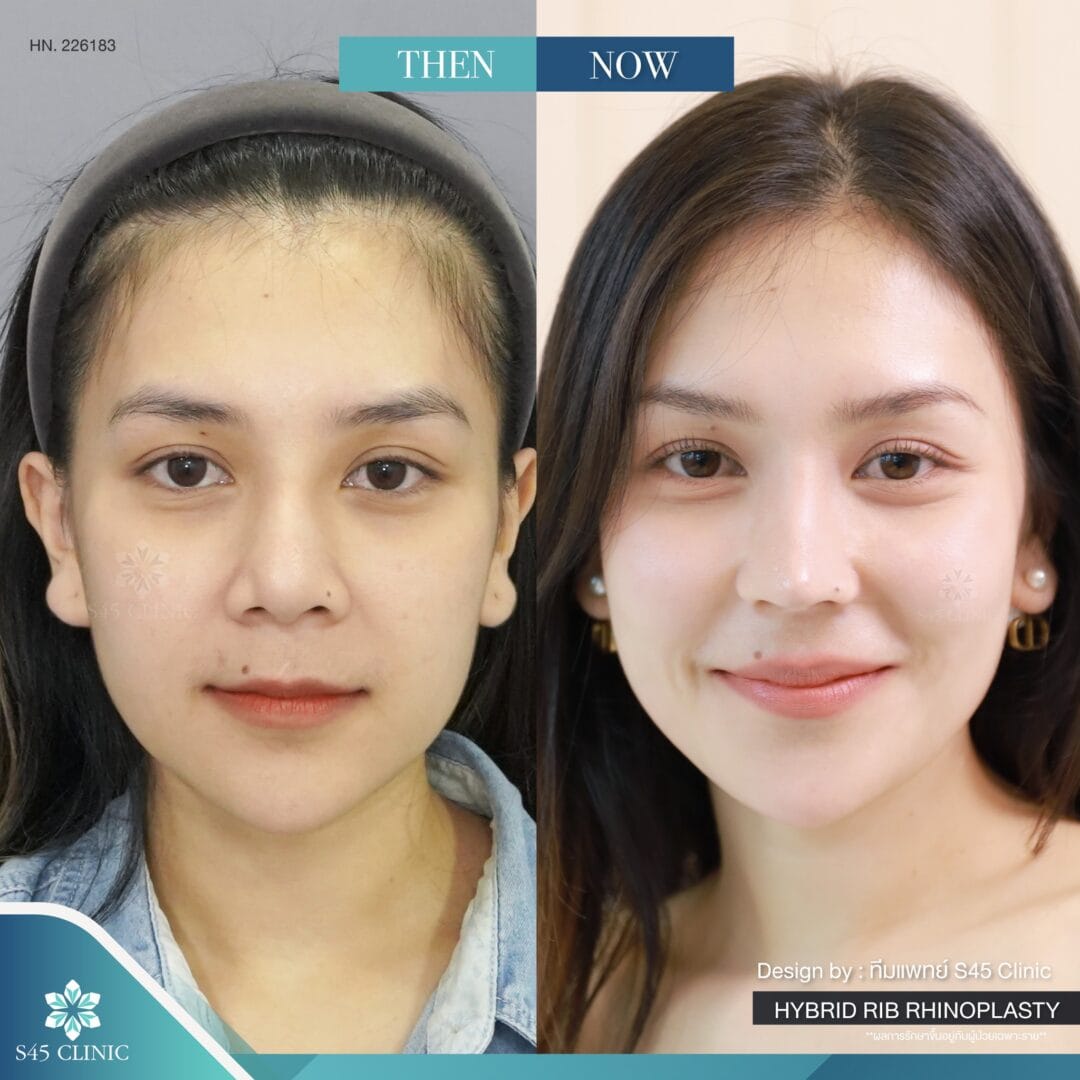
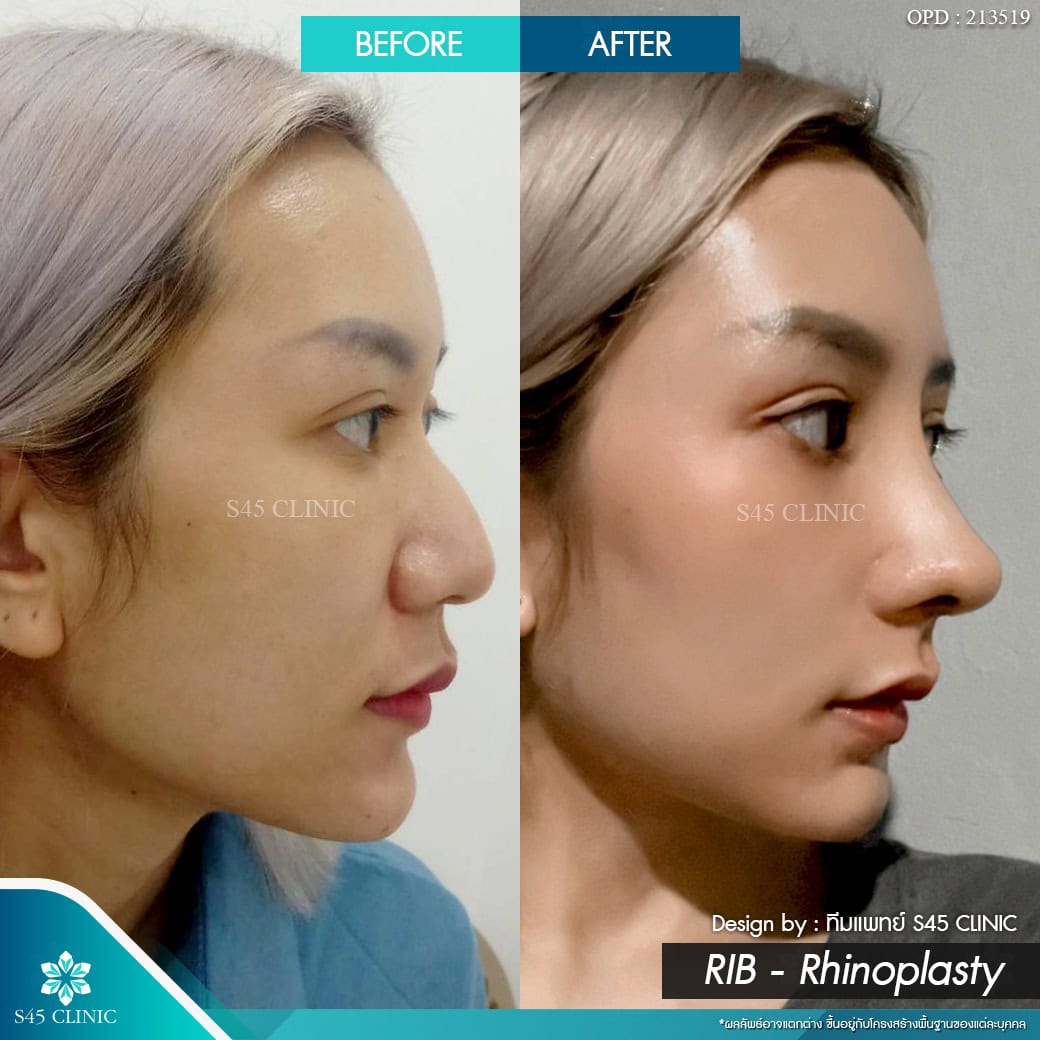
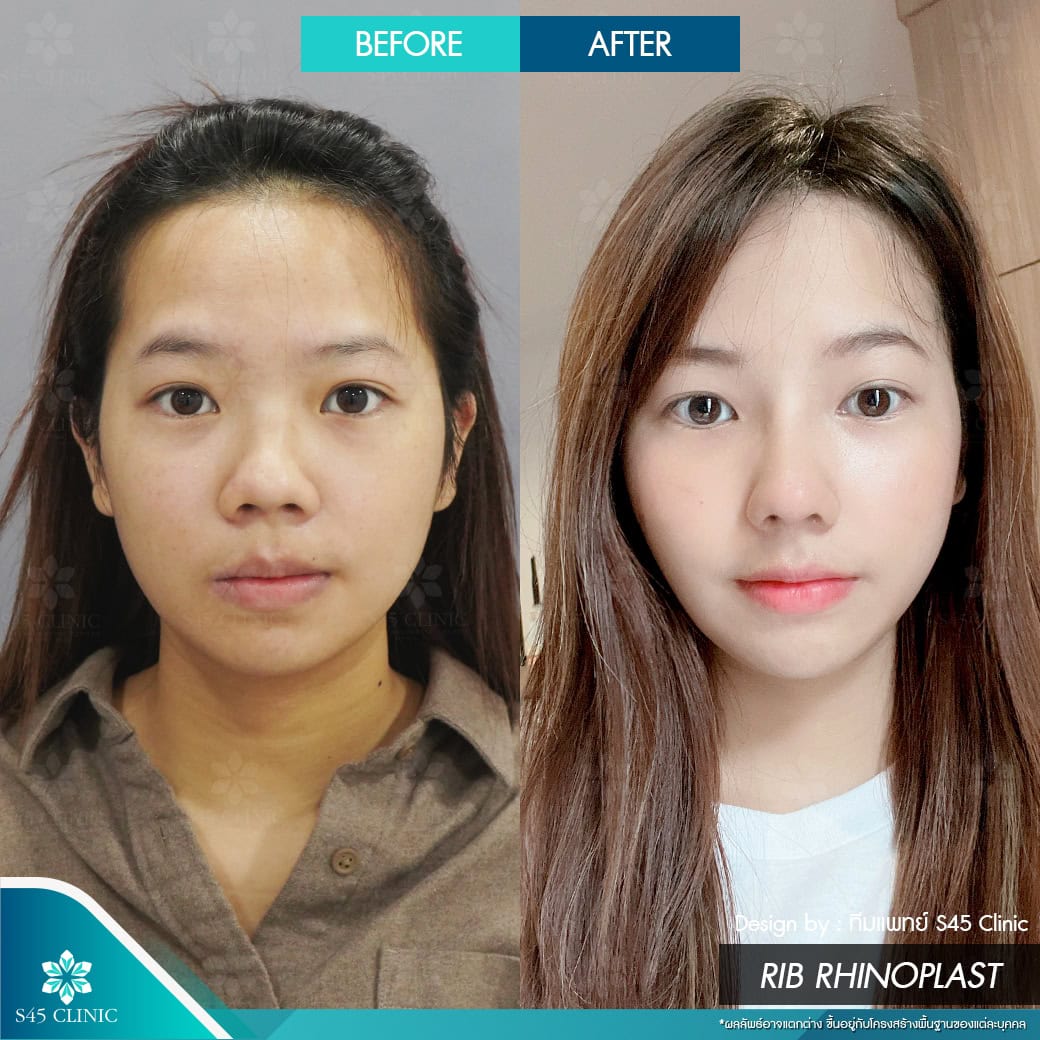
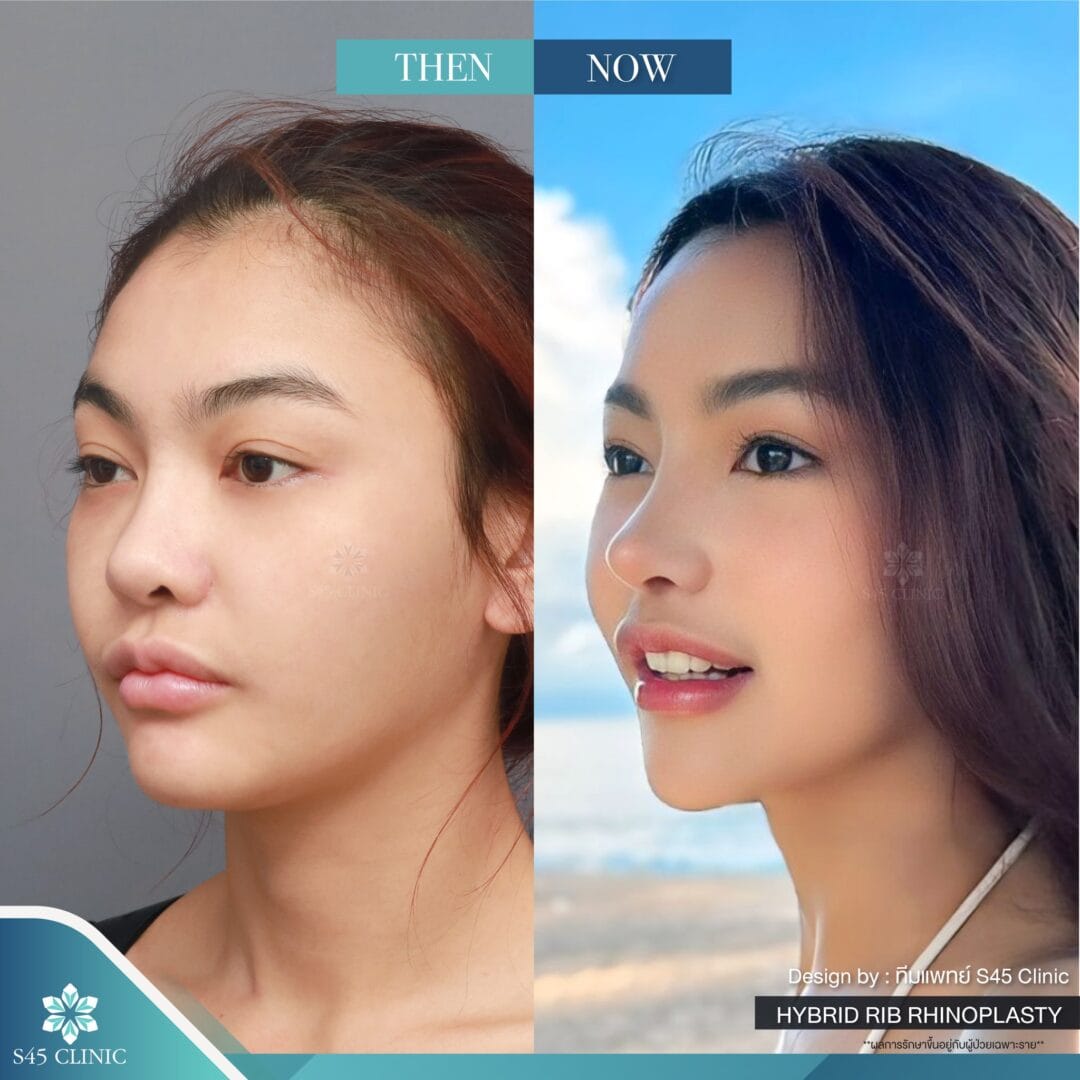
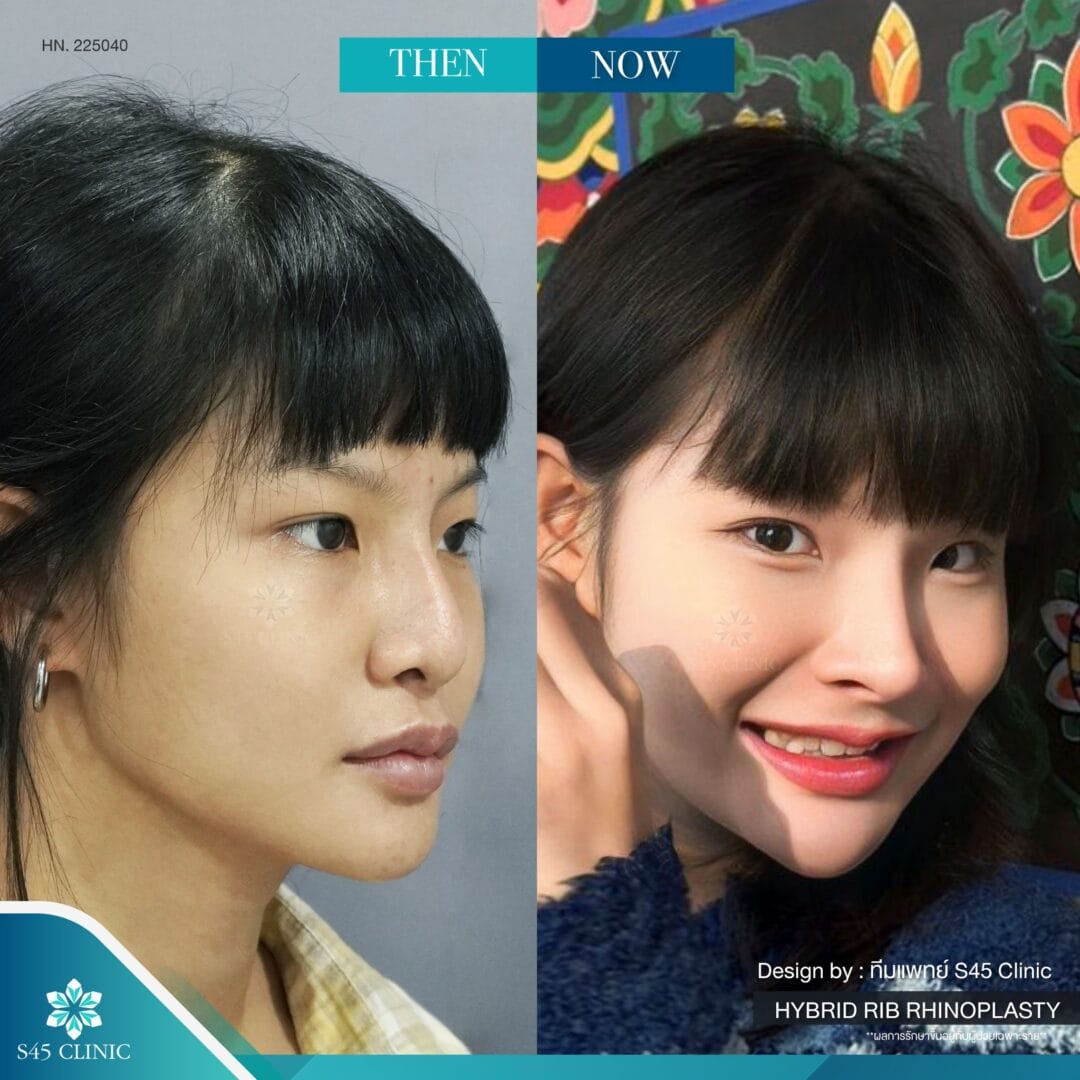

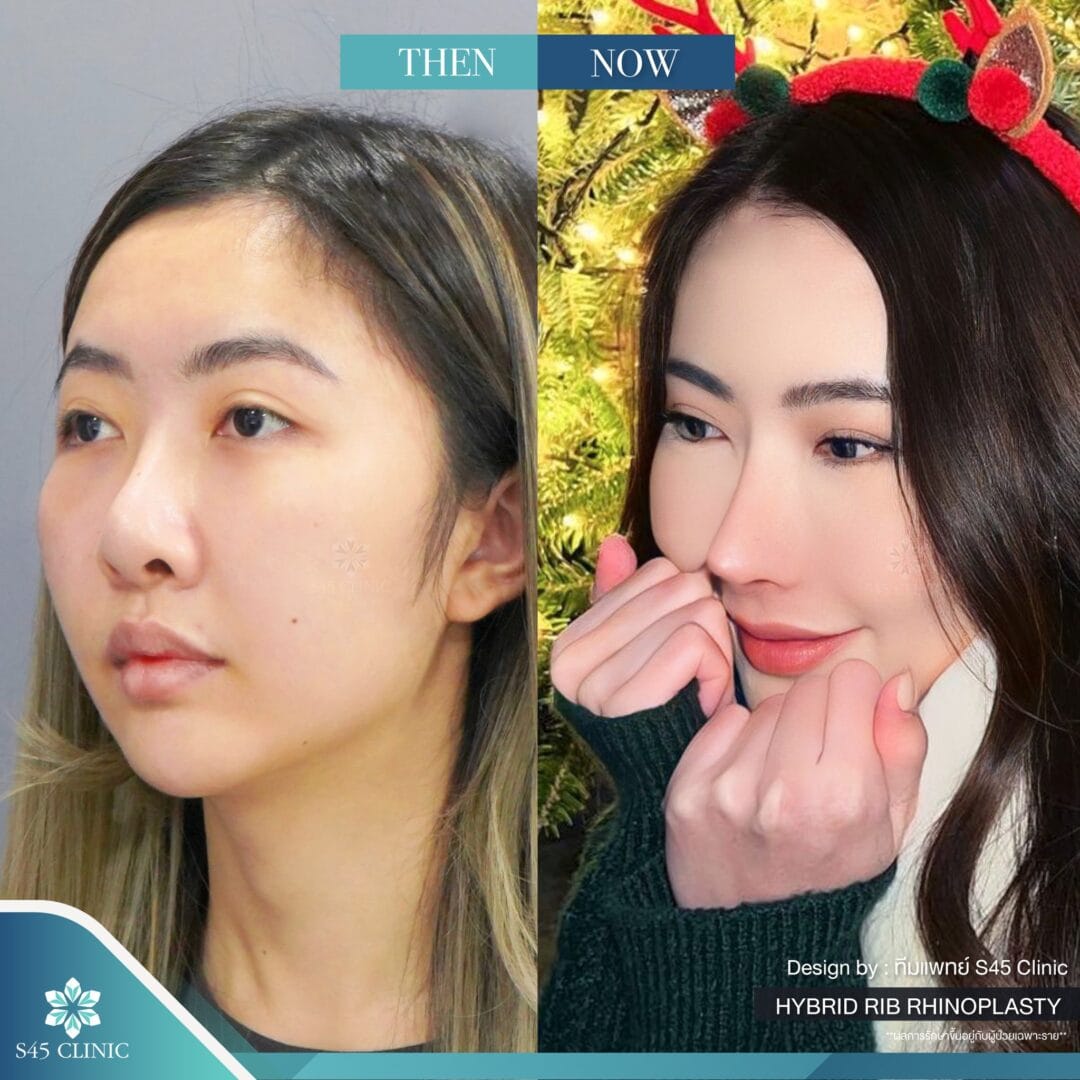
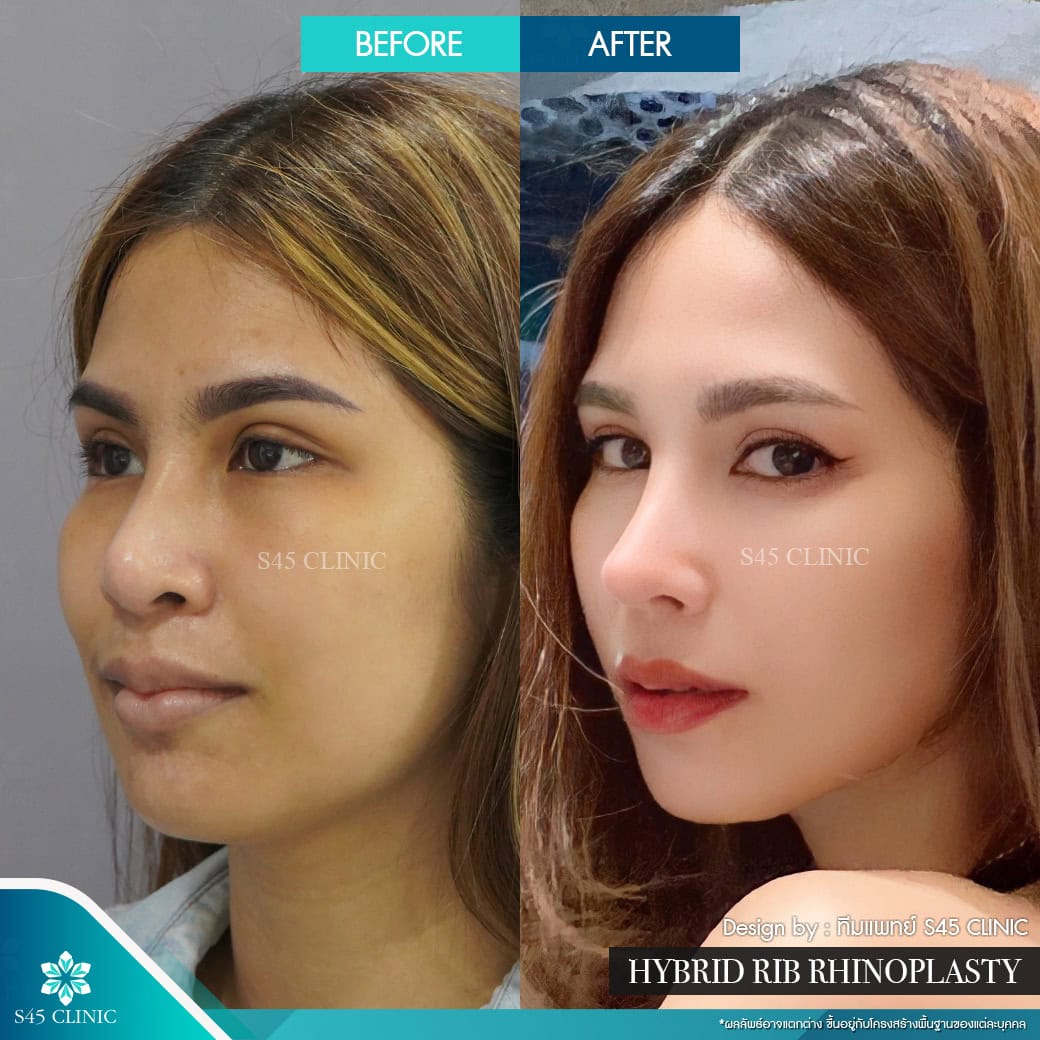
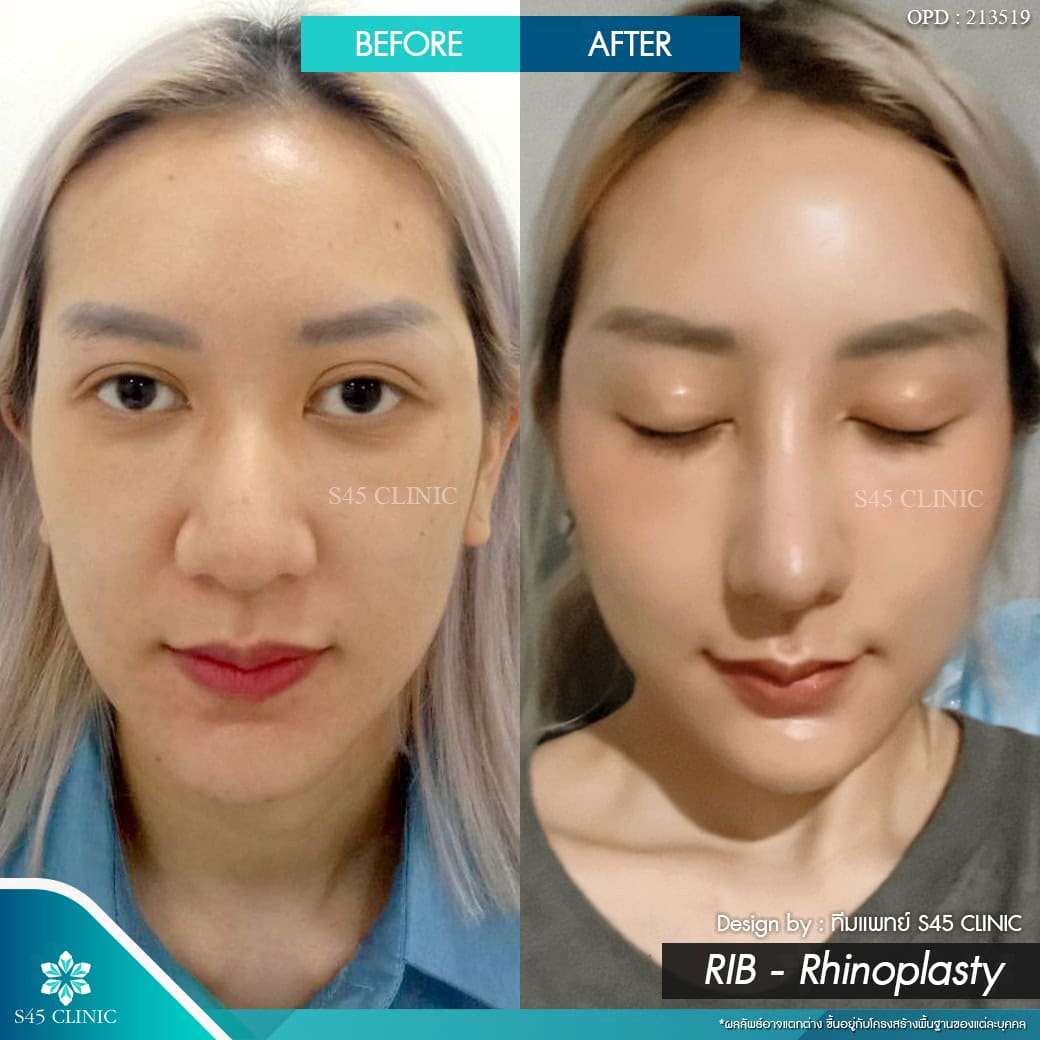
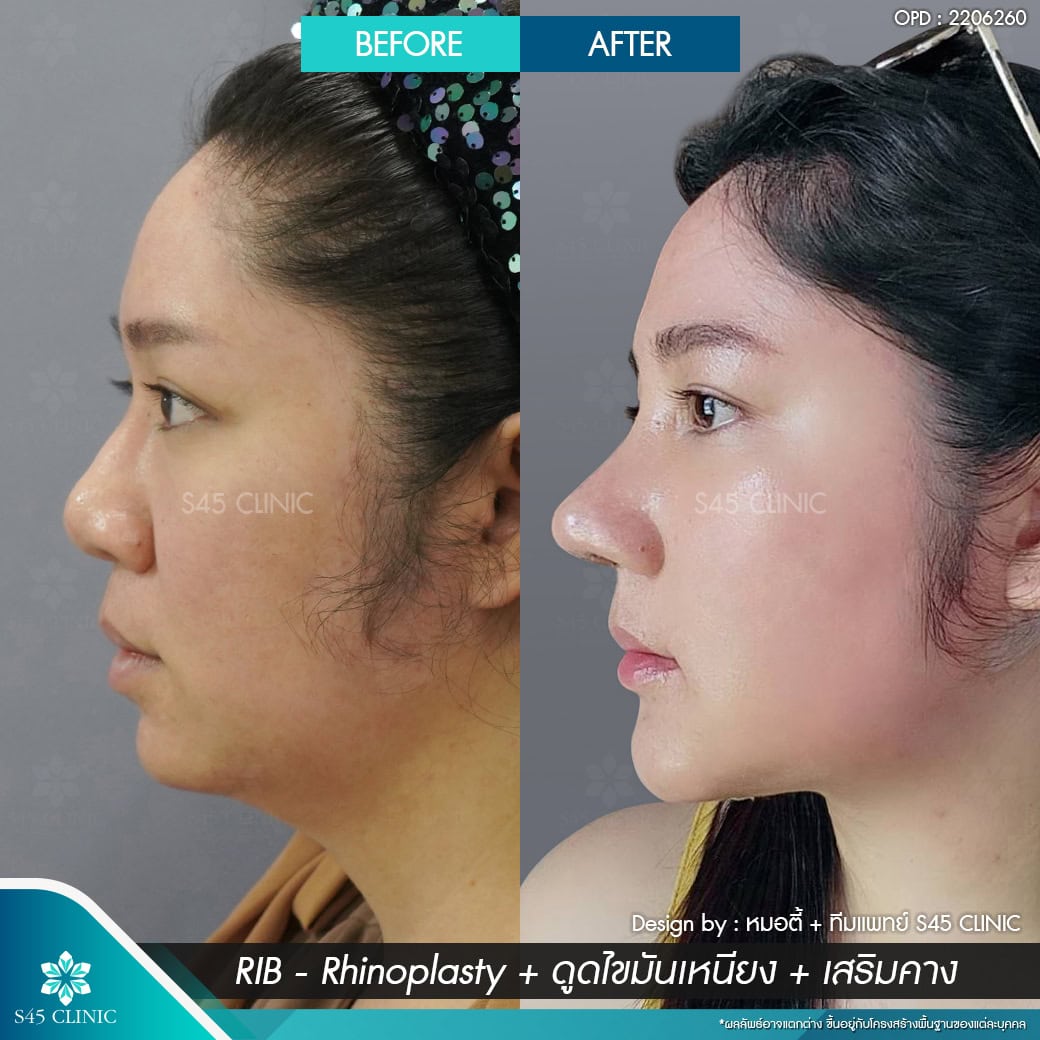
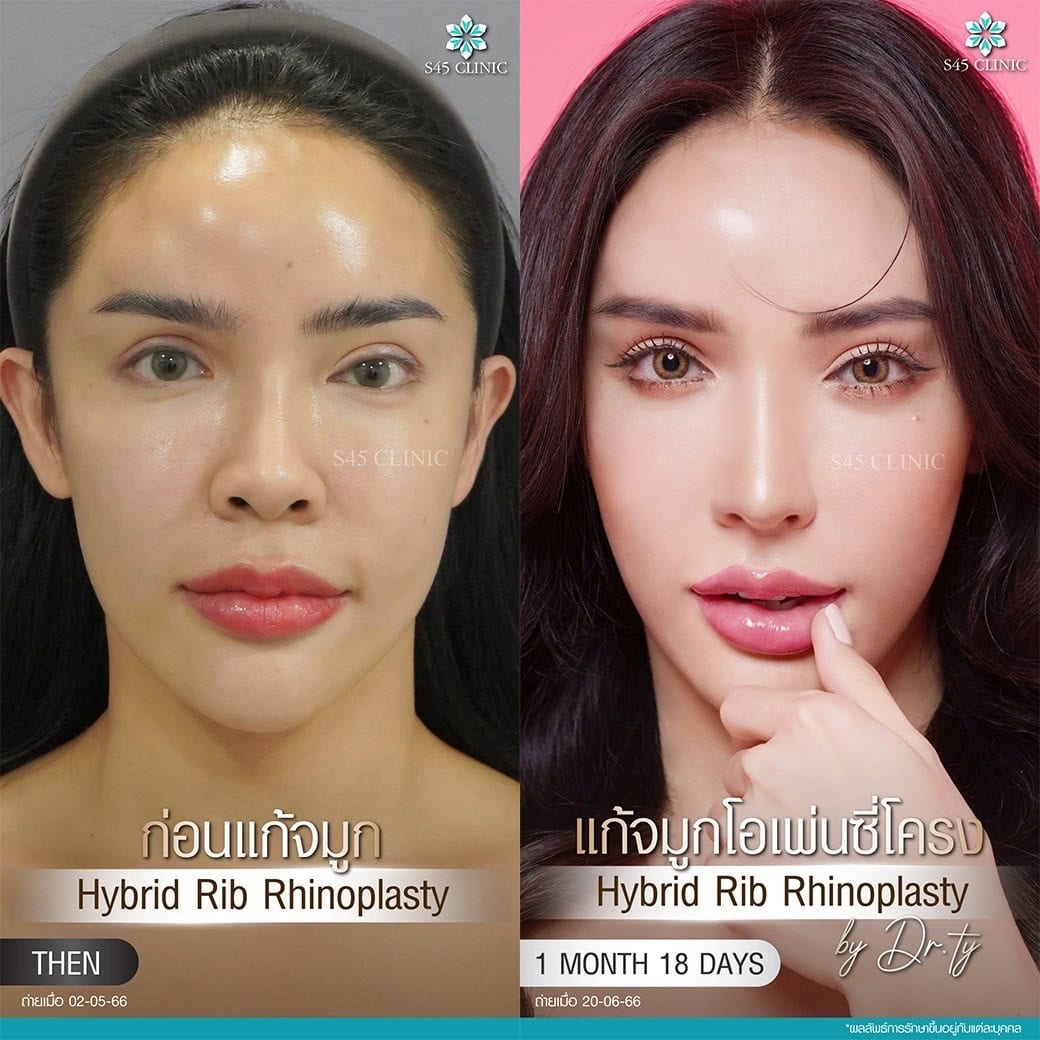
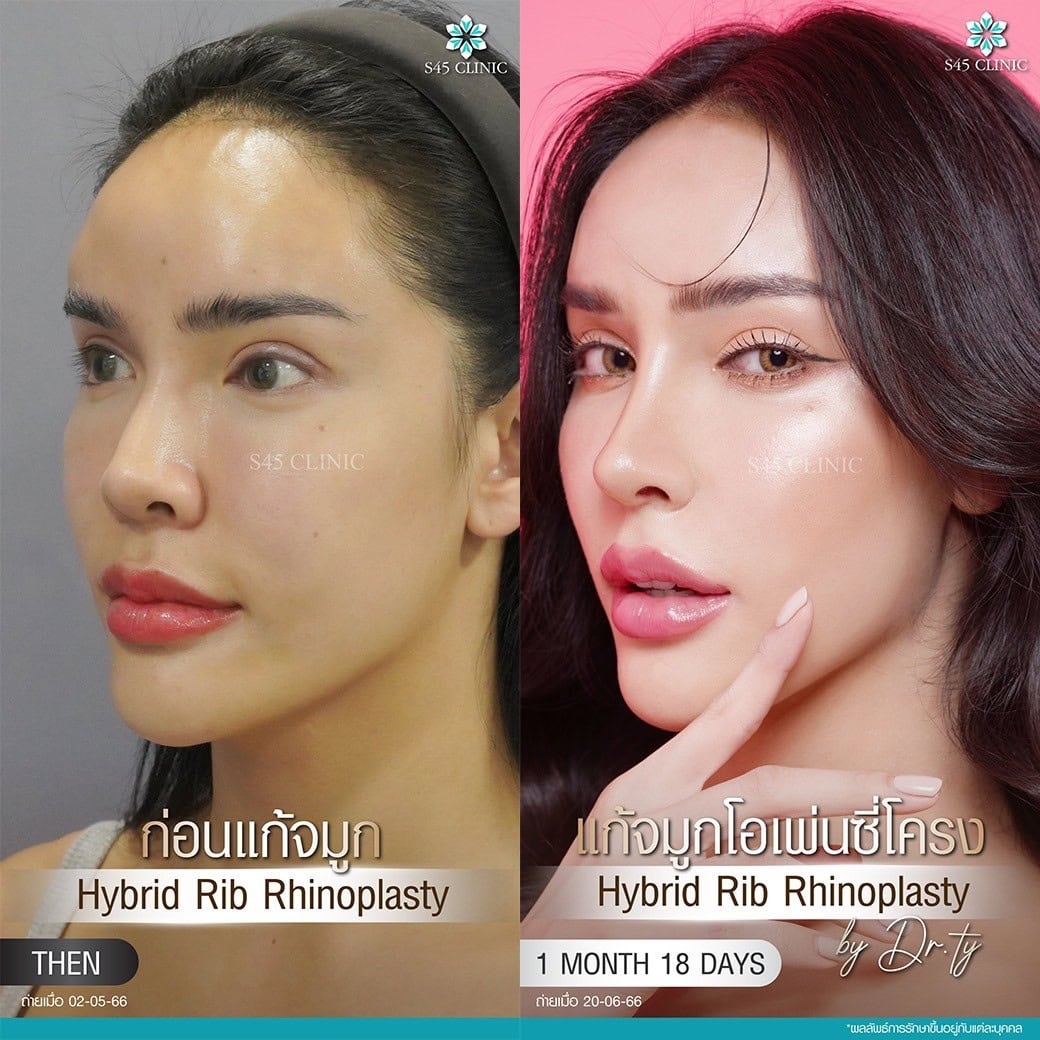
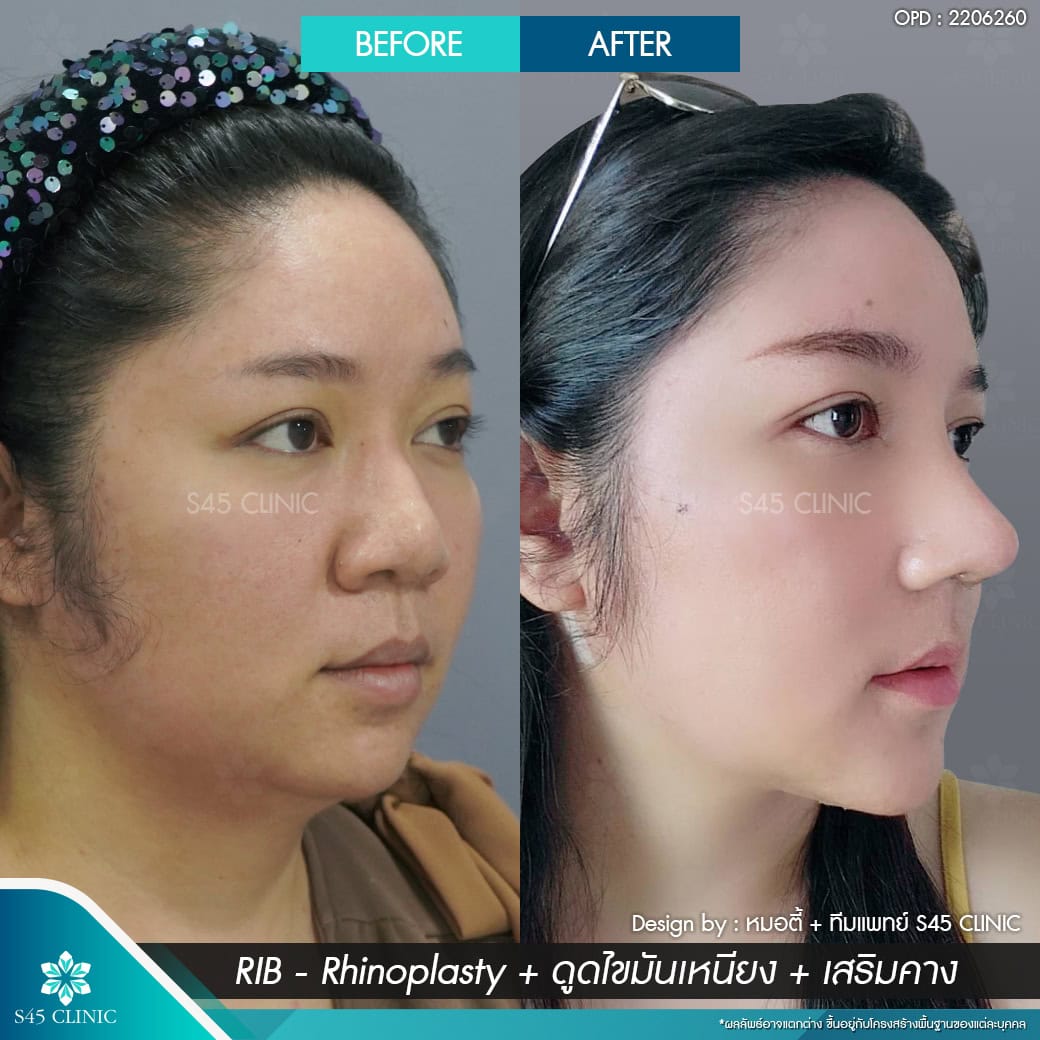
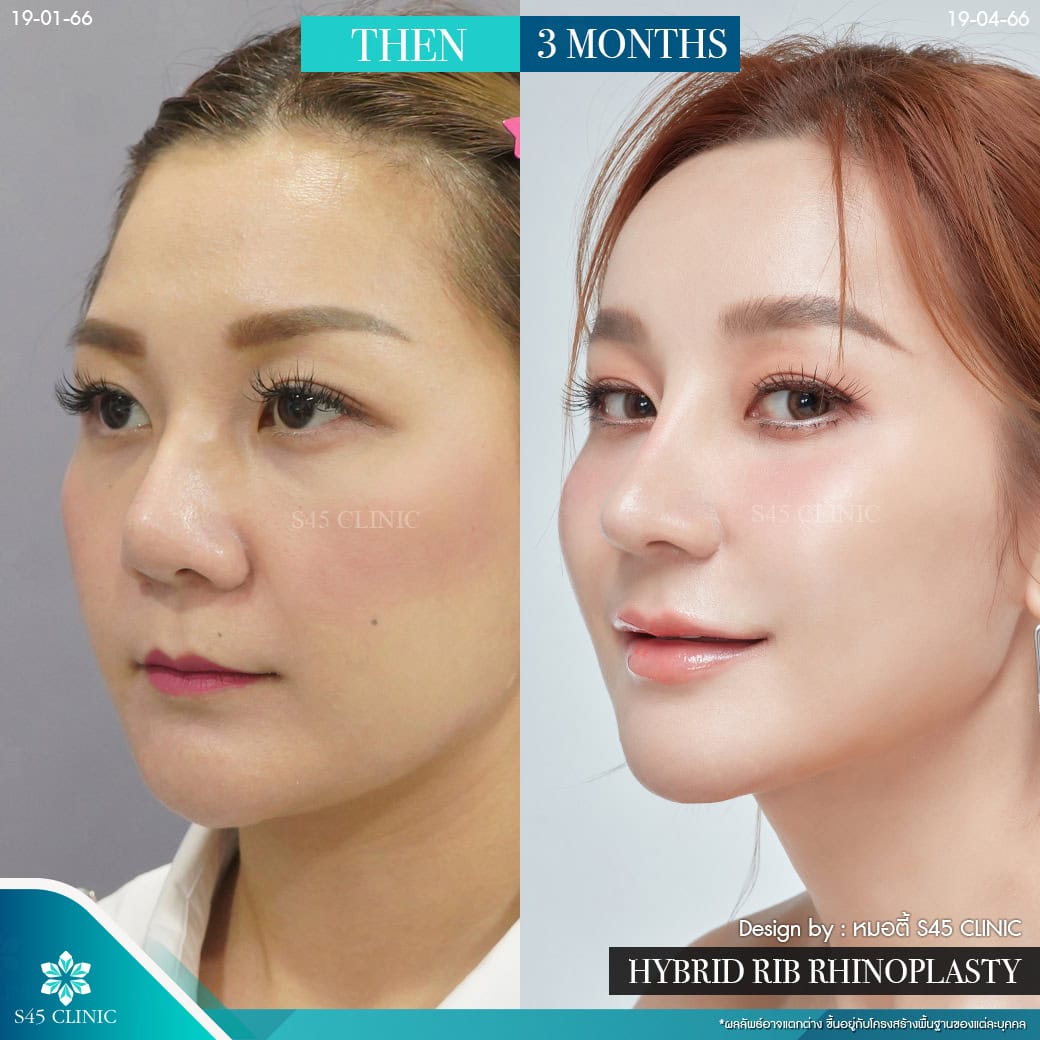
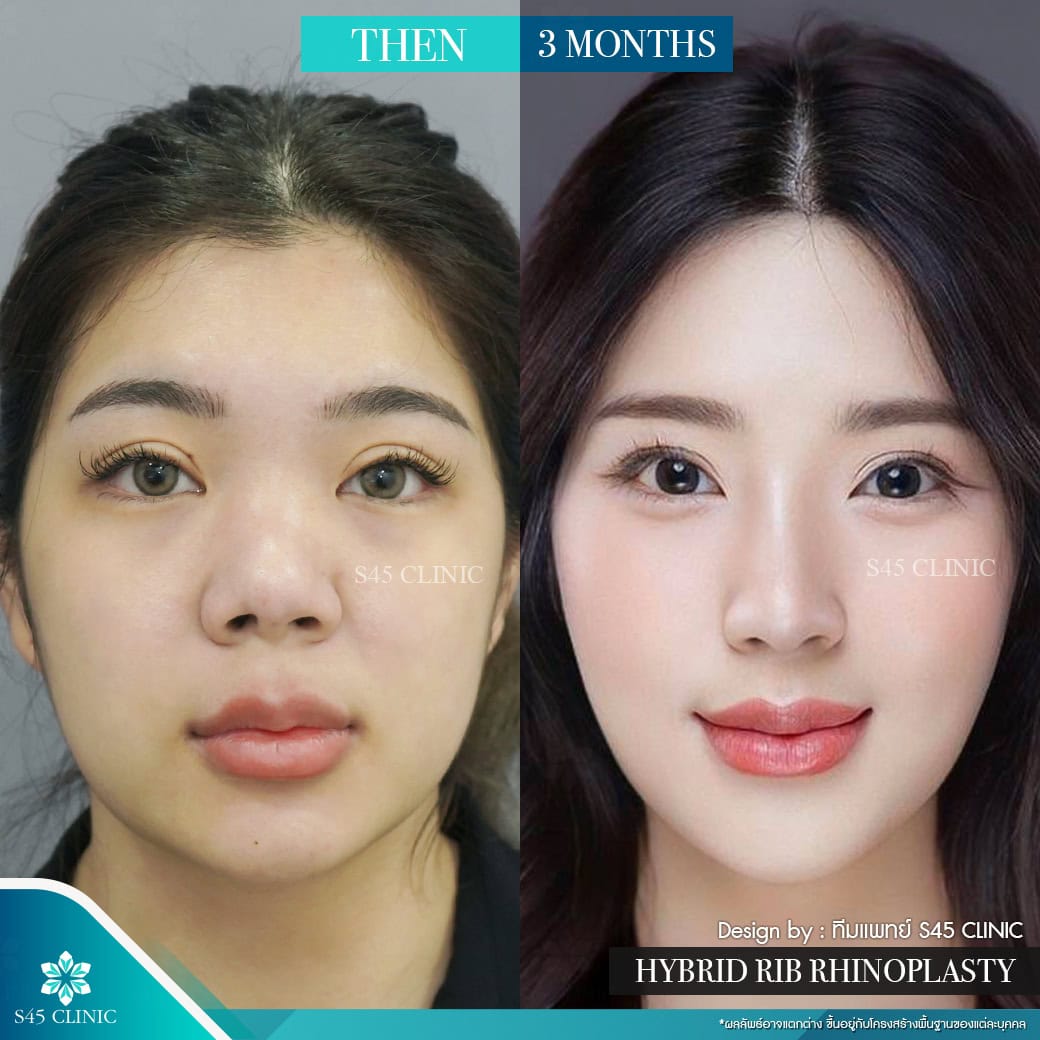
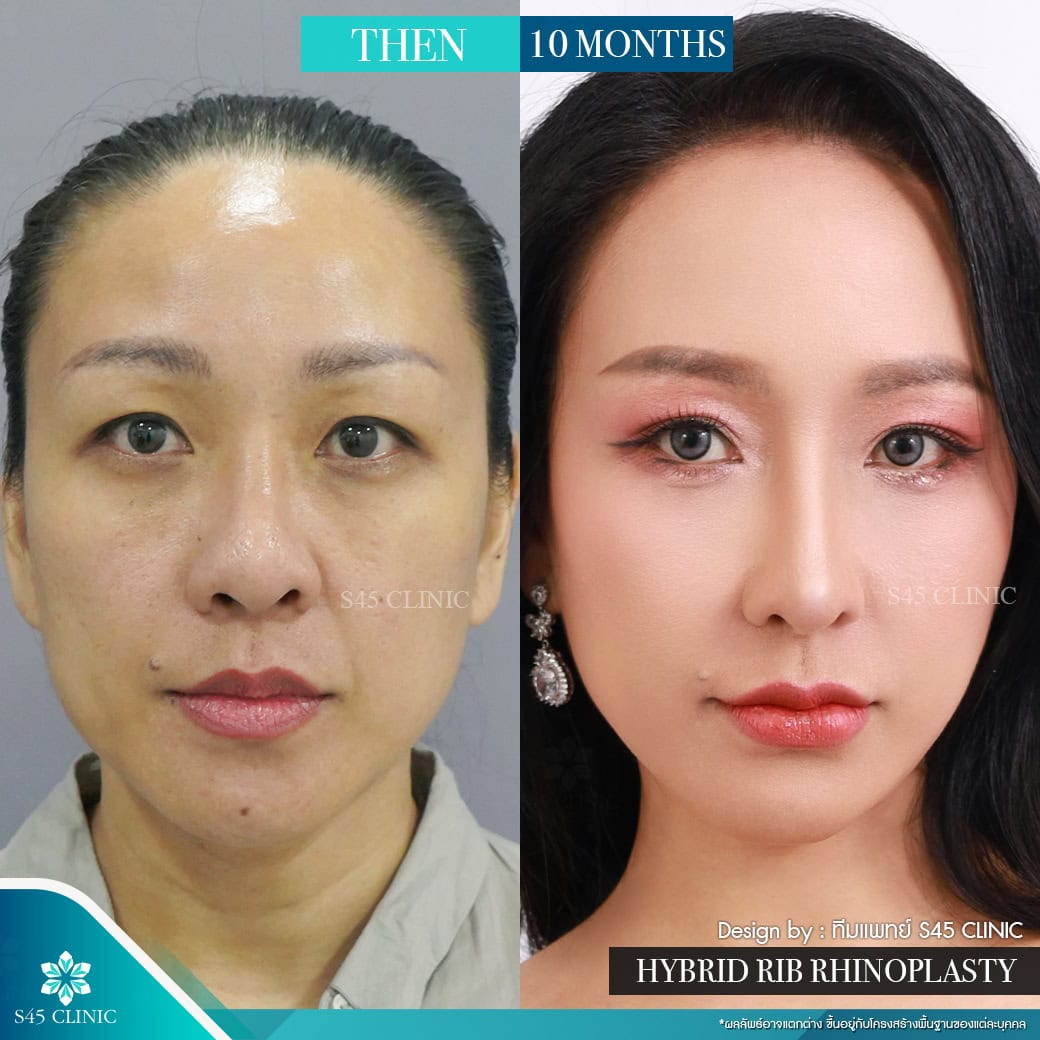
Follow-Up Care Under the Clinic’s Terms for Rhinoplasty at S45 Clinic
- follow-up care under the clinic’s terms for 1 year (from the date of surgery), under these conditions:
- follow-up care for damage caused by surgery at S45 Clinic
- follow-up care under the clinic’s terms does not cover dissatisfaction with the shape caused by your own physical features, such as a tilted nose caused by an uneven facial structure, infection from complications beyond the surgeon’s control, or your own underlying health conditions
- if you do not follow the aftercare advice strictly, the clinic will not provide follow-up care under its terms in any case, for example if you eat raw or undercooked food or foods traditionally avoided after surgery in Thailand, smoke or drink alcohol
- follow-up care under the clinic’s terms for surgery for 1 year does not include these costs:
- additional consumables and materials used in surgery
- changing to a different surgeon
- the surgical technique
- if you have rhinoplasty or nose reshaping at S45 Clinic and then have or want revision surgery at another medical facility (while you are still under follow-up care under the clinic’s terms), the follow-up care under the clinic’s terms ends immediately