Is a Brow Lift Dangerous? Brow Lift Risks and Side Effects to Know First

Key points
- If you are worried whether a brow lift is dangerous, brow lift surgery carries the standard risks of any operation. The chance of complications depends on an individual assessment and care by your surgeon, together with endoscopic technology that helps make the procedure more precise.
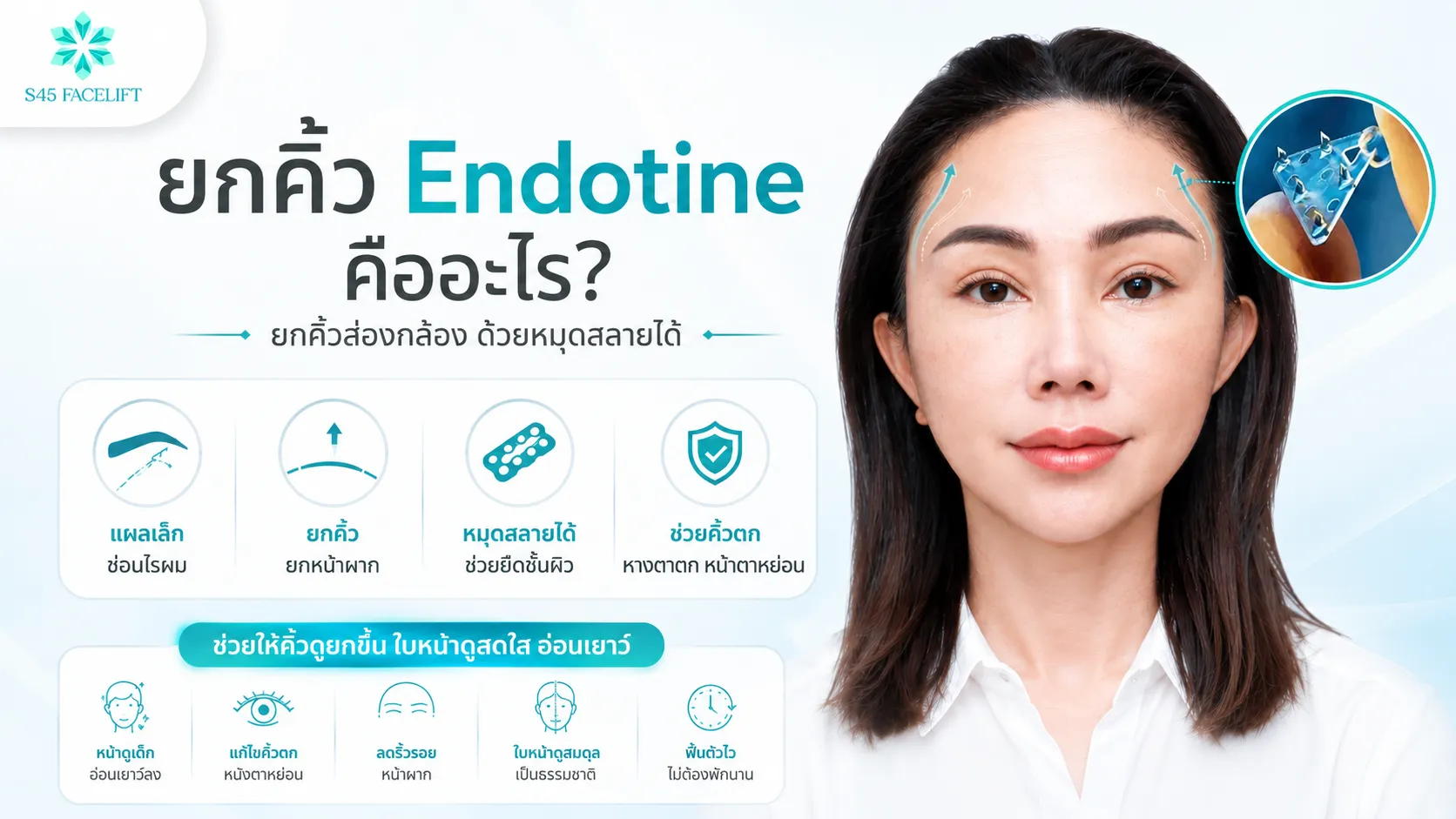
- An endoscopic forehead lift with Endotine devices helps support the skin and reduce lines. The absorbable material gradually dissolves on its own, and scar tissue forms to support the skin in its place.
- Swelling and bruising around the eyes and forehead, and a feeling of tightness, are normal temporary side effects after the procedure. They gradually improve and usually settle within 7 to 14 days.
- Preparing and stopping certain medicines or supplements at least 14 days beforehand is important to lower the chance of bleeding and to help the wound heal well after surgery.
When drooping brows and sagging upper eyelids make your face look stern, tired and older than your age, a brow lift is an option many people think of. The next worry that follows is whether brow lift surgery is dangerous, whether it will affect the nerves, or whether it will make the face look stiff or artificial.
In this article, S45 Clinic explains the facts about brow lifts, from assessing the risks and the temporary side effects you may get to the surgical techniques used, to help you plan your brow lift properly.
In This Article
Is a Brow Lift Dangerous?

To answer the question “is a brow lift dangerous?”, brow lift surgery carries the standard risks of any operation. The chance of complications depends on choosing a suitable technique and on care by an experienced plastic surgeon.
This procedure repositions the skin of the forehead to lift sagging areas and make them tighter. Today, the endoscopic technique is also used, which helps reduce tissue trauma and keeps the incisions to about 3 to 5 small points along the hairline.
However, as with any surgery, the body reacts to the wounds during recovery. To help you prepare properly, this section explains which side effects are normal and how to spot warning signs that something may be wrong, so you can see your surgeon straight away.
Possible Risks and Side Effects
Brow lift surgery has a low chance of serious complications when it is carried out by an experienced surgeon, but you will get some temporary side effects after the procedure. These happen because the position of the skin has been changed, and they gradually improve as your body recovers.
- Swelling and bruising around the eyes and forehead, which gradually go down and usually settle completely within 7 to 14 days.
- Numbness or tightness of the scalp and forehead, which returns to normal within 3 to 6 months.
- Scarring along the incision line, which needs regular scar ointment for 3 months to help the scar fade.
Warning Signs That Something May Be Wrong
An important warning sign after a brow lift is loss of feeling around the forehead or brows that lasts longer than 3 months, together with numbness that does not improve at all. This is caused by injury to a sensory nerve, and you may also be unable to move your inner brows or raise your forehead.
A clearly visible change in shape, such as a difference in height between the 2 brows of more than 5mm after the swelling has gone down, is also a clear warning sign. Thick yellow fluid oozing from the edge of the wound with a fever above 38°C is a sign of infection, and the wound needs to be checked straight away, within 24 hours.
What Causes Drooping Brows and How Do They Affect the Face?

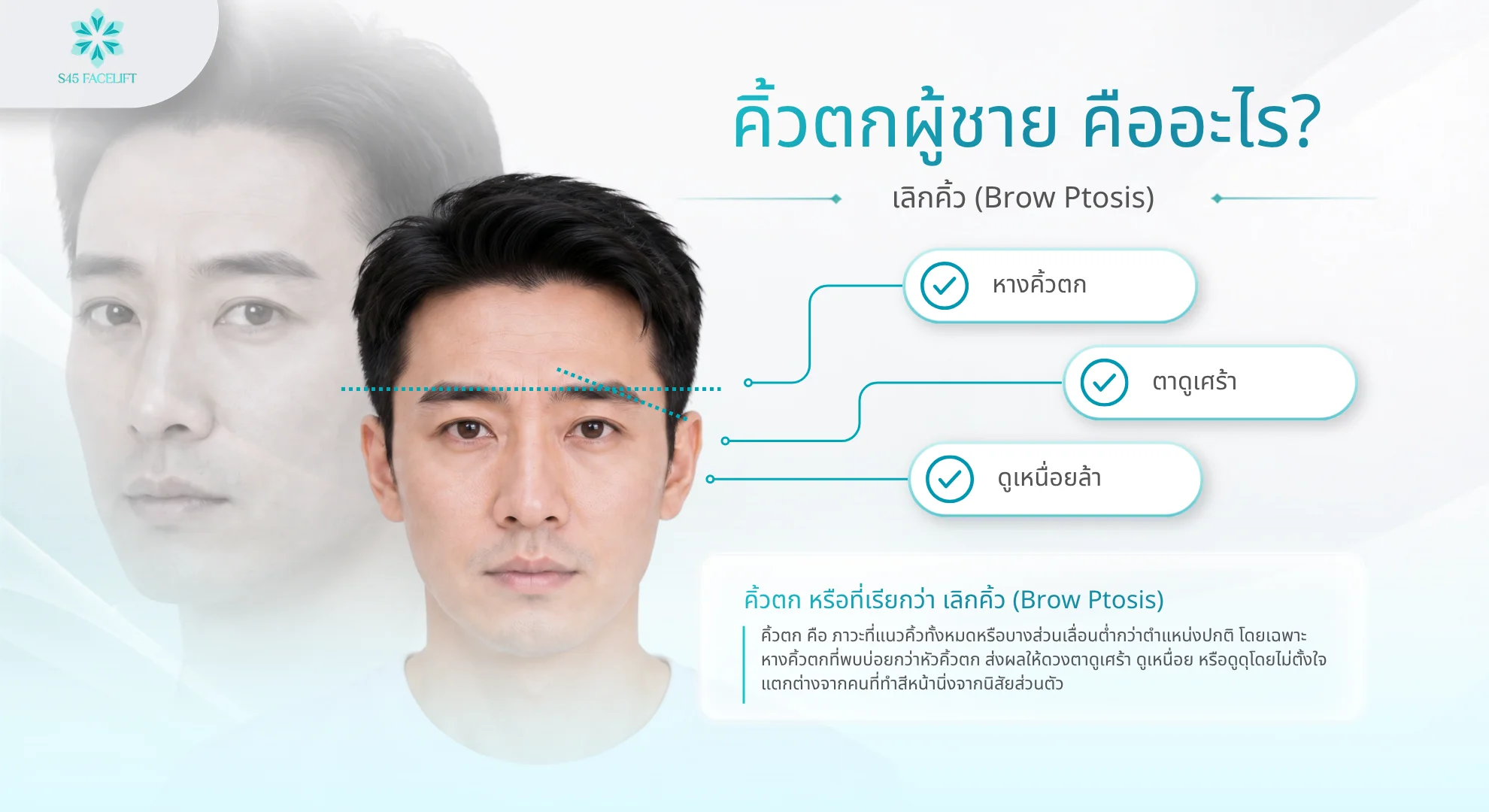
Drooping brows are caused by ageing skin and by gravity pulling the skin of the forehead down over time. This makes the face look tired, sad and older than your age. The sagging can hide your eyelid crease and make your eyes look smaller, so some people often strain to open their eyes wider, which leads to deep lines around the eyes and forehead over time.
It is not only a cosmetic concern. These physical changes can also affect your vision, because excess skin drops down and blocks the upper field of view. This is why many people with drooping brows look into whether brow lift surgery is dangerous, so they can plan how to lift the skin of the upper face.
Brows can droop earlier than expected because of daily habits and the skin layers ageing faster than usual, including:
- loss of collagen and elastin under the skin from the age of 25, which makes the skin less elastic and less able to resist gravity
- repeated facial expressions, such as frowning, squinting or raising the brows high while talking, which make the forehead muscles work hard and cause creases to build up
- exposure to sunlight and PM 2.5 dust pollution without regular sunscreen, as ultraviolet rays directly damage the supporting fibres in the dermis
- too little rest and smoking, which narrow the blood vessels so the skin gets less oxygen
Signs It May Be Time to Consider a Brow Lift
A clear sign that you may benefit from a brow lift is deep forehead lines together with drooping outer eye corners that block your vision. You can check this by looking at the distance between your brow and your upper eyelid margin: if it has narrowed to less than 2cm, your face may look tired or frowning all the time.
These signs often come with upper eyelid skin that sags over the lash line and makes it hard to open your eyes in daily life. You can check for other sagging areas on your face by looking for these physical signs:
- clear horizontal lines across the forehead even when your face is relaxed
- less upper eyelid space, making eye make-up harder than it was in your 20s
- the tail of the brow drops below the upper edge of the eye socket, so the eyes look almost triangular
What Brow Lift Techniques Are Used Today?
Brow lift techniques have developed over time to reduce side effects and help the upper face look more youthful. The surgeon assesses you and chooses a method based mainly on how much the skin sags and where your brows sit. Techniques can be grouped by where the incisions are made and the technology used, as follows.
Hairline Incision Surgery
A brow lift with the incision hidden along the hairline helps hide the scar well, using a small incision along the upper edge of the hairline. This method suits people with a high forehead or those who also want to reduce the height of the forehead at the same time. The surgeon designs a curved, zigzag incision that follows the hair to mimic your original hairline.
The scar gradually fades and blends in with the surrounding skin after recovery. Aftercare focuses on cleaning to stop dirt building up along the stitches. The skin usually heals fully, and the stitches can be removed within 14 days.
Outer Eye Corner and Under-Brow Lift
Lifting the outer eye corners and the area under the brows helps with drooping upper eyelids and drooping outer eye corners in specific areas, without lifting the whole forehead. This method hides the incision close to the lower edge of the brow, so the scar is hard to see after recovery. The surgeon removes excess skin and stitches it to tighten the skin around the eyes. The distance between the eyes and brows looks more balanced after the very fine stitches are removed at 7 to 14 days.
Repositioning the outer eye corners this way can help reduce sagging at the outer corners, depending on each person. It suits people whose outer eye corners droop but whose forehead does not yet have deep lines. Aftercare focuses on cold compresses for the first 3 days to reduce swelling around the eyes, then cleaning the wound with medical saline every day.
Endoscopic Surgery With Endotine
An endoscopic brow lift with Endotine helps raise drooping brows and tighten the forehead without a long incision. This method uses small openings in the scalp to insert a thin camera (endoscope), so the surgeon can see the internal structures clearly and reposition the skin precisely.
The Endotine device holds the skin in its new position temporarily while the body heals. This small device gradually dissolves on its own within about 6 to 12 months and is not intended to remain under the skin as a foreign body.
Is an Endoscopic Brow Lift With Endotine Dangerous?

A brow lift with Endotine is a recognised method that is accepted in medicine for lifting the upper face. The device is designed to spread the pulling force evenly and reduce tension on the skin, which can ease some of the worry about whether a brow lift is dangerous.
The device holds the skin firmly in a suitable position in the early period after surgery, while the body forms its own tissue to support the skin instead. Together, this helps the brows and forehead stay in position over the long term once the healing process is complete.
Can the Body Really Absorb This Material?
The body absorbs and breaks down the Endotine device over time. It is made from polylactic acid, a material based on lactic acid, the same type of material used in absorbable medical stitches, and it gradually breaks down through the body’s own chemical processes. The device’s holding role becomes less important once the tissue layers have joined together fully.
The material starts to break down and is fully absorbed within about 12 to 18 months after surgery. The body removes it as water and carbon dioxide through breathing and urine, and it is not expected to affect how your internal organs work, which helps reduce worries about a foreign body staying in the body over the long term.
How Many Years Do the Results Last?
Brow lift results can last about 5 to 10 years, depending on the technique used and on each person’s skin and how it changes with age.
With the endoscopic technique using absorbable fixation devices, the devices gradually dissolve on their own within about 6 to 12 months. During this time, scar tissue forms and holds the brows in their new position in place of the devices, so the upper face can stay lifted and smooth for several years even after the devices have fully dissolved.
Preparing for a Brow Lift so Surgery Goes Smoothly
Preparing properly can ease worries about whether a brow lift is dangerous and helps lower the chance of complications after surgery.
Change certain habits and stop certain substances at least 14 days beforehand, so your body is ready to heal well after the procedure.
What to Tell Your Surgeon and What to Stop Before Surgery
Preparing before surgery is important for the result. The first step is to give your surgeon full details of your health, so they can assess whether you are ready and plan the surgery properly. Tell your surgeon in advance about:
- any medical conditions, especially high blood pressure, diabetes and heart disease
- any history of drug allergies, including allergies to foods or chemicals
- medicines you take regularly, such as blood thinners and blood pressure medicines
As well as giving this information, stopping certain substances at least 14 days beforehand helps lower the chance of prolonged bleeding and bruising after surgery. Stop the following before surgery:
- aspirin or any anticoagulant, including NSAID painkillers such as ibuprofen
- supplements and vitamins, especially vitamin E, fish oil, ginkgo extract, ginseng and garlic tablets, which affect blood flow
- alcohol and cigarettes, as nicotine narrows the blood vessels, slows wound healing and raises the chance of infection
How to Prepare on the Day of Surgery
- Wash your hair before you travel to the clinic, because the wound must stay dry for at least 3 days after surgery to prevent dampness.
- Do not wear make-up, nail polish or nail extensions of any kind, because the surgeon needs to check your skin colour and measure the oxygen level at your fingertip during the procedure.
- Wear a front-buttoned shirt so you do not pull a top over your head, which could pull on the wound along the hairline.
- Do not eat or drink for at least 8 hours beforehand if you will have a general anaesthetic, to lower the chance of breathing food into your lungs.
Caring for Yourself After a Brow Lift to Help Healing and Lower the Chance of Infection
Caring for the skin around your eyes and forehead properly after brow lift surgery helps lower the chance of inflammation and supports healing. Paying attention to cleaning and avoiding certain activities helps the treated skin settle. The external wounds usually dry completely within 10 to 14 days, which is the period when you need to follow the advice carefully.
Wound Care Week by Week
Caring for a brow lift wound in the early period takes discipline, to help the wound heal well and lower the chance of the scar widening:
- Week 1: focus on cold compresses around the eyes and forehead for the first 3 days to reduce swelling and bruising. Keep the wound completely dry, and gently clean around it with a cotton ball soaked in saline 2 times a day to stop scabs building up.
- Week 2: switch to warm compresses to help clear pooled blood under the skin and encourage blood flow around the eyes. During this time your surgeon will see you to check the wound and remove the stitches, usually at about 10 to 14 days after surgery.
- Weeks 3 to 4: the skin around the wound becomes stronger. Keep applying the scar ointment your surgeon prescribes, and avoid activities that involve bending your head down low or strenuous exercise, to prevent blood pressure from affecting the incision line.
Common Normal Symptoms After Surgery
Swelling and bruising around the eyes and tightness of the forehead are normal reactions that start straight after brow lift surgery. They gradually ease after the first 3 to 5 days of recovery. You may feel tightness in your scalp or temporary numbness along the incision line, which is caused by irritation of the small nerve endings.
Cold compresses during the first 48 hours help limit the widening of blood vessels and reduce fluid build-up under the skin. Sleeping with your head raised on 2 extra pillows also helps the swelling go down within 14 days after surgery.
Why Choose S45 Clinic for a Drooping Brow Lift
At S45 Clinic, treatment for drooping brows focuses on shaping the upper face so it suits the rest of your features. We combine an individual facial assessment with endoscopic technology to give a clear view of every area.
Care by Experienced Surgeons With an Individual Facial Assessment
Planning with experienced surgeons helps lower the chance of side effects and gives a result that suits your own face. The surgeon always assesses the position of your brows, the elasticity of your skin and the distance between your brows and eyes in detail before starting. A detailed assessment helps lower the chance of dry eyes or eyes not closing fully after surgery.
Endoscopic Brow Lift With Absorbable Endotine Fixation Devices
An endoscopic brow lift with Endotine fixation devices is a technique that helps lift sagging skin of the forehead and brows evenly. The thin camera lets the surgeon see blood vessels and nerves clearly and reduces trauma to the surrounding tissue, so the incisions are small and well hidden along the hairline.
Technology and Operating Theatre Standards
Endoscopic brow lift surgery needs a strictly controlled environment to lower the chance of infection. A standard operating theatre uses a high-efficiency air filtration system to keep the air clean and circulating properly throughout the procedure.
Frequently Asked Questions About Brow Lifts
Will a Brow Lift Affect My Eyes or Stop Them Closing Fully?
A brow lift is not expected to stop your eyes closing fully when the amount of lift is judged correctly. You may get tightness or temporary dry eyes in the first 7 to 14 days, which gradually improve and usually return to normal as the swelling goes down within 1 month.
I Am Older or Have a Medical Condition. Is a Brow Lift Dangerous for Me?
For older adults or people with medical conditions, the chance of complications from a brow lift is low when a thorough health assessment is done before the procedure. The surgeon reviews the medicines you take and your medical history to manage the risks systematically. People whose conditions are well controlled, such as high blood pressure, or diabetes with a normal average blood sugar level (HbA1c) over the last 3 months, can also have surgery.
Is There a High Chance of Infection After a Brow Lift?
Brow lift wounds have a low chance of infection because the face has a good blood supply, which helps wounds heal. So whether a brow lift is dangerous depends mainly on wound care, especially cleaning the wound with saline and applying antiseptic ointment every day for the first 7 days to stop residue building up.
Summary
Is brow lift surgery dangerous? The answer is that the chance of complications and side effects is low when you are cared for by a surgeon who assesses your facial structure individually and uses a technique suited to your concern.
If you are still worried about the surgery, an endoscopic brow lift with Endotine devices that dissolve on their own within 6 to 12 months can ease concerns about large scars. The incisions are small and well hidden along the hairline, making it an option that helps reduce tissue trauma, with results that can last for several years, depending on each person.
Because every face shape…
is different
An otolaryngologist with subspecialty training in facial plastic and reconstructive surgery assesses every case before treatment and gives advice based on your actual concerns.
“Reveal the beauty within you”
Message us online
Surgery and medical procedures carry risks. Find out about them and consult a doctor before you decide. Results depend on each person.