Breast Shapes, What Types Are There? Get to Know Each One Before Breast Augmentation

Key points
- Breast shapes differ from person to person. Understanding your own body helps you choose a bra that supports your breasts in line with your body.
- Wearing a bra that suits your breast shape helps hold the breasts in shape and lowers the chance of breast sagging.
- Breast augmentation with round or teardrop implants is one option for adjusting uneven breasts. The surgeon assesses your breast base size and skin elasticity to plan balanced proportions.
- Lifestyle changes, such as chest muscle exercises and avoiding sleeping on your front, help maintain the elasticity of the skin over the chest and support the breasts in the long term.
Choosing bras or clothes that suit your body is worth paying attention to, because breast shapes vary, from breasts that point outwards to the sides to breasts that sag after breastfeeding. Understanding and observing the skin and fat of your own breasts helps you choose suitable ways to care for your body.
This article from S45 Clinic explains the different breast shapes and how to choose a supportive bra, and compares breast augmentation to adjust uneven breasts with breast lift surgery, to help you prepare before an assessment by the surgeon.
Jump to a section
In This Article
What Are the Different Breast Shapes Called?

Breast shapes vary from person to person and are named by their outer shape. Understanding these shapes helps you assess your body so you can choose a bra that holds and supports the breasts in line with your body.
In anatomical terms, the physical features of the breast are often compared with geometric shapes or different fruits to make them easier to picture. Common breast shapes include round breasts, sloping or teardrop breasts, breasts with little volume and breasts that point outwards to the sides.
1. Standard Round and Teardrop Breast Shapes
Common anatomical breast shapes include round and teardrop, which differ in how fat is spread and in breast volume. Understanding both shapes helps you choose a bra or assess your body. (If you want to compare round and teardrop implants for surgery, you can read more.)
- Round breasts have volume spread evenly across the upper and lower parts, so the upper part of the breast looks full and rounded.
- Teardrop breasts slope with gravity, with less volume in the upper part and gradually more volume towards the lower base of the breast.
| Feature | Round breasts | Teardrop breasts |
|---|---|---|
| Breast tissue distribution | Even volume in the upper and lower parts | Sloping upper part, fuller lower part |
| Upper chest | Full and rounded in the upper part | Slopes gently with gravity |
| Bra fit | Usually fills a standard cup | May leave a gap at the top of the cup |
Both shapes are normal anatomical variations, so care focuses on supporting the skin by wearing a sports bra with an underband, to reduce pulling and lower the chance of breast sagging during daily activities.
2. Fruit-Shaped Breasts
Describing breast shapes by comparing them with fruit is one way to help you understand your outer shape and choose a supportive bra. Fruit-shaped breasts include small-volume breasts, compared with a cherry, which have a flat breast base and little breast fat; full, rounded breasts, compared with an orange, which have an even curve; and breasts with more volume in the lower part, compared with a pear, which have a narrow breast base with fat in the lower part of the breast.
Each breast shape affects your choice of bra size and any plan to adjust your proportions. People with small-volume breasts often choose a structured bra to hold the breasts, while people with more volume in the lower breast often choose an underwired bra with a wide base to hold the breasts and spread the pressure on the breast base.
3. Wide-Set Breasts or Breasts That Point Outwards
Breasts that point outwards are an anatomical feature where the nipples point to the sides and the gap between the breasts is wider than usual. This is often due to a flat, wide breastbone or genetic factors that set breast position from birth. Choosing a bra without hard wiring at the sides helps reduce pressure around the body and lowers the chance of pressure marks.
For people with this breast shape, a front-fastening bra or a bra with side support panels helps hold the breasts and bring them towards the middle. Choosing a bra size that suits your body helps the breasts look balanced and supports your proportions when you wear clothes.
4. Sagging and Uneven Breasts
Sagging and uneven breasts can be caused by genetic factors, hormonal changes during pregnancy or losing weight quickly, which make the skin and fat lose elasticity. With this shape, the breasts sit below the breast fold or the nipples point downwards, and it often comes with breasts of different sizes, which is common.
Doctors grade breast sagging by the position of the nipple compared with the breast fold, from grade 1 to 3. For basic care, you can wear an underwired support bra or a bra with a padded insert on one side, to make the outer shape look more even when you wear clothes.
How Can I Tell What Breast Shape I Have?
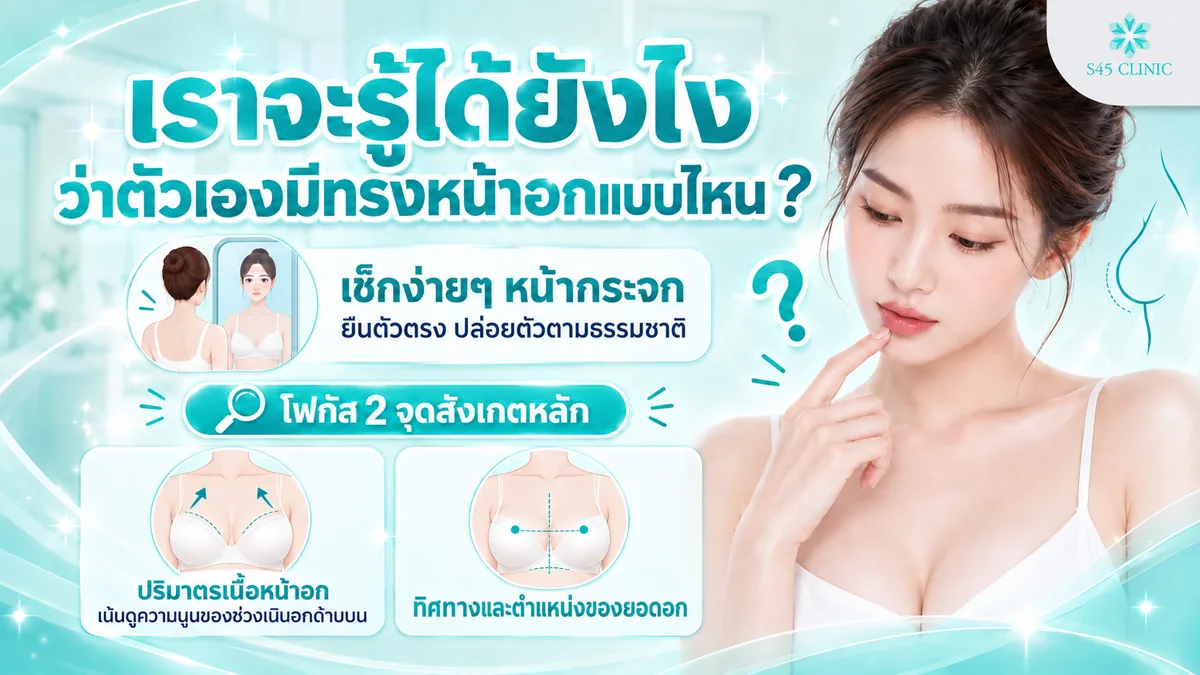
You can check your breast shape by standing upright in front of a mirror in a relaxed posture to look at your outer shape. Understanding your breast type helps you choose a bra that fits, and helps you plan your consultation with the surgeon about reconstructive or aesthetic breast surgery.
When checking the shape, look at 2 main things, the volume of the upper breast and the direction of the nipples, to tell your breast type correctly.
Checking the Breasts and the Upper Chest
To check your breasts and upper breast proportions, stand in front of a mirror with your arms relaxed and look at whether the upper chest is rounded or slopes down. A balanced upper chest is rounded and blends with the lower breast. If this area looks flat or slopes down in a straight line, this is often seen in people with teardrop breasts or people who have breastfed.
Gently touching the area from above the nipple up to the collarbone helps you judge the thickness of the skin and fat in the upper part. This upper fat thickness is important information when choosing implant size and shape to add volume to the upper chest in balance, in surgery to adjust breast shape.
Measuring the Gap Between the Breasts and the Nipple Direction
To assess your breast shape yourself, start by using a tape measure to measure the distance between your nipples while standing upright, to see your outer proportions. The gap between the breasts differs from person to person, depending on body size and ribcage structure. If the gap is wider than usual, you are in the group with breasts that point outwards to the sides, and you may consider a bra designed to support this shape.
To check nipple direction, look in the mirror at where the nipples point. Nipples usually point straight ahead or slightly outwards, which is a normal breast structure. Knowing your structure clearly helps you choose a bra size that suits your body, and gives information to plan adjustments to your breast shape with the surgeon.
Which Bras Support Each Breast Shape?
Choosing a bra that suits your breast shape helps hold the breasts in shape and lowers the chance of breast sagging during daily activities. Specially designed bras help spread the weight of the breasts evenly.
Wearing a bra that fits your body helps reduce pressure around the chest. When buying a bra, go mainly by your breast base size and upper breast proportions, to reduce pressure on the breast fold.
Bras for Wide-Set Breasts and Breasts That Point Outwards
Underwired bras with wide side panels help hold breasts that point outwards and bring them towards the middle. A bra with side support pads or diagonally cut cups gathers tissue from the sides of the body towards the middle, which helps the breasts look balanced when you wear it.
Bras that suit this shape include a plunge bra with a firm cup base to support the breasts from below. You may also choose a bra with several rows of back hooks for a closer fit, to help lower the chance of the straps slipping during the day and help hold the breasts in shape.
Bras for Small-Volume Breasts
A push-up bra with padding at the bottom, or a half-cup bra, suits people with small-volume breasts. A soft-wired bra helps support the breast base so it looks fuller, and a push-up bra lifts the lower breast upwards, which helps the breasts look fuller and the upper chest look balanced when you wear it.
For comfort, a non-wired bra with triangle-shaped padding can also help hold your breast shape. A bra with a wide underband helps keep the bra in place during the day, and adjustable straps help bring the cups closer to the skin, which lowers the chance of gaping cups or a gap at the top of the cup.
Bras for Teardrop and Round Breasts
When choosing a bra for round or teardrop breasts, go for a structure that holds the breasts without thick padding, because both shapes already have suitable volume in the upper chest. An underwired bra or a plunge bra helps support the breast base in balance and shows the shape of the upper chest without squeezing the breasts too much.
For people with teardrop breasts, which have more fat in the lower part, a demi bra or half-cup bra helps lift the lower breast so it looks balanced with the upper breast. These bras usually have straps positioned to spread and support the weight of the breasts. Choose a cup size that matches the volume of the upper breast, to lower the chance of wrinkled fabric over the upper chest.
How Can Breast Augmentation Help Adjust Breast Shape?
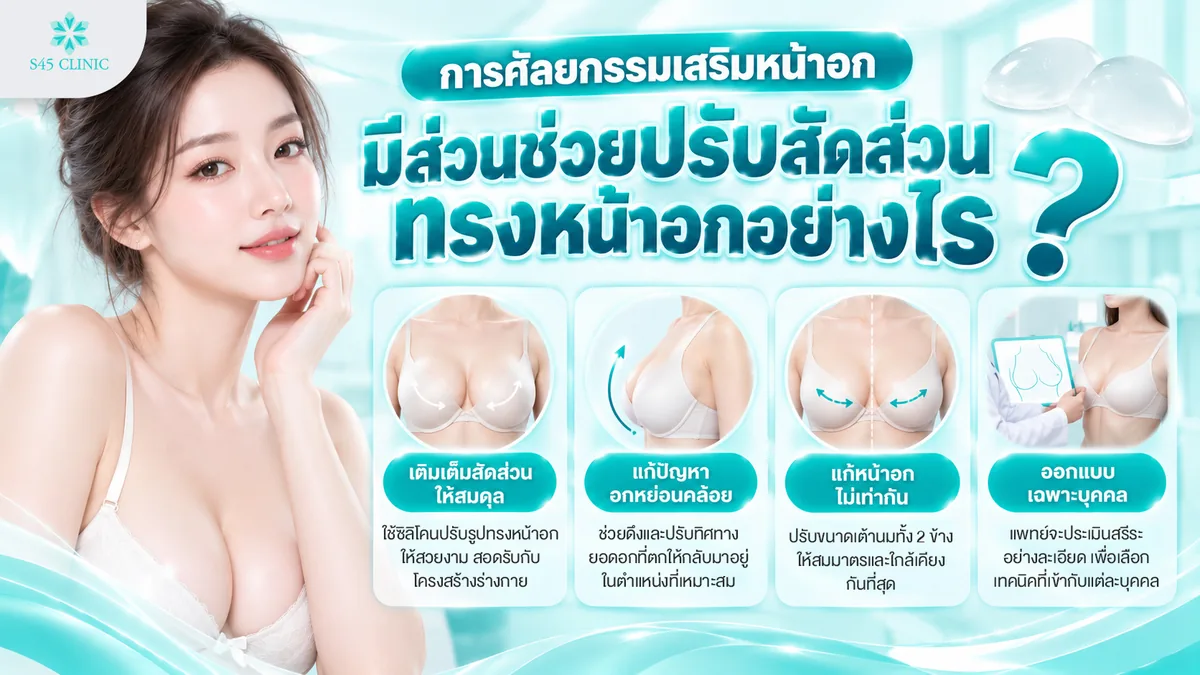
Breast augmentation helps make the breasts look more balanced by using breast implants, together with positioning the breast structure to suit your individual anatomy.
An assessment by the surgeon to choose a technique that suits your body helps adjust nipples that point low, or breasts of different sizes, so they look balanced with your body.
Adjusting Flat, Small-Volume Breasts With Round Implants
Breast augmentation with round implants helps adjust proportions for people with little breast volume and flat breasts, adding volume so the breasts look more balanced.
The gel in this implant shape is spread evenly in all directions, so it helps add roundness to the upper breast. Round implants are therefore one option for people who especially want more fullness in the upper chest.
The flexibility of round implants lets them change shape as your body moves, dropping with gravity when you are upright and spreading out when you lie down. The surgeon assesses the width of your existing breast base, together with your skin and fat, to choose a suitable implant volume, aiming for proportions that stay stable in the long term.
Breast Lift With Breast Augmentation for Sagging Breasts
Breast lift surgery with implants helps adjust breasts that have sagged and lost volume so they look more balanced and lifted. It suits people whose nipples point downwards, or whose skin around the breasts has stretched a lot after breastfeeding or weight loss. The surgeon removes excess skin to raise the nipple to a suitable position and places implants to add volume to the upper chest.
Implants are usually placed under the muscle to help support their weight. The incision pattern varies with how much the breasts sag, such as around the areola, a vertical incision, or an anchor-shaped incision for more severe sagging. After surgery, follow the surgeon’s advice on wound care and stitch removal to support your recovery.
Adjusting Uneven Breasts to Look More Balanced
Adjusting breasts of different sizes helps your body look more symmetrical. The surgeon may choose implant sizes or types to suit each breast. Uneven breasts are often due to the ribcage structure or uneven growth of the skin and fat from birth. Assessing this means measuring the breast base to choose an implant volume for each side, such as using different implant volumes for the left and right sides, to make the upper chest look balanced.
As well as using different implant volumes, the level of the breast base is also important in balancing the breast shape. The surgeon chooses the implant position in the muscle layer to suit each breast, to help make up for uneven sagging. Assessing even small differences in the gap and structure of your existing breasts helps the surgical plan suit your body.
Which Implants Suit Your Existing Breast Shape?
Choosing implants to adjust or build your breast shape to suit your existing breast base requires an assessment of your skin, fat and ribcage structure.
Understanding your existing body helps plan the implant position, either under or over the muscle. Assessing breast sagging and breast base width with medical instruments is a basic assessment step before surgery.
Round Implants
Round implants help add volume to the upper breast. They are an option for people whose breasts are fairly flat, or who have lost upper breast volume after breastfeeding. This implant shape helps support the skin over the upper chest so it looks rounded, and fills out the breasts when you wear a bra.
The gel inside round implants is spread evenly in all directions, so it helps support and lift the breasts, helping them look rounded and balanced. For people with a wide breast base, choosing an implant diameter that suits your body after the surgeon’s assessment helps reduce the gap between the breasts, so they look balanced.
Teardrop Implants
Teardrop implants are designed to follow the shape of a real breast, sloping from the upper part and gradually adding volume to the lower base. The resulting breast shape is rounded in line with your body and helps your overall proportions look balanced.
Implants of this shape are an option for people with little breast volume or mild breast sagging, because the shape supports and fills out the lower breast. The flexibility of this type of implant lets it change shape with gravity as your body moves.
The gel inside sloping implants is usually highly cohesive to keep the anatomical shape, and they are usually made with a microtextured or textured surface, which helps them grip the surrounding tissue and lowers the risk of the implant moving after surgery.
How to Care for Your Breasts to Help Them Keep Their Shape in Daily Life
Caring for your breasts to help them stay firm and keep their shape in daily life starts with changing daily habits and caring for your body regularly.
This care includes exercises to strengthen the chest muscles (pectoralis major), which help support the breasts, together with caring for the skin over the chest and choosing bras that hold and support the breasts for your daily activities.
Chest Exercises to Help Support the Breasts
Strengthening the chest muscles (pectoralis major) helps support and hold the breasts. You can train these muscles yourself to help strengthen the base. Examples of chest-strengthening exercises include:
- Push-ups work all of the chest muscles directly.
- Dumbbell pullovers stretch and work the upper and side chest muscles.
- Chest flys work the muscles in the middle of the chest, using a dumbbell weight that suits your body.
Caring for the Skin Around the Breasts and Habits to Watch
Applying gentle skincare products and avoiding habits that may affect the skin help maintain the elasticity of the skin over the chest. The skin over the breasts is delicate and dries out easily. Using a moisturiser with hydrating ingredients, such as hyaluronic acid, after a shower helps the skin hold moisture, and avoiding very hot showers helps lower the chance of dry, rough skin and loss of skin elasticity.
Wearing a bra that does not fit your body and sleeping on your front can put pressure on the chest, and exercising without a sports bra may stretch the ligaments that support the breasts (Cooper’s ligaments). Consider sleeping on your back with a pillow under your knees, to help position your body and reduce pressure on the chest while you sleep.
Why Choose Breast Augmentation at S45 Clinic
Breast reshaping at S45 Clinic focuses on care that gives proportions that suit your individual body structure. Preparing from the early stage helps reduce worry through a body assessment, analysis of your skin and fat thickness and measurement of your existing breast base, to help calculate and choose an implant size that suits your body.
Planning Your Breast Shape With the Surgeon
Assessing and planning your breast shape with the surgeon helps you get a breast shape that suits your body. The surgeon assesses your breast base width and skin elasticity and analyses your existing breast volume to choose an implant size with you. This process helps lower the risk of choosing implants too large for your body.
Aftercare and Follow-Up After Surgery
Aftercare and follow-up after breast surgery are an important part of supporting your recovery. S45 Clinic provides a programme of wound checks and breast proportion assessments at suitable times, with a nursing team who advise on cleaning your wound, how to wear a support bra and following the surgeon’s instructions on medicines.
Operating Theatre Standards
A closed air circulation system that continuously circulates and exchanges air helps manage hygiene in the operating theatre, with air filters that can remove small particles to keep the surgical process hygienic.
Summary
Understanding your own breast shape helps you choose a bra that supports your breasts in line with your daily activities, and helps lower the chance of early breast sagging. You can check and assess basic proportions yourself, such as the direction of and gap between your nipples, using a standard tape measure while standing in front of a mirror, to understand your body structure.
Understanding your existing body is also important information when planning to adjust your breast structure with the surgeon, whether your breasts point outwards to the sides, have little volume or are different sizes. This helps the breast augmentation plan suit your body and helps achieve balanced proportions that suit you.
Because every body…
is different
Doctors at S45 Clinic assess every case before treatment and give advice based on your actual concerns.
“Reveal the beauty within you”
Message us online
Surgery and medical procedures carry risks. Find out about them and consult a doctor before you decide. Results depend on each person.