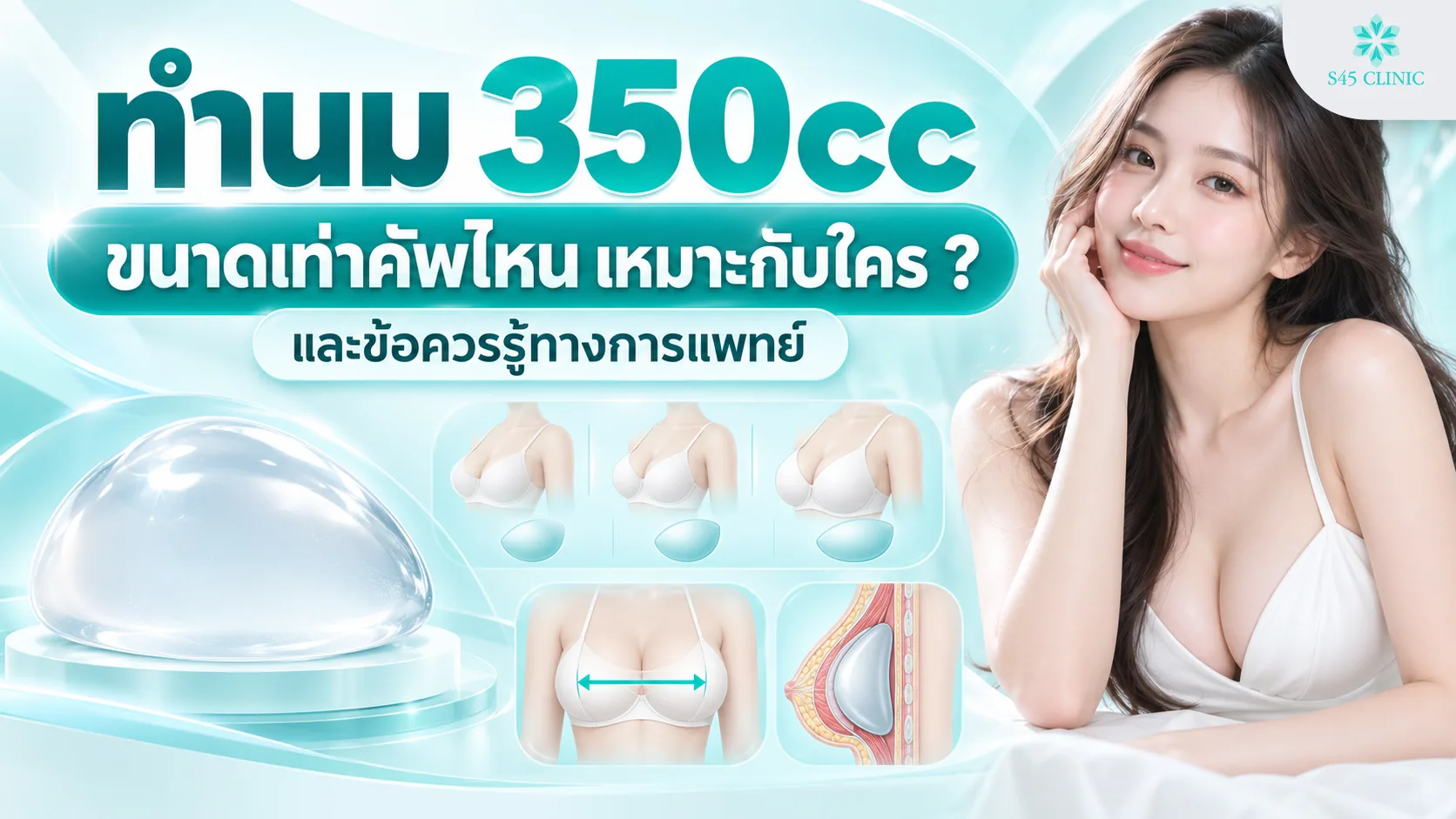
Breast Implant Sizes, How Many cc Suits Your Body?

Key points
- How many cc to choose for your breasts depends on your existing body, your skin and your build, for a result in proportion with your body.
- An individual assessment by the surgeon helps you choose a size that matches your actual body proportions.
- Considering your body structure together with the implant size helps lower the risk of choosing a size that is too large, which may affect your skin in the long term.
- Planning a suitable shape with the surgeon helps give breasts that are well proportioned and suit your body as closely as possible.
How many cc suits your figure? Some people choose a size that does not match their body, which can affect the body’s balance or lead to pain around the shoulders later on. Deciding on breast augmentation therefore relies on body measurements, such as your chest size or the width of your existing breast base, to get suitable proportions and help lower the chance of long-term health effects.
In this article, S45 brings together guidance on assessing body proportions, how to analyse implant sizes from 200cc to 400cc compared with standard bra cup sizes, the differences between round and teardrop implants, and the effects on the body of choosing a size that does not suit you, as initial information before you consult the surgeon.
In This Article
How Many Cup Sizes Do Breast Implants Add at Each cc Size?
Choosing an implant size to change your cup size depends on your existing breast base and the implant volume used. Generally, adding about 200cc of implant may help increase your size by about 1 cup, depending on each person’s structure and existing tissue. You can also read the guide to choosing a cc size that suits your figure.
This initial volume estimate gives a clearer overall picture of your body proportions. The details of size changes and the comparison data help you plan a cup size change that is suitable and in line with your actual body, before your assessment by the surgeon.
How Much Does Each Implant Size Increase Your Breast Size?
Generally, every 200cc of implant may help increase your breast size by about 1 cup size as a rough guide. For example, if you wear an A cup bra, an implant of about 200cc may bring you up to a B cup. This change depends on how much breast tissue you already have and on your body before surgery.
The same implant volume may also give different results in different people, because of factors such as the width of the breast base and height. For people with a small frame, a 250cc implant may give a visible change in proportions, while people with a broad back may need to consider about 300cc or more for proportions that look balanced with their body. This also needs an assessment by the surgeon.
Implant Size and Standard Bra Cup Size Comparison Table
Generally, increasing breast size by 1 cup size usually takes an implant volume of about 200cc, depending on each person’s existing breast base. If you start from an A cup and want to go up to a C cup, consider an implant size that suits your body, to help reduce a feeling of tightness in the chest.
Comparing implant volumes with cup sizes as a rough guide gives a clearer overall picture of the physical change, before your assessment by the surgeon.
| Implant size | Approximate cup size increase |
|---|---|
| 200 cc | 1 cup size larger |
| 250 cc | 1 to 1.5 cup sizes larger |
| 275 cc | 1 to 2 cup sizes larger |
| 300 cc | 2 cup sizes larger |
| 350 cc | 2 to 3 cup sizes larger |
| 400 cc | 3 cup sizes larger |
For people with a wider frame, the surgeon may consider a larger implant volume than for people with a smaller frame, to reach a similar cup size increase. Measuring your chest with a standard medical tape measure helps choose an implant size that suits the width of your existing breast base. Generally, with an average breast base width of about 12cm, the surgeon considers an initial implant size in line with each person’s actual body.
Implant Sizes Compared With Everyday Objects
Numbers in cc are often hard to picture when you read them in a table, so comparing them with everyday objects makes the volume easier to imagine. A standard table tennis ball has a diameter of 40mm, which is a volume of about 33cc per ball. A 200cc implant is therefore close to the volume of about 6 table tennis balls per side, 300cc about 9 balls and 400cc about 12 balls.
These numbers are only to help you picture the volume and do not reflect the size you will actually see after surgery, because the implant sits under the tissue and spreads across the width of your existing breast base. Assessing a size that suits your body therefore relies on measurements taken by the surgeon.
How Many cc Suits Your Body?
When choosing how many cc of implant will suit your body, there is no ready-made number that works for everyone, because each person’s body structure and build are different.
Analysing your individual proportions is key to deciding the implant volume, to help lower the chance of long-term physical effects. The surgeon needs to measure your body before you decide, starting with the width of your existing breast base in centimetres, to choose an implant size that suits you.
How to Assess Your Existing Breast Base and Breast Tissue Before Choosing a Size
The size of your existing breast base and the amount of breast tissue you have are the main factors in deciding how many cc of implant to use in proportion with your body. The actual breast width is measured in centimetres with a measuring tool, from the inner edge to the outermost edge, to find the width that suits your chest. Choosing an implant with a base wider than your existing breast may make the implants sit too close together in the middle or spread out to the sides, so they look out of proportion.
A pinch test on the upper breast (skin pinch test) also helps assess the thickness of the skin and the fat under the skin. If it is less than 2cm, this may mean you have little breast tissue, so the surgeon often recommends a size that suits your body, to help lower the chance of the implant edge being felt or rippling under the skin in the long term. This test is considered together with the nipple position, measured from the collarbone, which is generally about 18cm to 22cm on average.
How Height and Frame Size Affect Your Choice of Size
The choice of implant size is often based mainly on height and frame size, so the breasts look balanced with your figure. For people with a small build or who are shorter than 160cm, choosing an implant that is too large may make the upper body look thicker. At the same time, for people who are taller or have a larger frame, choosing a size that is too small may make the breasts look out of proportion with the width of the back.
Your frame size and chest wall width are key factors in assessing the implant base size. If your frame is narrow but you choose an implant with a base that is too wide, the implants may sit too close together in the middle or spread out to the sides. Measuring your existing breast base width with a standard measuring tool therefore helps the surgeon make an initial size assessment. For example, for someone with a breast base about 11cm wide, the surgeon may consider an initial implant size of about 250cc to 300cc, depending also on how elastic the existing tissue is.
Who Are Implant Sizes From 200cc to 400cc Suitable For?

Choosing an implant size in the 200cc to 400cc range helps give breast proportions that look balanced and in line with each person’s figure. Choosing the implant volume requires measuring your breast base and the width of your chest, to help lower the chance of the implant edges spreading out to the sides of the body.
Implant sizes can be divided into 3 rough levels according to different bodies and needs. Grouping the sizes this way gives an overall picture of how your body proportions may change, as information to consider together with the surgeon’s assessment.
200cc to 250cc
An implant size of 200cc to 250cc is one option suited to people with a small frame or little existing breast tissue who want more fullness. Implants of this size help fill out the breasts so they look fuller. Generally, this size tends to increase breast size by about 1 to 1.5 cups, depending on each person’s breast base and existing structure.
People with a breast base about 10cm to 11cm wide often suit implants in this range, because the implant base is not so wide that it spreads out to the sides or sits too close together in the middle of the chest.
300cc to 350cc
An implant size of 300cc to 350cc tends to add shape and contour for a more balanced figure. For people with a medium build, implants of this size help fill out the upper breast so it looks fuller, and help clothes fit in proportion with your body.
People who suit implants in this range are often about 160cm to 168cm tall with an A cup before surgery, going up to about a C to D cup as a rough guide. A volume at this level helps balance your body proportions without making the upper body look too heavy, depending on each person’s existing body.
400cc
Implants of 400cc or more are often suited to people with a larger frame, a fairly wide existing breast base, or who want more breast volume. Choosing a volume of more than 400cc requires the surgeon to assess the elasticity of the skin and breast tissue, to help lower the chance of tension at the incision.
People who already have a fair amount of breast tissue often suit this implant size. The body types that tend to suit larger implants are people about 165cm or taller, or whose frame size matches the width of the implant base, because choosing a size larger than the existing structure in people with a small build may make the implant edges clearly visible.
Where the skin is tight but you want more fullness at the front, the surgeon may consider a high profile implant instead. This helps reduce the width of the implant base while keeping the projection of the breast, so the breast looks fuller, with an implant base width that matches the edges of each person’s chest wall.
How Do Implant Surface and Shape Affect Breast Proportions After Surgery?

Choosing the surface and shape of breast implants is an important factor that affects fullness at the front, softness and how the breasts move, to suit your body.
Besides the implant volume, these implant type details help the surgeon assess and plan a breast shape that suits each person’s needs and body. The final breast shape depends mainly on the size of your existing breast base, how elastic your skin is and the thickness of the fat under your skin. If you are unsure which material to choose, you can read more about the differences between breast augmentation with implants and with your own fat.
How Do Round and Teardrop Implants Differ?
Round implants focus on filling out the upper breast, while teardrop implants focus on a slope similar to the shape of a breast without implants. The implant shape affects your breast proportions and how clothes fit. Round implants help add fullness to the upper breast in people with little existing breast tissue or with mild breast sagging.
Their different physical features affect where the implant is placed and how the breast bears weight. Comparing the 2 types helps as information for choosing a shape that suits your body, together with the surgeon’s assessment.
| Comparison | Round implant | Teardrop implant |
|---|---|---|
| Silicone gel distribution | Evenly balanced throughout | Concentrated at the lower base |
| Look of the upper breast | Filled out and firm | A smooth, gentle slope |
| Movement with the body | Spreads out with the body when lying flat | Holds its original shape more |
Differences Between Mentor and Motiva Implants
Mentor and Motiva implants differ in their gel and shape, which affects how the implant size and volume (cc) are assessed to suit each person’s body.
| Feature | Mentor | Motiva |
|---|---|---|
| Feel of the implant | Stable gel that supports the breast’s position | Soft and flexible, moving with the body |
| Shape | Available in round and teardrop shapes | Some models change shape with posture and body changes |
| Data chip | No chip inside | Optional models with a microchip (Qid) |
The choice between these 2 brands depends on the thickness of the skin and tissue of your existing breasts. If your skin is fairly thin, the Motiva Ergonomix model helps lower the chance of the implant edge being noticed under the skin.
For people with a fairly wide existing breast base who want more fullness at the front, the surgeon may consider the Mentor Ultra High Profile model, which helps add projection to the breast to suit your body, even at an initial size of about 250cc. This depends on the assessment of each person’s body structure.
Physical Considerations When Choosing a Wider or Larger Implant Size (cc)
Choosing an implant size larger than your body’s existing proportions can affect your muscles and body structure in the long term. Carrying implant weight beyond what your body’s tissues can cope with may affect the upper body muscles, as well as the bones and the skin of the chest as the tissue stretches over time.
Back Ache and Changes to Your Body
Choosing an implant size (cc) requires assessing the weight of the implant together with the structure of your spine at the upper back and neck, to help lower the chance of back ache. Choosing a size larger than your existing body may make your shoulders move forward and make the upper back muscles work harder to keep the body balanced, especially for people with a fairly narrow underbust who choose a size larger than their existing structure.
Pressure from bra straps carrying the weight of the breasts may also cause a feeling of tightness around the shoulders or arms, so read the guide to choosing and wearing a bra after breast augmentation as well. Stretching exercises for the shoulder blades and back, such as stretching the back muscles 2 to 3 times a week, help relax tension in the upper back muscles. Get advice from the surgeon or a physiotherapist as well.
Implant Edge Rippling and Long-Term Skin Changes
Choosing implants larger than your existing body may increase the chance of rippling at the implant edges, as well as long-term changes to the skin of the breasts, because there is not enough existing breast tissue to cover the implant. When the implant is heavy, it may put pressure on the fat under the skin, so that fat layer gradually thins over time.
Choosing an implant size (cc) wider than your existing structure may make the implant edges or rippling under the skin more noticeable over time. Choosing an implant size in line with the thickness of your skin and upper fat layer (from a skin pinch test, which should generally show about 2cm or more), together with the surgeon’s assessment, therefore helps lower the chance of rippling and helps the breasts suit your body in the long term.
Which Implant Placement Helps Support the Weight of the Breasts?

Placing the implant under the muscle, or in 2 layers (dual plane), helps spread the implant’s weight by using the chest muscle to take some of the pressure. This technique reduces pulling on the outer skin and helps lower the chance of the breasts sagging over time.
Placing the implant in the right tissue layer lets the muscle help hold the implant, so the skin above does not carry the weight alone. The surgeon assesses the thickness of the tissue and the structure of your chest with standard measuring tools before surgery, to decide the position that suits each person’s body.
Placing Implants Under the Muscle
Placing implants under the muscle helps spread the implant’s weight by using the large chest muscle (pectoralis major) for support. This reduces pulling directly on the outer skin and pressure on the lower tissue, which helps the breasts keep a balanced shape over time. Assessing the implant volume (cc) together with placement under the muscle therefore helps spread the pressure in line with your body.
For people with fairly thin skin or little existing breast tissue, placing the implant in this layer helps lower the chance of the implant edge being noticed and of rippling under the skin. The surgeon may recommend this position for people with implants of about 300cc or more, to help lower the chance of the breasts sagging with age, depending on the assessment of each person’s body structure.
Dual Plane Implant Placement
Dual plane placement means placing the implant under the muscle at the top and above the muscle (under the breast tissue) at the bottom, so the breast can move with your body. This placement helps lower the chance of the implant edge being noticed on the upper breast, whatever implant volume (cc) is chosen. The technique also helps spread the implant’s weight, which helps the breast have a gentle slope when you stand upright.
The placement is often adjusted at 3 levels, depending on the amount of existing breast tissue and each person’s body structure. The surgeon assesses the thickness of the fat under the skin to decide where to separate the muscle layer, for example level 1 for people with a fair amount of existing breast tissue, up to level 3 for people with mild breast sagging.
The dual plane technique also helps lower the chance of capsular contracture around the implant and of the implant moving out of position in the long term, depending on each person’s care after surgery.
What If You Are Unhappy With the Size You Chose?
Feeling that the size you chose is not quite what you intended is something many people worry about before deciding. In practice, the breast shape in the first period after surgery is not the final shape, because there is still swelling and the implant has not settled. The tissue adjusts gradually over time, and this period differs from person to person.
An assessment with the surgeon before surgery is therefore a step that helps lower the chance of being unhappy later. Trying on sizers and measuring the width of your existing breast base help you see the proportions before you decide.
If you still feel after recovery that the size does not suit your body, you can consult the surgeon to assess options for breast revision. Surgery to change implant size is a procedure that requires another assessment of your skin elasticity and existing tissue, so consult the surgeon about whether it is suitable for you.
Why Choose S45 Clinic for Breast Augmentation
Choosing an implant size that suits your body structure at S45 Clinic helps your breast proportions look balanced and helps lower the chance of long-term complications. You can also read our criteria for choosing a breast augmentation clinic to help you decide.
The clinic focuses on assessing your anatomical proportions to find the right balance between what you want and the width of your existing breast base. Surgery and care at every step are carried out by doctors, for a result in line with your body and to help reduce possible risks.
Body Assessment With the Surgeon
A body assessment with our surgeons helps find the implant size (cc) that suits each person’s body structure. Measuring the width of your existing breast base, the width of your chest wall and the elasticity of the skin over your chest gives the surgeon key information for assessing size. This anatomical information helps lower the chance of implant edges spreading out to the sides or a feeling of tightness after surgery.
Our Operating Room
The operating room is a closed system with pressure control and air filtration, which helps lower the chance of dust and airborne particles getting in. An anaesthetist provides one-to-one care to monitor your breathing and vital signs, using equipment and vital sign monitors that are checked before use, and every surgical instrument is sterilised with heat and pressure according to medical hygiene principles.
Frequently Asked Questions About How Many cc to Choose
Is It Better to Choose a Larger cc Size?
Choosing an implant size larger than your skin elasticity and existing breast base can cope with may increase the chance of long-term changes, such as rippling under the skin, breasts sagging over time or a heavy, tight feeling in the chest. Choosing a size that suits your body structure therefore helps your breasts look balanced and lowers the chance of complications.
Can I Have 300cc or More If I Have a Small Frame?
Yes, if your existing breast tissue is elastic enough and your breast base can accommodate it. The surgeon measures your breast base and lets you try on sizers to assess the balance before surgery.
If I Already Have Some Breast Tissue, How Many cc Should I Choose?
If you already have some breast tissue, you usually do not need a very large cc size, to avoid the breasts looking too heavy or overfilled. The surgeon focuses on choosing a size that fills out the breast shape in proportion and gives some lift.
Summary
Choosing how many cc to have starts mainly with the surgeon assessing the width of your existing breast base together with the elasticity of your skin and the fat under your skin. Assessing and choosing an implant size that suits each person’s body structure plays an important part in giving breast proportions that are balanced with your body.
Choosing an implant size in line with your existing body also helps lower the chance of complications and long-term body changes, such as rippling at the implant edges or tightness and aching in the upper back muscles.
Because every body…
is different
Doctors at S45 Clinic assess every case before treatment and give advice based on your actual concerns.
“Reveal the beauty within you”
Message us online
Surgery and medical procedures carry risks. Find out about them and consult a doctor before you decide. Results depend on each person.