Is Breast Augmentation Painful? What It Feels Like and How to Look After Yourself
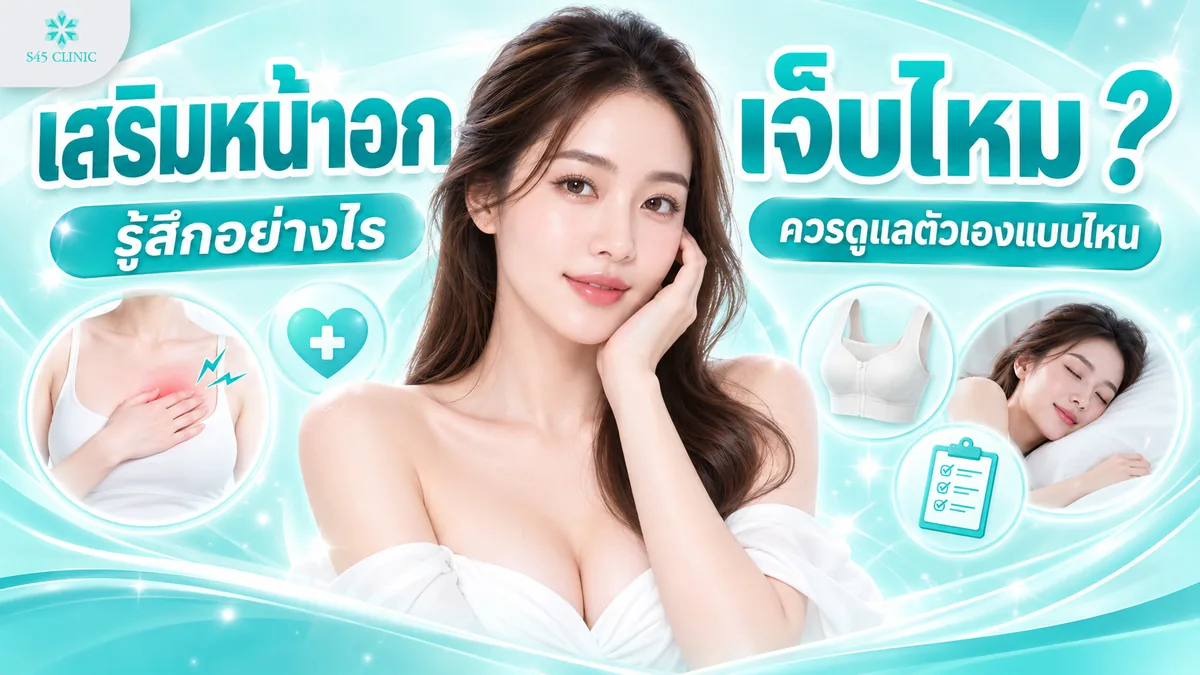
Key points
- If you are asking “is breast augmentation painful?”, the answer is that how it feels varies from person to person. Most people describe it as soreness after surgery. Assessment and care by the doctor, along with taking pain relief medication as prescribed, can help ease this pain.
- An individual assessment by the doctor helps plan surgery that suits your body.
- Preparing before surgery and following aftercare advice play an important part in helping your body recover after surgery and lowering the chance of complications.
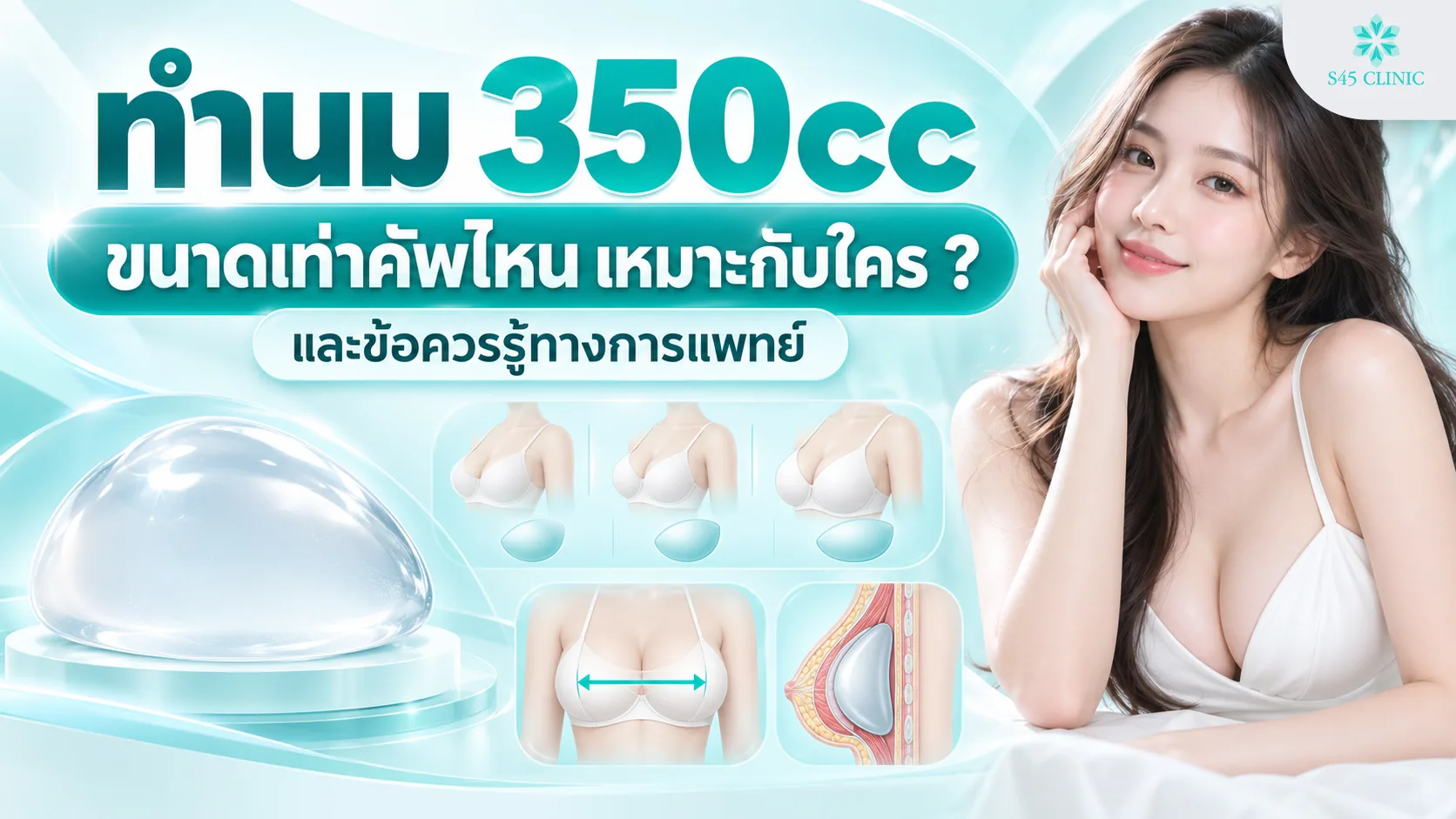
- Choosing an implant material and size that suit your existing body shape helps reduce tension on the skin and tightness around the chest after the procedure.
Worry about pain is one of the main reasons many people ask whether breast augmentation is painful, and they may also wonder how their body will feel after the procedure. Learning about the recovery process and what you may feel at each stage is an important step in preparing yourself physically and mentally before breast reshaping.
This article from S45 Clinic brings together what to know about how breast augmentation feels at each stage, along with self-care that can help ease tightness after the procedure, such as cold compresses and wearing a support garment as advised by the doctor.
Jump to a section
In This Article
Is Breast Augmentation Painful? What Does It Really Feel Like After Surgery?
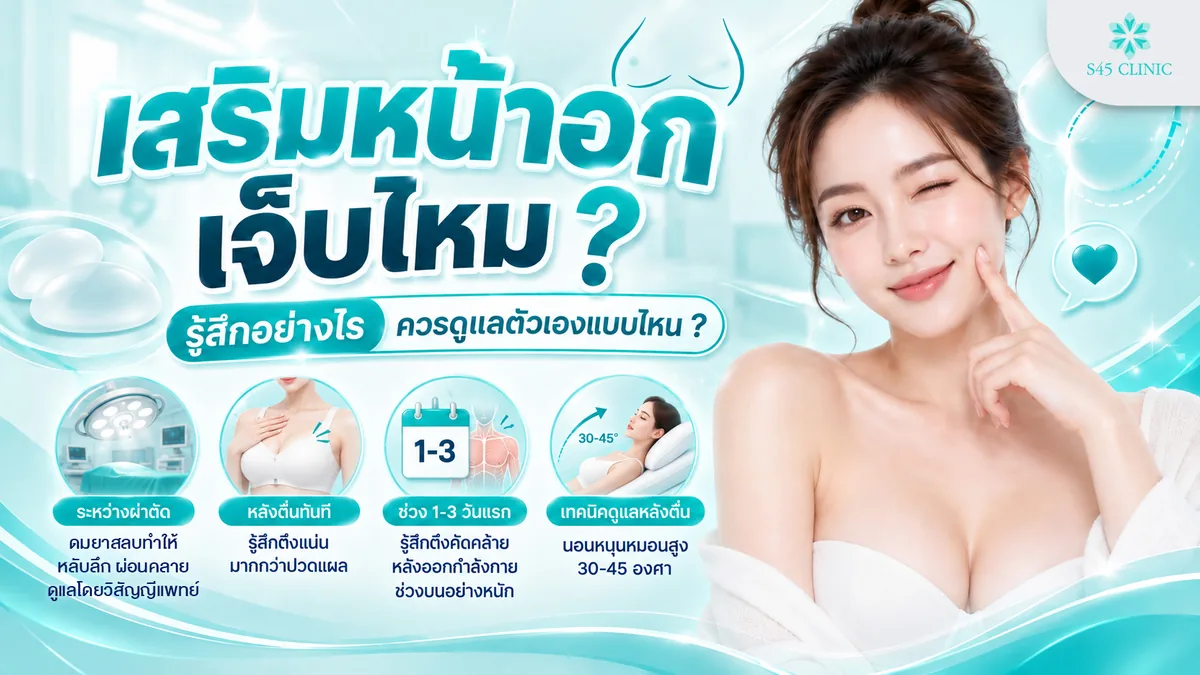
How painful breast augmentation feels varies from person to person. Most people describe a feeling similar to fullness and tightness in the chest, or tight muscles similar to how you feel after a hard upper-body workout.
Aching and tightness in the chest appear in the first 48 to 72 hours, because the skin and muscles are adjusting to the size of the new implant. After the first 3 days, the tight, uncomfortable feeling gradually eases.
Taking pain relief medication as advised by the doctor can help you feel well enough to walk around and do light activities at home as normal. Results, recovery and how your body responds depend on your body shape, your health and the care you receive.
How It Feels During Surgery, With Pain Controlled by an Anaesthetist
During breast augmentation, your body is cared for with a general anaesthetic given by an anaesthetist, who stays with you one-to-one throughout. This type of anaesthesia puts you into a deep sleep and fully relaxes your muscles. All your vital signs, including the oxygen level in your blood, are closely watched on a monitor.
The anaesthetist works out the right dose from your weight, health history and body, so that you stay asleep throughout the procedure until the breast implants are in place. This takes about 1 to 2 hours, depending on your body structure, the placement technique and the doctor’s assessment.
How It Feels When You Wake Up After Surgery
When you wake up in the recovery room, the first thing you may notice is tightness and pressure in the chest. This is normal and happens because the skin stretches to hold the volume of the implant. The local anaesthetic is also still working, so the tightness is more noticeable than wound pain.
You may feel dizzy or generally unwell for a short time in about the first 2 to 4 hours. Nurses look after you and give you medication to ease symptoms as the doctor prescribes. Lying with your head raised on pillows at about 30 to 45 degrees helps ease pressure on the chest and helps your body relax during this time.
What Kind of Pain Does Breast Augmentation Cause?
Comparing breast reshaping to feeling as if you have been run over by a lorry does not match how the procedure is done today. This belief is only a story passed on over the years, and it can cause worry before you make a decision.
What you actually feel after the procedure is similar to fullness and tightness in the chest, or tight muscles similar to after an upper-body workout. This aching and tightness gradually eases until your body returns to normal, and recovery depends on each person’s body.
Where the Belief About Pain in the Past Came From
The belief about pain in the past came from the limits of older medical technology, when small endoscopic cameras were not yet used to create the space for the implant. As a result, the surrounding tissue could become tight and bruised.
In the past, a local anaesthetic was also not injected to block the breast nerves before you woke up from the general anaesthetic, so people could feel aching and tightness in the first 24 to 48 hours. Implants that were too large for the body also stretched the chest muscles quickly, sending pain signals to the central nervous system.
What Surgery Is Like With Today’s Medical Equipment
Today, with medical technology that keeps developing, small endoscopic cameras help the doctor assess and position the implant appropriately.
Radiofrequency devices used today also help protect the surrounding tissue. After the procedure, the incision is small, about 3cm to 4cm, which helps your body gradually adjust and recover step by step. It also helps lower the chance of capsular contracture (scar tissue tightening around the implant). Results, recovery and how your body responds depend on your body shape, your health and the care you receive.
Is Breast Augmentation Painful With Different Implant Placements?
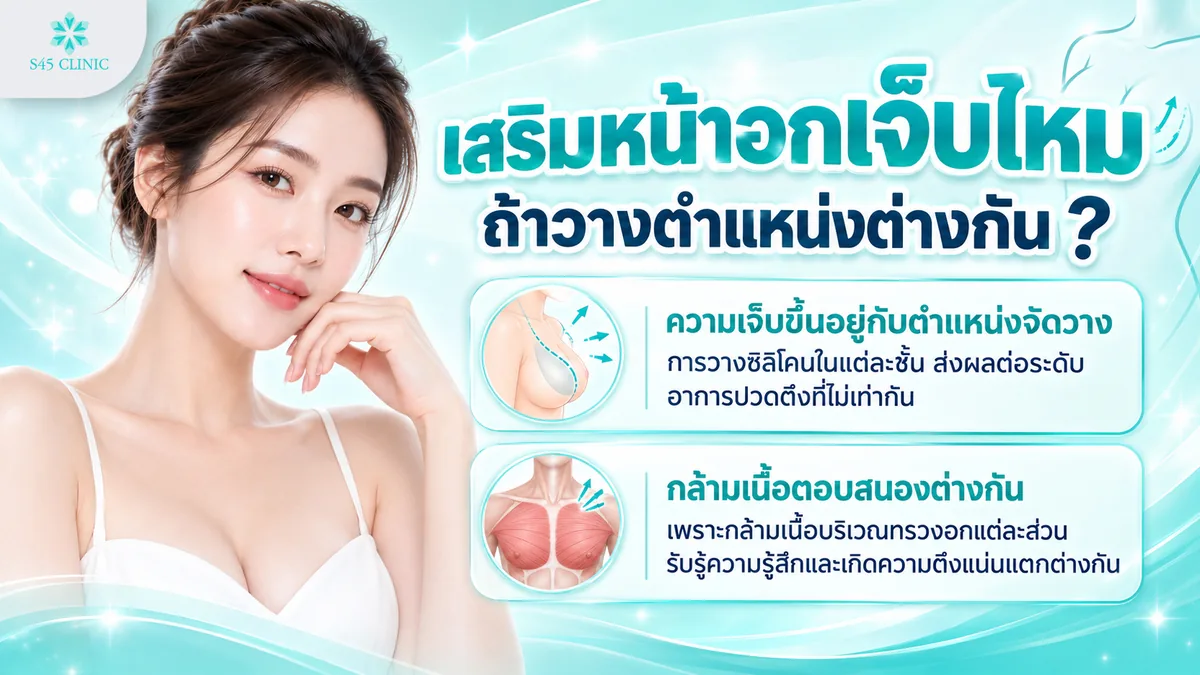
Whether breast augmentation is painful also depends on where the implant is placed, because the position of the implant is linked to aching and tightness after the procedure, as each part of the chest muscle responds differently.
Choosing a placement that suits your body structure is therefore an important factor in how much pain you feel and how your body adjusts in the first week after the procedure. Each placement differs as described below.
Breast Augmentation Above the Muscle
Placing the implant above the muscle can help ease tightness after the procedure, because the implant sits under the breast tissue but above the muscle, without disturbing the chest muscle. As a result, aching and tightness are usually less than with other placements.
This approach helps your body adjust step by step, because only the skin and breast tissue need to adjust. The skin gradually stretches to fit the implant without pressure from the muscle, so moving your body or arms is usually easier from about 3 to 5 days after the procedure, depending on how each person recovers.
This placement also helps lower the chance of tightness in the chest when you use your arm muscles or lift things. The body forms a layer of tissue around the implant, which goes together with wearing a support bra for as long as the doctor advises.
Breast Augmentation Under the Muscle
Breast augmentation under the muscle usually feels tighter than placement above the muscle, because the implant is placed under the chest muscle. Pressure from the muscle affects how tight the chest feels at first, which is part of how the body normally adjusts.
Aching and tightness appear soon after the procedure, and the doctor may prescribe medication to help with muscle tightness. After the first week, the tight, uncomfortable feeling gradually eases as the skin and tissue around the implant start to adjust to your body. Results, recovery and how your body responds depend on your body shape, your health and the care you receive.
Dual Plane Breast Augmentation
Dual plane breast augmentation can help ease aching and tightness after the procedure by placing the implant in 2 parts of the chest muscle. The implant sits under the upper part of the muscle and above the lower part, so the chest is not under pressure from the whole muscle. This means you can usually move your body, move your arms and keep your balance more easily.
An incision of 3cm to 4cm under the breast crease helps reduce bruising of the blood vessels and nerves around the breast, so there is less tightness around the area. Most people can go back to light tasks or their daily routine as appropriate.
How Many Days Does the Pain Last After Breast Augmentation, and When Do the Breasts Settle Into Shape?
Aching and tightness after breast augmentation usually appear in the early stage and gradually ease until you can go back to light daily activities.
As for the shape of the breasts, the skin around the implant gradually relaxes and adjusts to your body over about 3 to 6 months, depending on how the skin around the implant is cared for and on wearing a support bra as advised by the doctor.
Soreness in the First 3 Days
Soreness after breast augmentation is most noticeable in the early stage, when the body starts its normal response and the chest muscles are tight. It usually feels like fullness and tightness in the chest along with temporary pressure. Take care when moving or getting up and sitting down during this time.
Self-care in the early stage focuses on cold compresses around the chest and taking pain relief medication as the doctor prescribes. Lying on your back with pillows raising your head and upper back to an angle of about 30 to 45 degrees helps ease tension on the skin of the chest and helps your body relax.
Recovery From the First 7 Days to 1 Month
Aching and tightness after breast augmentation gradually ease. By day 7, when the body starts adjusting to the implant, the tightness around the chest slowly relaxes, so moving your upper body becomes easier. By this time the outer wound starts to dry, and you can have a follow-up check at the appointment the doctor sets.
From week 2 to 1 month, the breasts start to relax and adjust to your body, and the skin gradually feels less tight and full and more supple. During this time, still avoid exercise that uses the chest muscles and do not lift heavy objects, to lower the chance of an internal wound tearing.
Is Breast Augmentation Painful? Looking After Yourself After Breast Augmentation at S45 Clinic

Whether breast augmentation is painful depends on looking after yourself correctly after the procedure, which is an important factor in how comfortable your chest feels. The clinic has a system of care that supports your recovery after the procedure, so you can go back to your daily life as normal. Care covers basic aftercare along with wearing a support garment for as long as the doctor advises.
1. Follow the Doctor’s Advice and Take Pain Relief Medication as Prescribed
Taking pain relief medication on time, as often as the doctor prescribes, helps keep soreness after breast augmentation under control. In the first 3 days, lie on your back with your head raised on pillows at about 30 to 45 degrees to help ease pressure on the chest and gradually reduce tightness in the skin.
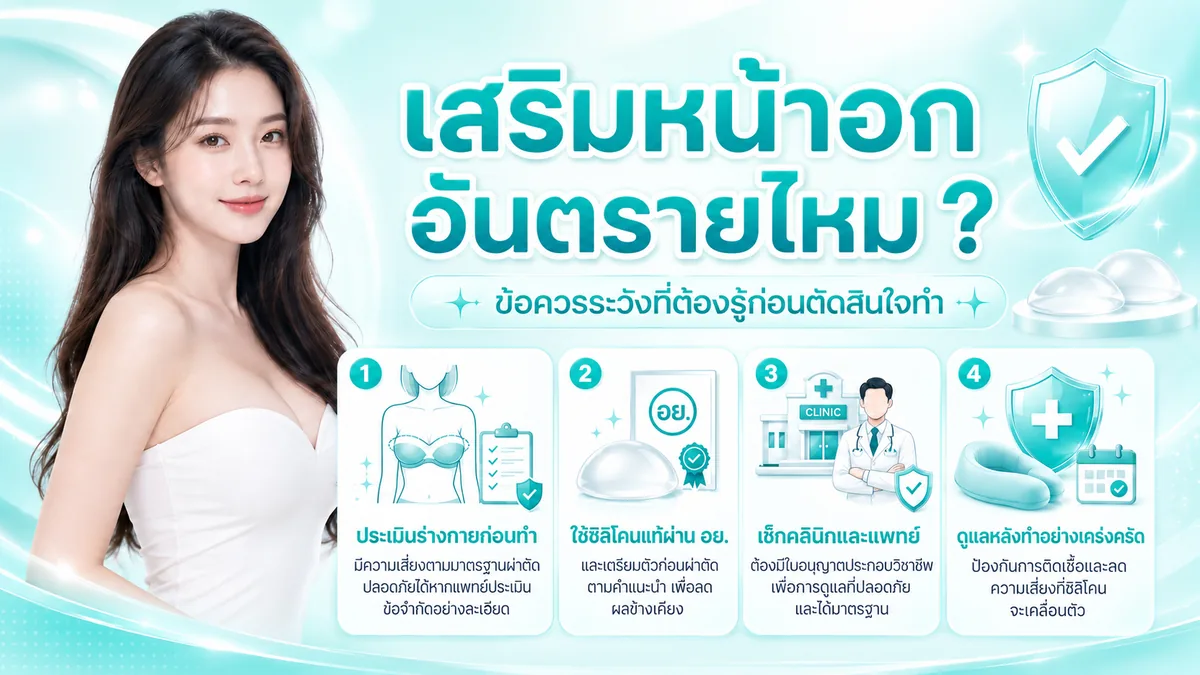
Stop taking some pain relief medicines, such as aspirin and ibuprofen, and all dietary supplements in the first week, because they may affect blood clotting and increase the chance of blood collecting under the skin. If you notice unusual redness and swelling or have a fever, contact the clinic promptly for advice and care that suits your condition.
2. Wearing a Support Bra
Wearing a support bra after the procedure helps reduce heaviness and pulling in the chest when you move.
This type of garment holds the breasts in a suitable position to lower the chance of the implant shifting or the wound opening from pulling when you move. Suitable support also helps your body relax from the feeling of tightness, so soreness gradually eases.
Wear this support bra 24 hours a day for at least 1 to 3 months, taking it off only to shower. Choose a size that suits your body and has no underwire pressing on the incision. This helps spread pressure evenly, lowers the chance of symmastia (the breasts joining in the middle) and helps the skin gradually heal to fit the new shape of the breasts.
3. Breast Massage
Massaging the breasts correctly helps lower the chance of scar tissue tightening around the breast, so the breasts gradually adjust and stay soft. You can start gentle massage as advised by the doctor once the incision has fully closed, to help circulation around the chest.
Massage involves moving the breasts in different directions, pushing up, down, left and right, to widen the space around the implant. Massaging the breasts yourself 2 times a day for 10 minutes each time helps ease tightness in the skin of the chest and helps the breasts gradually settle. Results, recovery and how your body responds depend on your body shape, your health and the care you receive.
Summary
Is breast augmentation painful? With breast reshaping today, you may still feel some pain or tightness depending on your body, but it is not as much as people believed in the past, because medical technology is used to choose where the implant is placed, along with anaesthesia.
Aching or pulling is usually most noticeable in the early stage after the procedure and gradually eases with suitable care, wearing a support bra and taking pain relief medication as the doctor prescribes.
Because every body…
is different
Doctors at S45 Clinic assess every case before treatment and give advice based on your actual concerns.
“Reveal the beauty within you”
Message us online
Surgery and medical procedures carry risks. Find out about them and consult a doctor before you decide. Results depend on each person.