After Rhinoplasty Care for Your Wound in Revision Rhinoplasty Cases

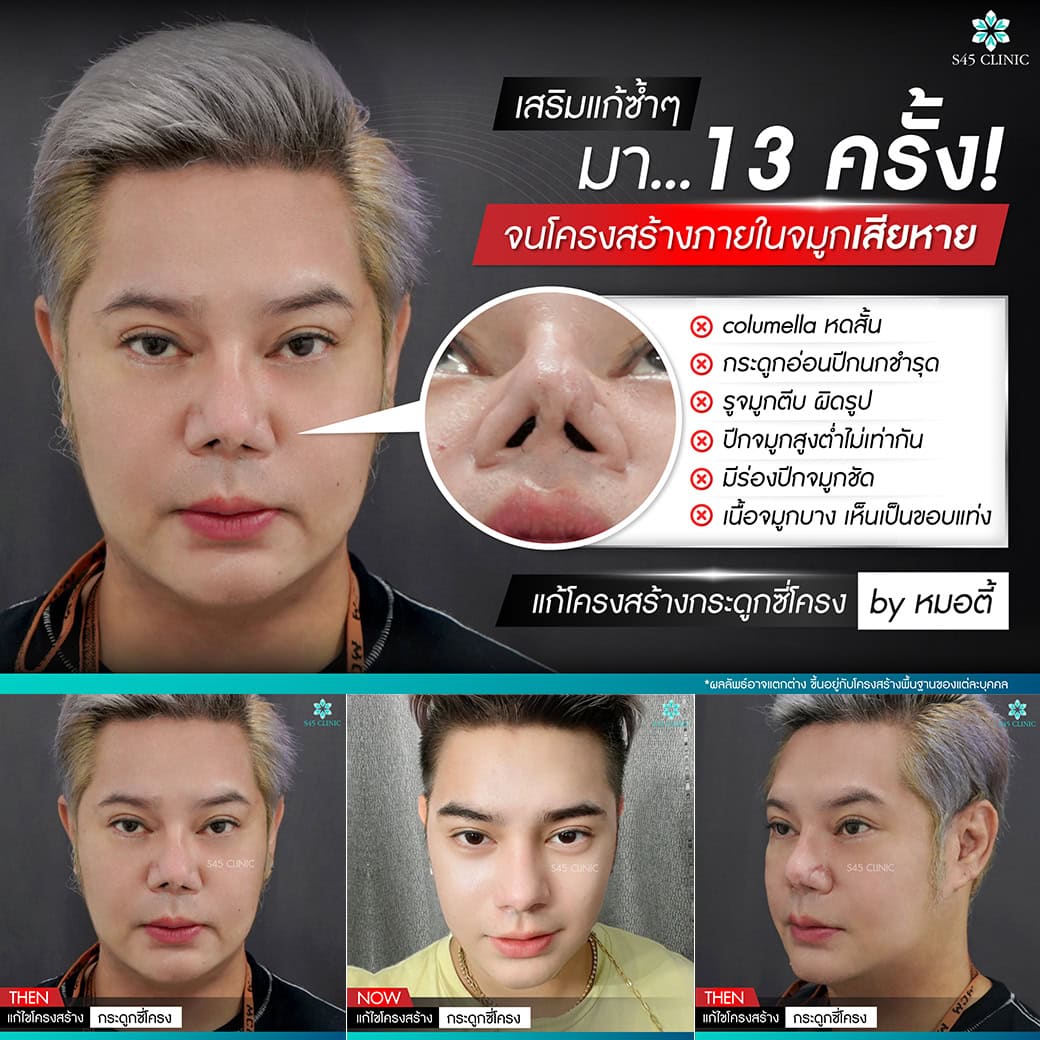
Revision rhinoplasty and structural rhinoplasty are part of looking after yourself if you have had problems from a previous rhinoplasty, or if you want to correct a nasal structure that was abnormal, such as a deviated septum, a crooked or tilted nose, a past nose infection, previous liquid injections, contracture from scar tissue or thin skin. If the wound is not cared for properly after surgery, it may lead to infection and other complications that affect your health.
After revision rhinoplasty or structural rhinoplasty to build your confidence and refine your appearance, looking after yourself after surgery properly matters just as much.
Structural rhinoplasty is more complex surgery than standard rhinoplasty, so the surgical wounds are larger and may be more visible. There are 2 main wound sites: the base of the nose between the 2 nostrils, and the rib area or behind the ear, depending on the technique the surgeon chooses. If the wounds are not cared for correctly, this may lead to problems such as:
- infection, with an inflamed, red, swollen, painful and hot wound, pus or the wound opening up, which can affect the corrected nasal structure
- slow wound healing, where the wound does not close, which raises the chance of complications later
- getting the wound wet, which can slow healing and cause the tissue to break down
How to Care for Your Nose Wound After Revision Rhinoplasty to Help Prevent Infection and Scarring
Self-care is divided into 3 stages.

1. Recovery Period (First 1 to 7 Days)
The first week after revision rhinoplasty or structural rhinoplasty is about looking after yourself to prevent infection. During this time:
- For the first 48 to 72 hours after surgery, use cold gel packs and sleep with your head raised on a high pillow to reduce bruising, swelling and pain.
- Gently clean the wound with a cotton bud dipped in saline twice a day, morning and evening. Do not clean it more often, as this may make the wound soggy.
- Apply medicine as advised by the doctor.
- Avoid touching, picking or scratching the wound unless necessary.
- Avoid blowing your nose hard, as this increases pressure inside the nasal cavity. If you have a runny nose, dab it gently.
- Avoid pickled and fermented foods, seafood, strongly flavoured food and alcohol.
- Do not smoke, and avoid being around people who smoke.
2. Healing Period (First 1 to 4 Weeks)
- After the nasal splint is removed, apply gentle warm compresses around the nose to boost blood circulation and reduce bruising and swelling.
- Clean the wound gently.
- Avoid strenuous activities and heavy exercise.
- Attend your follow-up appointments with the doctor.
3. Care to Help Reduce Scarring
Once the wound has started to heal, is dry and is no longer sore or painful:
- Gently massage the wound area to help the tissue under the skin smooth out and lower the chance of raised or keloid scars.
- Use a gel or cream that helps reduce the appearance of scars.
- Do not pick at scabs.
- Avoid wearing make-up until the wound has fully healed and closed.
- Do not wear glasses during the recovery period (as advised by the doctor).
- After revision rhinoplasty or structural rhinoplasty, it is important to look after yourself and follow the doctor’s advice carefully. Proper self-care helps lower risks and helps the wound heal well.