Who Does a Sloped Nose With a Projected Tip Suit, and What Should You Know Before Rhinoplasty?

A sloped nose with a projected tip suits people who want a nose shape that looks soft and defined without being too high or stiff, especially those who want the bridge to slope gently and the tip to lift slightly so that it suits the face as a whole. Before choosing this shape, it is important not to rely on reference photos alone, because each person’s result depends on their existing facial structure, nose length, soft tissue at the tip, nasal base and the technique that suits their case.
This article explains what a sloped nose with a projected tip is, who it suits, how it differs from other shapes and what should be assessed before rhinoplasty at S45 Clinic.
What Is a Sloped Nose With a Projected Tip, and What Look Does It Give?


Before choosing a sloped nose with a projected tip, it helps to understand that this shape is not only about height. The bridge and tip are designed to slope in balance so that they suit the face as a whole. You can recognise this shape from the following details.
Features of a Sloped Shape With a Projected Tip
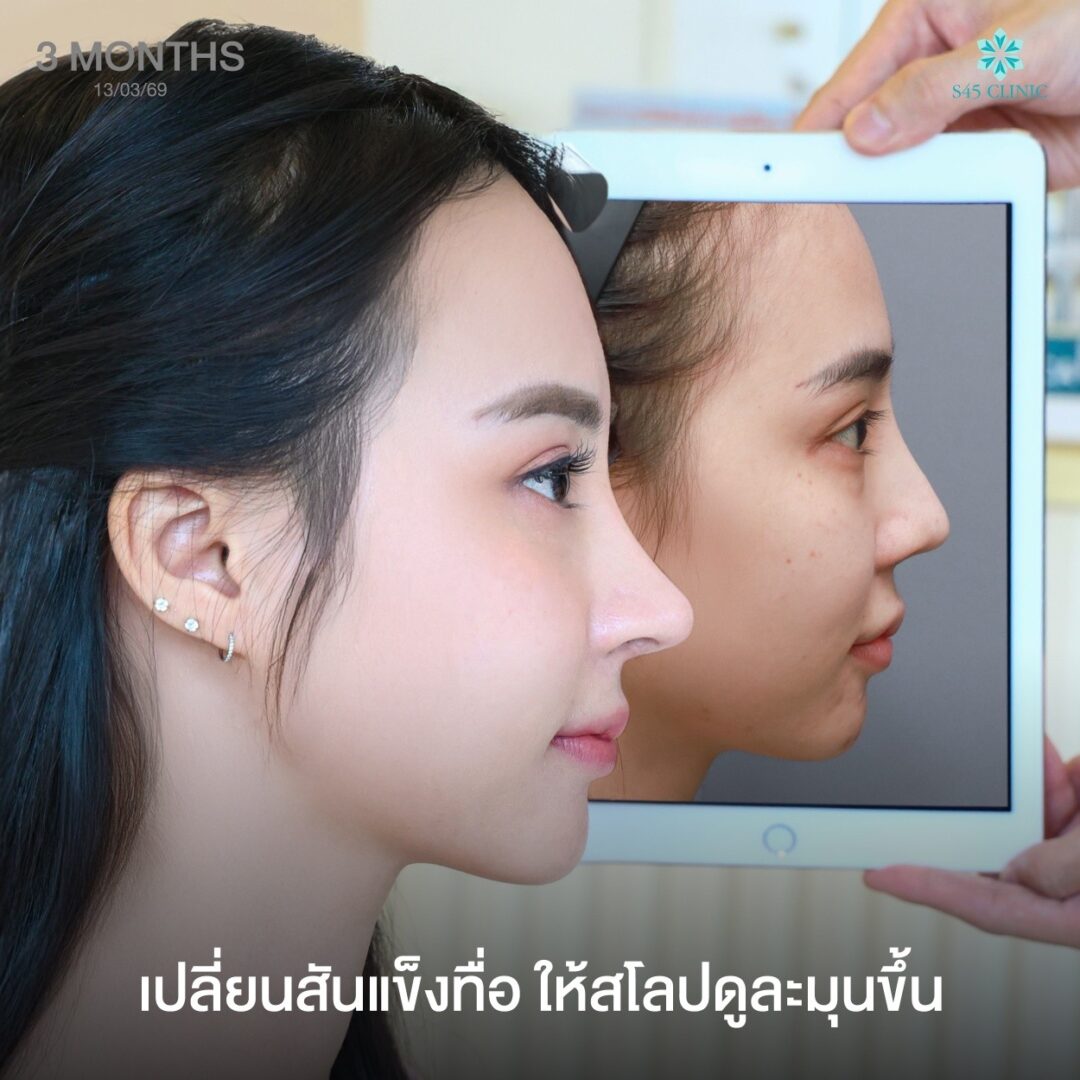
A sloped nose with a projected tip has a bridge that slopes gently from between the eyes down to the nasal tip, with a tip that lifts slightly. This gives the face more depth.
The key feature of this shape is that the bridge and tip are not overly upturned or projected, so many people choose it when they want a subtle nose shape that still has more definition.
The Look This Shape Gives, Soft, Subtle and Defined
This shape usually gives a softer look and a sweeter face, while keeping some definition at the bridge and tip. It suits people who do not want a very sharp shape, or who do not want the nose to stand out from the rest of the face.
Why This Shape Is Commonly Chosen
A sloped nose with a projected tip is commonly chosen because it gives a soft, defined look and can be adjusted to suit many face shapes. It focuses on a bridge that slopes gently and a tip that lifts by a moderate amount, so it suits people who want an attractive nose shape that still looks subtle. Have a surgeon assess your facial structure, nose length, soft tissue at the tip and nasal base before choosing a shape, so that it suits you as an individual.
How Does a Sloped Shape With a Projected Tip Differ From a Teardrop Tip, a Soft Rounded Shape and a Sharp, High-Bridged Shape?
Many people may be unsure how a sloped nose with a projected tip differs from a teardrop tip, a soft rounded shape or a sharp, high-bridged shape, because some of their features are similar. A basic comparison helps you understand the differences and choose a shape that suits your existing facial structure.
Sloped With a Projected Tip vs Teardrop Tip
The teardrop tip focuses on a nasal tip that looks longer and more rounded, while the sloped shape with a projected tip focuses on a gently sloping bridge and a tip that lifts by a moderate amount.
Sloped With a Projected Tip vs Soft Rounded Shape
The soft rounded shape usually focuses on softness, with a bridge that is not high or stiff and a tip that looks gentle. The sloped shape with a projected tip adds slightly more sharpness and definition at the tip. It suits people who want a subtle look but still want the nose to have a clearer shape.
Sloped With a Projected Tip vs Sharp, High-Bridged Shape
The sharp, high-bridged shape usually gives a sharper, higher and more clearly defined look. It suits people whose existing facial structure works well with a sharp, defined look. A sloped nose with a projected tip focuses on moderation, suits the face and does not make the nose stand out more than the rest of the face.
Which Face Shapes Suit a Sloped Nose With a Projected Tip?
Although a sloped nose with a projected tip can be adjusted to suit many faces, each person’s result may differ, depending on their face shape, existing nasal structure and how the bridge and tip suit each other.
A sloped nose with a projected tip can be adjusted to suit many face shapes, for example:
- round face, where it can help the face look more defined
- oval face, where it can add softness and suit the facial structure
- square face, where it may help the face look softer overall if the bridge and tip are designed in proportion
However, it should be assessed together with the forehead, cheekbones, chin and face length, so that the rhinoplasty suits your face, rather than choosing a shape from reference photos alone.
Existing Nose Features That Make This Shape Easier
Cases where this shape is usually easier to achieve are people who already have a reasonable bridge, good soft tissue support at the tip and a nasal base that is not too wide, because the surgeon can make the bridge and tip flow into each other more easily.
Skin and Soft Tissue Features That Affect the Result
People with enough soft tissue at the tip, skin that is not very thin and room to support the tip may be more suited to this shape, because the tip can more easily be adjusted to lift by a moderate amount. On the other hand, if there is little soft tissue at the tip or the skin is fairly thin, a detailed assessment is needed before choosing a shape.
Who Needs a Detailed Assessment Before Choosing This Shape?
Short Nose
People with a short nose may be able to have a sloped nose with a projected tip in some cases, but the surgeon needs to check how much the existing nose length can support. Adding too much to the tip may make it look tight or forced, so have a surgeon assess you before choosing a shape.
Thin Nasal Soft Tissue
Thin nasal soft tissue is an important factor, because a projected tip relies on the soft tissue at the tip for support. If the soft tissue is very limited, a very projected tip may not be suitable. Choose an amount of projection that suits your existing structure.
Large Nasal Tip
If you have a large nasal tip, the surgeon may need to assess whether the size comes from the soft tissue, the cartilage or the base of the tip, because some cases need the tip details refined as well so that the shape looks slimmer and suits the bridge.
Wide Nasal Base
If the nasal base is very wide, creating a sloped shape with a projected tip without also assessing the base may make the shape look out of balance with the face. The surgeon should look at the nasal base, the nostrils and the width of the alae (the sides of the nostrils) together before choosing a technique.
Why Might Some Cases Need the Open Technique?
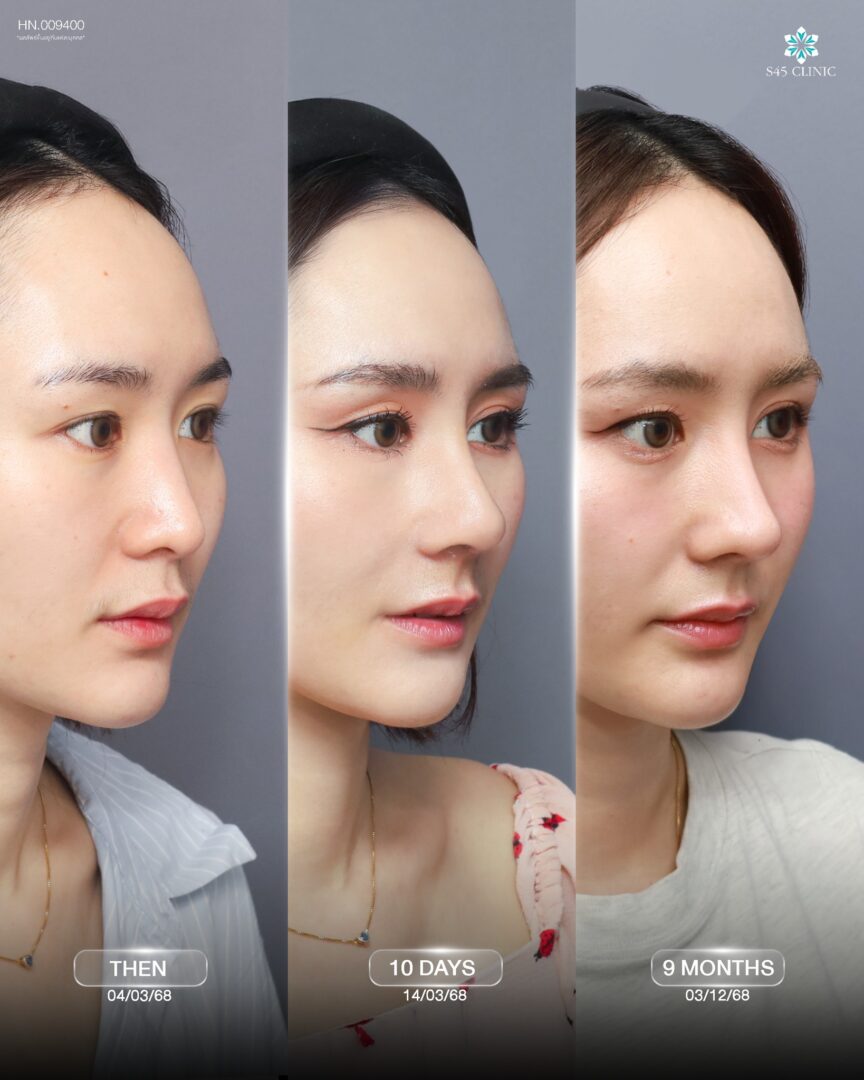
Creating a sloped nose with a projected tip does not depend only on the height of the bridge. It also involves the details of the nasal tip, such as the tip length, how projected the tip is, the soft tissue at the tip and each person’s existing structure.
In some cases, open rhinoplasty may be a technique the surgeon considers, because it gives a clearer view of the nasal structure and allows a closer assessment of the nasal tip, especially in cases with a short tip, a large tip, an uneven nasal base or limited existing soft tissue.
The Open Technique Helps Assess the Nasal Tip Structure in More Detail
If you want a sloped nose with a projected tip, the open technique may help the surgeon assess the nasal tip structure more clearly, to design the tip projection around the limits of your existing nose, without forcing the tip to project more than the soft tissue can support.
Some Cases May Also Need Cartilage
In some cases, the surgeon may also consider using cartilage at the nasal tip, such as ear cartilage, or in some cases open rhinoplasty with rib cartilage as needed, to help refine the details or add support at the tip. Not every case needs rib cartilage. It depends on the surgeon’s assessment of each person.
What to Know Before Choosing a Sloped Shape With a Projected Tip
Limits of This Shape in Some Cases
Although a sloped nose with a projected tip is a commonly chosen shape, some cases may have limits, such as a very short nose, little soft tissue at the tip, thin skin, a wide nasal base or previous nose surgery. Have a surgeon assess you before choosing a shape.
Approximate Recovery Time
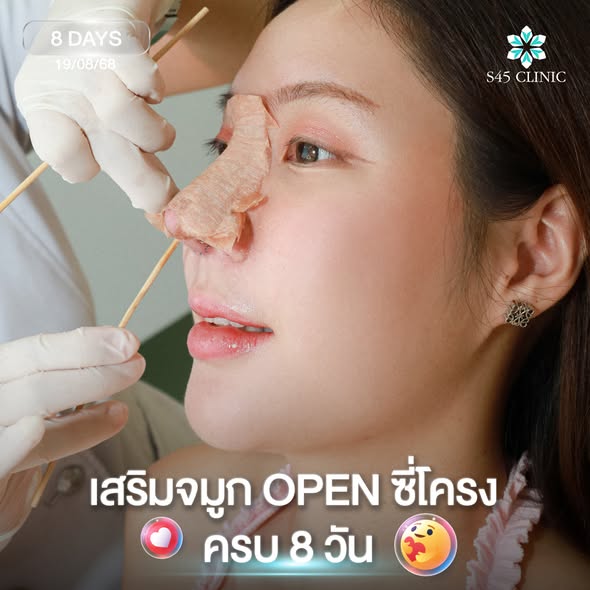
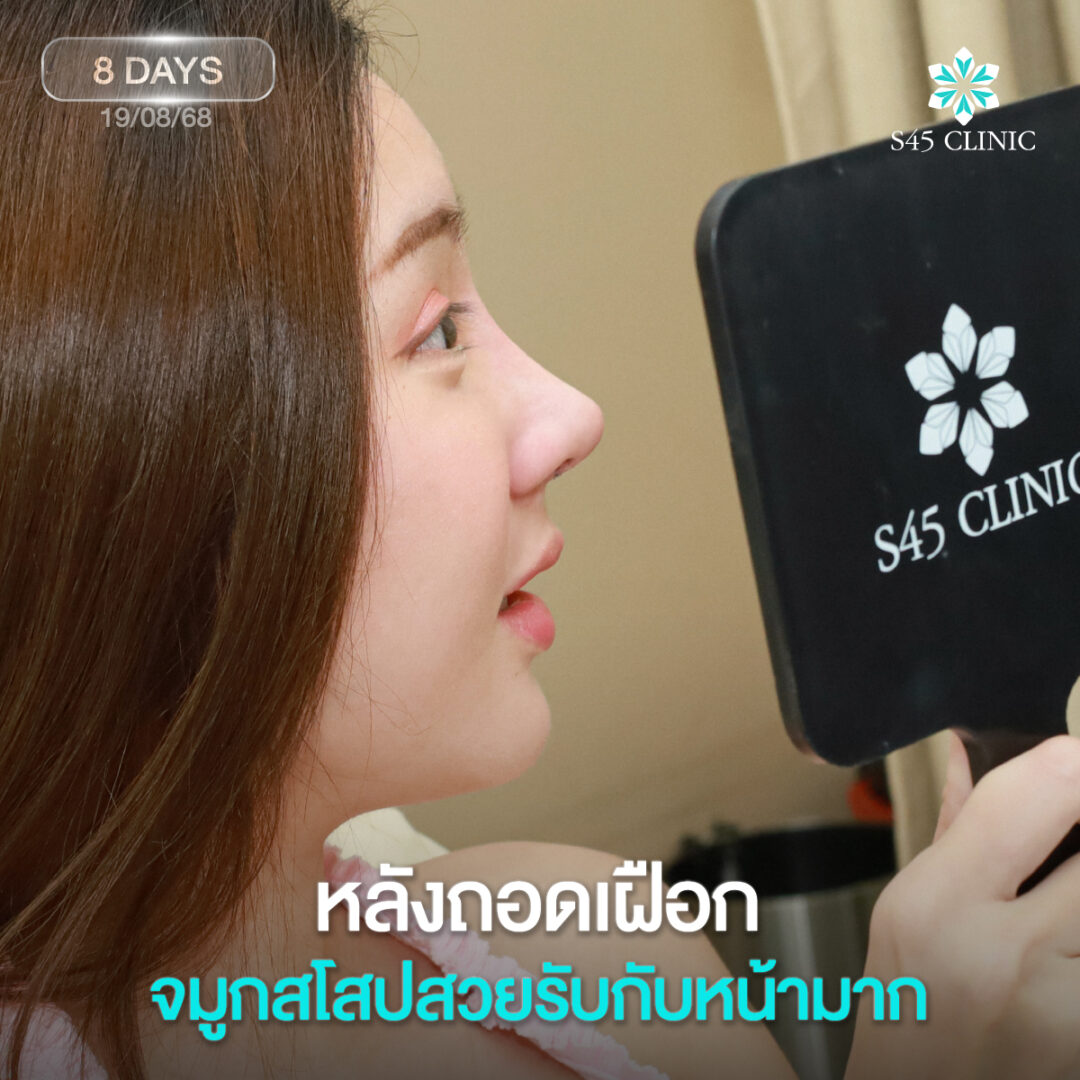
Recovery differs from person to person. In general, it can be divided as follows:
- days 1 to 7, when you may have more swelling and bruising than at other times
- around 1 month, when the swelling usually goes down gradually and the shape starts to become clearer
- around 3 to 6 months, when the nose shape usually settles further
Recovery time depends on the technique used, your skin, your aftercare and each person’s body.
Factors That Affect the Price
The price of rhinoplasty may vary with several factors, such as the technique used, how complex the case is, the materials chosen, whether cartilage is also used and the surgeon’s experience. Have a surgeon assess you before the approach and cost are confirmed.
How a Sloped Nose With a Projected Tip Is Designed at S45 Clinic


At S45 Clinic, designing a sloped nose with a projected tip starts with an assessment of your existing nasal structure and your face as a whole. The surgeon at S45 Clinic looks at several factors, such as the height of the bridge, your existing nose length, the soft tissue at the tip, the nasal base, the width of the alae and what you want.
The surgeon then considers whether your case suits open rhinoplasty or another suitable technique, so that the shape suits your face and does not force your existing nasal structure too much. The key point is that the shape is not chosen from reference photos alone, but adjusted to suit each person.
Summary, Who Does a Sloped Nose With a Projected Tip Suit?
A sloped nose with a projected tip suits people who want rhinoplasty to give the face more depth, while keeping a soft look that is not stiff and a subtle nose shape. The key is to choose a shape that suits your existing nasal structure, not one chosen from reference photos alone.
If you want an attractive nose shape that suits your face, you can book a consultation with a surgeon at S45 Clinic to assess your existing nasal structure, nasal tip and soft tissue, and to choose open rhinoplasty or another technique that suits your case.
Note: Results depend on your existing nasal structure, soft tissue, skin, the technique used and the surgeon’s assessment of each person.