Forehead Augmentation for a Small, Flat or Sunken Forehead
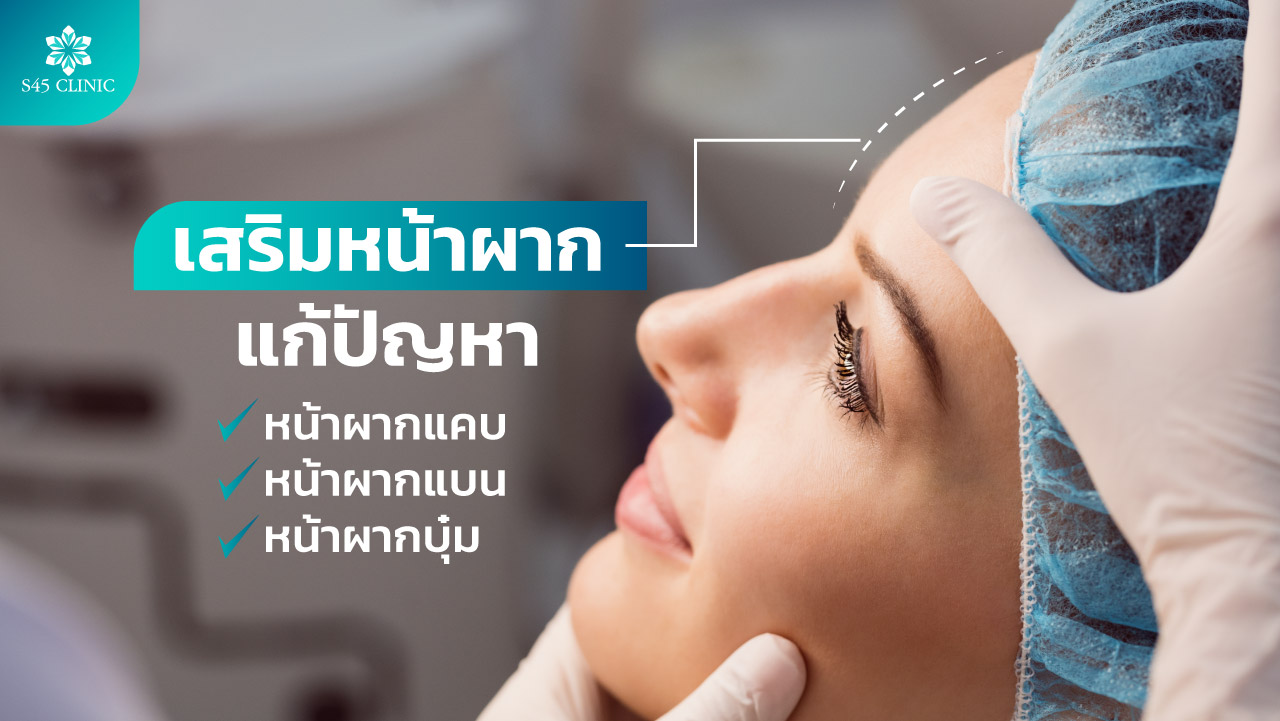
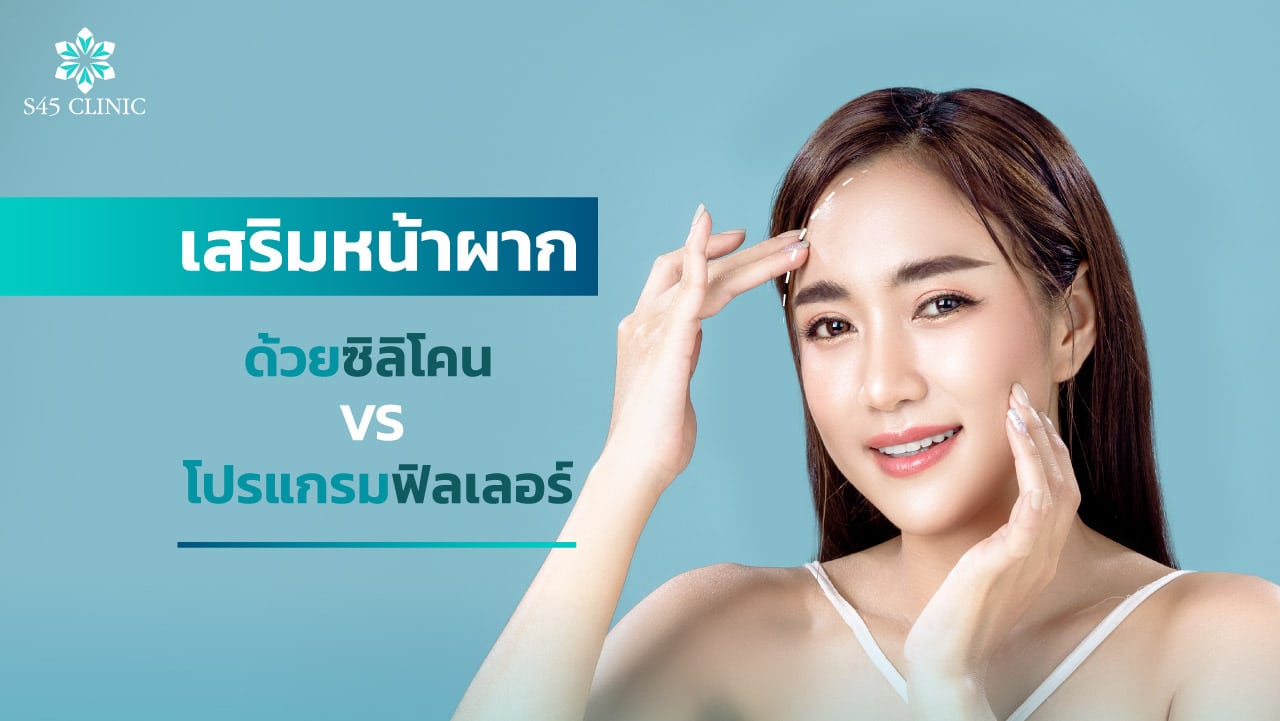
There is no denying that people today take more photos and want good-looking pictures to post on social media and other platforms to attract attention. Many people use their face, photos and videos to earn a living, so they want their face to have more definition and look good from every angle, both for their own confidence and to make a strong impression. Plastic surgery is one option many people think of. Forehead augmentation is one choice that can help give the face better proportions, boost confidence and address an unbalanced face, a narrow forehead, a sunken forehead, a flat forehead or a forehead that does not look full.
How Many Types of Forehead Augmentation Are There?
Forehead augmentation is divided into 2 main methods: liquid injections, and surgery to place a silicone implant. Both aim to reshape the forehead so it is in proportion with each person’s face.
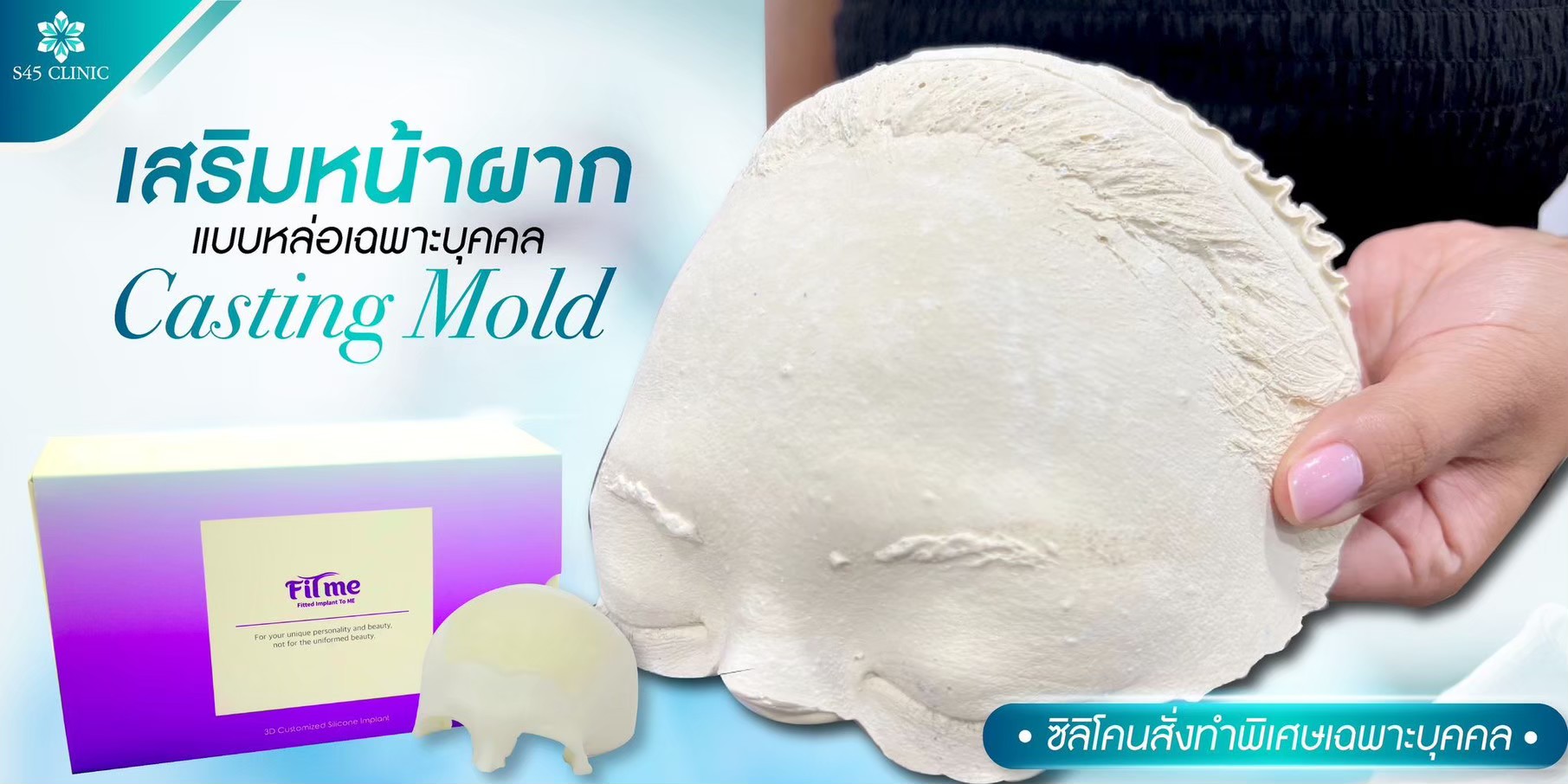
S45 Clinic offers forehead augmentation with the 4D CT FIT and Casting Mold techniques, using silicone implants made to order in Korea from implant-grade material. Each implant is made for one person, with thin edges that sit smoothly on the forehead. Surgery is done by experienced doctors, who place the implant under the periosteum (the membrane covering the bone) to lower the risks related to the implant, with the incision hidden under the hairline.
*The silicone implant is moulded for each person to match the proportions of their forehead. The doctor considers how prominent the forehead should be for your proportions and discusses what you want, so the plan matches your expectations.
Benefits of Silicone Forehead Augmentation
- It does not need top-ups. The silicone implant sits under the periosteum and is held in place by the tissue that forms around it, which helps stop it from moving.
- It adds fullness to the forehead with a smooth contour, and may help reduce fine lines on the forehead.
- Allergy to silicone is rarely seen.
Drawbacks of Silicone Forehead Augmentation
- You need time to recover and must take care during the first month after forehead augmentation.
- The result may not suit your face if the surgeon is not experienced, or if the forehead is made too prominent for your facial proportions.
- If you have thin skin on your forehead, the 4D CT FIT technique is recommended to lower the chance of the edges showing in the long term.
- You may see a small surgical scar on the scalp.
4D CT FIT, a Personalised Forehead Augmentation Technique
Forehead augmentation to achieve the shape you want uses a custom-designed silicone implant together with 3D images from a CT scan, a technology that analyses your bone structure to plan a suitable amount of fullness. With this technique, the silicone implant sits smoothly against your skull, so it blends with the shape of your forehead.

Steps of 4D CT FIT Forehead Augmentation
- Send front and side photos of your face to our team for an initial assessment, and we will book an appointment with the surgeon for advice and a consultation.
- After the consultation, if you and the doctor agree on the expected result, the doctor will arrange a CT scan for a full assessment.
- You have the CT scan at a location the clinic arranges.
- The clinic then sends the forehead design to Korea to make the silicone implant, which takes about 14 days.
- When the silicone implant arrives, the clinic books your surgery in advance and tells you how to prepare, such as stopping vitamins or supplements.
- Surgery is performed by an experienced doctor.

Casting Mold Forehead Augmentation Technique
Forehead augmentation with a silicone implant based on a plaster cast of your skull, which is sent to Korea to make the implant to order. The doctor designs a suitable size for each person’s concerns.
Looking After Yourself After Forehead Augmentation
- Use cold compresses around the head often after forehead augmentation to help the blood clot faster and reduce swelling and bruising. After that, switch to warm compresses.
- Avoid sleeping on your side. Sleep with your head raised or sleep sitting up, using a neck pillow for support, so your face is not knocked or rubbed against anything while you sleep, for at least 1 to 2 weeks.
- In the first 3 to 7 days, you may have swelling or bruising around the area, which is normal.
- Avoid touching your forehead for 1 month.
- Do not let the surgical wound get wet. Avoid washing your face and hair for at least 7 days or until the forehead stitches are removed. After that, you can wash your hair gently. To clean your face, wipe it with cotton wool or a damp cloth, and take great care not to touch the wound.
- Keep the bandage wrapped around your head for the first 3 days without removing it, and have it changed at the clinic on day 4. Keep it on for another 7 days after that.
- Your stitches are removed 10 days after forehead augmentation, or when your doctor schedules.
- Avoid exercise for at least 1 month.
- Eat healthy food. For at least 1 month, avoid foods traditionally avoided after surgery in Thailand, pickled and fermented food, undercooked food, spicy food, seafood, salty food that may cause swelling, and hard food that needs a lot of chewing.
- Avoid alcohol and smoking for 1 to 3 months.
- If you have unusual symptoms, such as ongoing pain, swelling or redness, contact the clinic promptly and see the doctor to check your symptoms.
- Go to every appointment with your doctor.
Forehead Augmentation Results With the 4D CT FIT Technique


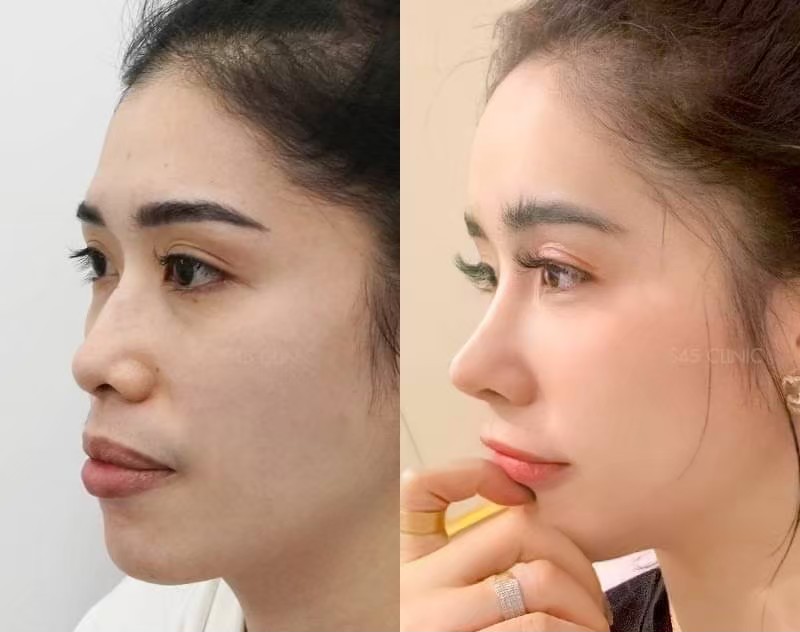
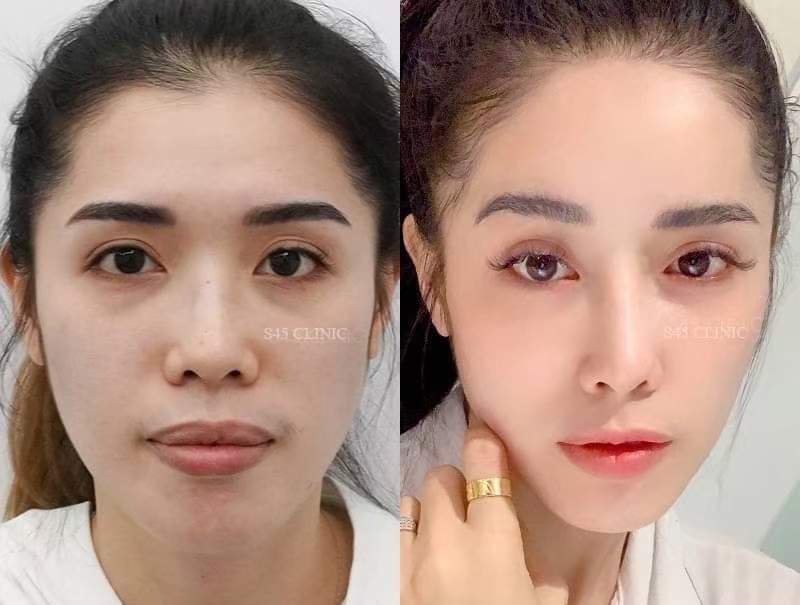
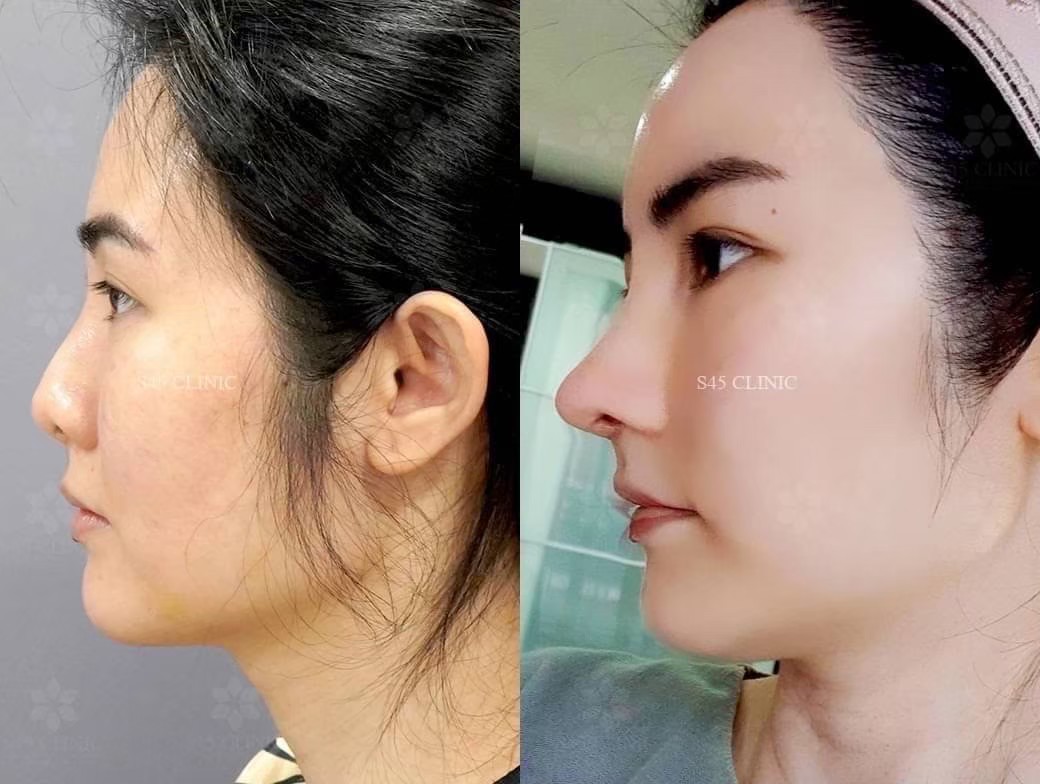
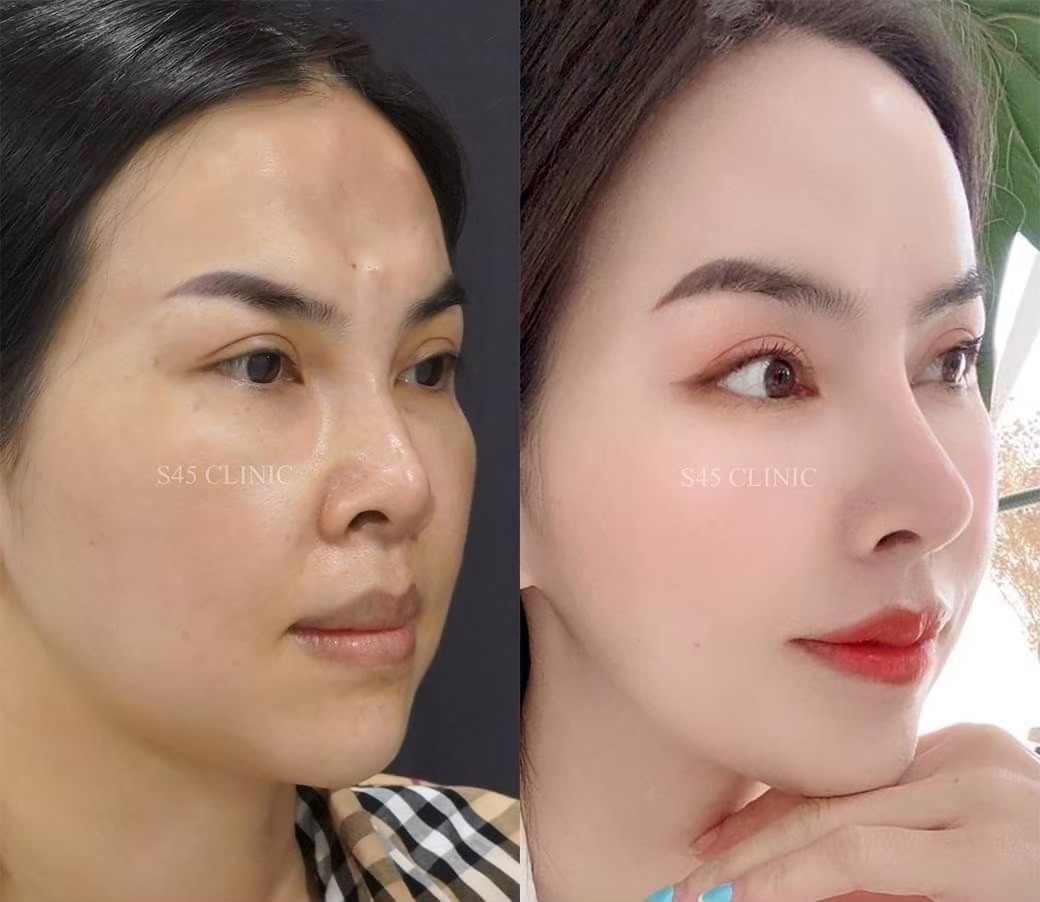

Interested in forehead augmentation? Consult us for an initial assessment before you see the doctor, with individual advice on what suits you at S45 Clinic