A nose with a raised bridge, a high dorsal hump and a droopy nasal tip is known as a hooked nose, or hawk nose. This nose shape can make the face look stern and out of balance. It can be inherited or caused by an accident that breaks the nasal bones out of shape, and it is found in both women and men.
How to Tell If You Have a Hooked Nose
the bridge curves or bulges out when seen from the side
the bridge is clearly visible when seen from below
the nose looks slightly crooked when seen from the front
you can feel a bump on the bridge, or a dorsal hump
If you want to reshape your nose to look smooth and suit your face, this can be done with several reshaping techniques, chosen according to each person’s nasal structure. The surgeon mainly considers the cause of the problem and the structure of the face. For example, a curved bridge can be corrected by shaving down the prominent bone until it is smooth and lowering the bridge so it is in better balance with the face. For people with a very curved bridge, the surgeon may use rasping or shave the bone and narrow the base of the side bones so the nose is slimmer and better proportioned.
A well-shaped nose needs to suit the face from every angle, from the front, the side and below.
A hooked nose can be reshaped using open rhinoplasty, which allows detailed correction of the nasal structure, with rhinoplasty materials chosen to suit each case, and the tip adjusted to lift slightly. This gives a softer look that suits the face from the forehead down to the tip.
At S45 Clinic, rhinoplasty for a hooked nose aims to give good proportions and balance with the face. You can choose from several shapes, depending on the surgeon’s assessment and your own preferences.
When revising a nose with problems, using silicone implants alone does not meet both appearance and long-term safety needs. Many past cases have needed another revision because the silicone did not fit the structure, the surgeon who did the previous rhinoplasty had little experience, and other reasons. This can lead to tip extrusion, a tight, pulled tip and other problems.
S45 Original revision rhinoplasty by Dr. Ty by Dr. Ty (นายแพทย์กิตติศักดิ์ วงค์เทียนชัย, ว.35602) using the open rib technique, based on 15 years of rhinoplasty work at S45 Clinic, one of the clinics using the open rib technique in Thailand. Dr. Ty analyses each person’s facial structure and nasal problems to suit Asian faces.
A reshaped nose needs to look good, have a strong structure and suit each person’s face.
Note: Repeat nose surgery, which many people know as ‘nose reshaping’, is surgery for people who have had nose surgery before and want a further assessment by a surgeon. The approach to care depends on the original problem, the nasal structure and the surgeon’s judgement in each case.
S45 Clinic, Soi Sukhumvit 33, Bangkok. This article is published by S45 Clinic as general information and is not a medical diagnosis. Please see a doctor for an assessment before receiving any treatment.
Breast augmentation and rhinoplasty can be done at the same time in some cases, depending on your health, the length of the operation, the general anaesthetic and the surgeon’s assessment of each person.
Where to have open rhinoplasty in Thailand. Learn what open rhinoplasty is, the techniques used, what to assess before surgery and how the nose structure is planned at S45 Clinic.
What causes nasal tip ptosis (a droopy nasal tip) after rhinoplasty? Learn how the nose structure, old material, scar tissue and aftercare play a part, and what to consider before you decide.
Nasal osteotomy (reshaping the nasal bones) is a surgical technique that uses specialised instruments to move in or cut the bones at the base of the nose so that they become narrower or smoother…
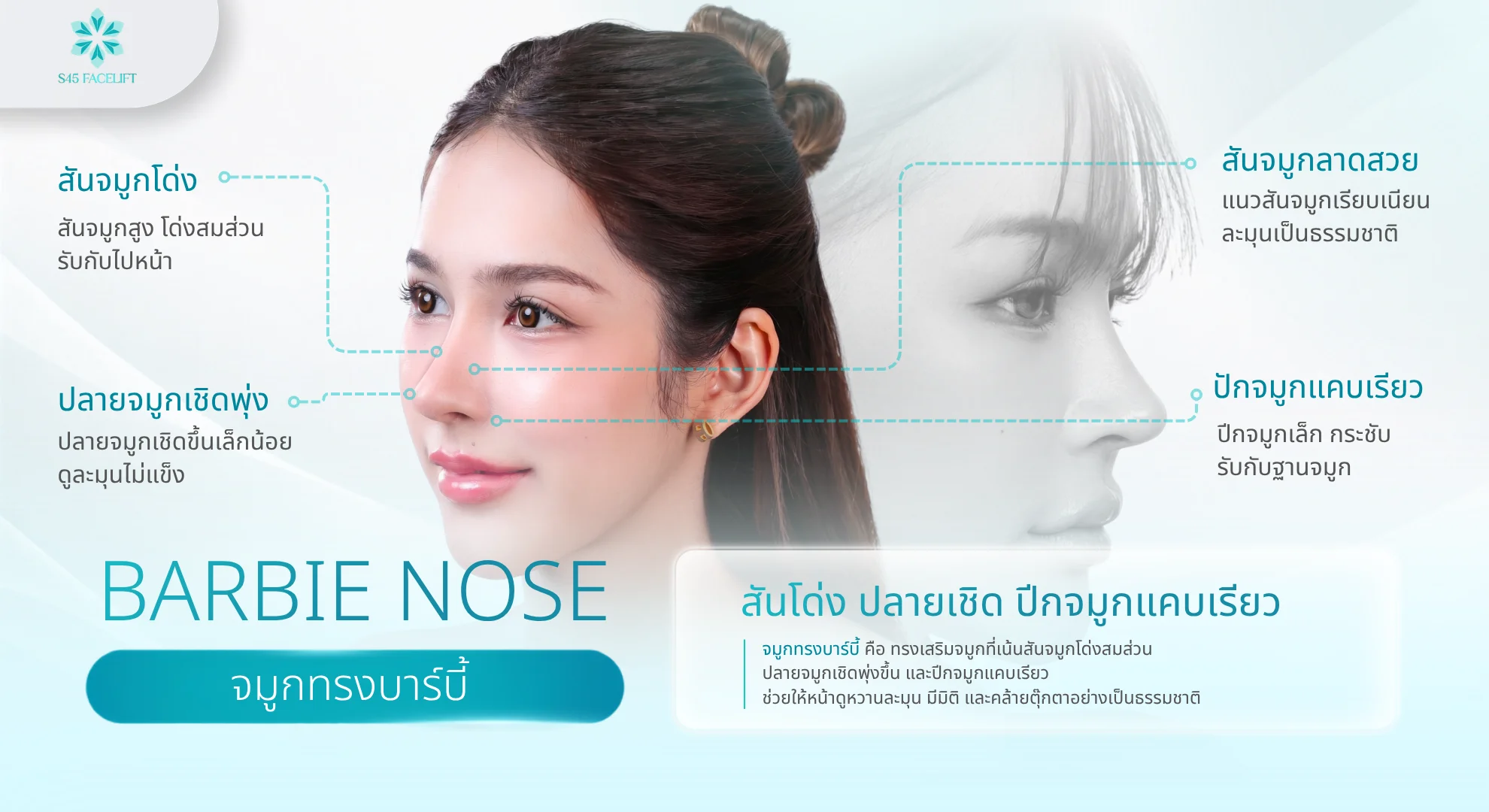
A Barbie nose is a rhinoplasty shape inspired by the Barbie doll. Its key features are a high bridge, an upturned and projecting tip and narrow, slim alae (the sides of the nose), giving the face a sweet, doll-like look.
What causes a short, contracted nasal tip, a hollow alar crease or an asymmetrical alar base and alae, and what a surgeon assesses before planning surgery.