Thin Skin Rhinoplasty, Which Nose Shape Suits Thin Nasal Skin and How to Match It to Your Face

People with thin nasal skin and little soft tissue often ask similar questions. Can they still have rhinoplasty? If they want a more projected tip or a longer-looking nose, how much can be done? In fact, rhinoplasty can still be planned in many cases of thin nasal skin, but it is important not to choose a shape from example photos alone, because the amount of nasal soft tissue, skin elasticity, original nose length and nasal tip structure differ from person to person.
If you have a short nose with thin skin, or you are worried that your nasal tip cannot take much reshaping, an assessment by a surgeon is an important step. It shows whether a soft shape, a tip of suitable size or a technique that supports the structure is needed, such as open rhinoplasty, or using some cartilage as well. This article looks at which shapes suit thin nasal skin and what to know before deciding.
What Is Thin Nasal Skin, and How Can You Check for It Yourself?
Thin nasal skin describes a nose where the soft tissue over the bridge or tip is fairly thin, stretches only a little, or leaves limited room to support a new shape. When planning rhinoplasty, extra care is needed with the height, projection and length of the nasal tip.
Signs of Thin Nasal Skin You May Notice

Signs you may notice include a flat or thin-skinned bridge, a short nasal tip, a tip that feels tight easily, fairly thin skin over the tip, or a feeling that the tip is pulled more than usual when you smile. Some people may also have a short nasal base, so a shape that is very long or very projected may not suit their existing structure.
How to Check Yourself First
You can check roughly in 3 ways. Look in a mirror from the side to see the length of your nose, feel the bridge and tip to judge how thick the soft tissue is, and take photos from the front, the side and at a 45-degree angle to see how much room the bridge, tip and base have for reshaping.
However, these are only first checks. Have a surgeon assess your actual nasal structure before planning.
Nose Shapes That Suit Thin Nasal Skin
People with thin nasal skin do not always need a very high nose shape. The key is to choose a shape that works with the existing soft tissue, does not force the tip and suits the face as a whole.
Soft Sloped Shape With a Well-Proportioned Tip

This shape suits people who want a subtle look. The bridge slopes gently and the tip is not overly projected, so the skin covering it is not put under much tension. Among the basic shapes, it is often one that thin nasal skin can accommodate. It suits oval or heart-shaped faces.
B-Nose Shape

A short nose with thin skin often needs the tip lengthened so the nose looks longer, together with a higher bridge. The B-Nose shape, with a rounded tip of suitable length, helps the face look more balanced. The surgeon uses cartilage to support the structure together with a silicone implant to reach the planned shape.
S45 Original Shape by Dr. Ty
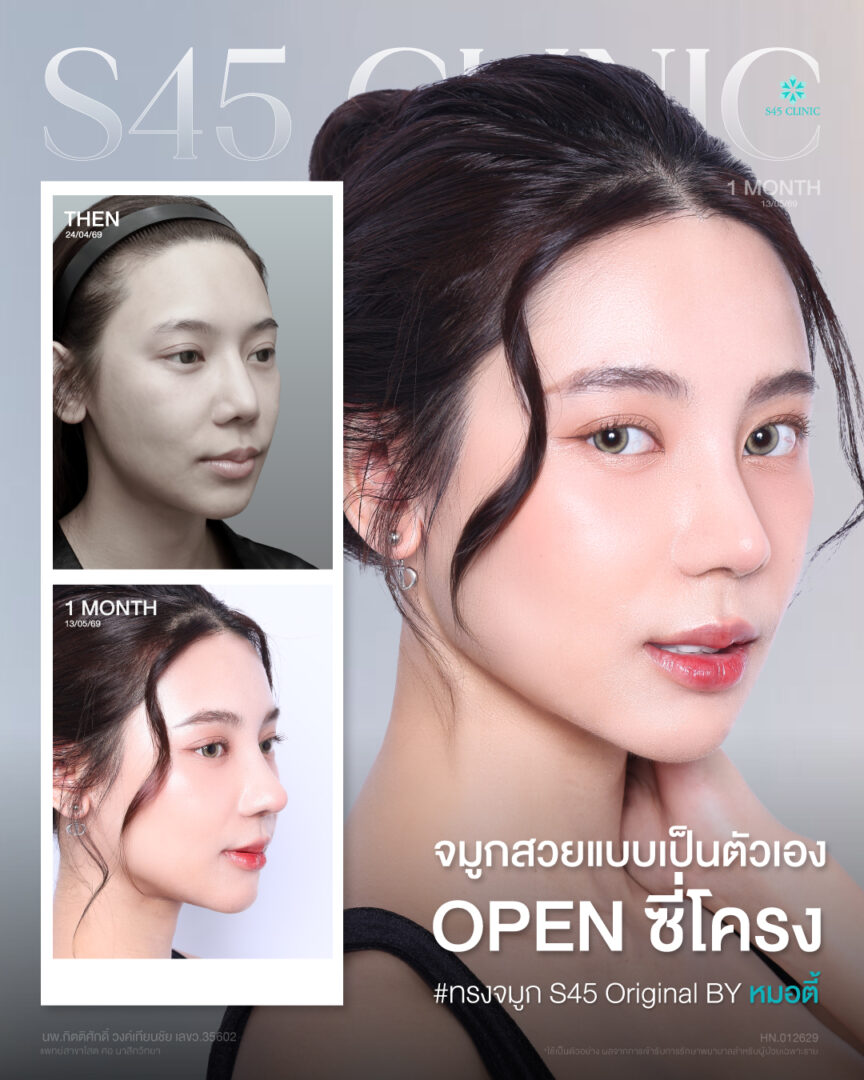
The S45 Original shape by Dr. Ty (นายแพทย์กิตติศักดิ์ วงค์เทียนชัย, ว.35602) is designed around the facial structure of Asian faces. It focuses on a height that blends with the face and a tip that looks softer, not stiff or overly projected. The surgeon assesses the bridge, the nasal base, skin elasticity and the tip structure to plan a shape that suits each case.
Open Septorhinoplasty and the Materials Used for Thin Nasal Skin
In some cases of thin nasal skin or a limited nasal tip structure, a silicone implant alone may not meet your needs. The surgeon may also consider a technique that helps assess and support the nasal tip structure.
What Is Open Septorhinoplasty, and How Does It Suit Thin Nasal Skin?
Open septorhinoplasty is an open surgical approach that lets the surgeon assess the nasal structure in more detail and plan how to align the septum or support the nasal tip as needed. It suits some cases that need the tip reshaped or lengthened, or where the existing nasal soft tissue is limited.
Open vs Closed Rhinoplasty for Thin Nasal Skin
The closed technique usually suits cases that need only small changes to the bridge and have enough soft tissue to support them. Open rhinoplasty suits cases where the nasal tip structure needs a more detailed assessment, such as a short nose, a tight tip, thin skin or a limited nasal base. The technique should be chosen from your actual structure, not from the name of the technique alone.
When Are Ear Cartilage, Septal Cartilage and Rib Cartilage Used?
Materials used to build up and support the structure in thin skin rhinoplasty can come from several places. The surgeon considers how much material is needed, the shape of the nasal tip, skin elasticity and each person’s existing nasal structure.
- Ear cartilage is considered when a small amount of cartilage is needed to support or build up the nasal tip. The wound is behind the ear, so it is usually hard to see. Recovery depends on wound care and each person’s health.
- Septal cartilage is cartilage inside the nose. It can be used with open rhinoplasty in some cases, because the surgeon can assess it and use it to plan support for the nasal tip structure as needed.
- Rib cartilage is considered when more material is needed, such as for a short nose with thin skin, or when cartilage from other places is not enough to build the structure.
The use of rib cartilage should be assessed by a surgeon for each person, because the wound position, aftercare and recovery time differ from case to case.
How Projected Can the Tip Be?
A common question from people with thin nasal skin is “Can I have a more projected tip?” The answer is that how much can be done differs from person to person. If the soft tissue over the tip stretches only a little, the surgeon may suggest a tip of suitable size that does not force the tissue, and focus on building a structure that matches your existing nose rather than only adding projection.
Limits and What to Know Before Deciding
Before planning thin skin rhinoplasty, understand your own limits so that you can choose a more suitable shape and technique.
Results Depend on Each Person, and Shapes to Avoid
People with thin nasal skin should be careful with shapes that are very high, have a very long tip or are more projected than their existing structure allows, because these may make the tip too tight. A suitable shape suits the face, has a moderate height and does not add too much tension around the tip.
Approximate Recovery Time
In general, after rhinoplasty you may have swelling and bruising in the first 1 to 3 days. At around 5 to 7 days there may be a follow-up visit or stitch removal, depending on the surgeon’s plan. At 2 to 4 weeks the swelling usually goes down gradually, and at 1 to 3 months the shape starts to settle in part. The settling of the soft tissue and the finer details of the tip may take several months.
Results depend on each person, and the timing may differ.
Factors That Affect the Price
The price of thin skin rhinoplasty may vary with how complex the case is, the technique used and the materials needed, such as ear cartilage, septal cartilage or rib cartilage, as well as the plan made with the surgeon for each case. An assessment first lets you know the suitable approach and a clear cost.
Planning Thin Skin Rhinoplasty at S45 Clinic
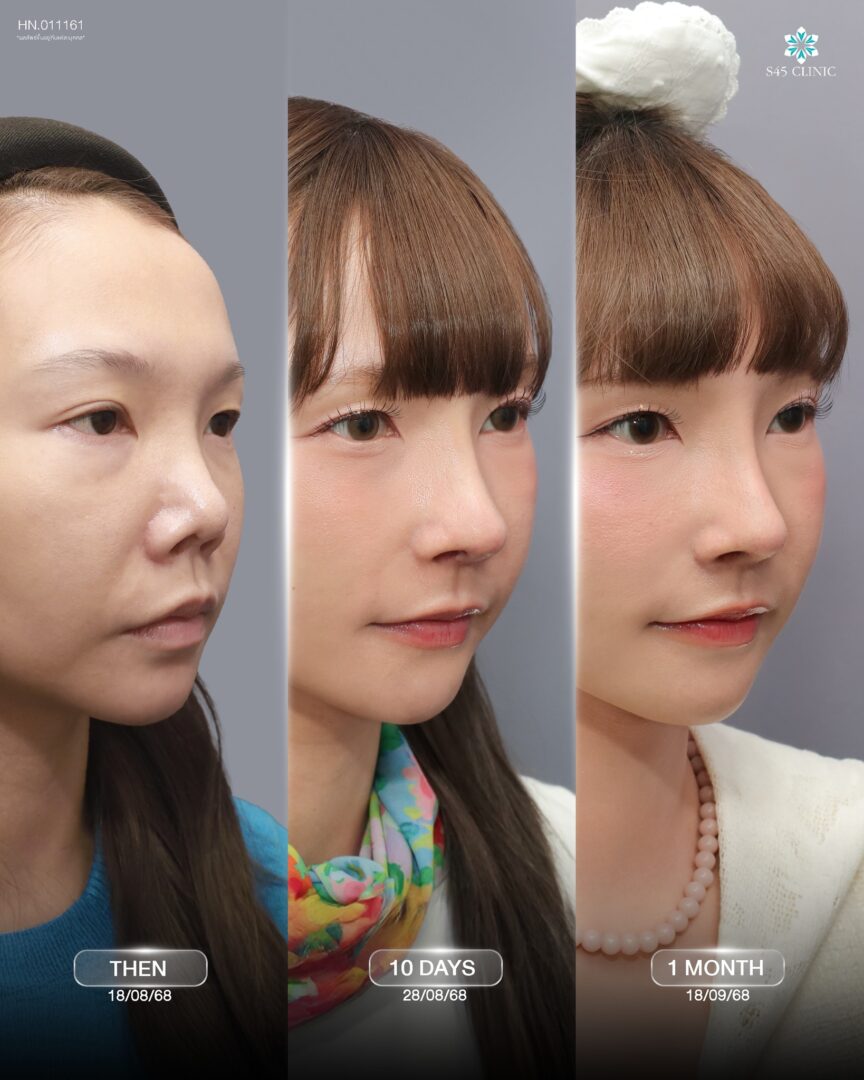
At S45 Clinic, when the surgeon plans for someone with thin nasal skin, they start by assessing the overall face and checking the elasticity of the nasal skin, the length of the nasal base, the bridge and the nasal tip structure. The surgeon then explains the suitable approach, such as which shape to choose, whether open rhinoplasty is needed and whether extra materials are needed to support the structure, so that the nose shape is designed to match each person’s features.
Frequently Asked Questions
If you are worried about thin nasal skin or unsure which nose shape suits you, you can book a consultation with a surgeon at S45 Clinic to assess your nasal structure and plan a shape that suits your face.