Sagging Face, What Can You Do? Ways to Lift and Firm the Face, From Self-Care to Procedures

As they get older, many people notice that their face has started to sag, the smile lines are deeper or the jawline is less defined than before. They search for what to do about a sagging face to make it firmer and look more youthful again, and there are now so many options that many people feel confused.
Key points
- A sagging face is caused by the loss of collagen and elastin with age, together with gravity, sunlight and lifestyle.
- Self-care, such as using sunscreen, keeping the skin moisturised and getting enough rest, can help slow down and prevent sagging, but it does not clearly lift skin that has already sagged.
- Non-surgical procedures, such as HIFU, micro-focused ultrasound, Thermage, collagen-stimulating injections, filler injections, botulinum toxin injections and thread lifts, can firm the skin to different degrees and give temporary results.
- Lifting surgery, such as an endoscopic brow and forehead lift, suits cases with clear sagging where you want a longer-lasting result.
- No single method suits everyone. The choice should depend on how severe the sagging is, where it is, your age and your goals, with a doctor assessing you.
- Results and how long they last vary from person to person, so have a consultation with a doctor to plan treatment for you.
This article explains, simply and plainly, what causes sagging skin, self-care and creams, non-surgical procedures such as HIFU, micro-focused ultrasound, Thermage, filler injections and botulinum toxin injections, and lifting surgery, with a comparison of who each option suits, to help you choose an approach that suits you with confidence.
In This Article
What Is a Sagging Face and How Can You Tell?
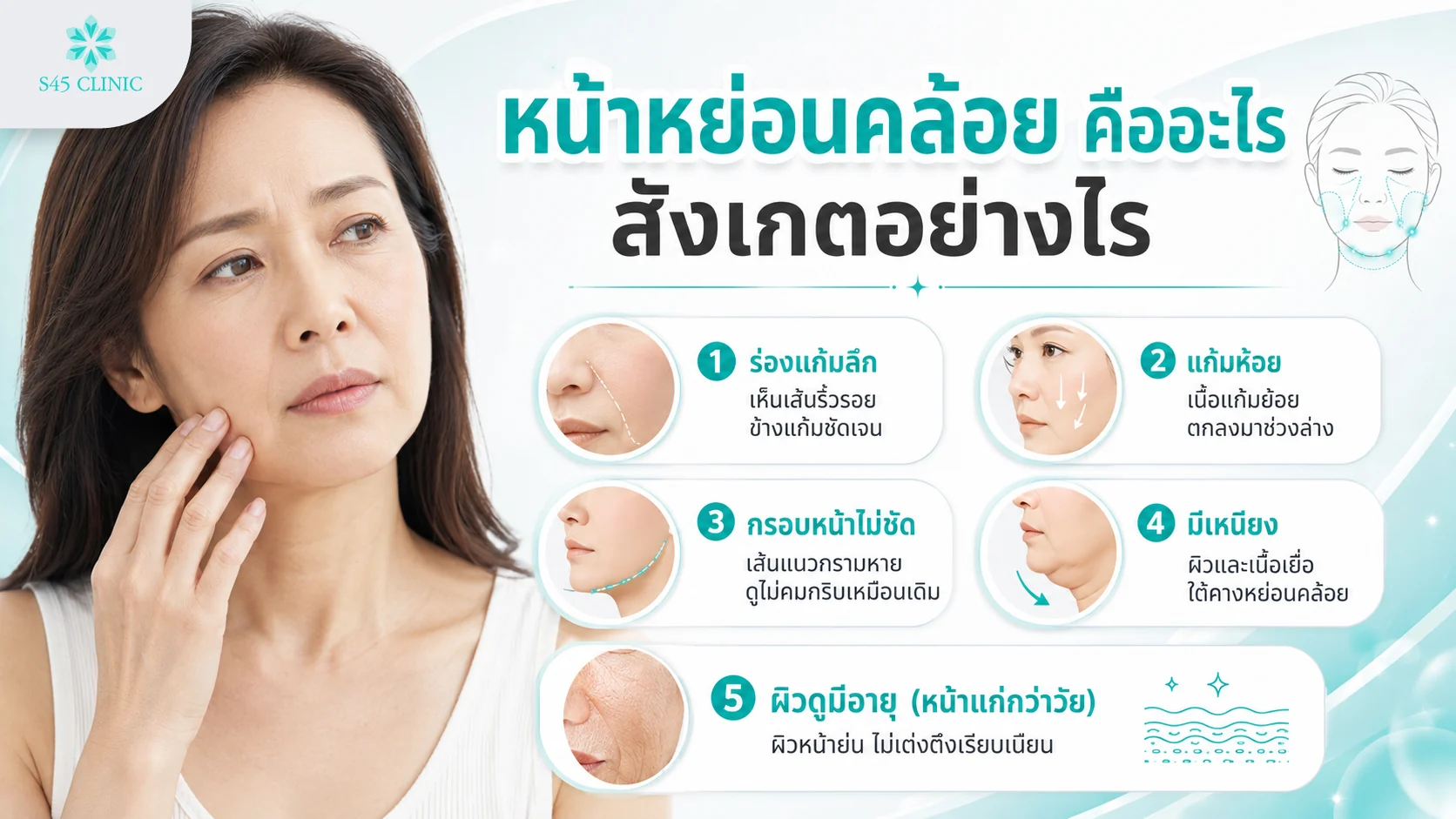
A sagging face, or sagging skin, is when the skin and tissue of the face lose their firmness and drop with gravity, so the face does not look as taut as before. Signs you may notice include deeper smile lines, sagging cheeks, a less defined jawline, loose skin under the chin (a double chin) or skin that is not as smooth as before.
Many people call cheeks that have dropped towards the jawline ‘sagging cheeks’ or jowls, while others notice lines and wrinkled skin that make them look older than their age. These are age-related changes in the skin that are found as people get older.
Understanding which areas of your face have sagged and by how much helps you choose the right care, because each area and level of severity suits a different method.
What Causes a Sagging Face?

Many people search for what causes a sagging face and why facial skin sags with age. In general, several factors work together, including:
- the loss of collagen and elastin with age, which are the structures that keep skin firm and elastic, so when they decrease, the skin sags
- gravity, which pulls tissue that has started to sag downwards over time
- sunlight and UV rays, an important factor that speeds up the breakdown of collagen and makes skin age faster
- lifestyle, such as not getting enough rest, stress, smoking and losing weight quickly
- genetics and facial proportions, which make some people start to sag earlier than others
Understanding the causes helps you care for your skin and prevent sagging more effectively, especially by protecting your skin from the sun, which is a factor you can control and which affects sagging in the long term.
Sagging Face, What Can You Do and How Many Approaches Are There?
If you want to know how to treat a sagging face, the main approaches fall into 3 groups: self-care, non-surgical procedures and surgery.
The first group is self-care and creams, which focus on slowing down and preventing sagging. The second group is non-surgical procedures, such as energy-based lifting treatments like HIFU or Thermage, collagen-stimulating injections, filler injections, botulinum toxin injections and thread lifts, which firm the skin to different degrees. The third group is lifting surgery, which suits cases with clear sagging where you want a longer-lasting result.
The choice depends on how severe the sagging is, where it is, your age and your goals. The next section explains each approach realistically, so you can see how much each method can help.
How Much Can Self-Care and Creams Help?

Self-care is an important foundation that helps slow down sagging and look after overall skin health. It does not clearly lift skin that has already sagged, but it can help your skin age more slowly. It includes:
- using sunscreen regularly to protect your skin from UV rays, which speed up the breakdown of collagen
- keeping your skin moisturised with a moisturiser that suits your skin type
- eating a healthy diet, especially protein, vegetables and fruit that help nourish the skin
- drinking enough water and getting enough rest so your skin can repair itself well
- avoiding habits that damage the skin, such as smoking and strong sun exposure without protection
How Much Can Face Lifting Creams Help at Age 50?
Many people search for face lifting creams for people in their 50s, hoping their skin will become firm again. Realistically, creams with skin-nourishing ingredients, such as retinol or peptides, may help with smoothness and moisture at the surface of the skin, but they do not clearly lift deeper tissue that has sagged. They are better suited to supporting care and prevention than to treating sagging that is already clear.
Does Face Lifting Massage Work?
Face lifting massage may help circulation and relaxation to some degree, but it does not change the structure of the face or lift skin that has sagged with age in a lasting way. If you want a clearly visible result, you will usually need to consider a medical procedure as well.
Non-Surgical Procedures to Lift and Firm the Face

If you are looking for non-surgical procedures to lift and firm the face, there are now several options that firm the skin to different degrees. Each works in a different way and has limits worth understanding.
Energy-Based Lifting With HIFU, Micro-Focused Ultrasound and Thermage
Energy-based lifting treatments use energy to stimulate collagen production under the skin so the skin becomes firmer. HIFU (high-intensity focused ultrasound) and micro-focused ultrasound devices send high-frequency ultrasound energy into the deeper layers, while Thermage uses radiofrequency (RF) energy to stimulate collagen and help firm the skin. These treatments suit people with mild to moderate sagging. They do not involve surgery and recovery time is usually short, but the results develop gradually and last a limited time, so the treatment may need to be repeated in cycles. Some people call these devices ‘lifting machines’. They should be used by a doctor or a trained professional in a medical facility that meets proper standards.
Collagen-Stimulating Injections
Collagen-stimulating injections, a group of products that help the skin make new collagen, can make the skin look fuller and firmer gradually. They suit people whose skin has started to thin and sag slightly. The results are temporary and the treatment needs to be repeated in cycles. It should be done by a doctor who can assess the right areas and amounts.
Filler Injections
Filler injections into hollow areas or deep lines, such as the smile lines, can make the face look fuller and the lines look shallower, so the face looks more youthful visually. The results are temporary because the injected material gradually breaks down, and the treatment should be done by an experienced doctor, because unsuitable injections can make the face look puffy or unbalanced.
Botulinum Toxin Injections
Botulinum toxin injections in certain areas, such as the jawline or neck, can adjust how the muscles work and help the jawline look slimmer and firmer in some cases. The results are temporary and the injections need to be repeated from time to time. Botulinum toxin injections suit problems linked to the muscles, not lifting skin that has sagged because of changes in the underlying structure.
Thread Lifts
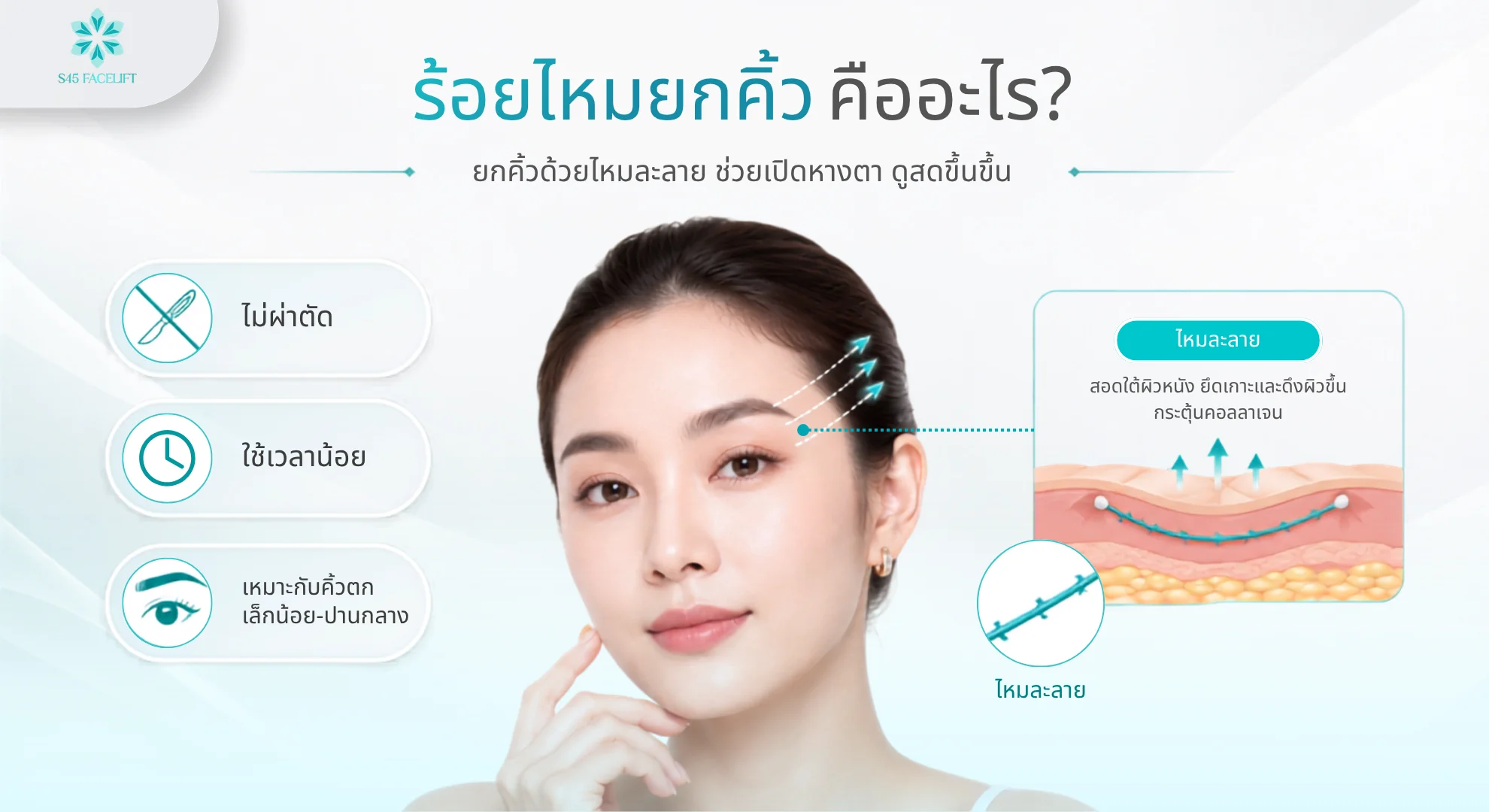
A thread lift lifts sagging tissue and firms it, and stimulates collagen around the threads. It suits people with mild to moderate sagging. The results are temporary because the threads gradually dissolve, and it has limits in cases with a lot of sagging.
Face Lifting Surgery
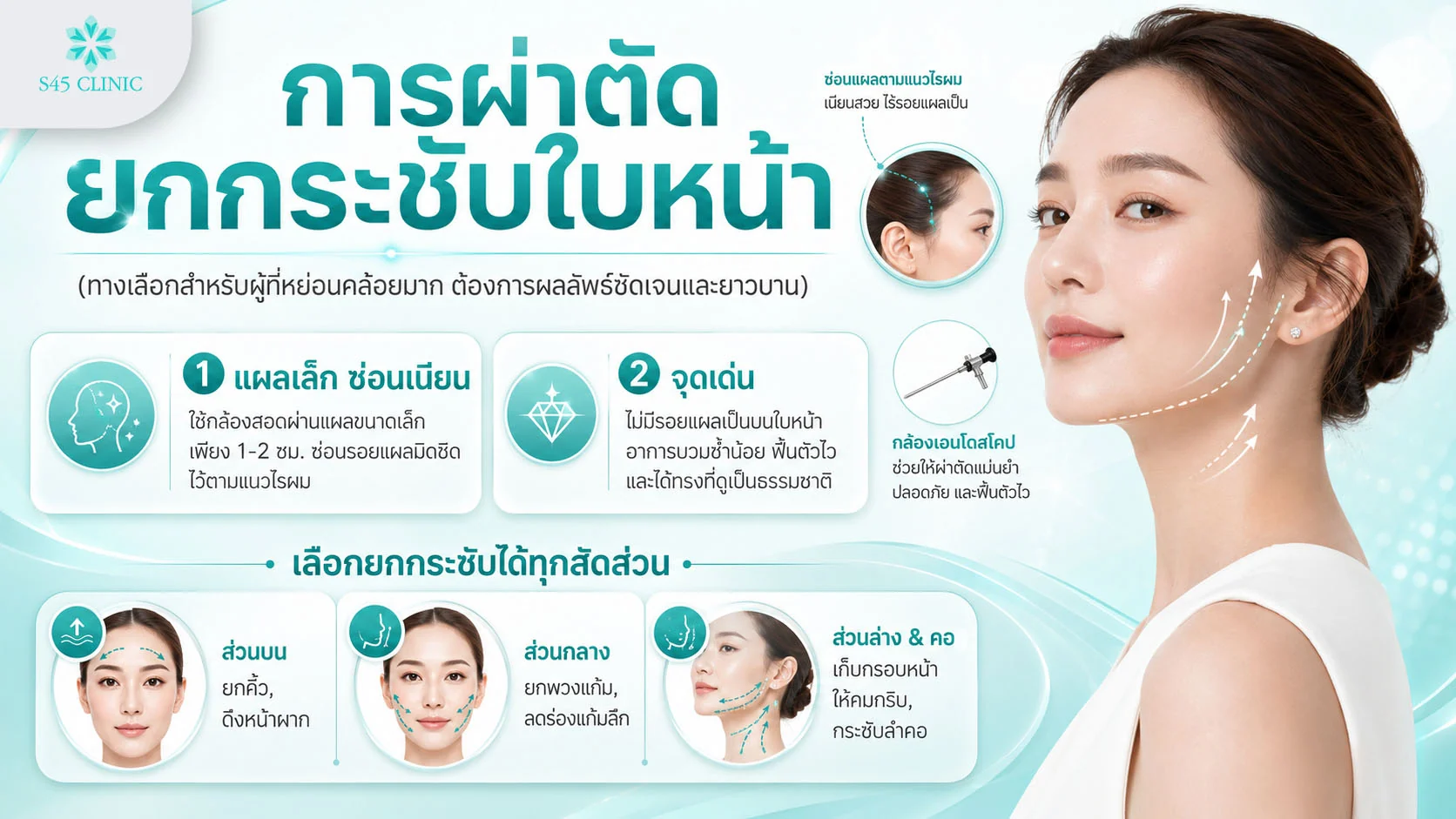
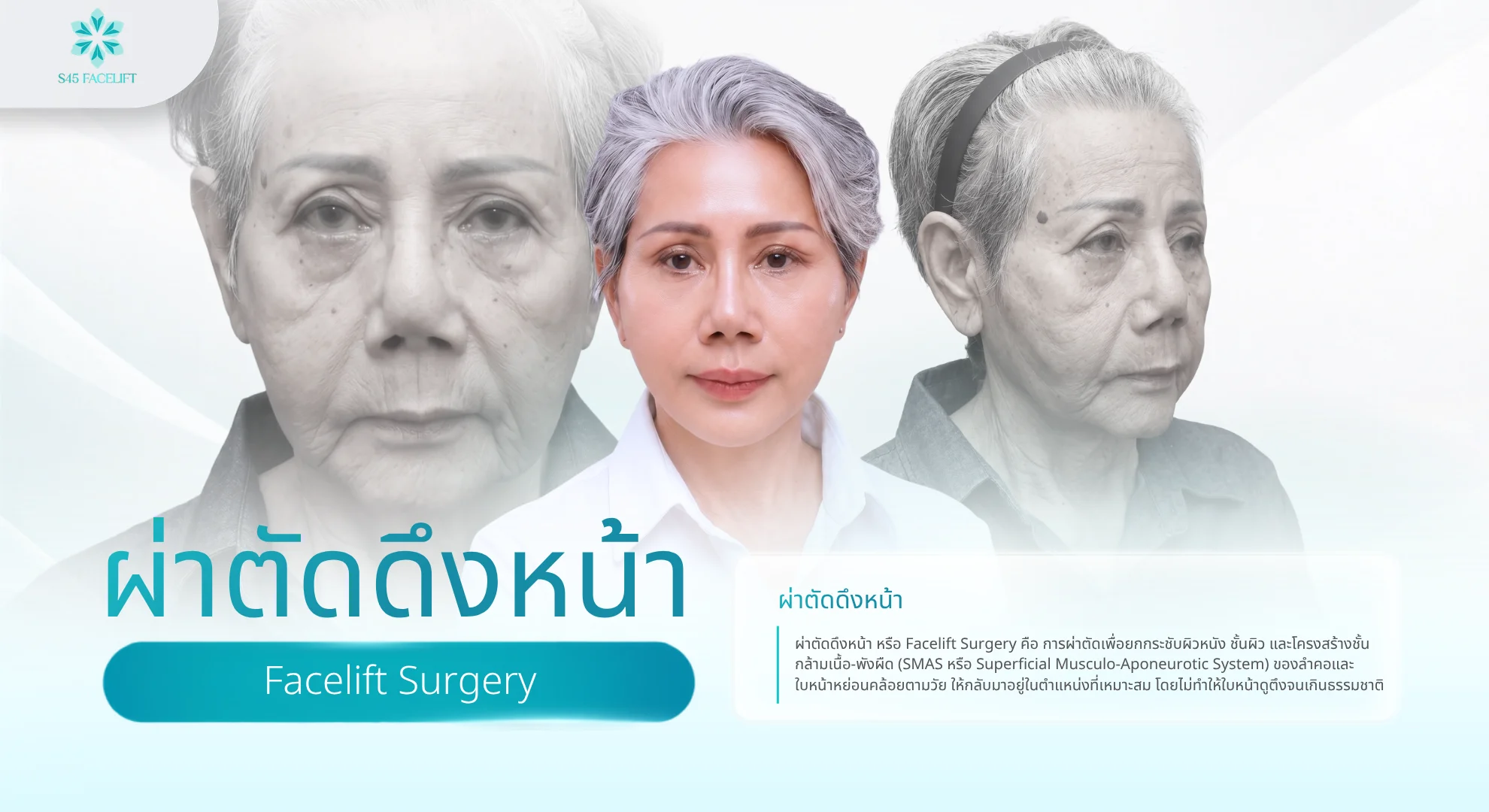
Where the sagging is clear or you want a longer-lasting result, lifting surgery treats the problem directly, because it lifts and tightens the skin and underlying tissue.
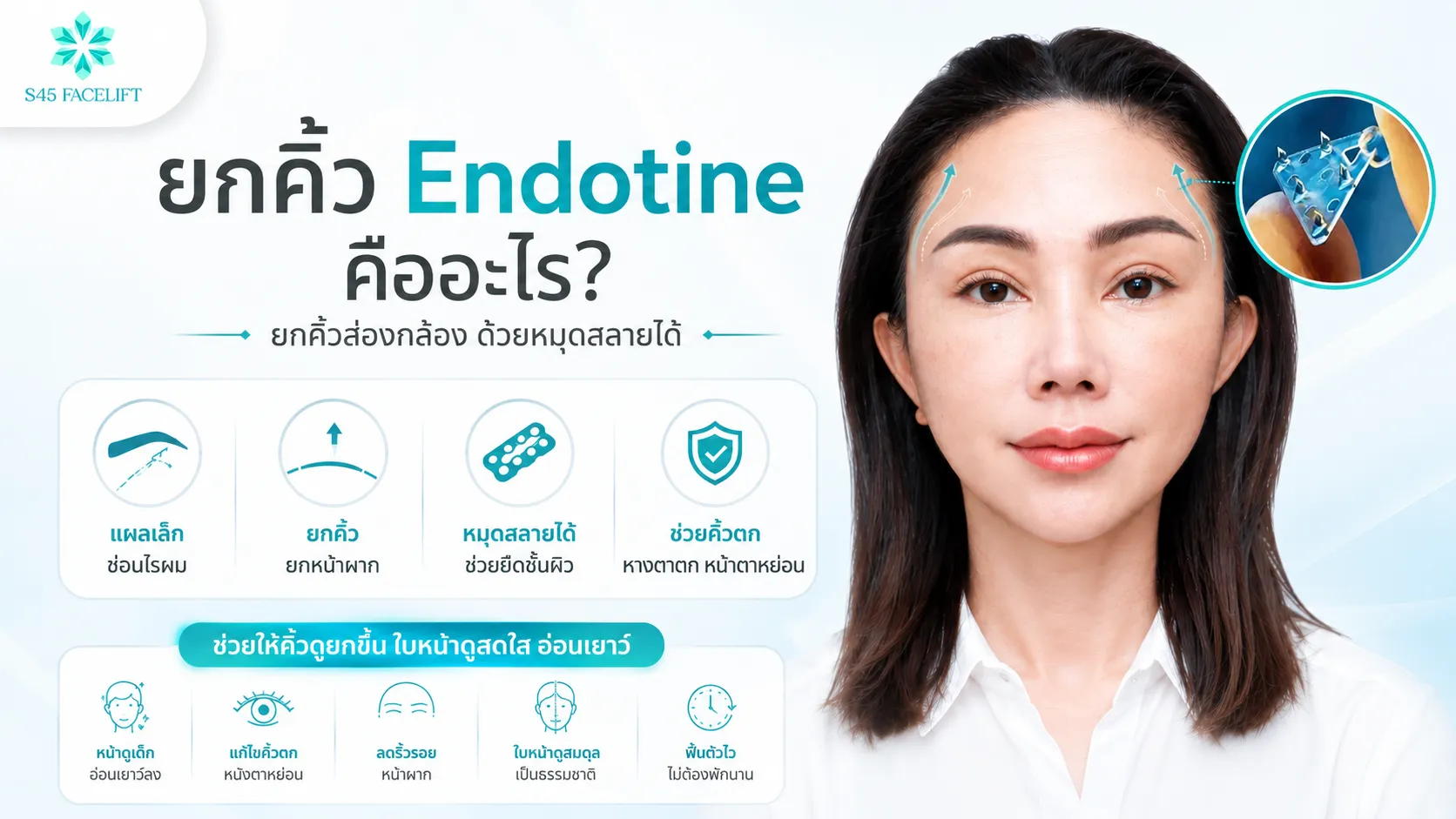
One commonly used technique is the endoscopic brow and forehead lift, in which the surgeon inserts a camera through small incisions of about 1cm to 2cm hidden along the hairline to lift and tighten the skin and muscles of the forehead, brows and face. The main advantage is that the incisions are hidden in the hairline, so the scars are not on the face. Swelling and bruising are usually mild, and the position is adjusted to suit your face.
With the endoscopic technique, the lift can be planned for several areas depending on the problem, including the upper face (forehead and brows), the midface (cheeks and smile lines), the lower face (jawline) and the neck, using a fixation material that suits your skin condition and age. For an international perspective, see ASPS Facelift.
Which Method Suits Each Type of Sagging
Because a sagging face comes in different degrees and affects different areas, the choice of method should depend on your particular features.
If the sagging is mild and the aim is prevention, self-care together with energy-based lifting such as HIFU or Thermage may be enough. If deep lines or thinning skin start to appear, collagen-stimulating injections or filler injections may help. For moderate sagging, a thread lift is one option, and for clear sagging, such as noticeable jowls or loose skin under the chin, lifting surgery meets the need more closely.
In many cases, the doctor may consider combining several methods to get a result that suits your face. Having a doctor assess your actual condition is therefore more important than choosing from general information alone.
Comparing the Ways to Lift and Firm the Face
The table below summarises the differences between the methods in terms of surgery and how long the results last. Which one is suitable depends on the severity and features of each person.
| Method | Surgery? | How long it lasts | Suits |
|---|---|---|---|
| Self-care / creams | No | Focus on slowing down and prevention | Everyone, as a foundation |
| HIFU / Ulthera / Thermage | No | Temporary, repeated in cycles | Mild to moderate sagging |
| Collagen-stimulating injections / filler injections | No | Temporary | Thin skin, deep lines |
| Botulinum toxin injections | No | Temporary | Problems linked to the muscles |
| Thread lift | No | Temporary | Mild to moderate sagging |
| Lifting surgery | Surgery | Longer lasting | Clear sagging, wanting a long-term result |
Which Face Lifting Method Suits You?
Many people search for which face lifting method works well, but the truth is that no single method suits everyone, because each method is designed for different problems and different degrees of sagging.
A suitable approach starts with assessing how much sagging there is, where it is and whether other factors are involved, and then choosing a method or combination that meets your needs. Having a doctor assess your actual skin condition gives you advice for your situation, which is more accurate than choosing from reviews or general information.
Do Lifting Procedures Hurt, and Are They Risky?
Many people worry whether lifting procedures hurt and whether they are risky. On pain, procedures such as injections or energy-based lifting use anaesthetic cream or a local anaesthetic, so most people feel only mild pain or heat during the treatment. Lifting surgery is done under local anaesthetic or general anaesthetic depending on the technique, so pain is controlled during the operation. Afterwards you may have some tightness or swelling, which is normal for the procedure.
On risk, every procedure has its own risks, such as swelling and bruising, or a result that has not yet settled in the early period. Most of these can be managed by choosing a clinic that meets proper standards and having the procedure done by an experienced doctor. To lower the risks, choose a properly licensed medical facility and have a consultation with a doctor for an assessment before every procedure.
How to Prevent a Sagging Face
You cannot completely stop the changes that come with age, but looking after yourself can help slow down sagging. This includes:
- using sunscreen every day to protect your skin from UV rays
- keeping your skin moisturised and nourished regularly
- eating a healthy diet and drinking enough water
- getting enough rest and managing stress
- not smoking and avoiding losing weight too quickly
- seeing a doctor for a skin assessment from time to time if you want preventive care from an early stage
Common Misunderstandings About a Sagging Face
There are several beliefs about a sagging face that are worth understanding as they really are.
- Myth: lifting creams can fix a sagging face as well as procedures can. Creams help care for the skin and slow down sagging, but they do not clearly lift deeper tissue that has sagged.
- Myth: frequent face massage lifts the face in a lasting way. Massage helps relaxation and circulation, but it does not lift skin that has sagged with age in a lasting way.
- Myth: every procedure lasts equally long after 1 session. Each method lasts a different length of time. Non-surgical methods give temporary results, while surgery gives longer-lasting results, although these can still change with age.
- Myth: the stronger the procedure, the better. In fact, the treatment should be chosen to match the degree of sagging, because doing more than is needed may not give a better result and can increase the risks.
Why Choose S45 Clinic for Face Lifting
Lifting the face so that it looks balanced and suits your features needs an assessment of the causes and a method chosen for each person. S45 Clinic is a medical clinic that provides facial aesthetic care, planning an approach for each person under our promise, “Because every kind of beauty comes from care”.
Experienced Doctors in Brow and Forehead Lift
Our doctors experienced in brow and forehead lift surgery assess the causes and degree of sagging for each person and then recommend a suitable approach, aiming for a result in balance with your features. See the service details at facelift and neck lift and see brow lift prices at Endotine brow lift prices.
Endoscopic Technique With Small Incisions Hidden in the Hairline
Where surgery is suitable, S45 Clinic uses an endoscopic technique with small incisions of about 1cm to 2cm hidden along the hairline, so the scars are not on the face, and chooses a fixation material that suits each person’s skin condition and age.
Care by an Anaesthetist and Operating Theatre Standards
When a general anaesthetic is used, an anaesthetist looks after you one-to-one, with equipment and medicines ready for emergencies to lower the risks during surgery, and there is a follow-up system after the procedure. The clinic is in central Bangkok on Sukhumvit 33, easy to reach and close to BTS Phrom Phong station.
FAQs About a Sagging Face
Sagging Face, What Can I Do?
Options range from self-care and creams to slow down and prevent sagging, to non-surgical procedures such as HIFU, micro-focused ultrasound, Thermage, filler injections, botulinum toxin injections and thread lifts, to lifting surgery for clear sagging. Have a doctor assess you to choose a method that suits you.
What Causes a Sagging Face?
It is mostly caused by the loss of collagen and elastin with age, together with gravity, sunlight, lifestyle and genetics.
Which Cream Should I Use for Sagging Skin?
Creams with skin-nourishing ingredients, such as retinol or peptides, may help with smoothness and moisture at the surface of the skin, but they do not clearly lift deeper tissue that has sagged, so they are better suited to supporting care and prevention.
Which Face Lifting Method Suits Me?
No method suits everyone. It depends on the degree of sagging, the area, your age and your goals. Have a doctor assess your actual skin condition to recommend a suitable method or combination.
How Can I Make My Face Firmer?
Start with self-care such as sun protection and skincare, together with a procedure that suits the degree of sagging, and have a doctor assess you before you decide.
My Face Is Starting to Sag at 40 to 50. How Should I Start Caring for It?
At this age you can start with preventive care and non-surgical procedures that suit the degree of sagging. If the sagging is clear, you may consider surgery. Have a consultation with a doctor to plan treatment for you.
Summary
A sagging face is caused by the loss of collagen and elastin with age, together with gravity, sunlight and lifestyle. As for what you can do about a sagging face, the options range from self-care and creams that focus on slowing down and preventing sagging, to non-surgical procedures such as HIFU, micro-focused ultrasound, Thermage, collagen-stimulating injections, filler injections, botulinum toxin injections and thread lifts, to lifting surgery for cases with clear sagging.
Most importantly, no method suits everyone. The choice should depend on the severity, the area of sagging, your age and your goals, with an experienced doctor assessing your actual skin condition, so you can choose a suitable approach or combination and a result that suits your face. Results depend on each person.
Because every face shape…
is different
An otolaryngologist with subspecialty training in facial plastic and reconstructive surgery assesses every case before treatment and gives advice based on your actual concerns.
“Reveal the beauty within you”
Message us online
Surgery and medical procedures carry risks. Find out about them and consult a doctor before you decide. Results depend on each person.