Breast Implants, What Are They Made of, What Types Are There and How Do You Choose the Right Fit?
Key points
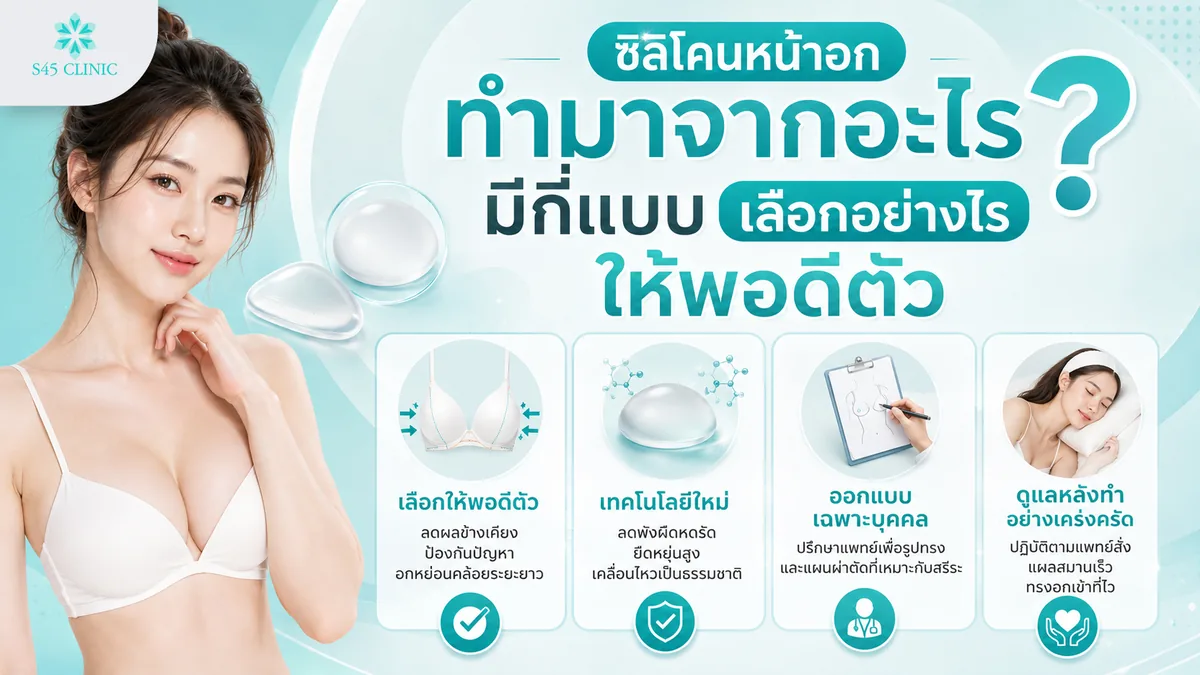
- Choose a breast implant size and shape that suit your body, to help lower the chance of side effects and of the breasts sagging in the long term.
- Newer gel and surface designs help lower the chance of capsular contracture (scar tissue tightening around the implant) and add flexibility, so the breasts can move with your body.
- A consultation with the surgeon helps you get a breast shape and surgical plan designed around your individual body.
- Following the surgeon’s advice during recovery supports wound healing and helps the breasts gradually settle into shape, depending on each person’s body.
The decision to have breast augmentation often starts with wanting a more balanced body shape. Choosing breast implants that suit your body, however, means learning about each type of material, including how long it lasts, its specific properties and how your body may change after surgery.
In this article, S45 Clinic brings together information on the different implant surfaces, a comparison of round and teardrop shapes and the differences between registered implant brands, to help you prepare and consider an implant size that suits the width of your chest and your individual body.
In This Article
What Are Breast Implants and How Do They Work With the Body?
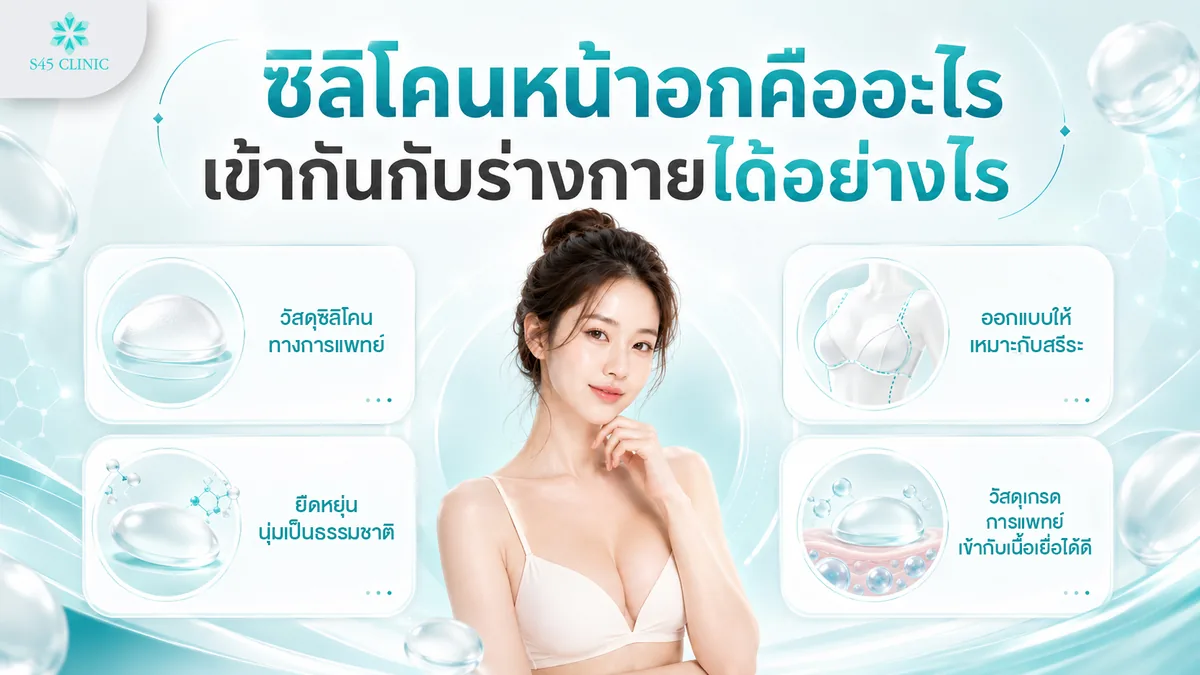
Breast implants are made from a medical-grade synthetic material (medical-grade silicone) designed to add volume to the breasts or adjust their proportions to suit your body. The material is made from silicon compounds combined with oxygen, carbon and hydrogen, which produces a chemically stable substance that withstands conditions inside the human body, including body temperature.
Because it is a medical material, it has a low chance of triggering a reaction from the body’s immune system. The outer shell of the implant is flexible and designed to cope with pressure from everyday activities, such as lying on your front or exercising, which helps lower the chance of gel leaking out under the skin.
Main Components
Breast implants are made from a medical-grade synthetic material (medical-grade silicone) designed to be compatible with the body. They have 2 main parts, an outer shell made from flexible silicone elastomer and a filling of dense silicone gel. This differs from breast augmentation with your own fat in both the material and the method.
The key component inside is called cohesive gel. The gel holds together, which helps lower the chance of it spreading out if the implant shell is damaged. The flexible outer shell and the stable gel work together to help the breast keep its shape and lower the chance of leakage under the skin over time.
Registration and Assessment by the Thai Food and Drug Administration
Breast implants registered with the Thai Food and Drug Administration (Thai FDA) have been checked against the production and quality control standards set by law. Assessment by the Thai FDA or by regulators in other countries, such as the US FDA, shows that the material has passed biological testing against standard criteria, which assesses whether it is suitable for use in the human body.
The assessment covers the strength and flexibility of the implant shell and how well the gel inside holds together, to lower the chance of leakage under the skin. Choosing implants with a product code and serial number you can check on the box, together with documents from the importer, helps confirm that the materials used are registered as the law requires.
What Surface Types Are Available for Breast Implants?
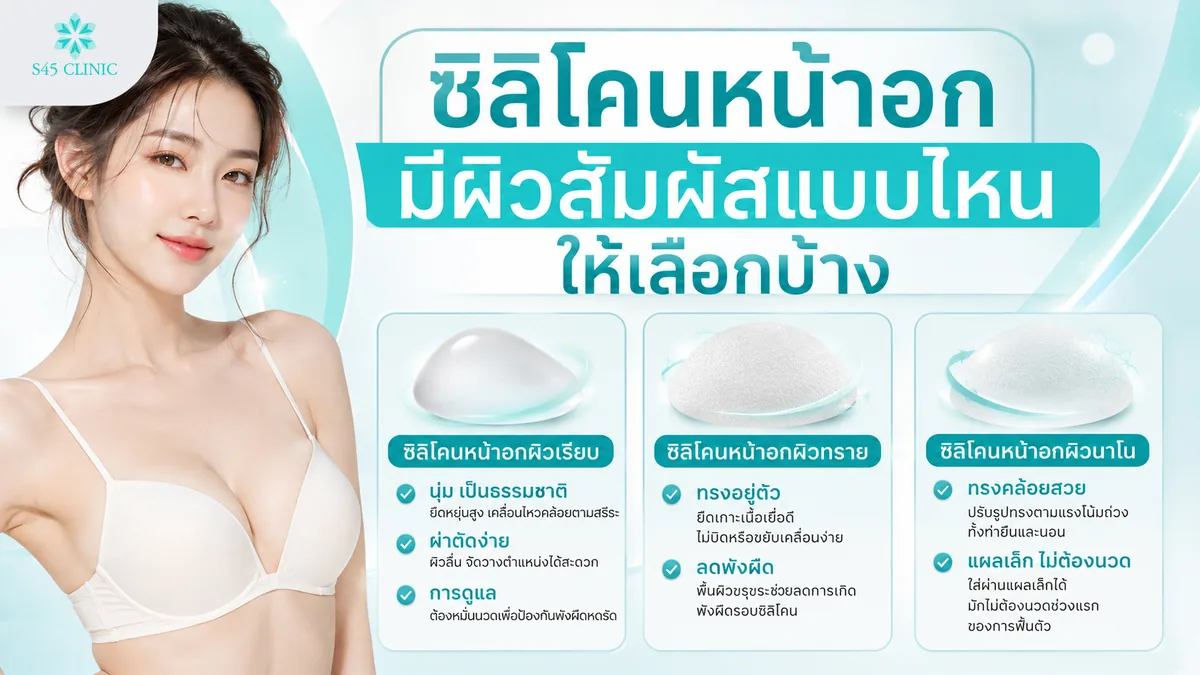
The surface of breast implants has been designed and developed to suit each person’s body and build. The type of outer surface affects how the implant moves and how the skin and fat layers respond after surgery.
There are currently 3 main surface types, and the surgeon chooses the one that suits the anatomy of each person.
1. Smooth Breast Implants
Smooth breast implants are designed to be flexible, so the breast can move in line with your body. The smooth outer shell also lets you feel the stability of the gel inside.
The smooth, slippery surface lowers friction as the implant is passed through the incision, which makes it easier to place the implant in the intended position.
The silicone gel inside lets the breast relax and change shape with your body position, such as when lying flat. With this type of implant, the surgeon may advise gentle massage around the breasts, to help keep the implant pocket flexible and lower the chance of capsular contracture around the implant over time.
2. Textured Breast Implants
Textured breast implants are designed to help lower the chance of scar tissue forming around the implant. The finely rough surface helps scatter the direction in which collagen fibres line up around the implant, which helps lower the chance of the scar tissue thickening over time.
This type of surface also grips the surrounding skin and fat layers more firmly, which helps lower the chance of the implant moving out of position or rotating after surgery.
3. Nano-Textured Breast Implants
Nano-textured breast implants use a technology developed to combine flexibility with the ability to grip the body’s tissues, which helps lower the chance of capsular contracture around the implant. The very fine surface, at micrometre scale, adds strength and flexibility to the outer shell and increases its resistance to pulling forces, as with the Motiva Ergonomix breast implant, which helps lower the chance of capsular contracture over time.
This design also lets the implant flex and stretch as your body moves, which makes it easier for the surgeon to pass the implant through a small incision into the planned position. It also lets the breast settle with gravity to suit your body, both lying down and standing up.
After surgery with this type of implant, the surgeon may generally advise avoiding breast massage in the early recovery period, to reduce disturbance to the skin and fat layers in the operated area.
What Is the Difference Between Round and Teardrop Breast Implants?
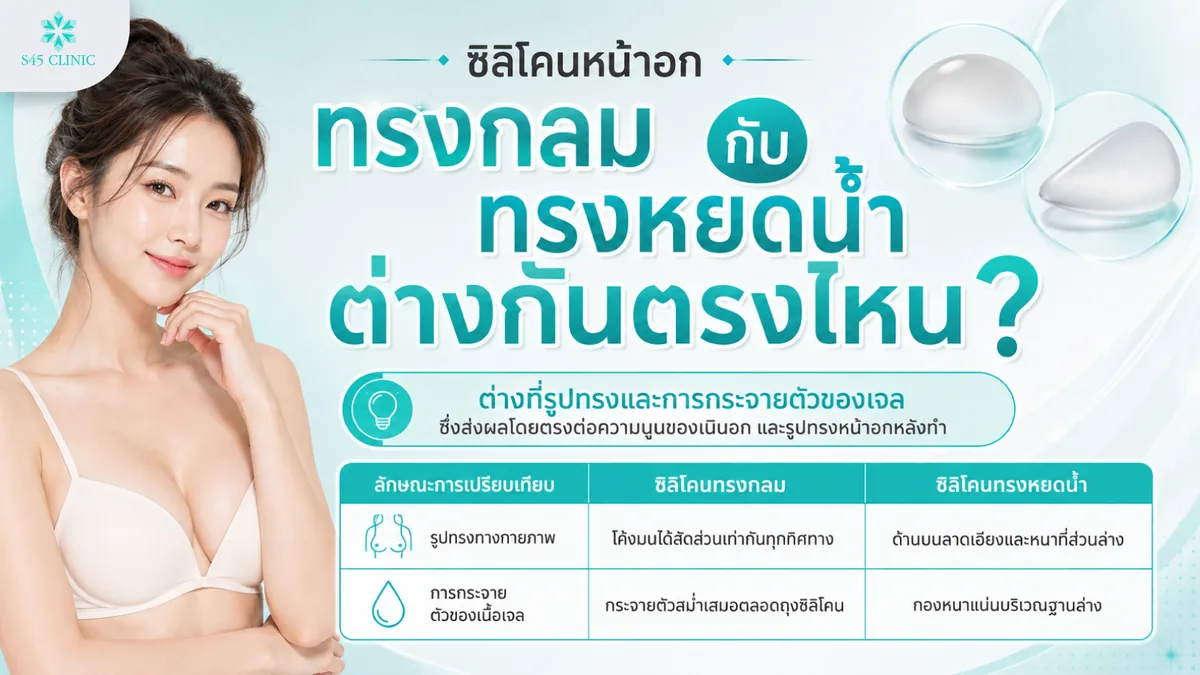
Round and teardrop breast implants differ in their shape and in how the gel inside is distributed, which affects how the upper breast and your body shape look after surgery.
| Comparison | Round implant | Teardrop implant |
|---|---|---|
| Physical shape | Evenly curved in every direction | Sloping at the top and fuller at the bottom |
| Gel distribution | Spread evenly throughout the implant | Concentrated at the lower base |
The width of your existing breast base and how elastic your skin is are key factors in choosing the implant shape. Different shapes also affect where the implant is placed, and the surgeon considers this to balance the nipple area and how the breast settles with gravity in line with your body.
Round Breast Implants
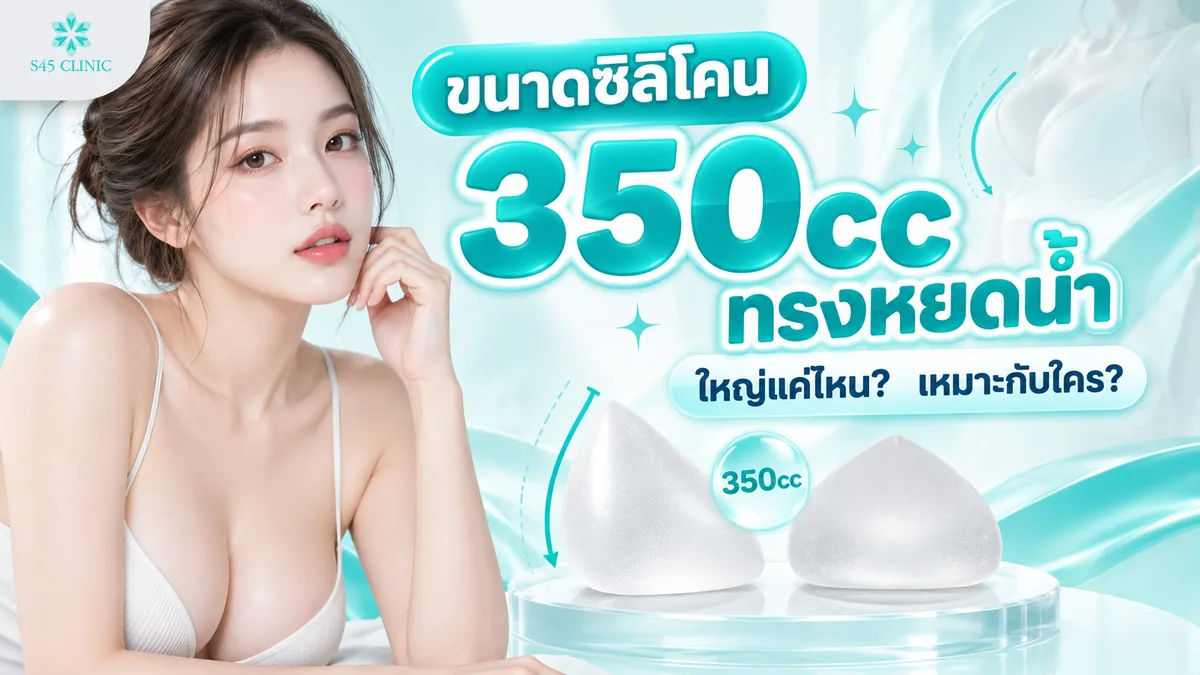
Round breast implants help add volume to the upper part of the breast, for a more balanced look and a more defined upper breast. This type of implant has an evenly curved shape on every side and supports your existing breast tissue to add fullness to the cleavage area. It is often considered for people with mild breast sagging or with little breast tissue who want more volume in the upper part. Round implants come in several projection levels, so the upper breast can be enhanced to suit your build.
The gel in a round implant is distributed symmetrically within the shell, which helps with the shape of an upper breast that has lost volume with age or after breastfeeding. For people who want a more defined upper breast when dressed, the surgeon assesses an implant volume that matches the width of the existing breast base, so the breasts look balanced and suit each person’s body.
Teardrop Breast Implants
Teardrop breast implants are designed to follow the anatomy of the breast, with a sloping upper part and more gel volume at the lower base. This shape helps the breast slope gently and helps reduce a visible ridge at the upper edge of the breast.
This shape is often considered for people with a small breast base, or with mild sagging who want more volume in the lower part. For people with thin skin and fat over the chest, a teardrop shape helps lower the chance of the implant edge showing on the upper breast. The surgeon often considers an incision in the fold under the breast (inframammary fold), to help place the implant and control its direction in line with the skin.
Mentor or Motiva Breast Implants, What Is the Difference?
The difference between Mentor and Motiva breast implants lies in the physical structure of the gel inside and the design of the outer surface, which affects the implant’s shape and how it adjusts to your body’s movements.
| Implant brand | Gel inside | Surface technology |
|---|---|---|
| Mentor | Designed to hold its shape and keep its volume | Traditional smooth and textured surfaces |
| Motiva | Designed to be flexible and change shape with gravity | Smooth, finely nano-textured surface |
The choice therefore depends on the surgeon’s assessment together with your existing body. The first brand was developed and researched in the United States, while the other brand has a blue barrier layer, which helps show signs of damage or gel leakage in the outer shell.
Mentor Implant Properties
Mentor breast implants are a medical device that has been assessed and registered by the US Food and Drug Administration (US FDA) and by the Thai Food and Drug Administration (Thai FDA). The gel inside is made from form-stable silicone gel, which helps the breast keep its proportions and shape to suit your body, and the brand has a long history of research and development for medical use.
The outer shell of the implant is designed for added strength and flexibility, with a choice of textured surfaces, which help lower the chance of capsular contracture over time, and smooth surfaces, which feel flexible.
The brand’s production process is also designed so the gel molecules hold together, which helps lower the chance of gel spreading out if the implant shell is damaged. The manufacturer also has a product support policy, under its own terms, for cases where shell damage or capsular contracture at Baker grade III or IV is found.
Motiva Implant Properties
Motiva breast implants are made from silicone gel designed to be flexible, so the gel can change shape with your posture and gravity, for example sloping like a teardrop when you stand and relaxing when you lie flat. The outer surface uses SilkSurface technology, which helps lower the chance of capsular contracture around the implant.
Some models also have a small microchip (RFID microchip) in the base of the implant that stores the product’s serial number, so the surgeon can check the details with an external scanner. The Motiva Ergonomix model has a shell and gel designed to be strong, flexible and able to return to shape, to cope with the movements of your daily activities.
What Breast Implant Size Will Suit Your Body?
Choosing the right breast implant volume does not depend only on what you want, but also on your individual physical characteristics.
Assessing proportions to suit your body helps give a balanced result and lowers the chance of complications. Choosing a volume that suits your body therefore relies mainly on analysing the width of your existing breast base, how elastic your skin and fat layers are, and the width of your chest wall. You can also read the guide to choosing a cc size that suits your figure. The surgeon examines and measures your body before surgery to decide the implant volume that suits each person’s build.
How to Assess Your Body Structure
Assessing the right breast implant size starts mainly with measuring the width of your existing breast base, so the implant sits within the limits of your chest wall. This helps the surgeon calculate an implant volume that suits your actual body and helps lower the chance of the implant edge showing under the skin after surgery.
The body analysis has 3 main parts:
- the width of your existing breast base, measured in centimetres
- how elastic the skin over your breasts is, which affects how far it can stretch to hold the implant volume
- the distance from the nipple to the base of the breast, to help decide where the implant is placed
The thickness of the breast tissue is checked with a pinch test, using a tool that measures the thickness of the fat under the skin. If it is less than 2cm, the surgeon often considers an implant volume no wider than your existing breast base, placed under the muscle, to lower the chance of the implant edge or rippling showing under the skin.
Myths About Choosing a Size That Is Too Big for Your Body
Choosing breast implants wider than your existing body structure can have physical effects in the long term, especially given the belief that a bigger size will keep the breasts close together and attractive for good.
In reality, the weight of an implant that is too large can pull on and add pressure to your skin and fat layers, so the breasts may sag with gravity sooner over time. It can also have several other physical effects, including:
- pain in the shoulders and neck from the weight of the breasts constantly pulling the body forward
- stretch marks on the upper breast from the skin stretching quickly and beyond its limits
- visible implant edges or rippling, because there is not enough fat under the skin to cover the implant
- thinning of the existing breast fat from long-term pressure from a large implant
An assessment by the surgeon of the width of your existing breast base and how elastic your skin is before surgery is therefore an important step that helps lower the chance of complications and of needing breast revision surgery in the future.
Why Choose S45 Clinic for Breast Implants
Breast implant surgery at S45 Clinic focuses on assessing each person’s body structure individually, to choose an implant shape and volume that suit your individual body. You can also read our criteria for choosing a breast augmentation clinic to help you decide.
During the assessment, our surgeons pay attention to planning breast proportions that are balanced with your figure, based mainly on the width of your existing breast base and how elastic your skin and fat layers are, to support a balanced result.
The clinic also has a structured follow-up process after surgery to assess your recovery, so you get the right information and self-care steps throughout your care, for a breast shape that suits your body and complements your individual look.
Frequently Asked Questions About Breast Implants
Can I Breastfeed as Normal After Breast Implants?
Generally, placing the implant under the muscle does not interfere with the milk ducts or milk-producing glands, so you can usually breastfeed as normal. Consult the surgeon to assess the technique and implant position that suit your body.
How Long Do Breast Implants Last and When Do They Need Replacing?
Modern medical breast implants do not have a fixed lifespan after which they must be replaced, as long as there are no problems such as capsular contracture, implant leakage or a change in shape. Have regular breast and implant check-ups as the surgeon advises.
What Is the Difference Between Smooth and Textured Implants?
Each implant surface has different properties and grips the tissue differently. The choice depends on your existing breast tissue, the amount of fat and what the surgeon assesses as suitable together with you.
Summary
Choosing breast implants that suit your body is an important step in planning breast augmentation, including analysing shapes such as round or teardrop, and outer surface technologies such as smooth, textured or nano-textured.
A consultation and assessment by the surgeon, including measuring the width of your existing breast base, the thickness of the fat under your skin and how elastic your tissues are, helps you choose the type and size of implant that match your individual anatomy.
Because every body…
is different
Doctors at S45 Clinic assess every case before treatment and give advice based on your actual concerns.
“Reveal the beauty within you”
Message us online
Surgery and medical procedures carry risks. Find out about them and consult a doctor before you decide. Results depend on each person.