How Long Is Breast Augmentation Recovery? Recovery Stages and Aftercare

Key points
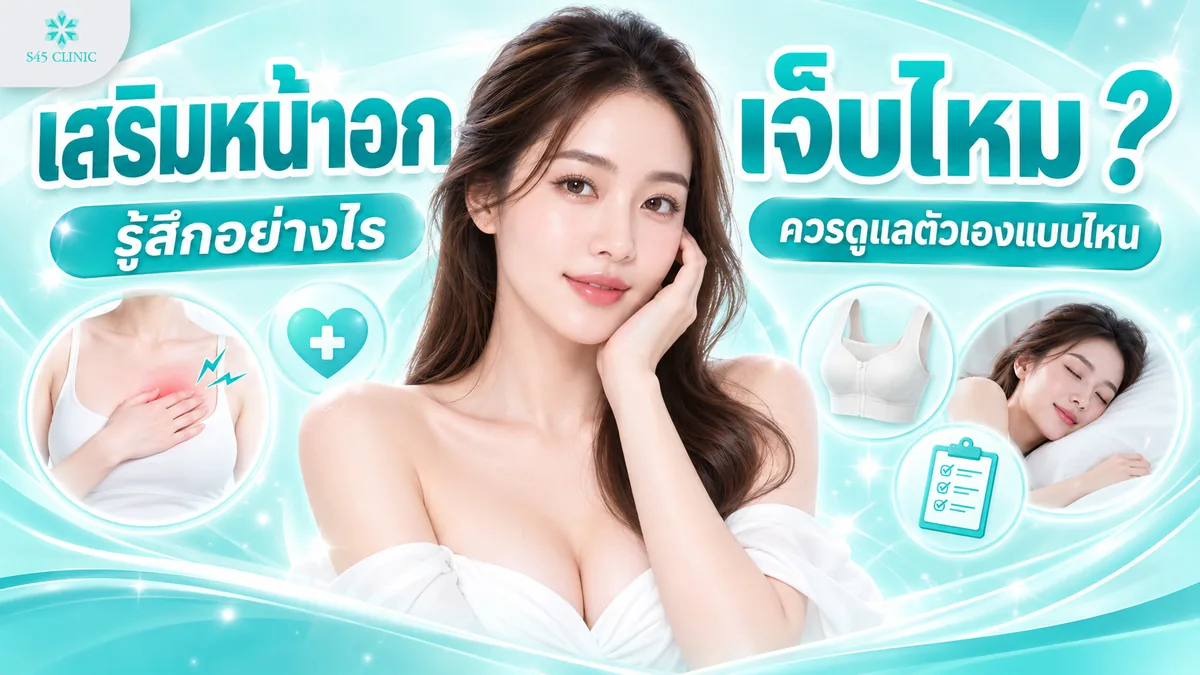
- For the question “How long is breast augmentation recovery?”, the answer is that the rest period after breast augmentation surgery is about 3 to 7 days, depending on how each person recovers.
- Wearing a support bra as your doctor advises plays an important part in supporting the breasts and keeping them in a suitable position.
- Take care with strenuous activities such as heavy lifting, driving or upper-body exercise in the first 4 to 6 weeks, to lower the risk of the wound tearing and of the breast implant moving out of place.
- Because each person’s body and recovery are different, your doctor needs to assess you individually to plan care that suits you.
Planning time off work and arranging your daily life are important for anyone considering breast augmentation. Questions about recovery after surgery, such as how long breast augmentation recovery takes, are worth understanding in advance, because a surgical wound needs time and proper care to heal, which helps look after the skin and supports your recovery step by step.
In this article, S45 brings together self-care advice to support wound healing, a week-by-week timeline of your body’s recovery, and the warning signs that mean you need to go back to see a doctor promptly, to help you prepare to look after yourself properly after surgery.
In This Article
How Long Is Breast Augmentation Recovery Before You Can Return to Normal Life?
Breast augmentation surgery usually needs a recovery period so that your body and the skin around the wound can gradually heal. Most people rest fully in the early period before gradually returning to work that is not physically demanding, or to desk work.
Because each person’s skin responds and recovers differently, following your doctor’s aftercare advice plays an important part in supporting wound healing, easing swelling and tightness, and helping the breast shape gradually settle into suitable proportions.
Recovery Time After Surgery at Each Stage
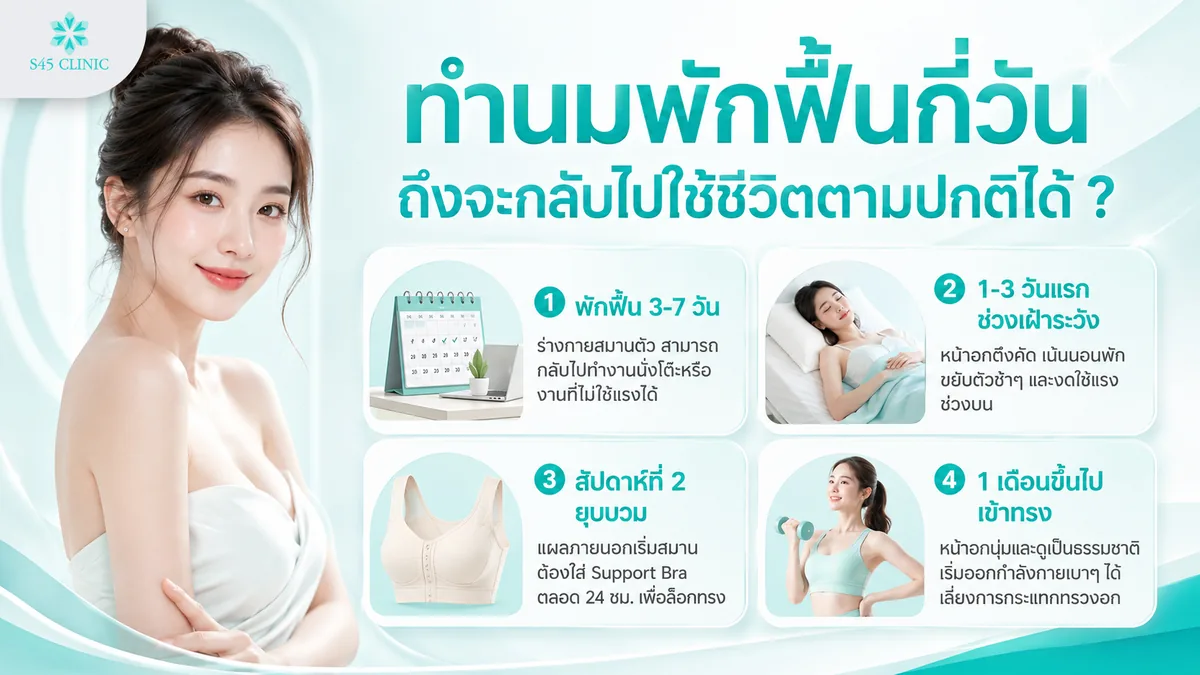
Breast augmentation needs a recovery period. Most people rest for about 3 to 7 days so that the body and skin can gradually heal, before going back to office work or daily life as suits them. Recovery time and how your body responds may differ from person to person.
In the first 1 to 3 days, the skin around the wound may feel tight and full, and you may feel tightness in the skin. Self-care during this time focuses on getting enough rest, moving slowly and limiting upper-body effort, to reduce pulling on the wound.
In week 2, the tightness gradually eases and the swelling and bruising go down. The outer skin starts to heal, and wound care or stitch removal follows your doctor’s assessment. The deeper layers are still healing, so wearing a support garment or support bra 24 hours a day is important to support the breasts and keep them in a suitable position. How quickly the deeper layers recover depends on your health and how you heal.
After 1 month, the breasts start to soften and become more flexible, and the breast shape gradually settles into proportions that suit your body. You can start light activities or gentle exercise that does not jolt the chest, as your doctor advises. How quickly the shape settles and softens depends on each person’s build and skin elasticity.
Normal Symptoms While Your Body Is Recovering After Surgery
A tight, full feeling in the breasts and the skin around them is a normal reaction after breast augmentation, because the skin is adjusting to the new proportions. How your body responds may differ from person to person. Common symptoms include:
- Soreness or sharp, shooting twinges in the first 3 to 7 days, caused by the sensory nerves around the surgical wound reacting.
- Bruising and swelling of the breasts, which gradually go down and start to soften over about 2 to 4 weeks, depending on how each person recovers.
- A sound like air bubbles moving in the breasts in the early period, caused by air left in the surgical pocket, which is gradually absorbed and goes away by itself over about 14 days.
Sleeping on your back with your head raised on pillows for the first 14 days helps circulation and helps with swelling. Together with wearing a support garment or support bra 24 hours a day, this helps support the implants and keep them in a suitable position while the body forms a capsule of tissue around them.
Does the Surgical Technique Really Affect Recovery Time?
The surgical technique plays an important part in recovery time after breast augmentation. A surgical approach that disturbs the surrounding tissues of the chest less helps your body recover gradually and return to activities step by step.
How the breast pocket is prepared and where the breast implant or silicone implant is placed also affect how much swelling and bruising you get. Recovery time and how your body responds depend on each person’s build and recovery.
Using an Endoscope to Reduce Tissue Injury
Endoscopic surgery lets the surgeon see the anatomy and the area inside on a monitor during breast augmentation. This technique helps lower disturbance to blood vessels and other areas that are not involved, which helps limit blood loss during the procedure.
Less tissue trauma supports recovery. The rest period is usually about 3 to 5 days, although recovery time and how your body responds depend on your health and how you heal.
The clear, magnified view also helps the surgeon place the implant in a suitable position, which helps lower the chance of capsular contracture (tightening of the scar tissue around the implant).
Placing the Implant Under or Over the Muscle
Where the implant is placed affects how sore you feel and how long you need to rest after the procedure, and each placement suits a different body type.
| Assessment detail | Over the muscle | Under the muscle |
|---|---|---|
| Level of soreness | Eases sooner, with soreness for a shorter time | More soreness, especially in the first 3 days |
| Rest time before light work | About 2 to 3 days | About 5 to 7 days |
| Chance of seeing the implant edge | Possible in people with thin skin or little existing breast tissue | Lower chance, because the muscle layer covers the implant |
People with little existing breast tissue are often advised to consider placement under the muscle, because it helps hide the edges of the implant. Choosing a placement that suits your skin helps reduce pulling on the wound and helps the breasts gradually settle over about 14 days. Consider this together with choosing an implant volume (cc) that suits your body. Recovery time and how your body responds depend on how each person recovers.
How Soon Can You Drive and Go Back to Work After Breast Augmentation?
Before going back to work and driving after breast augmentation, the recovery period is usually about 7 to 14 days on average, depending on the type of work, your build and your health.
In the first week, avoid activities that need effort or tense the chest muscles, to help keep the implants in a suitable position. You can judge how ready your body is by how sore you feel and how far you can move your arms over about the first 10 days.
When to Start Driving and Travelling Again
Before you start driving after breast augmentation, wait about 7 to 10 days or longer, because the chest and arm muscles still feel tight. Turning the steering wheel suddenly or making tight turns can increase pulling on the wound.
A seat belt across the chest can also press directly on it, so take care to help keep the implants in a suitable position.
For long journeys or flights, consider waiting about 2 weeks, to reduce the effects of changes in air pressure and of sitting in the same position for a long time.
If you need to travel by car as a passenger, place a soft pillow between your chest and the seat belt to cushion the pressure, and stop to change position from time to time to help circulation.
Going Back to Office Work and Lifting Heavy Things
You can usually go back to desk work or office work that does not need much physical movement about 3 to 5 days after breast augmentation on average. Desk work, writing or using a computer is fine as your body allows, but avoid reaching for things far away or raising your arms high in the first week.
The outer wound gradually heals over about 7 to 14 days, which makes moving around more comfortable. Recovery time depends on each person’s build and how their body responds.
Avoid lifting anything heavier than 3kg for about 4 to 6 weeks. Lifting heavy things or tensing the chest muscles can increase pulling on the wound and affect the position of implants that are still settling. We therefore suggest keeping everyday items at elbow or waist height, so you do not need to reach up or lift things high in the first month.
Starting to Move and Doing Gentle Exercise
You can start moving gently with short walks within about the first 24 hours after the procedure to help circulation. Walking slowly around the house helps blood flow and reduces the bloated feeling after surgery. Move your arms carefully and do not raise them above shoulder height for about the first 14 days, to help reduce pulling on the wound.
Light cardio without impact, such as walking on a treadmill, can start after week 4. Avoid high-impact activities such as running, jumping or yoga poses that use arm and chest strength until about 60 days have passed, so the implants can settle in line with your body. Recovery time depends on each person’s build and how their body responds.
How to Look After Yourself During Breast Augmentation Recovery
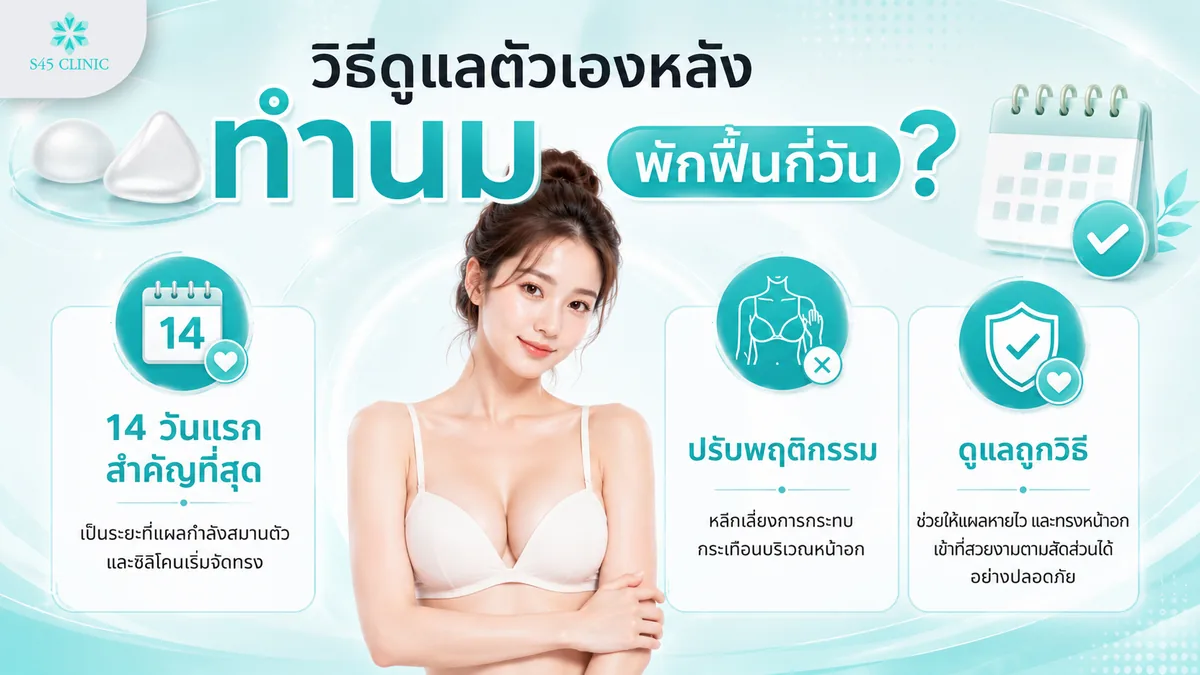
Looking after yourself properly after surgery plays an important part in supporting skin healing and helping the breast shape gradually settle into suitable proportions, together with changing habits to reduce outside factors that could affect your body.
Changing your daily habits for about the first 14 days after the procedure helps look after the skin and helps the silicone implants settle. You can start with these basic steps to get your body ready.
The Right Sleeping Position and Wearing a Support Bra to Support the Shape
Sleeping on your back with your head and upper body raised at about 30 to 45 degrees is a suitable position for about the first 7 to 14 days after the procedure, to help with swelling and keep the implants in a suitable position. This position reduces pressure on the chest and helps circulation. Take care not to sleep on your side or front for about the first 4 weeks, to reduce pressure on the wound and help the breast shape settle well.
Wearing a well-fitting support bra 24 hours a day for at least 1 month, or for as long as your doctor advises, is important to support the breasts and keep the silicone implants in a suitable position. It reduces breast movement when you move, helps with soreness and supports skin healing. Choose a support garment without underwires that opens with a zip or hooks at the front, so you can put it on without raising your arms too high.
Foods and Drinks to Avoid to Help With Swelling and Bruising
What you eat affects swelling of the skin after surgery. Foods high in sodium, such as instant noodles, pickled and fermented foods and snacks, should be avoided in the early period, because sodium can make the body hold more water, which may make the chest feel tight and swollen.
Take care with alcohol and undercooked food after the procedure, because alcohol widens the blood vessels and affects circulation, which may affect wound healing and how well the immune system protects the body.
Supplements such as fish oil, vitamin E or ginseng should be paused during recovery as your doctor advises, because these extracts can slow blood clotting, which may affect wound care and bruising of the skin.
Which Symptoms After Breast Surgery Mean You Need to See a Doctor Promptly?
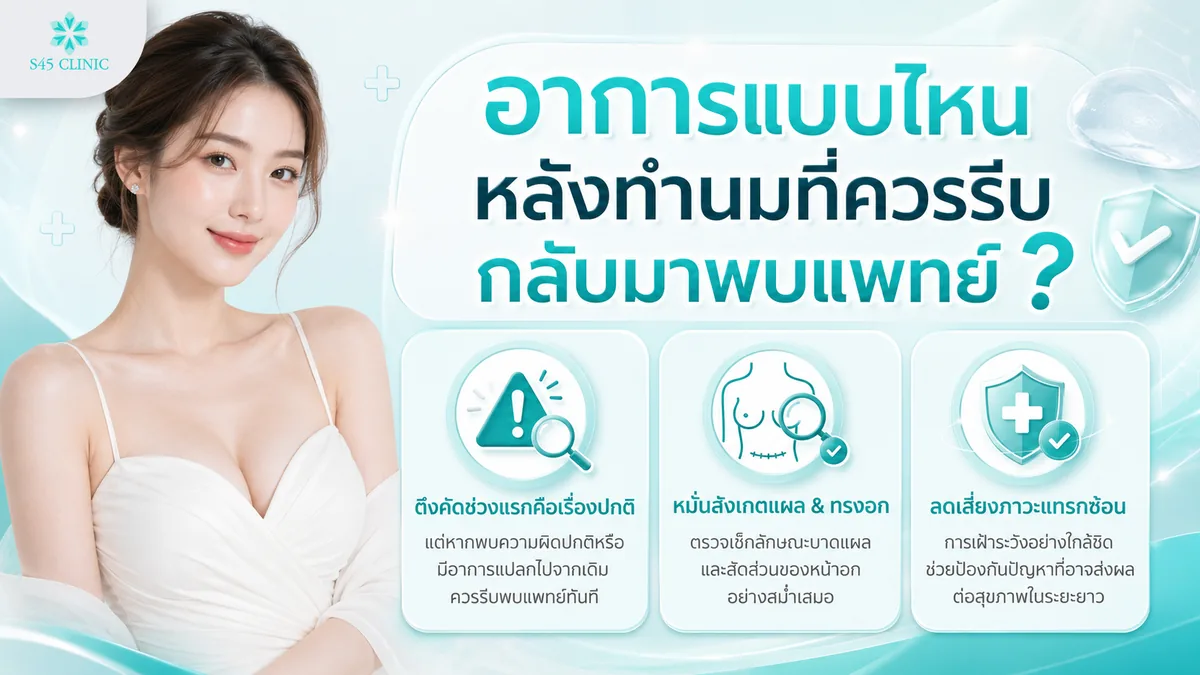
Noticing changes in your body during recovery is an important part of looking after yourself. Although tightness in the chest is a normal reaction at first, if you notice any unusual change, arrange a consultation and check with a doctor straight away.
Keep an eye on your wound and the shape of your breasts, to lower the chance of complications that affect your long-term health.
Warning Signs of Wound Inflammation or Infection
Infection or wound inflammation after breast augmentation usually shows warning signs in the skin and body temperature. If burning pain in the breast keeps getting worse instead of gradually easing as you recover, or the skin around the wound turns red over a wide area with unusual hard, tight swelling, check straight away for other signs. Signs to watch for include:
- a fever above 38°C with no known cause that does not go down after taking fever medicine
- green or yellow fluid, or blood-stained fluid, leaking from the edge of the surgical wound
- skin on the breast that feels warm or hot to the touch, or a red rash spreading around the skin
- edges of the surgical wound pulling apart, or a change in skin colour along the wound edge
If you get any one of these signs after going home to recover, see a doctor for an assessment straight away.
Breasts at Different Heights or With Different Shapes
Breasts that look different from each other in the early period after surgery can happen, because swelling on each side may go down at a different rate. However, if the breasts still look different after about 3 to 6 months, or the implants are not in matching positions, see your doctor for a further assessment to find the cause and plan suitable breast revision.
Capsular contracture around the implant may make the breast feel tight, change its shape or feel painful to touch. A breast ultrasound helps the doctor assess how thick the capsule is, to plan care or further adjustment as suitable.
Why Choose S45 Clinic for Breast Augmentation
At S45 Clinic, the implant shape and size are assessed individually to suit your body, and the implant placement is planned based on the assessment of our experienced surgeons to help reduce pulling on the muscles. After the procedure, we follow up to check how your skin is healing. You can also read our guide to choosing implant brands and models before your consultation.
Procedures are also done in an enclosed operating room with pressure control and high-efficiency air filters, which helps lower the chance of airborne contamination. An anaesthetist looks after you on a one-to-one basis to monitor your breathing and vital signs throughout surgery, and medical instruments are sterilised according to medical hygiene principles, so your care follows the required standards. You can also read our criteria for choosing a breast augmentation clinic to help you decide.
Summary
How long is breast augmentation recovery? Most people need a rest period of about 3 to 7 days after breast augmentation, so that the skin and surrounding tissues can gradually heal before going back to work or daily life. Recovery time and how your body responds depend on the surgical technique, your build and how you heal.
Following your doctor’s advice, such as avoiding heavy lifting, taking care with upper-body movement and wearing a support garment or support bra 24 hours a day, plays an important part in supporting the implants and keeping them in a suitable position.
Because every body…
is different
Doctors at S45 Clinic assess every case before treatment and give advice based on your actual concerns.
“Reveal the beauty within you”
Message us online
Surgery and medical procedures carry risks. Find out about them and consult a doctor before you decide. Results depend on each person.