What Are Fox Eyes? Eye Reshaping Methods and Medical Facts

Example image used in advertising. Not a real patient.
Key points
- Anatomical definition: fox eyes are an eye shape where the outer eye corner sits slightly higher than the inner eye corner, known as a positive canthal tilt. This feature can make the eyes look more alert and bright.
- Treatment options: non-surgical procedures give temporary results using botulinum toxin injections, which adjust how the muscles work, filler injections or a thread lift. Surgery, such as repositioning the tendon at the outer eye corner or a technique that hides the scar beneath the eyebrow, is another option the doctor may consider based on your anatomy.
- Criteria and precautions: suitable candidates are people with droopy outer eye corners or sagging eyelid skin. The doctor must assess people with bulging eyes or ptosis in detail. An assessment before treatment can help lower the chance of dry eyes and the eyelids not closing fully.
- Recovery time: stitches are removed at an appointment set by your doctor, which differs by technique. Swelling may vary from person to person and usually goes down gradually. Scars usually fade gradually over about 3 to 6 months.
Fox eyes, also called foxy eyes, are an eye shape where the outer corner of the eye is lifted slightly higher. This facial feature can make the eyes look alert and less tired. Adjusting the angle of the outer eye corner is an approach that can help the area around the eyes look fresher and in keeping with your age. This procedure suits people whose outer eye corners have sloped down since birth or who have sagging eyelid skin.
S45 Clinic places importance on assessing the area around your eyes individually. This helps you understand how facial anatomy differs from person to person. The doctor assesses how to reshape your eyes in proportion with your features, and you are told about all the medical precautions before you decide on treatment.
In This Article
What Are Fox Eyes and What Do They Look Like?
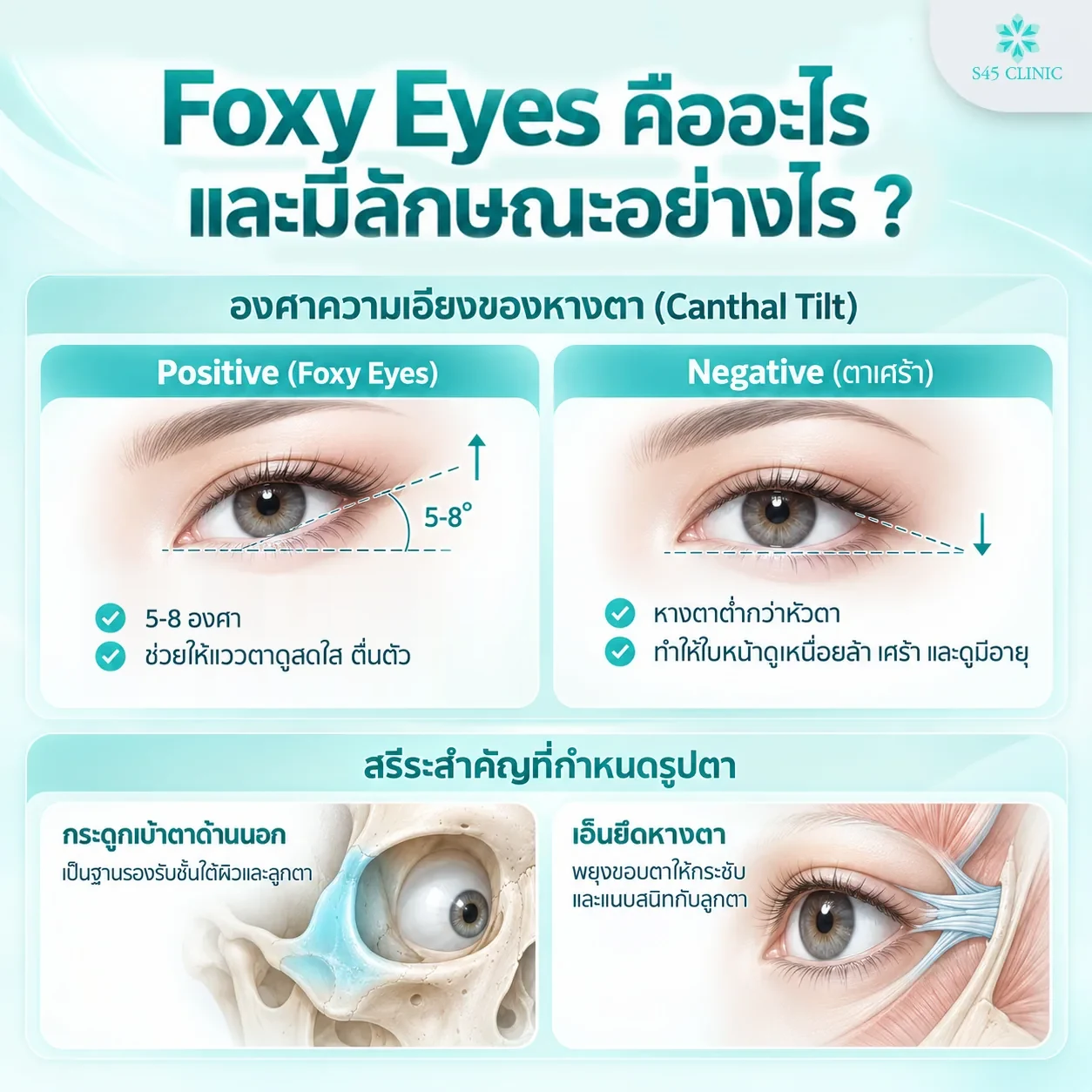
Fox eyes are an eye shape where the outer eye corner (lateral canthus) sits higher than the inner eye corner (medial canthus) when compared with a horizontal line through the middle of the eye. This facial feature is called a positive canthal tilt.
This eye shape depends on how the eye socket bones, the tendons and the thickness of the skin around the eyes relate to each other. When these parts are in balance, the eyes keep their lifted shape without affecting how the eyelids work.
How Does Canthal Tilt (The Angle of the Outer Eye Corner) Affect Eye Shape?
The angle of the outer eye corner directly affects the emotions the face shows. Some studies of facial proportions have found that faces rated as attractive have an outer eye corner about 8 degrees higher than the inner corner, while the average is about 4 degrees. There is no value that everyone has to have, because it depends on each person’s face shape. This feature is a positive canthal tilt, which helps the eyes look bright and alert.
When the outer eye corner slopes lower than the inner corner, known as a negative canthal tilt, the face often looks tired, sad or older. Doctors therefore use canthal tilt as a starting point to assess how to reshape the eyes to suit each person.
What Do the Eye Socket Bone and the Lateral Canthal Tendon Do?
The outer rim of the eye socket (lateral orbital rim) supports the tissue beneath the skin and the eyeball as a base for the face. The lateral canthal tendon (the tendon at the outer eye corner) supports the corners of the lower and upper eyelids so they sit closely against the surface of the eyeball.
The position and strength of the lateral canthal tendon directly affect how firm the lower eyelid is. A balanced slope of the eye socket rim, together with a firm tendon, helps eye reshaping go smoothly. If the eye socket is deeply hollow or the tendon has started to loosen, the doctor needs to strengthen where the tendon attaches, to lower the chance of complications.
How Many Fox Eye Techniques Are There, and How Do They Differ?
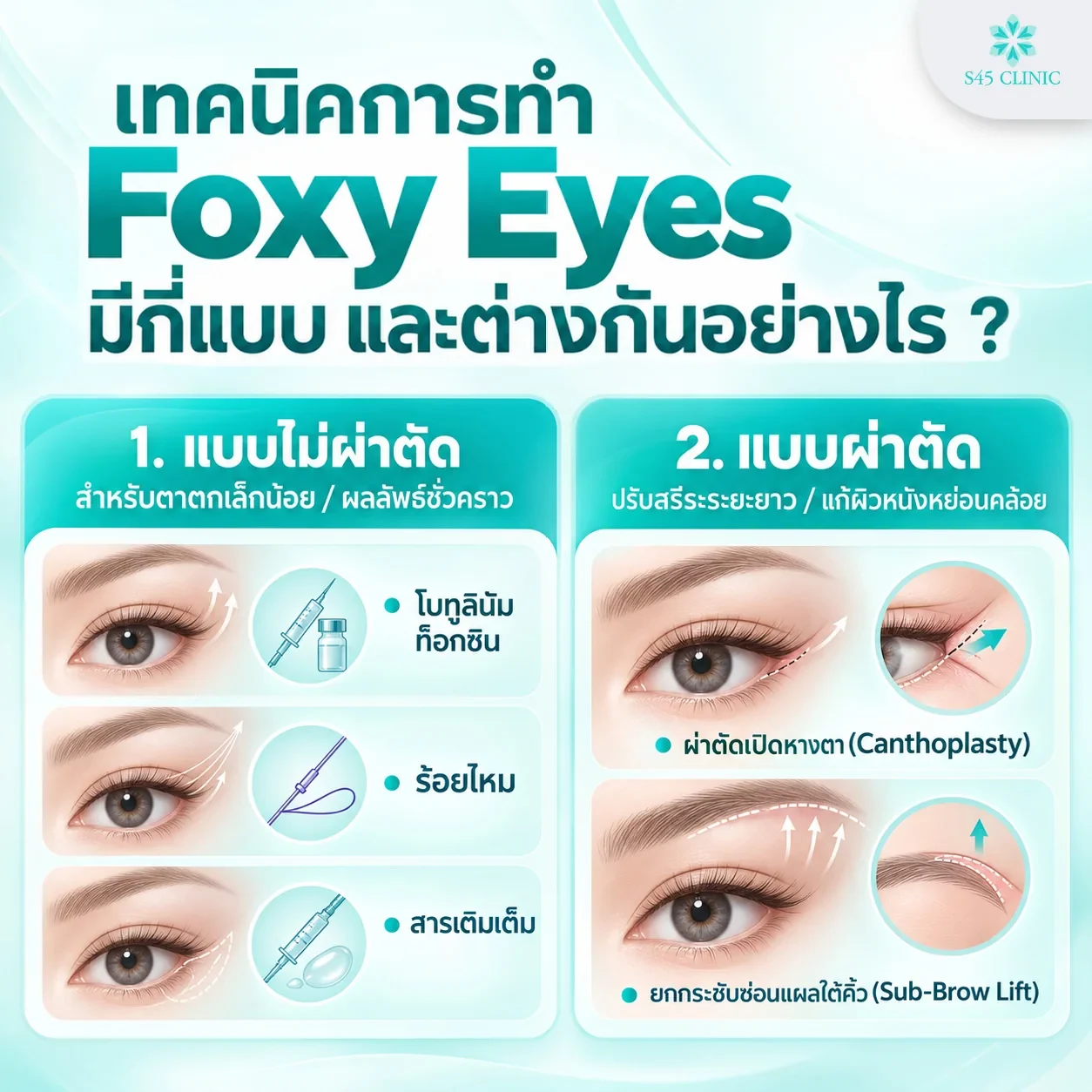
Fox eye techniques fall into 2 groups: non-surgical procedures and plastic surgery to change the facial anatomy. The doctor assesses treatment based on your existing facial anatomy, how much the skin sags and what you want. This approach can help the reshaping suit each person’s proportions.
How Do Non-Surgical Methods With Botulinum Toxin Injections, Filler Injections and a Thread Lift Work?
Non-surgical eye reshaping works by relaxing muscles, supporting the skin layers or building up the base of the face temporarily. This approach suits people with slightly droopy outer eye corners who want to change their eye shape in the short term. The methods are:
- Botulinum toxin injections: the doctor injects into the part of the orbicularis oculi (the ring of muscle around the eye) that pulls the outer eye corner down. When this muscle relaxes, the pull from the forehead muscle may lift the end of the outer eye corner temporarily.
- Thread lift to lift the outer eye corners: dissolvable barbed threads are inserted into the tissue beneath the skin at the temples. The barbs grip and support the tissue at the outer eye corner, lifting it up towards the hairline.
- Filler injections: the doctor uses filler injections to build up the tissue beneath the skin at the outer eye socket rim or at hollow temples. This creates a supporting base and helps the skin at the outer eye corner look firmer. Results vary from person to person.
How Do Canthoplasty and a Sub-Brow Lift Differ in How They Correct the Eyes?
The two surgical methods correct the anatomy in different ways, depending on the cause. Canthoplasty changes the angle of the eye directly, while a sub-brow lift with a hidden scar focuses on removing excess skin:
- Canthoplasty and repositioning the lateral canthal tendon (lateral canthoplasty): this focuses on changing the angle of the eye directly. The doctor makes a small incision at the outer eye corner, releases the lateral canthal tendon and secures it to the periosteum (the layer covering the bone) of the eye socket at a new level. Canthopexy tightens the existing tendon with stitches without releasing it, so it changes the eye shape less. The doctor chooses the method based on each person’s eye structure.
- Sub-brow lift with a hidden scar beneath the eyebrow: this focuses on removing excess sagging skin that covers the outer eye corner. The doctor removes excess skin along the lower edge of the eyebrow and stitches it to tighten the area. This method does not disturb the skin at your existing eyelid crease.
What Are the Benefits and Precautions of Fox Eye Treatment, and Who Is It Suitable For?

Fox eye treatment suits people with droopy outer eye corners or sagging skin. The benefit is that it can help the eyes look bright, but there are precautions about the limits of your facial anatomy and possible complications.
The doctor needs to assess all the information, including the benefits for your vision and your existing facial proportions. A detailed explanation helps you understand the results and risks before the procedure starts.
What Are the Medical Benefits, and Which Eye Shapes Suit Fox Eye Treatment?
Eye shapes that suit fox eye treatment are outer eye corners that have sloped down since birth and upper eyelid skin that sags over the lashes at the outer eye corner. It also suits people who want the level of their outer eye corners to balance with their cheekbones. This procedure has several medical benefits:
- It can help widen side vision in people whose skin folds block it.
- It reduces trapped moisture and rubbing in the skin crease at the outer eye corner, which often comes from sweat and tears.
- It makes the eyes look alert, lively and less tired, helping the face look bright and healthy in proportion with each person’s features.
- It makes caring for the skin around the eyes and doing everyday makeup easier. Results vary from person to person.
What Are the Anatomical Limitations and Temporary Side Effects to Be Aware Of?
The anatomical limitation to be aware of is that some eye areas are not yet suitable for lifting the outer eye corners, such as in people with bulging eyes (exophthalmos) or ptosis (weakness of the muscle that lifts the eyelid). The doctor needs to treat the muscle that lifts the eyelid so it works normally before considering adjusting the angle of the outer eye corner, to help prevent possible complications. Possible side effects include:
- Temporary dry and irritated eyes: lifting the angle of the outer eye corner exposes more of the surface of the cornea to the air, so tears evaporate faster than usual at first.
- Eyelids not closing fully (lagophthalmos): if too much skin is removed or the lateral canthal tendon is pulled too tight, your eyelids may not close fully during sleep.
- The lower eyelid turning outwards (ectropion): this may happen if the tendon at the outer eye corner is not secured firmly enough to the rim of the eye socket, so the edge of the lower eyelid pulls away outwards.
Why Choose S45 Clinic for Fox Eye Treatment?
At S45 Clinic, the outer eye corners are adjusted with surgery such as a sub-brow lift or an endoscopic brow lift, with priority on the normal function of the eyelids. A doctor assesses and plans your care individually.
The doctor assesses which technique to use so the shape of your eyes suits your facial anatomy. Results vary from person to person. The doctor plans the adjustment so it does not pull and affect how you blink or how fully your eyelids close.
What Are the Benefits of an Individual Measurement of the Outer Eye Corner Angle?
The benefit of an individual measurement of the outer eye corner angle is that it helps the doctor plan treatment precisely and assess your facial anatomy before the procedure starts. It helps:
- design the line of the outer eye corner in proportion with each person’s features, in line with the cheekbones, the bridge of the nose and the forehead
- keep the muscles around the eyes in balance, so blinking and closing the eyes still work normally
- the doctor choose a technique that suits the condition of each person’s existing skin layers
How Do S45 Clinic Doctors Care for Complex Cases?
Doctors at S45 Clinic place importance on assessing complex cases, especially people who have had double eyelid surgery before or have existing scars. The doctor examines the tissue beneath the skin and the support of the muscles around the eyes in detail before the procedure starts.
Understanding the muscles and blood vessels around the eye socket helps separate the tissue beneath the skin as planned. Care by a doctor helps reduce injury to nearby skin layers. Results vary from person to person.
What Are the Operating Room Standards and Aftercare?
S45 Clinic’s operating room standards and aftercare focus on cleanliness, with a system for close follow-up. The clinic’s care follows these steps:
- The cleanliness of the operating room is controlled, with aseptic technique (steps that stop germs getting into the surgical area) that meets the standards for medical facilities.
- Medical instruments are sterilised and ready for procedures around the eyes.
- There is a follow-up system after your care, with appointments to check the wound and remove stitches on schedule by medical staff.
How Do I Prepare for Fox Eye Treatment and Look After Myself Afterwards?
Looking after yourself after fox eye treatment means keeping the wound clean and following your doctor’s advice closely. This helps the surgical wound heal and lowers the chance of complications around the eyes. Swelling and bruising may vary from person to person, depending on your health. Learn how to care for the wound correctly at each stage.
How Do I Care for the Wound in the First 7 Days?
Wound care in the first 7 days means cold compresses, keeping the wound clean and avoiding anything that could disturb the wound around the eyes. In the first week after surgery, follow this medical advice:
- Apply cold compresses around the eyes and forehead for the first 48 hours. Swelling may vary from person to person.
- Clean the wound gently as your doctor advises, for example with cotton wool soaked in saline or clean warm water.
- Apply antibiotic ointment as your doctor advises, to lower the chance of infection.
- Avoid rubbing your eyes, avoid sleeping face down and avoid bending your head down for long periods.
- Do not wear contact lenses or eye makeup until the wound has healed well and your doctor has checked it.
How Long Does the Wound Take to Settle, and When Are Stitches Removed?
The wound starts to settle, and stitches are removed at an appointment set by your doctor, which differs by technique. The skin around the eyes recovers in stages:
- Days 1 to 3: you may feel tightness around the eyes. Swelling may vary from person to person and usually goes down gradually from day 4 onwards.
- Stitch removal appointment: you come back to have the wound checked and the stitches removed by medical staff.
- Weeks 2 to 4: bruising, which varies from person to person, usually fades gradually. The skin continues to adjust to its new position.
- Months 3 to 6: the surgical scar usually fades gradually over time and the eye shape gradually settles. Results vary from person to person.
Frequently Asked Questions About Fox Eyes
These questions about eye reshaping give you information before you decide. They cover effects on your eyes, surgery for people who have had procedures before, and combining fox eye surgery with other eye surgery.
Can I Have Fox Eye Surgery If I Have Had a Thread Lift or Filler Injections Before?
People who have had eye reshaping procedures before can have surgery. The doctor first examines the existing tissue beneath the skin to plan suitable treatment:
- If you have had filler injections: the doctor checks how much of the substance from your previous filler injections has broken down. In some cases, you may need to wait for it to break down so the doctor can position and stitch the tendon at the outer eye corner precisely.
- If you have had a thread lift: the doctor checks the scar tissue beneath the skin to plan removing it during surgery. This helps the skin layers move into their new position and suit your facial anatomy. Results vary from person to person.
Does Fox Eye Treatment Affect My Vision or My Eyes?
Fox eye treatment does not involve surgery on the eyeball itself, because surgery is limited to the skin, the eyelid muscles and the tendon at the outer eye corner. The procedure does not involve the eyeball, the lens or the retina. However, there is still a risk of dry eyes and eyelids not closing fully, as described in the section on limitations.
For the first 2 to 3 days after surgery, you may have some eye irritation or slightly blurred vision. These are temporary effects of the greasy eye ointment and the feeling of tightness around the eyes. Swelling may vary from person to person and usually eases as the skin recovers.
Can Fox Eye Surgery Be Combined With Other Eye Surgery?
Fox eye surgery can be combined with other eye surgery. The doctor assesses whether it is suitable for each person:
- Epicanthoplasty (surgery at the inner eye corner): this can help lengthen the eye at the inner corner to balance the lifted outer eye corner.
- Lower eyelid surgery for eye bags: this can help reduce sagging and firm the skin along the lower eyelid, so it matches the angle of the outer eye corner above, in proportion with each person’s features.
Summary
Fox eye reshaping is a procedure that needs a balance between the shape of the eyes and how the eyelids work. Results depend on each person.
Have a doctor assess your facial anatomy, the tension of the lateral canthal tendon and whether you have dry eyes, in detail. This helps you choose a treatment technique that suits your existing anatomy. Targeted care can help results suit each person’s proportions.
Because every face shape…
is different
An otolaryngologist assesses every case before treatment and gives advice based on your actual concerns.
“Reveal the beauty within you”
Message us online
Surgery and medical procedures carry risks. Find out about them and consult a doctor before you decide. Results depend on each person.