Rhinoplasty Revision With Structural Correction, Who Is It For?

Nose surgery, or rhinoplasty, is a commonly chosen aesthetic procedure. Besides rhinoplasty to shape the nose to suit the face, there are also ‘revision rhinoplasty’ and ‘structural rhinoplasty’, which are more complex and have different purposes.
Revision rhinoplasty is not just replacing a previous silicone implant
In fact, revision rhinoplasty involves structural correction. It is more complex surgery than standard rhinoplasty and suits people who have problems with their original nasal structure or who have had several revisions. It aims to add strength, so there is no silicone implant at the nasal tip that could push through the skin in future. Beyond confidence and appearance, rhinoplasty and revision rhinoplasty can sometimes help with blocked or difficult breathing that affects daily life.
Who Is Revision Rhinoplasty or Structural Rhinoplasty For?
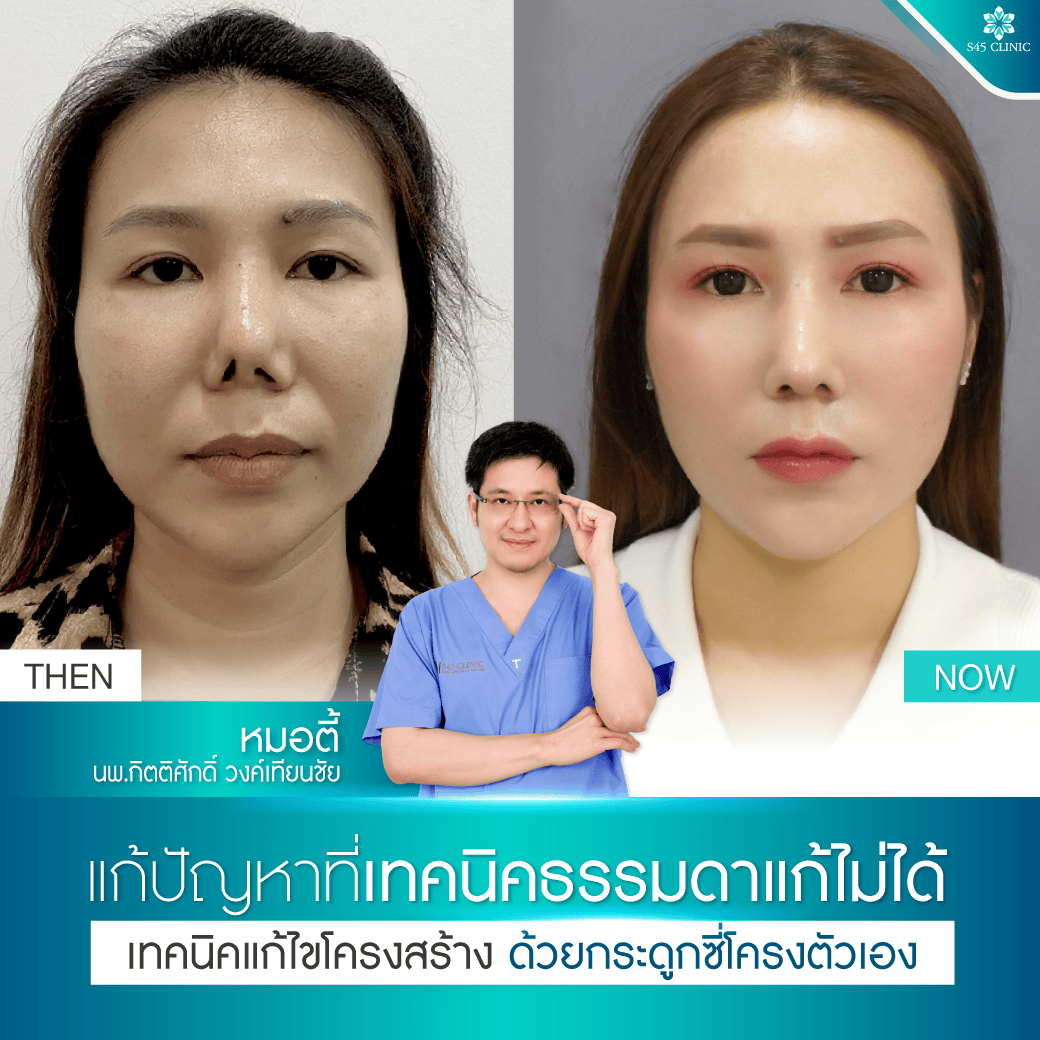
- People who have had rhinoplasty before and had problems, such as:
- a tilted silicone implant, caused by the implant being carved so it does not fit the line of the nose, or placed in the wrong position
- silicone implant extrusion, a common problem for people who want revision rhinoplasty. It happens when the implant size does not suit the nasal structure, so the implant shifts and tilts and puts pressure on the tissue. This thins the skin and raises the chance of the implant pushing through.
- People with a complex nasal structure, such as:
- a large nose or bulbous nose, where the tip is round, large, flared and droops like a rose apple, making the nose look big while the bridge looks short and small, so the nose looks flat and lacks definition
- narrow nostrils that affect breathing, mostly caused by a large amount of scar tissue and problems with the nasal structure, such as misshapen alar cartilages or damage from previous surgery
- a wide nasal base
- a short, contracted nose, which some people in Thailand call a 'pig nose'. The nose looks short, the nostrils are clearly visible and from the side it looks upturned, making the face look out of proportion. The main causes of a short nose are:
- a short nose from birth, because the nasal bone structure is short, which is mostly seen in Asian people
- a short nose after several operations, which causes scar tissue (fascia) to tighten and pull, making the nose look short
- a short nose after infection, because inflammation and infection erode the nasal bone, making the nose misshapen and shorter
- People with a dorsal hump (nasal hump), a bony bump in the middle of the nose along the bridge that creates a clear curve. It can sometimes make the face look harsh or older and less soft.
- People who want to change the shape of their nose, such as:
- adjusting the length
- raising the bridge
- adjusting the width of the nasal base so it is in proportion
- People with breathing or nasal function problems, such as:
- a deviated septum, where the septum (the bone and cartilage that divides the nose down the middle) is bent or twisted to one side. This reduces airflow inside the nose and may make breathing difficult because one side of the nasal passage becomes narrower. In severe cases, breathing through the nose may be hard, and your sense of smell may also be affected.
***A deviated septum may be caused by an accident or a sports injury, or may be present from birth***
Structural Rhinoplasty Techniques
- The surgeon may use cartilage from your own body, such as septal cartilage, ear cartilage or rib cartilage, to rebuild the structure, raise the bridge or add projection to the tip.
- Shaving down and refining excess bone to reshape the bridge or the nasal base.
- Using fat tissue or acellular dermal matrix (a processed dermis graft) to thicken the skin at the nasal tip, lower the chance of implant extrusion and smooth the tip area.
Structural rhinoplasty to correct problems with the original nasal structure needs careful treatment planning by the doctor to lower the risks and complications that may occur.
Why Choose Structural Rhinoplasty at S45 Clinic
- experienced doctors
- reviews of many different structural rhinoplasty cases
- the doctor talks with you, analyses your nasal structure, explains the risks and the results after surgery, and gives you a consultation with time to ask about anything in detail before you decide
- a detailed health check before surgery

Preparing for and Recovering From Structural Rhinoplasty
- Ask the doctor about the surgery in detail, including the materials used, such as cartilage, and how long the surgery takes.
- Follow the doctor’s advice carefully before surgery, such as stopping smoking and supplements.
- Use cold compresses, take pain relief medication and clean the wound as advised by the doctor.

Revision rhinoplasty and structural rhinoplasty need a longer recovery time than standard rhinoplasty, so prepare yourself well and avoid activities that may affect your recovery.
Note: Repeat nose surgery, which many people know as ‘revision rhinoplasty’, is surgery for people who have had nose surgery before and need further assessment by a doctor. The approach depends on the original problem, the nasal structure and the doctor’s judgement in each case.